



Oriental Bronze Lamp
These oriental bronze lamp designs bring cast metal and porcelain into domestic interiors, offering weight and distinct historical ornament.
Oriental Bronze Lamp
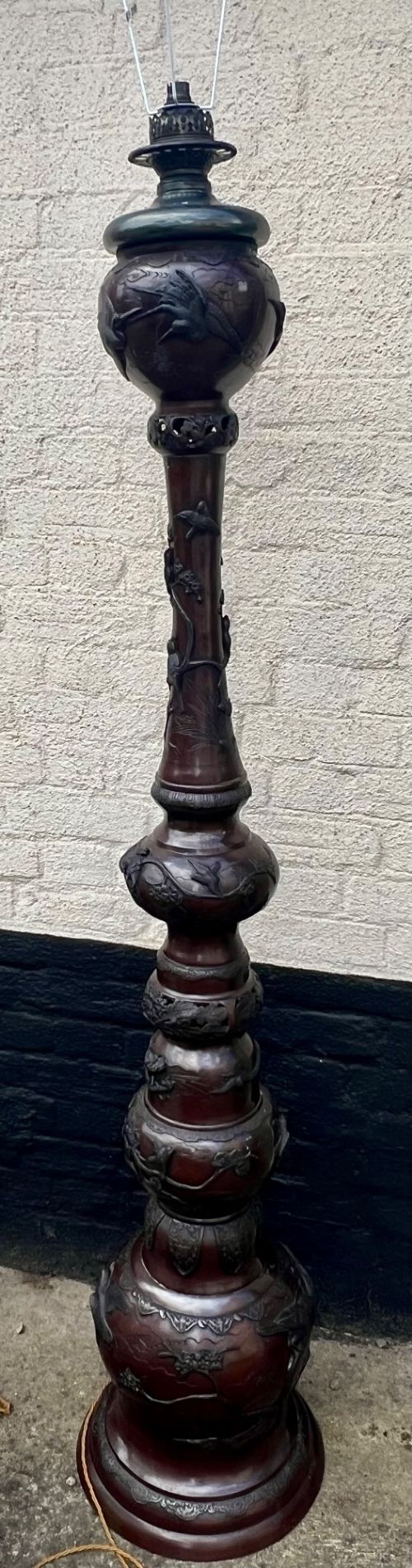
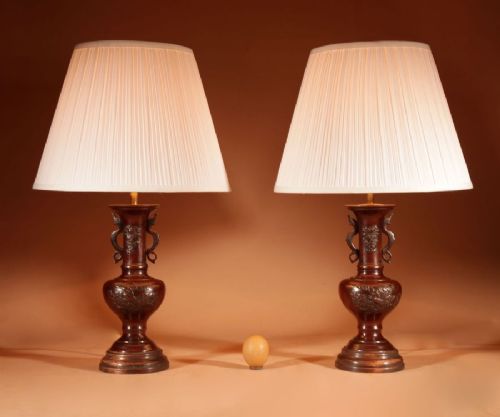
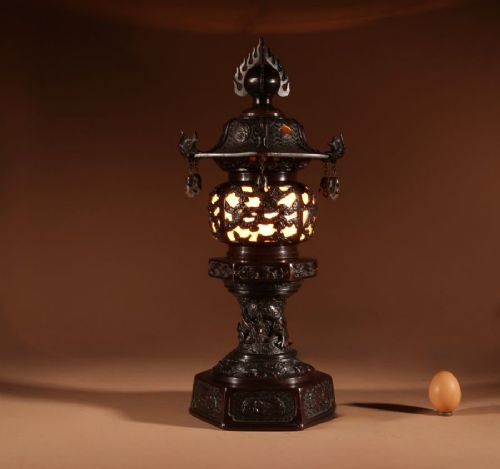
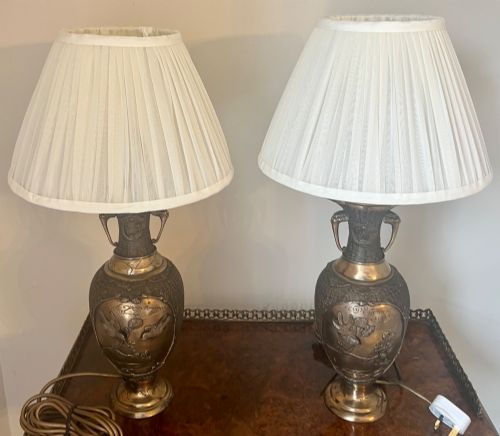
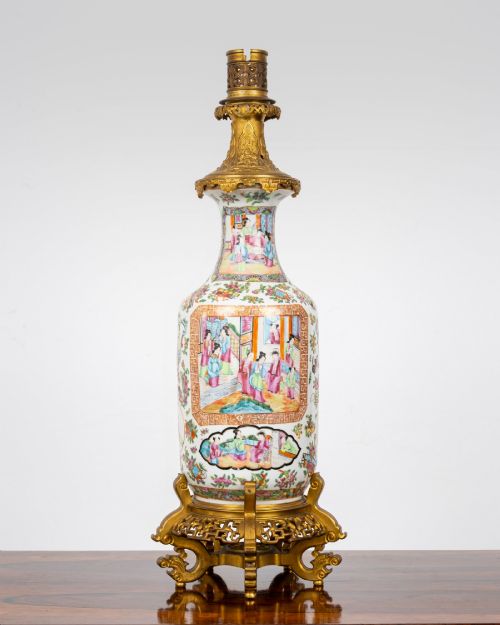
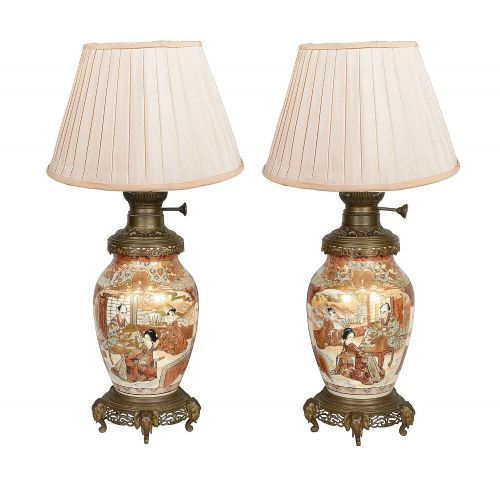
When searching for an oriental bronze lamp, buyers encounter pieces formed from converted vessels, cast figures, and lantern structures dating from the nineteenth and early twentieth centuries. The selection centres on Japanese Meiji period bronzes alongside Chinese vases fitted with mounts, spanning table and floor lighting formats.
Many examples originate from earlier ceramic and metalwork vessels subsequently adapted for illumination, integrating traditional East Asian forms into Victorian and Edwardian domestic spaces. These include Satsuma, porcelain, and cloisonné bodies paired with metal components.
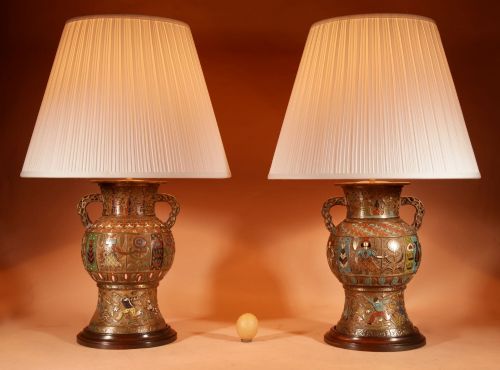
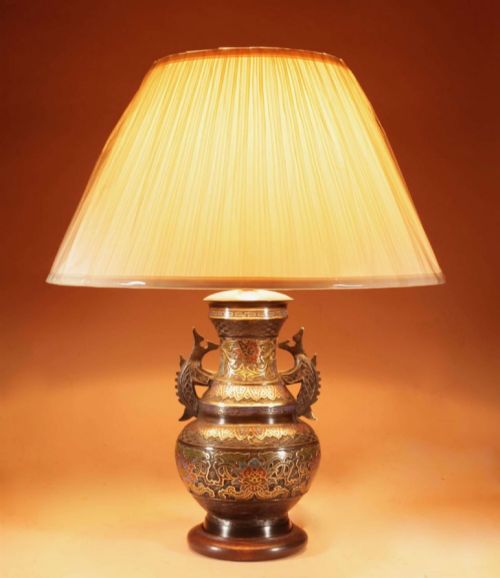
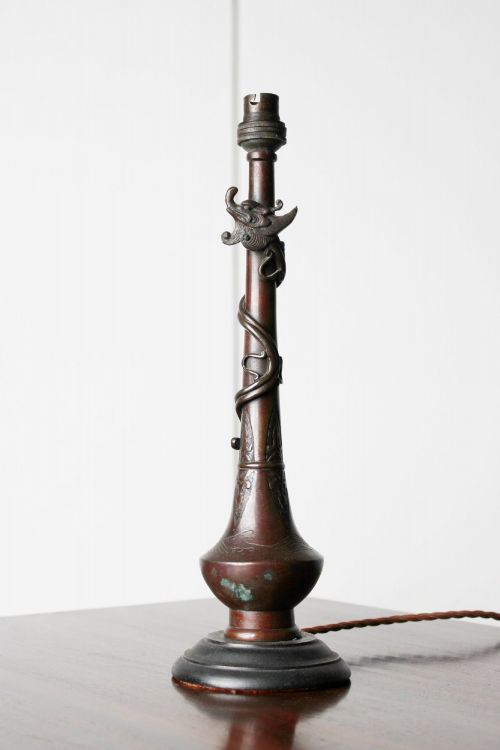
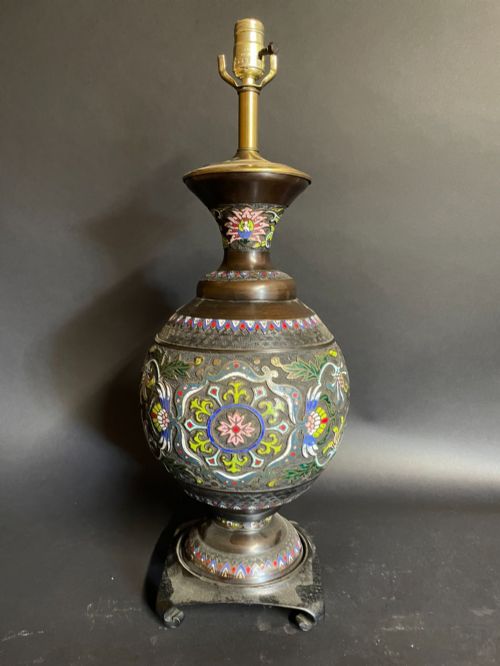
The category accommodates diverse silhouettes, ranging from dragon and elephant figures to geometric champlevé vessels and architectural hanging lanterns converted for surface use.
Materials and construction methods
Construction relies on cast bronze, brass, and patinated white metal, often enriched through applied champlevé and cloisonné enamel work. Metal elements are combined with porcelain bodies, including Rose Medallion, celadon, and powder blue ceramic pieces.
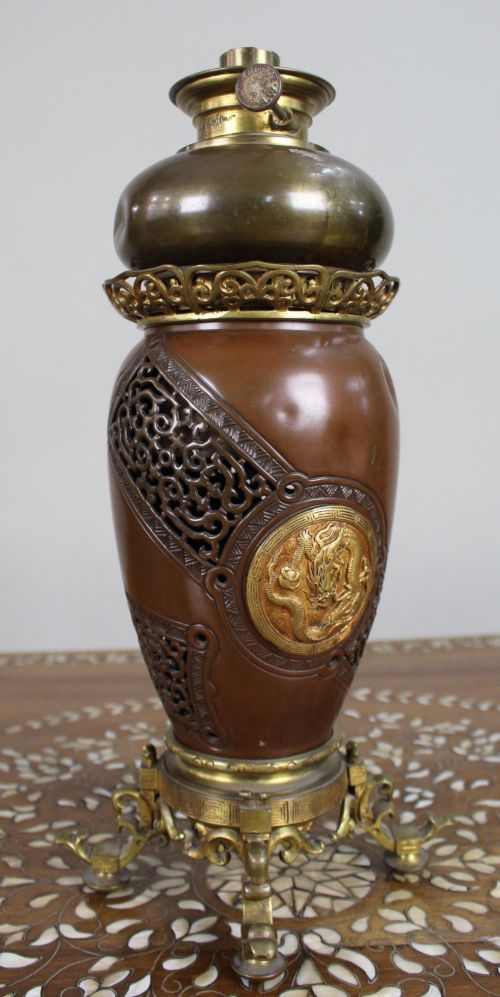
Mounts and fittings utilise ormolu and gilt bronze to secure ceramic vessels and elevate them into functional lighting. Wiring and electrical conversion are integrated into original antique bodies during later adaptation phases.
Several heavy bronze examples feature sculpted elephants and dragons supporting the electrical fittings.
Factors that define quality
Quality rests upon the crispness of the bronze casting and the precision of the enamel work, where finer pieces display intricate surface detail and stable patination. The harmony between the original vessel and its metal mounts dictates the overall aesthetic cohesion.
Condition of the underlying ceramic or metal body and the integrity of the original mounts distinguish superior examples from standard conversions, alongside the proportional balance of the completed lighting piece.
The Oriental Bronze Lamp Glossary
- Meiji Period
- A Japanese historical era spanning from 1868 to 1912, associated with skilled bronze casting and decorative metalwork exported to Western markets.
- Cloisonné
- An enamel technique where metal wire forms raised partitions on a bronze or copper base, filled with coloured paste and fired.
- Champlevé
- An enamelling method where troughs are gouged into the bronze surface to hold enamel colours before firing and polishing.
- Ormolu
- Gilt bronze ornamentation applied to mount porcelain vessels and provide decorative structural support.
- Celadon
- A pale green jade-like ceramic glaze found on traditional Chinese vessels later adapted for illumination.
- Chinoiserie
- A European artistic style reflecting Chinese aesthetic motifs, prevalent in nineteenth-century decorative pieces.
Oriental Bronze Lamp: Frequently Asked Questions
How do I identify a Meiji period lamp?
Meiji period pieces are identified by dense bronze casting, naturalistic animal motifs such as dragons or elephants, and defined patination characteristic of late nineteenth-century Japanese workshops.
These items often utilise detailed relief work and traditional signature panels embedded in the metal body.
Were these lamps originally made for electricity?
Most pieces started as vases, temple lanterns, or decorative bronzes before being converted into lamps during the nineteenth or twentieth centuries.
Wiring is added later to accommodate modern electrical fittings while retaining the antique vessel structure.
What is the difference between cloisonné and champlevé?
Cloisonné involves soldering thin flat metal wires onto a bronze base to create bounded cells for enamel paste.
Champlevé carves troughs directly into the thick bronze surface itself to hold the coloured enamel.
How do I care for antique bronze and enamel?
Dust surfaces gently with a dry, soft cloth and avoid chemical polishes that can damage patinated metal or enamel work.
Keep the lamps away from direct moisture and excessive sunlight to preserve the finish.