
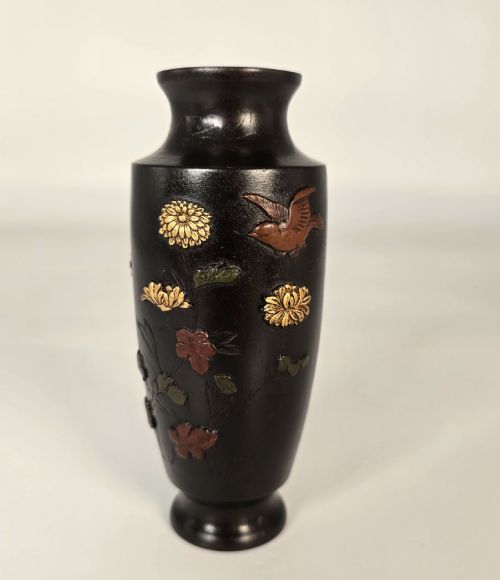


Oriental Bronze Flower Vase
An oriental bronze flower vase brings heavy metalwork and intricate surface detail to a room, channelling nineteenth- and early twentieth-century craftsmanship.
Oriental Bronze Flower Vase
When you search for an oriental bronze flower vase, you find vessels originating predominantly from Japan during the Meiji period alongside Chinese examples spanning the late nineteenth and early twentieth centuries. These objects take forms such as baluster urns, stem vases, and jardinières designed for floral display.
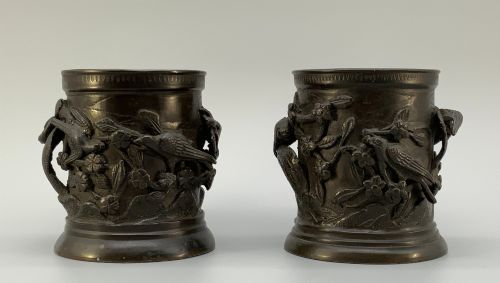
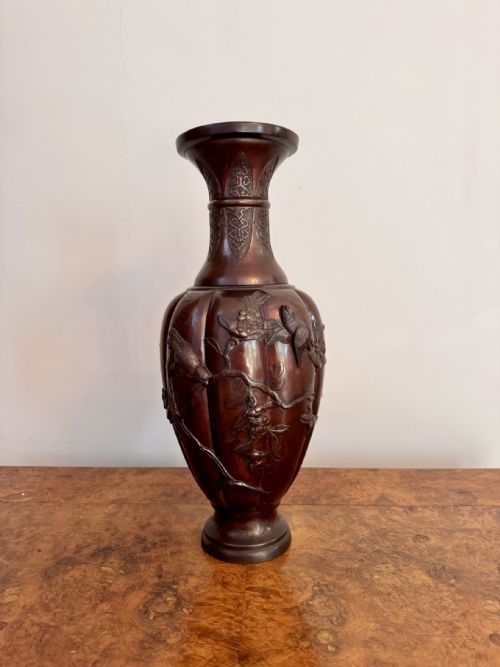
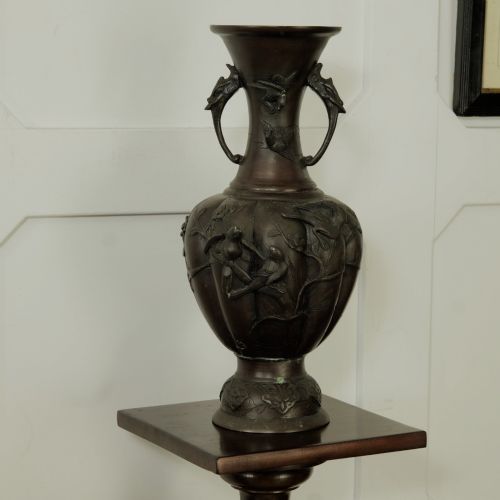
The pieces on this page lean heavily towards Japanese Meiji era production, often decorated with birds, blossoms, and raised floral detail. Chinese vessels from the same broader timeframe also appear, including bronze, gilt metal, and cloisonné variants.
How they were made
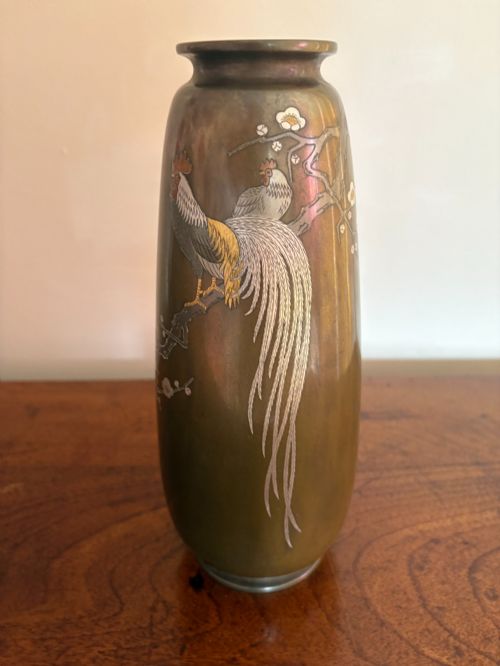
Makers utilised cast bronze, patinated bronze, and brass, frequently combining them with copper, silver, and gold in mixed metal constructions. Enamel work and cloisonné techniques add colour and complex geometric or pictorial patterns to the metallic surfaces.
Many items feature inlaid elements, signed panels, and raised relief work depicting natural subjects like birds and floral bouquets. Surface patination treatments create deep, varied tones that define the finish of each vessel.
Listings span the nineteenth and early twentieth centuries, featuring Victorian Chinoiserie alongside Japanese Meiji and Qing Dynasty pieces.
What varies in quality
Quality rests upon the crispness of the casting and the finesse of any mixed metal inlays or raised details. Pieces featuring signature work from known makers or complex multi-metal applications sit at the upper end of the scale.
The depth and consistency of the original patination alongside the precision of enamel or cloisonné work differentiate standard decorative vessels from finer artistic examples.
KANASAWA
The Oriental Bronze Flower Vase Glossary
- Meiji Period
- The era in Japanese history lasting from 1868 to 1912, associated with rapid modernisation and exceptional metalwork exports. Pieces from this time often display intricate flora and fauna motifs.
- Cloisonné
- An ancient technique for decorating metalwork objects with coloured material held in place by thin metal strips soldered to the base. This method creates vibrant, compartmentalised patterns across the vase body.
- Patinated Bronze
- Bronze that has undergone a chemical or natural treatment to alter its surface colour and finish. This process yields deep brown, green, or dark tones that protect the metal and enhance texture.
- Baluster Urn
- A vase form characterised by a bulging lower portion and a narrow neck resembling a traditional architectural baluster. These shapes provide stability for heavy floral arrangements.
- Mixed Metal
- An object composed of multiple metallic elements such as bronze, copper, silver, and gold combined for decorative contrast. Artisans used this technique to highlight specific motifs on the vessel surface.
Oriental Bronze Flower Vase: Frequently Asked Questions
How do I clean an antique bronze vase?
Dust gently with a soft, dry cloth to preserve the original patination and surface finish.
Avoid using water, chemical polishes, or abrasive cleaners that can strip away historic patination or damage delicate mixed metal inlays.
Were these vases meant for actual flowers?
Many of these vessels functioned as decorative display urns, posy vases, or jardinières intended to hold botanical arrangements.
Some possess delicate interiors or metal linings, so using a small waterproof insert protects the antique metal from moisture damage if you use fresh stems.
How do I date a Japanese bronze vase?
Examine the stylistic markers, such as Meiji period motifs, signature panels, and manufacturing techniques recorded in the metalwork.
Objects from the late nineteenth and early twentieth centuries often bear distinct patination styles and signature marks that align with specific production eras.
What is a MIMIKUCHI vase?
The term refers to a specific Japanese vessel style featuring distinct ear-like handles or lug attachments on the rim or neck.
These functional or decorative additions reflect traditional Japanese ceramic and bronze forms from the Meiji period.