

Oriental Bedside Tables
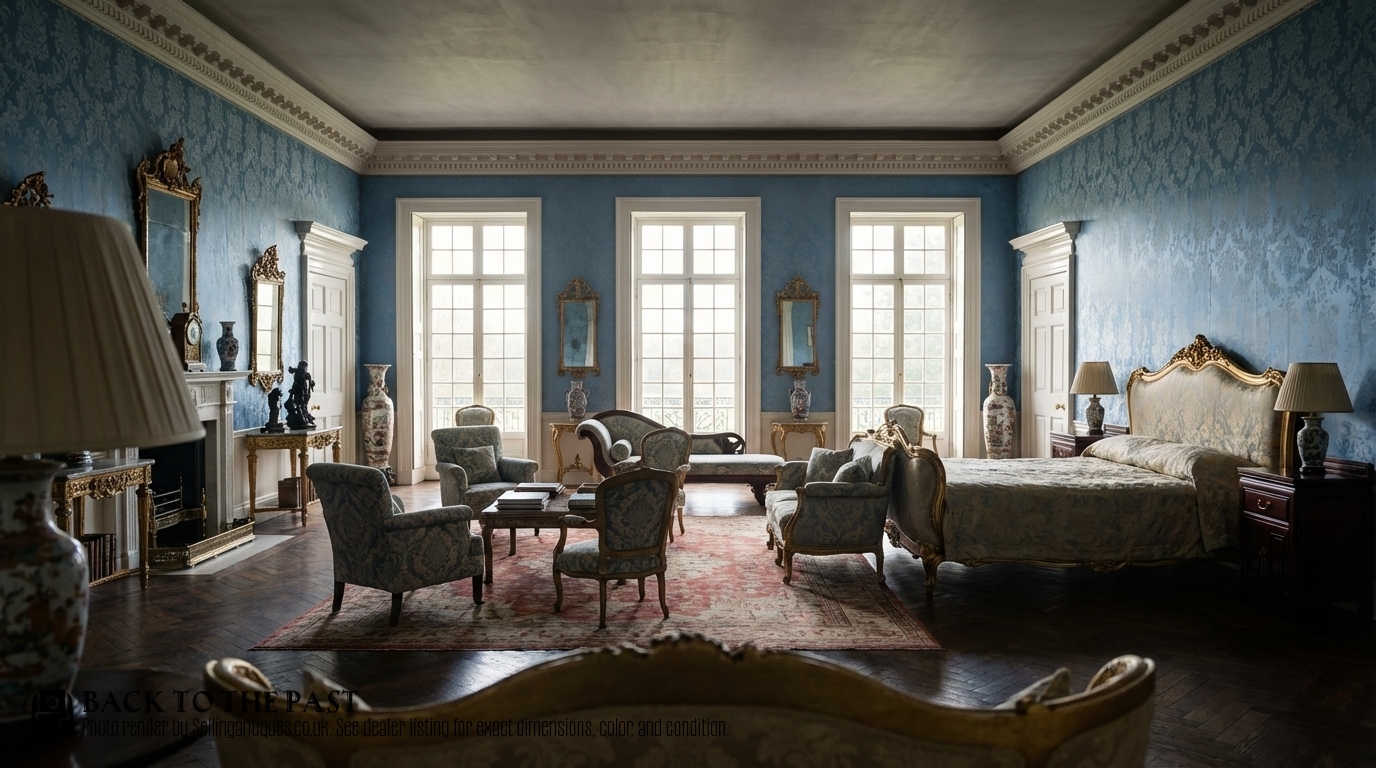
These oriental bedside tables and related pieces bring decorative lacquer, hand-painted porcelain, and rich bronze work into the bedroom.
Oriental Bedside Tables
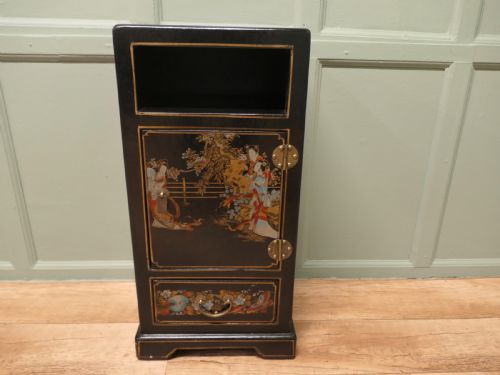
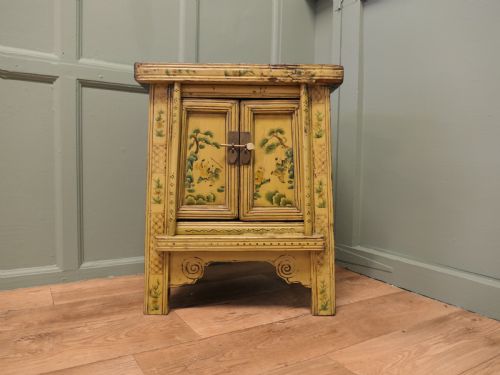
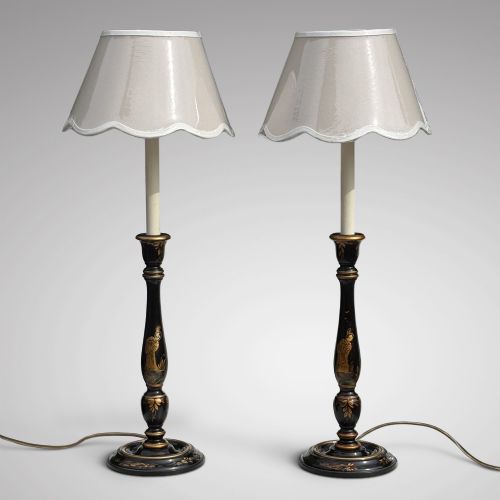
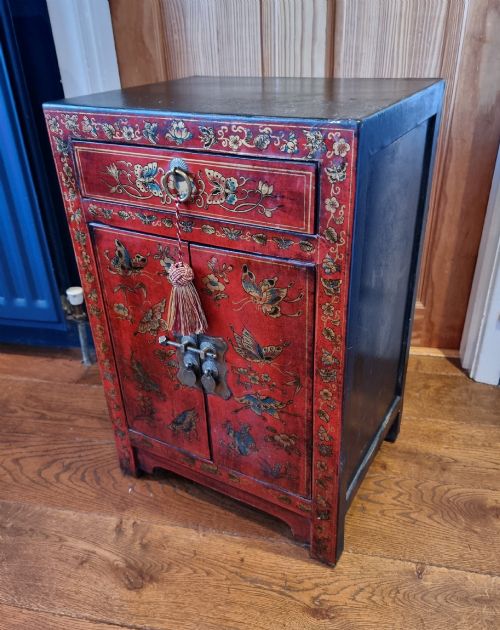
When searching for oriental bedside tables, buyers encounter low cabinets, cupboards, and lamp tables drawing upon 19th-century and early 20th-century Asian and Anglo-Indian decorative traditions. The selection frequently merges actual antique low cabinets with converted vase and bronze table lamps suited for bedside placement.
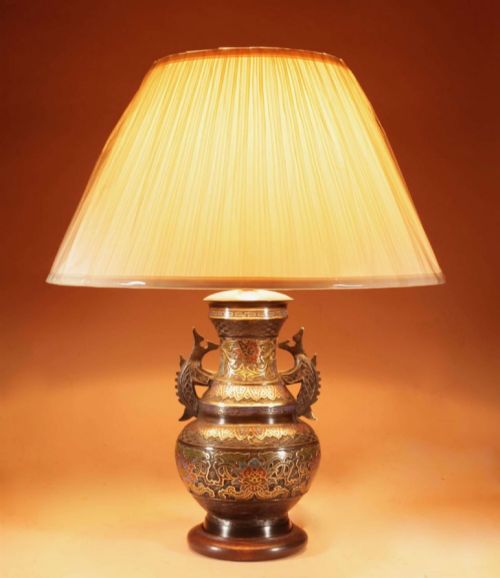
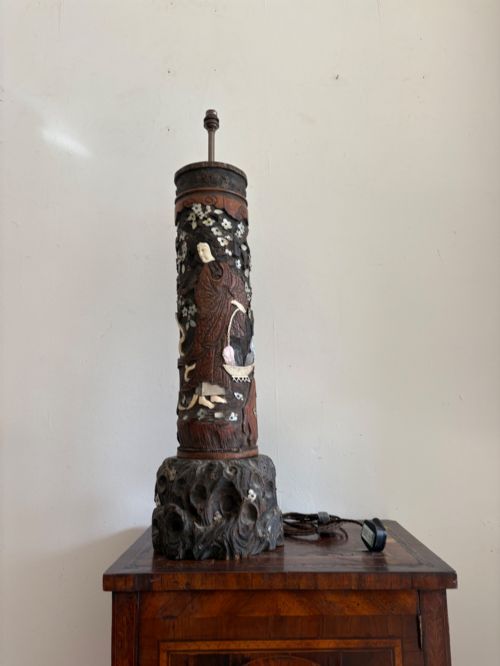
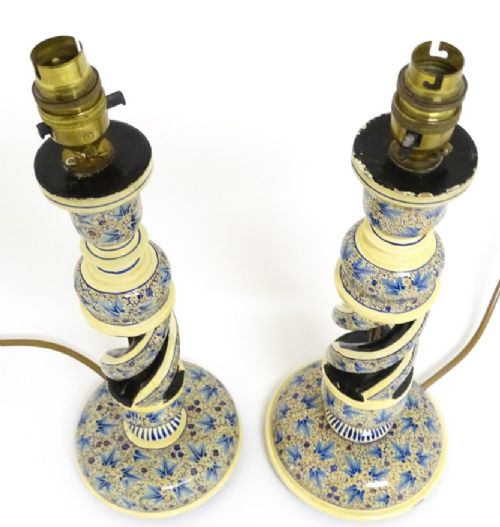
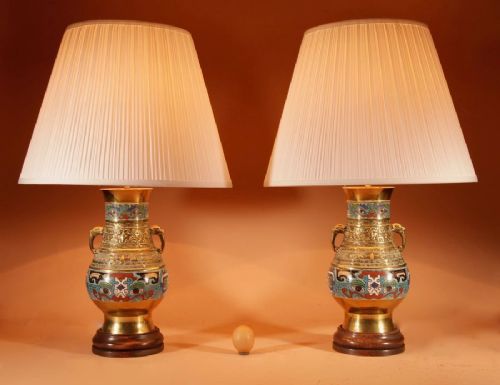
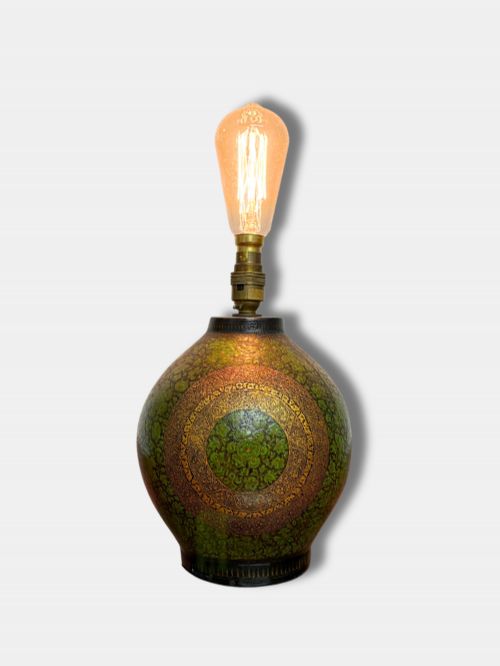
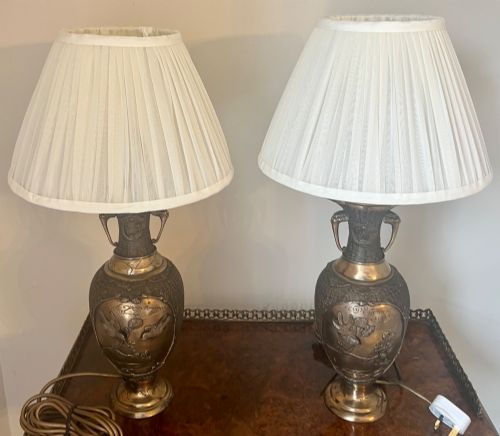
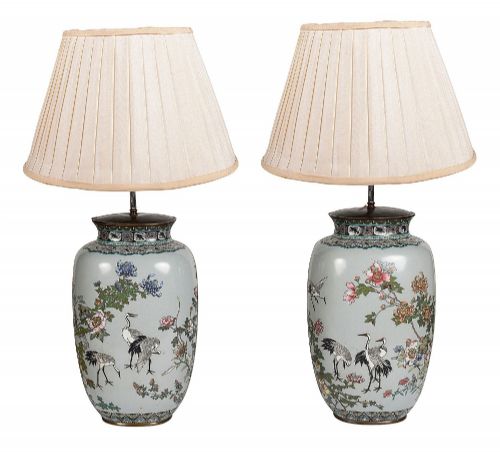
The material record spans Chinoiserie lacquered wood, Satsuma and Cloisonné enamel, alongside carved hardwoods reflecting Meiji period Japanese craftsmanship and Kashmiri painting styles. Cabinets provide enclosed storage while lamp pieces introduce soft illumination through silk and fabric shades atop porcelain or bronze bases.
Materials and construction
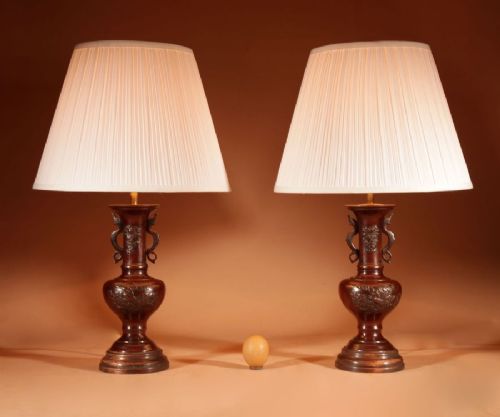
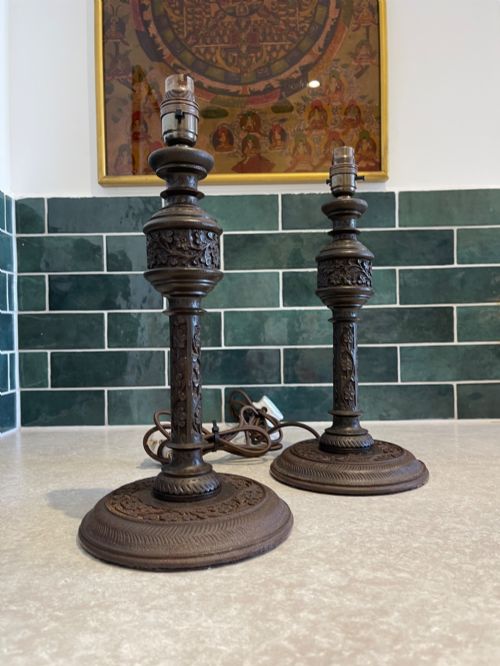
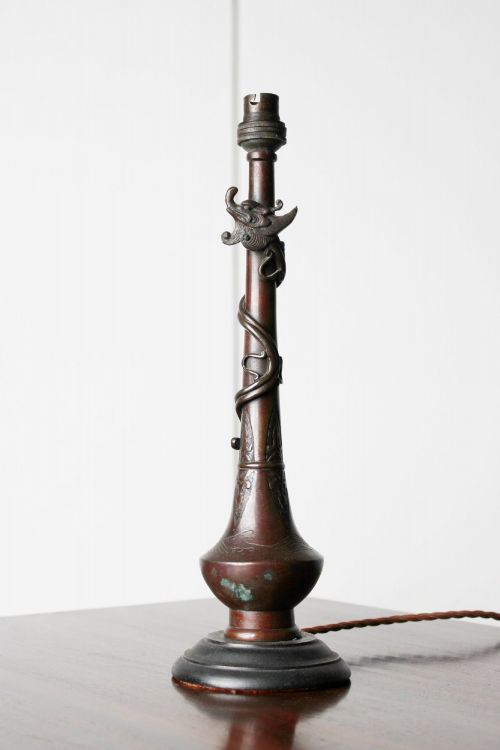
Pieces rely heavily on timber substrates finished with multiple layers of lacquer, often hand-painted in red, green, black, or cream Chinoiserie schemes. Metal elements incorporate cast bronze, brass, and champlevé or cloisonné enamel detailing applied to vases and lamp bodies.
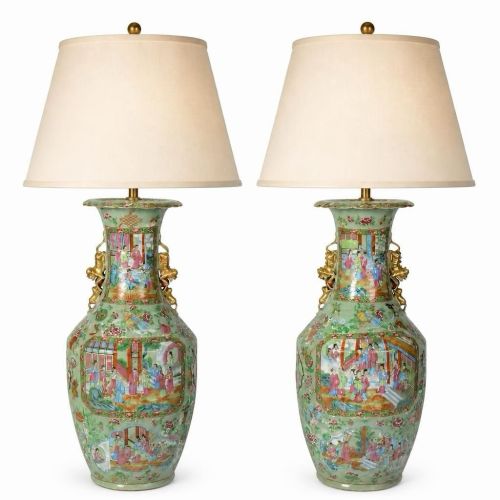
Ceramic components draw upon traditional porcelain forms such as ginger jars, tea canisters, and Famille Verte or Rose vases subsequently adapted for electrical fittings. Woodwork includes carved panels and joinery typical of nineteenth and early twentieth-century cabinet making.
Several fierce Foo dogs stand guard in ceramic form, ready to keep bedside watch over sleeping owners.
Judging quality and execution
The distinction between tiers rests upon the precision of the hand-painting, the depth of the lacquer work, and the crispness of the bronze or brass casting. Finer examples display intricate brushwork on porcelain surfaces and substantial, well-weighted metal mounts rather than simple stamped elements.
Cabinetry quality depends on the integrity of the timber, the preservation of the painted or gilded decorative schemes, and the smoothness of drawer operation where applicable. Converted lamps reveal quality in the mounting stability and the original preservation of the ceramic or bronze body.
The Oriental Bedside Tables Glossary
- Chinoiserie
- European decorative style imitating Chinese artistic traditions. It appears frequently on lacquer cabinets and table lamps dated to the Victorian and Edwardian periods.
- Cloisonné
- Metalwork technique where thin wire creates partitioned cells filled with enamel paste. These surfaces appear on many 19th-century vases adapted as lamps.
- Satsuma
- Japanese earthenware pottery featuring a crackle-glaze finish decorated with enamels and gilding. Pieces from the Meiji period frequently serve as decorative lamp bases.
- Champlevé
- Enamelling method where troughs are gouged into metal and filled with vitreous paste before firing. This technique decorates heavy bronze lamps from the early 20th century.
- Famille Rose
- Chinese ceramic palette dominated by pink or opaque rose enamel colours. These porcelain vessels commonly appear mounted as antique bedside lamps.
Oriental Bedside Tables: Frequently Asked Questions
What periods do these pieces come from?
The inventory spans the Victorian and Edwardian eras through the 1920s and 1930s, incorporating 19th-century works alongside early 20th-century adaptations.
Craftsmanship reflects specific historical windows such as the Japanese Meiji period and the Qing Dynasty design influence.
Are these cabinets or lamps?
The selection includes both actual low bedside cupboards and side cabinets alongside numerous table lamps created from converted antique vases and bronzes.
Buyers searching for bedside surfaces will find compact lacquered cabinets alongside lighting options designed to sit upon them.
How do I identify Chinoiserie?
Chinoiserie items feature European interpretations of Asian motifs, typically rendered in lacquer with painted figures, pagodas, and floral scenes.
These designs adorn cabinets, cupboards, and wooden lamp bases dating from the 19th century onward.
What materials are most common?
Wood and lacquer dominate the cabinet forms, while bronze, brass, and porcelain define the table lamps.
Additional decorative elements include enamel, silk, and mother-of-pearl inlay across various 19th-century and Edwardian pieces.