

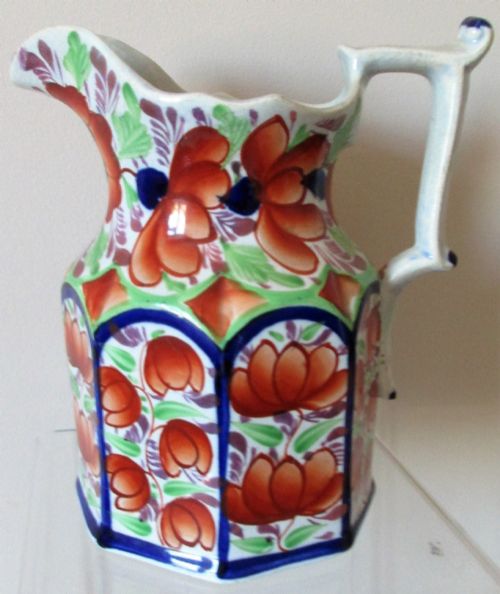
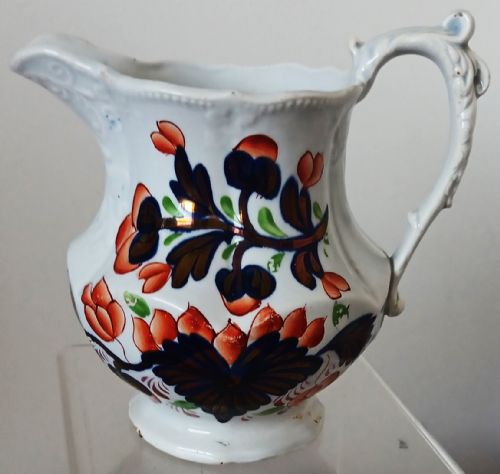
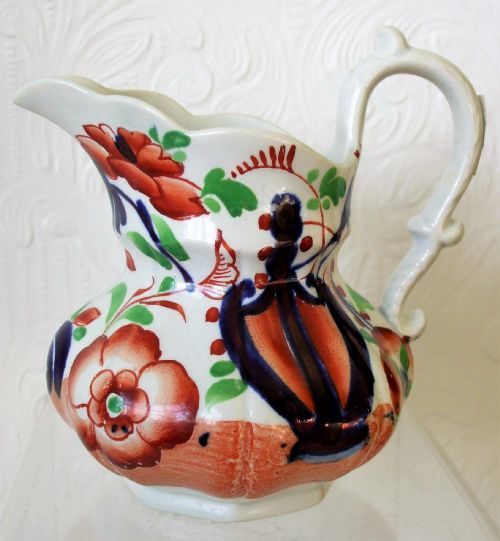
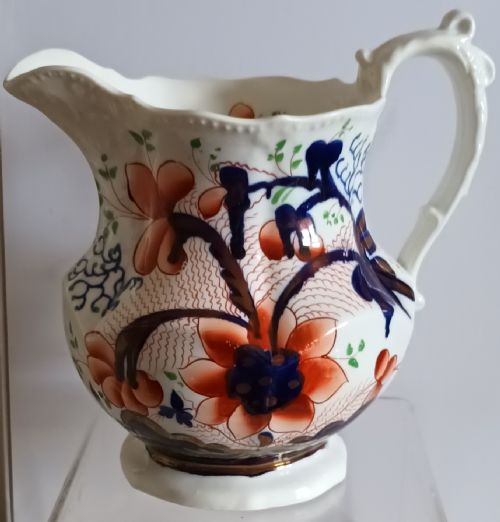


Orange Earthenware Milk Pitcher
These orange earthenware milk pitcher examples bring bright nineteenth-century colour and hand-painted pattern to the table.

Orange Earthenware Milk Pitcher
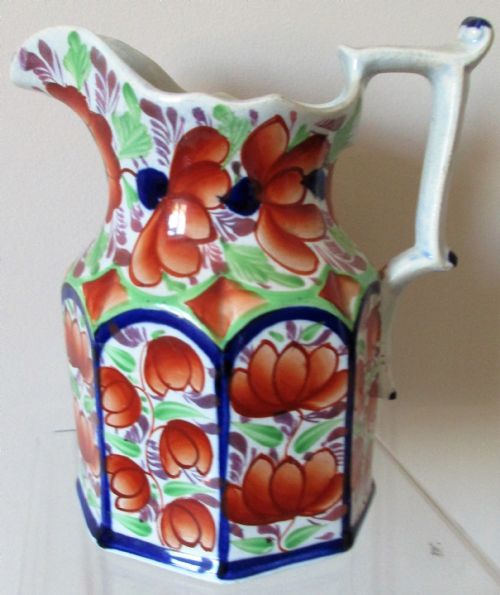
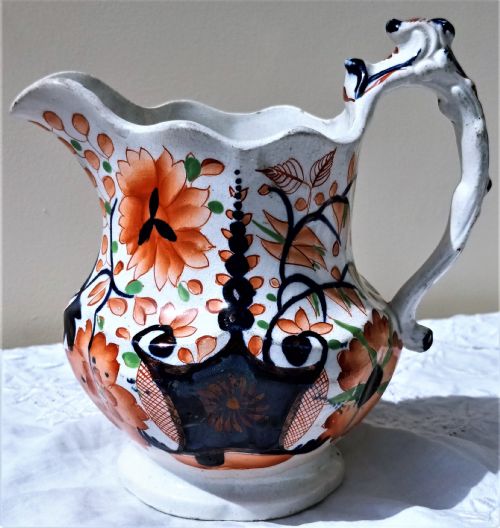
An orange earthenware milk pitcher is a sturdy nineteenth-century vessel designed for dairy service, dominated by Gaudy Welsh earthenware jugs in specific regional patterns. You will most frequently meet Victorian examples bearing transfer-printed designs enhanced by hand-applied enamel colours.
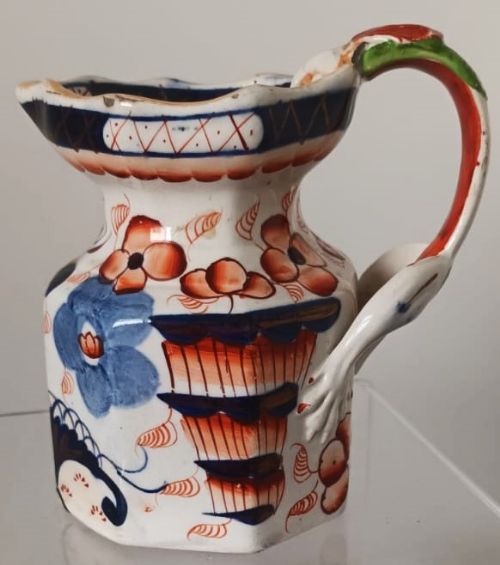
The inventory centres on nineteenth-century ceramic jugs and pitchers originating from the Victorian and Georgian periods. Forms range from standard pottery jugs to distinctive pouch jugs and Hydra jugs.
Pattern names such as Pagoda, Gwent, and Grape define the visual character of these pieces. They represent a tradition of domestic pottery that combined utilitarian function with vibrant decoration.
How they were made
Potters shaped these vessels from earthenware and ironstone, applying glaze to seal the porous clay body. Copper lustre and enamel glaze added metallic sheen and bright colour highlights to the surfaces.
Decoration relied on transfer-printed outlines that workers filled by hand using enamel pigments. Firing fixed the glazes and metals to the ceramic substrate, creating durable finishes for daily dairy use.
Orange Earthenware Milk Pitcher Retail Price Guide 2026
Typical asking prices for orange earthenware milk pitcher among the pieces listed under this phrase on Sellingantiques today, from the lower quarter to the upper quarter. They describe what is for sale here now, not the wider market.
All listed pieces date from the nineteenth century and encompass earthenware, ironstone, and copper lustre materials.
What varies in quality
Quality rests in the crispness of the transfer print beneath the glaze and the precision of the hand-applied enamel colours. Stronger pieces display steady brushwork within the pattern boundaries rather than casual, hasty application.
The weight and balance of the earthenware body, alongside the smoothness of the glaze, separate standard domestic output from finer examples. Potteries achieved different levels of refinement in their final ceramic surfaces.
The Orange Earthenware Milk Pitcher Glossary
- Earthenware
- A porous pottery body fired at lower temperatures, requiring a vitreous glaze to hold liquids. It forms the structural base for nineteenth-century milk pitchers.
- Copper lustre
- A metallic glaze finish imparting a coppery, reflective sheen to ceramic surfaces. Potters used it to frame or accent painted patterns.
- Hydra jug
- A specific classical ceramic form featuring a moulded serpent handle and flared rim. Mason's notably produced variations of this shape in the nineteenth century.
- Enamel glaze
- Coloured glass fused to ceramic during firing to provide bright, decorative hues. It allowed makers to introduce vivid oranges and blues over transfer prints.
Orange Earthenware Milk Pitcher: Frequently Asked Questions
What were milk pitchers used for?
These pitchers served to hold and pour milk at the table during meals. Their sturdy earthenware construction suited daily household service.
Over the nineteenth century, their vibrant enamel patterns also allowed them to double as decorative display items in modest homes.
How do I date these pitchers?
Dating relies on identifying the nineteenth-century styles, such as Victorian Gaudy Welsh patterns or Georgian forms. Material traits like ironstone bodies and copper lustre decoration point to this era.
Maker details, where present, help narrow the production window within the broader nineteenth-century span.
Are these pitchers safe for use?
While nineteenth-century earthenware remains physically robust, older glazes can contain lead or other substances. Modern food safety standards advise treating them as decorative objects rather than functional tableware.
Gentle hand washing preserves the fragile enamel and lustre details that define their surface character.