
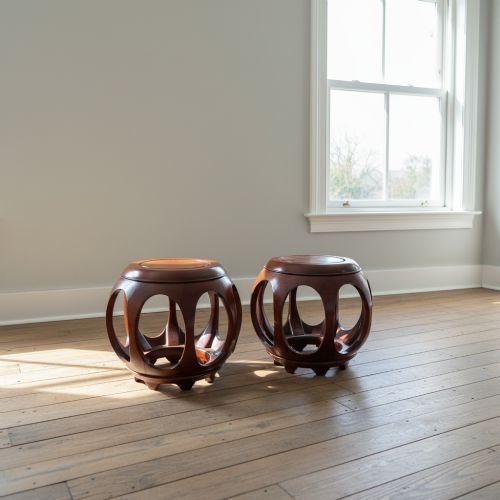
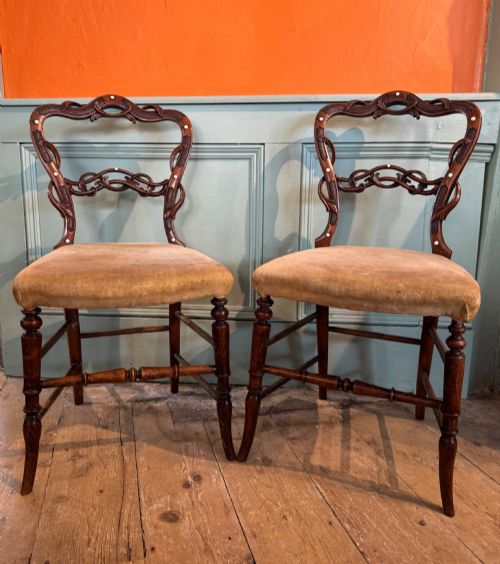
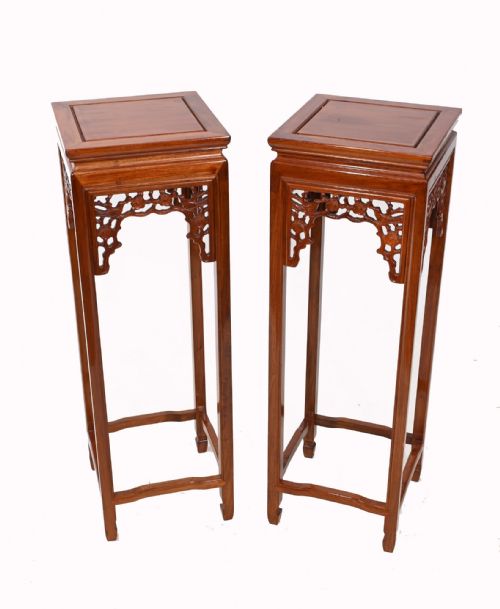
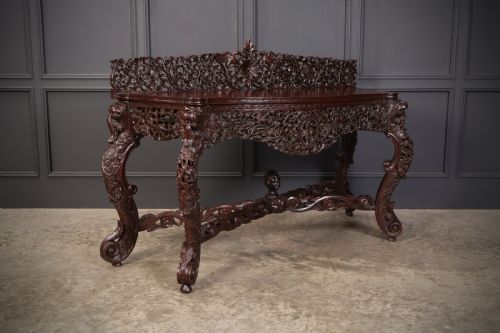


Openwork Carved Table
These openwork carved table examples combine intricate pierced decoration with dense timbers, offering both utility and strong visual presence for interiors.
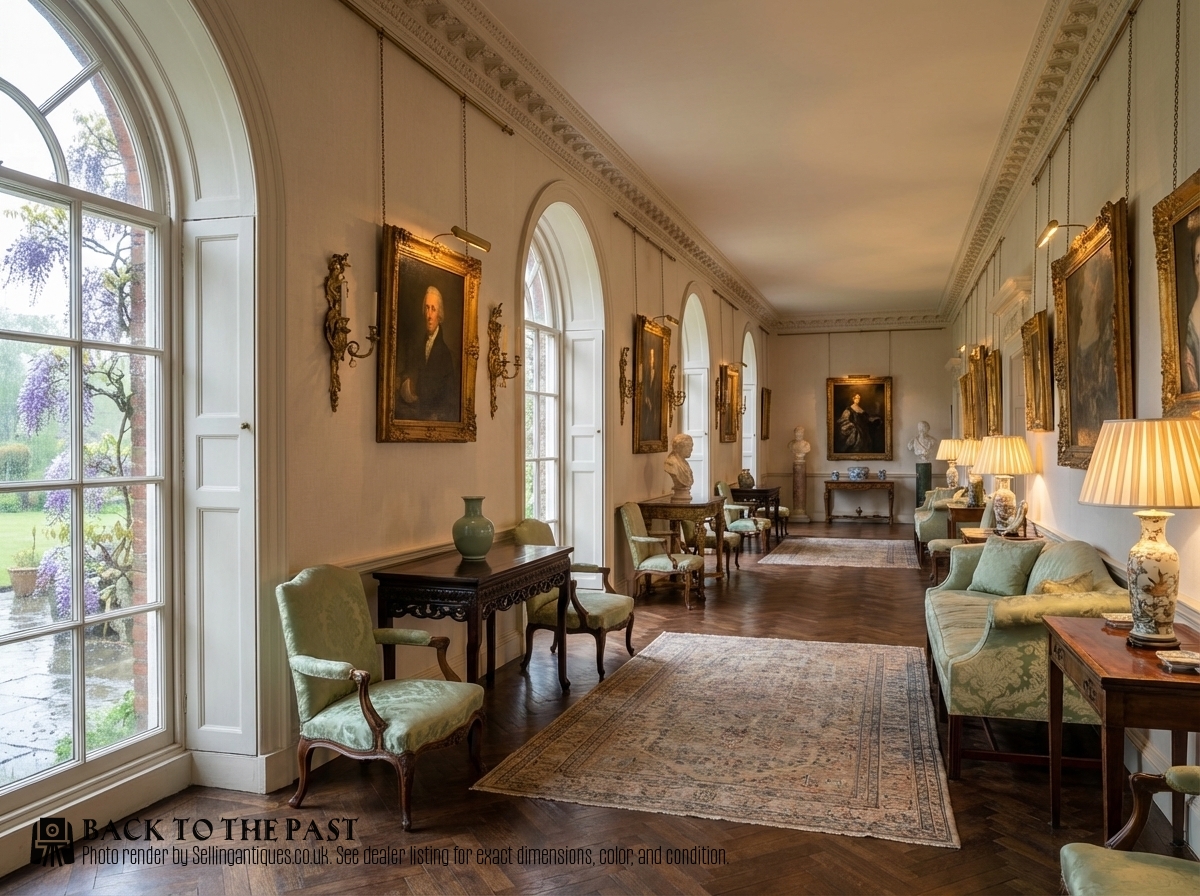
Openwork Carved Table
An openwork carved table is a surface shaped by pierced carving and decorative fretwork, appearing across several distinct geographical and historical traditions.
Buyers also encounter Anglo-Indian and Anglo-Burmese colonial pieces made from padauk or rosewood, bringing alternative decorative motifs to the category.
Materials and Construction
Cabinetmakers utilised heavy exotic timbers such as hardwood, hongmu, rosewood, and padauk, which provided the structural stability required for deep piercing.
The elaborate pierced patterns and relief work were executed entirely by hand, exploiting the grain and density of the wood to hold crisp edges without splintering.
Materials across the selection include hongmu, padauk, rosewood, elm, and burr wood, often deployed in console, altar, and nest table formats.
Judgments of Quality
Quality rests in the depth and crispness of the piercing, where superior examples maintain structural integrity alongside intricate negative space.
The choice of timber dictates the visual weight, with dense rosewoods and hongmu displaying finer grain definition than standard utility woods.
The Openwork Carved Table Glossary
- Openwork
- Wood carving that is pierced completely through to create a patterned negative space. This technique defines the visual lightness of the friezes.
- Hongmu
- A traditional Chinese term for dense red and dark hardwoods. It forms heavy, durable furniture with a high natural polish.
- Padauk
- A heavy exotic timber favoured in Burmese and colonial workshops. It possesses a rich reddish-brown hue and robust grain.
- Altar table
- A traditional Chinese furniture form featuring upturned ends and prolonged rectangular proportions. These pieces historically served ceremonial and display purposes.
- Nest of tables
- A graduated set of four tables designed to stack beneath one another. They offer flexible surface space when entertaining.
Openwork Carved Table: Frequently Asked Questions
What is an openwork carved table?
An openwork carved table is a wooden surface featuring pierced decoration where portions of the timber are completely cut away to form patterns. These items range from Chinese altar tables to Anglo-Indian console tables.
The style prioritises decorative surface work alongside practical utility, using dense woods to support the pierced framing.
How do I date these tables?
Dating relies on observing construction methods, timber choices, and stylistic traits associated with the nineteenth century and the Qing Dynasty. Pieces often reflect specific regional carving traditions from China or British colonial workshops.
Examining the underside and joinery helps determine the era of production.
Where should I place an altar table?
Altar tables suit narrow hallways, living room perimeters, or behind sofas due to their elongated rectangular proportions. Their decorative friezes demand a position where the pierced work remains visible.
Pairing them with minimal decor allows the carved woodwork to stand out.
How do I maintain padauk furniture?
Maintaining dense timbers involves dusting with a dry cloth and avoiding direct sunlight or rapid temperature shifts. Natural oils in woods like rosewood and padauk require little intervention beyond basic care.
Waxing should be done sparingly to prevent build-up on carved details.