


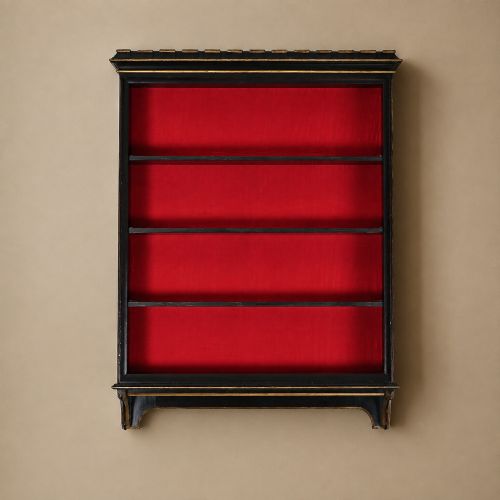
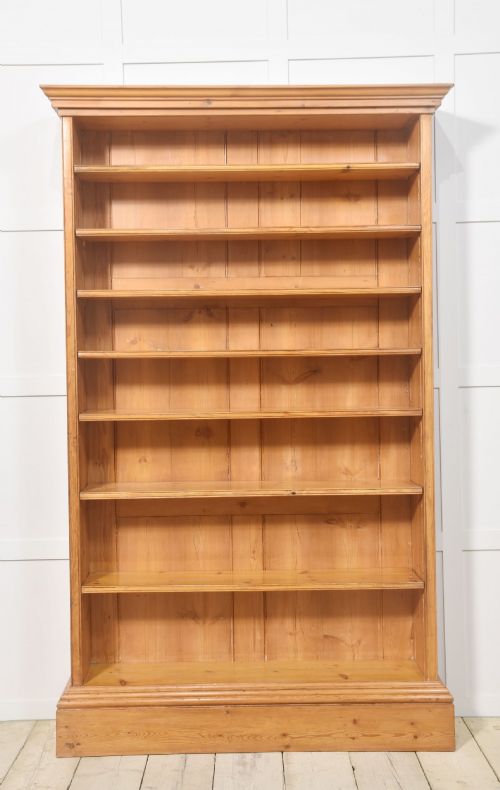
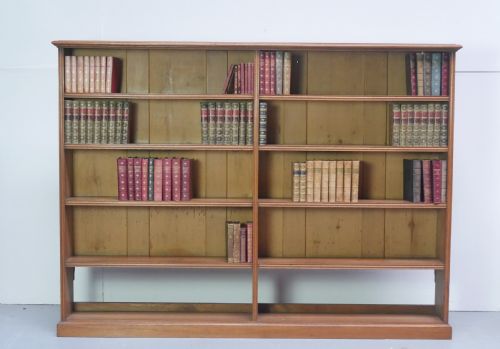


Open Wall Bookcase
An open wall bookcase offers practical storage and display for rooms of any scale, bringing character and order directly to your walls.
Open Wall Bookcase
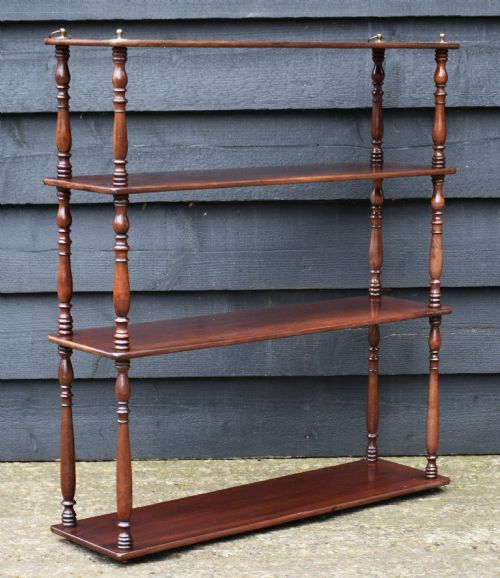
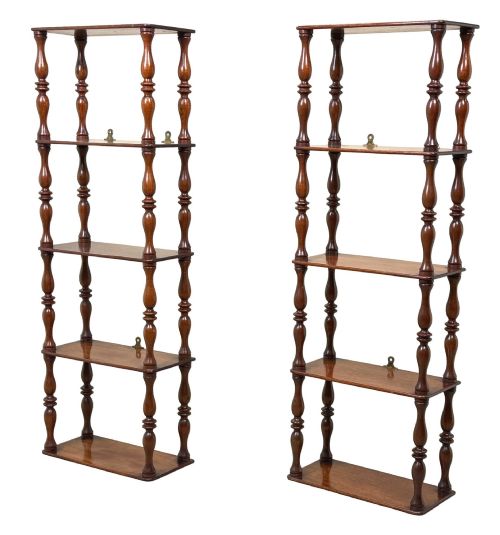
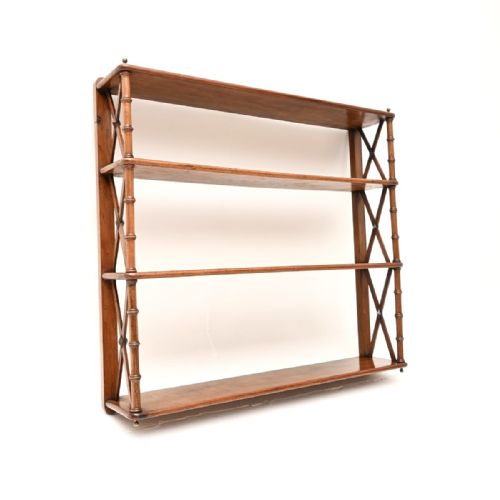
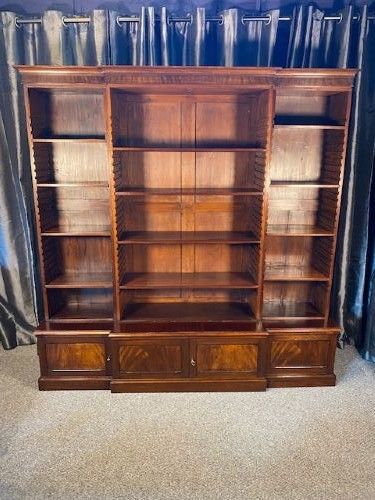
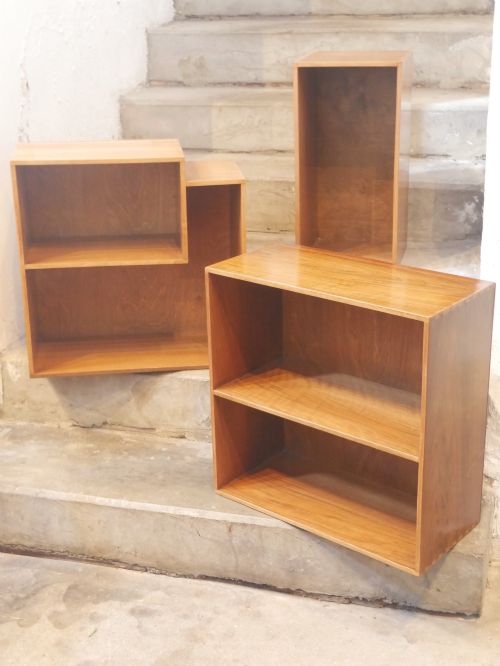
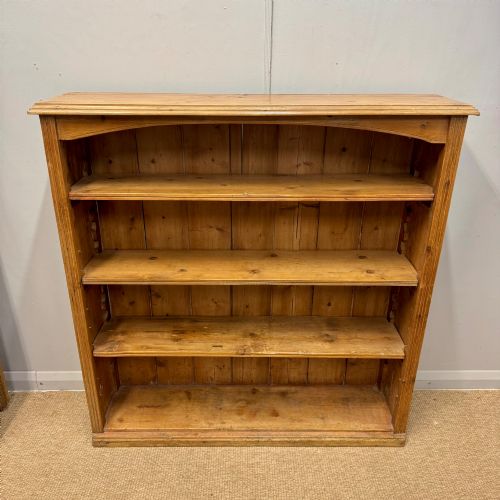
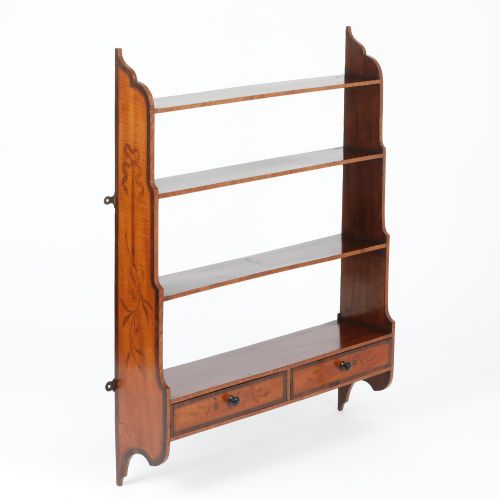
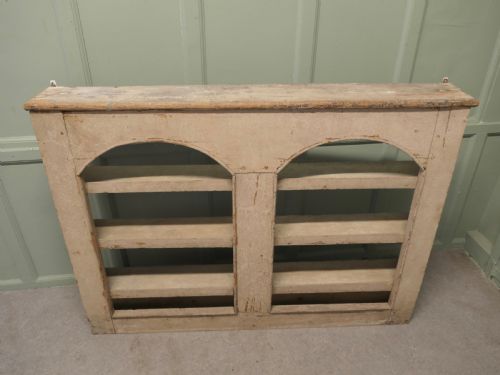
An open wall bookcase provides accessible shelving for books and display items without the heavy footprint of a full cabinet. These pieces range from compact hanging wall shelves to substantial wall-mounted shelving units suited for studies, sitting rooms, and libraries.
The versions most commonly found here date from the eighteenth, nineteenth, and early twentieth centuries, spanning Georgian, Victorian, and Edwardian eras. Makers utilised various formats including waterfall shelves, hanging cabinets, and alcove units to suit domestic interiors.
Materials vary widely across these periods, reflecting shifting tastes in domestic furniture. Buyers encounter traditional timbers alongside painted finishes and decorative details that mark distinct stylistic movements.
How They Were Made
Cabinet makers relied heavily on solid hardwoods like mahogany, walnut, oak, and satinwood, alongside softer timbers such as pine for painted or regional pieces. Construction often involved precise joinery to support the weight of books, with shelves frequently designed to be adjustable using wooden brackets or brass pins.
Surface treatments ranged from polished mahogany and waxed oak to painted, gilded, and ebonised finishes. Decorative elements included inlaid stringing, carved giltwood and gesso, and fine brass fittings, demonstrating the maker's skill in ornamenting functional furniture.
Listings feature items spanning the Georgian, Victorian, Edwardian, and mid-century periods, constructed from mahogany, walnut, oak, pine, satinwood, and iron.
What Varies in Quality
Quality rests upon the choice of timber and the precision of the construction. Superior examples display carefully figured wood grains, robust structural joints, and refined mouldings that remain stable over centuries of use.
George Edmund Street·Heals
The Open Wall Bookcase Glossary
- Etagere
- A piece of furniture consisting of a set of open shelves for displaying small objects. These open frameworks often hung on walls or stood independently in reception rooms.
- Waterfall bookshelves
- Shelves arranged in a graduated stepped tier where each level is narrower than the one below. This design originated in the Georgian period and remained popular through the Victorian era.
- Whatnot
- A multi-shelf open cabinet used for displaying ornaments and books. They appear frequently in Victorian and Edwardian interiors.
- Gesso
- A plaster-like mixture applied to wood surfaces as a base for gilding or painting. It allowed makers to carve intricate decorative motifs onto Victorian display shelves.
Open Wall Bookcase: Frequently Asked Questions
How do I hang a heavy wall bookcase?
Heavy wall-mounted bookcases require secure fixing directly into structural wall studs or solid masonry using appropriate weight-bearing brackets. Professional installation ensures the piece safely bears the substantial load of stacked volumes.
Older shelves may require supplementary internal battens or modern concealed fixings to distribute weight evenly without straining historic timber joints.
How do I distinguish Georgian from Victorian shelves?
Georgian shelves typically display restrained classical proportions, rectilinear mahogany construction, and minimal ornamentation such as subtle brass supports or simple reined cornices. The focus remained squarely on clean architectural lines and fine timber selection.
Victorian pieces often introduce bolder styling, including Gothic revival ebonisation, carved giltwood, turned spindles, and more complex tiered arrangements like etageres and whatnots.
Can these bookcases be mounted in alcoves?
Alcove shelving units and specifically adapted wall bookcases fit neatly into chimney breast recesses to maximise awkward domestic spaces. Measuring both the width and depth of the recess precisely ensures the piece sits flush against the wall.
Many nineteenth-century pine and oak units were constructed specifically for domestic alcoves, offering built-in utility combined with open display.