

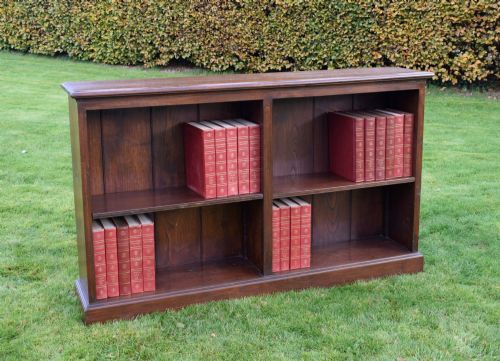
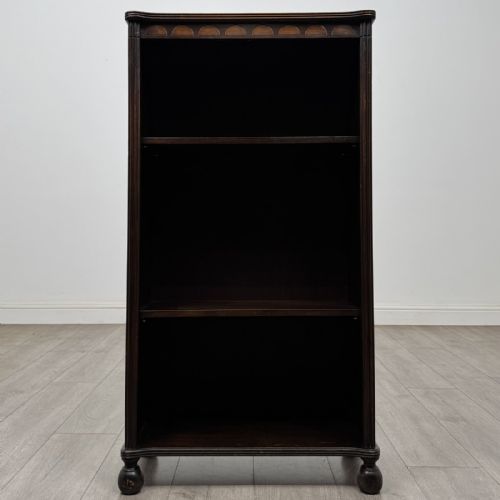
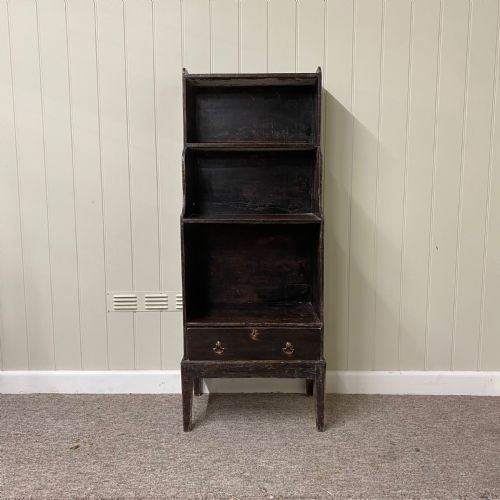
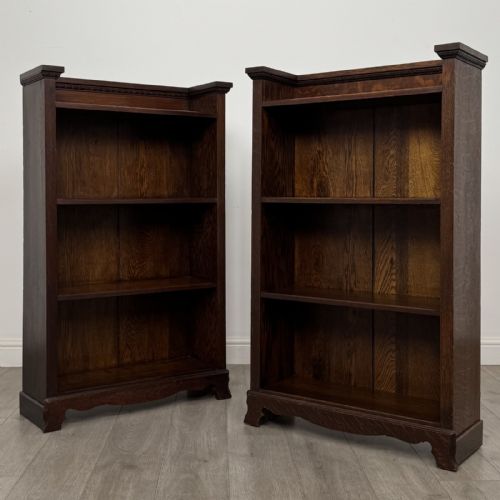
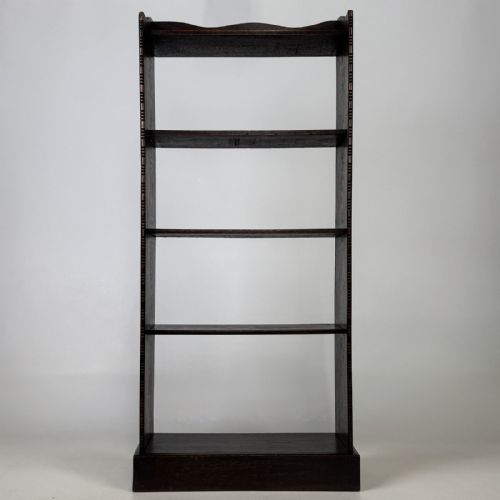
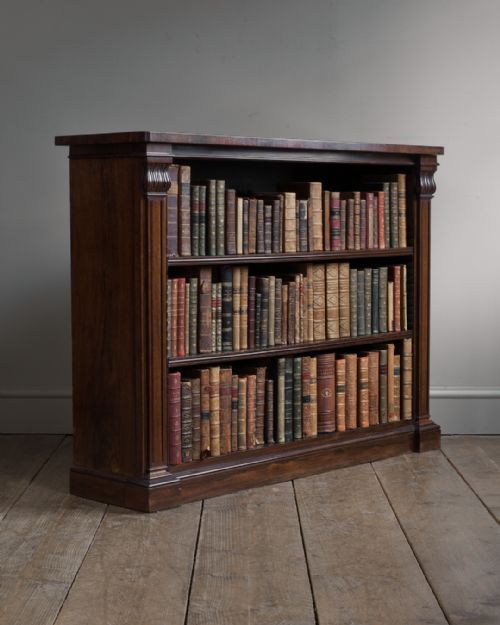
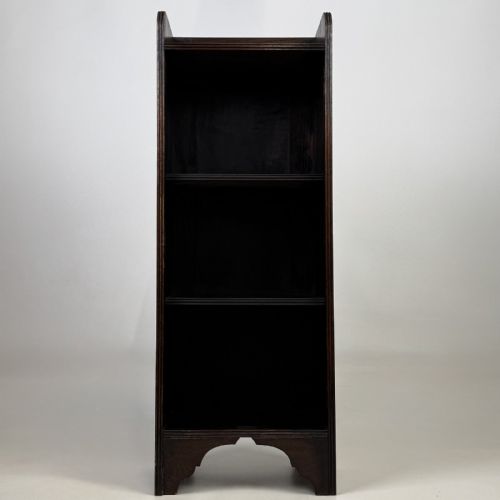
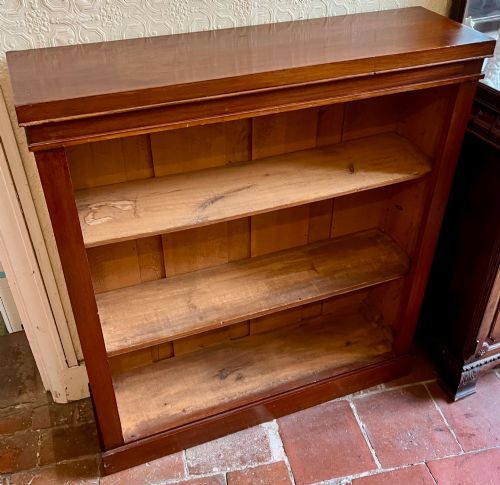
Open Standing Shelves
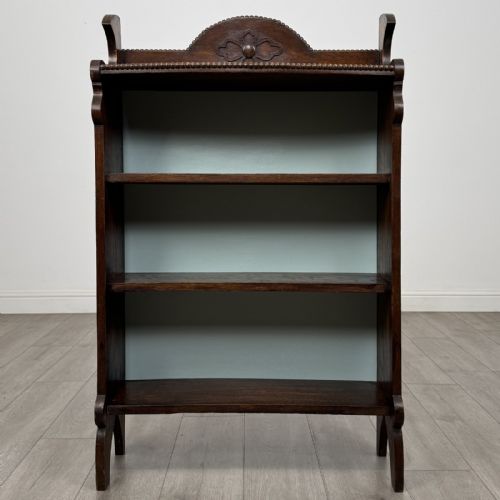
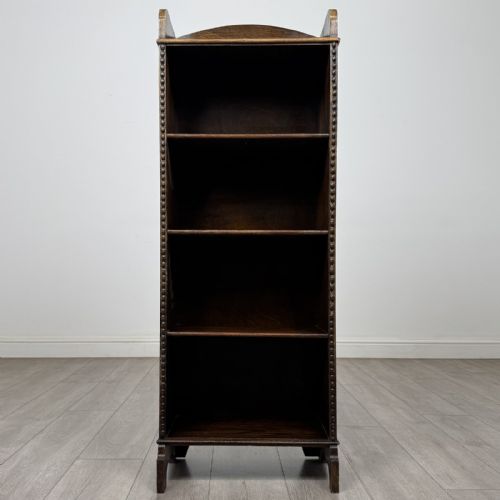
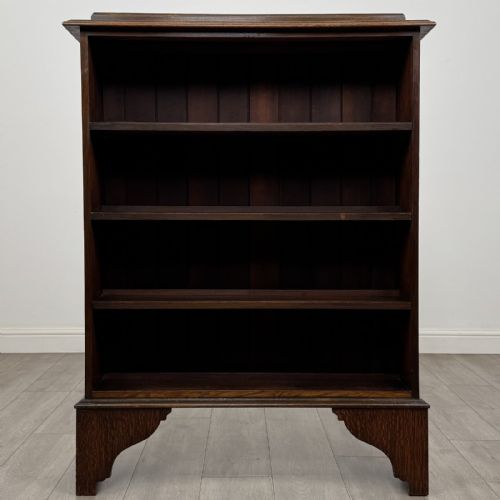
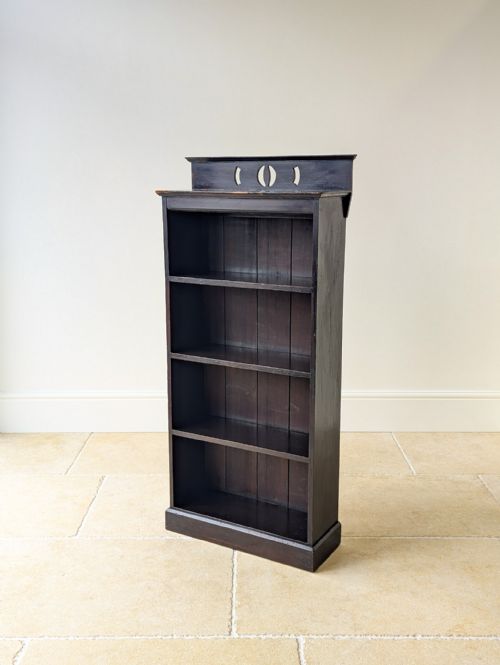
Open standing shelves bring accessible vertical storage to a room, ranging from simple oak bookcases to tiered what-nots.

Open Standing Shelves
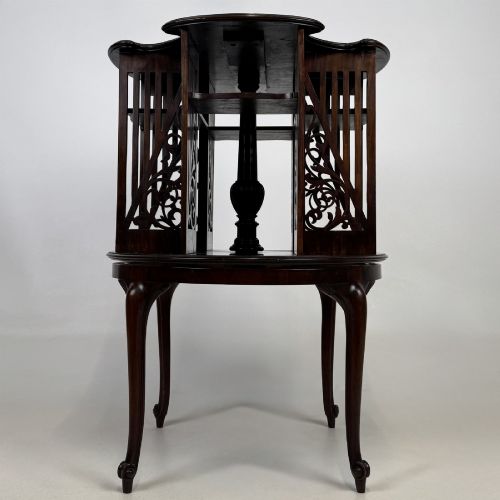
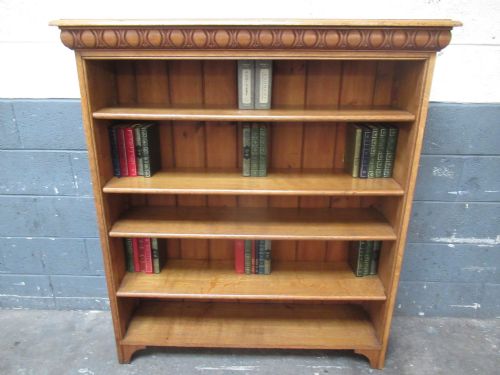
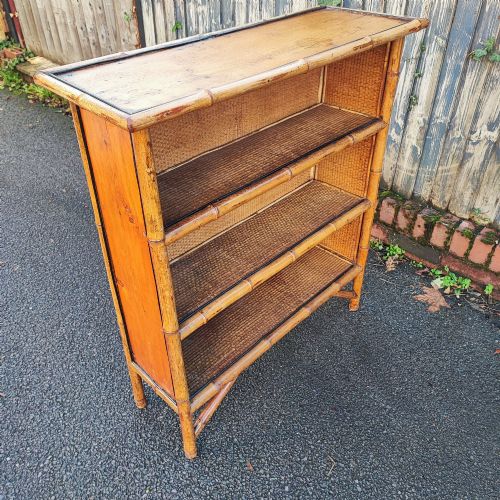
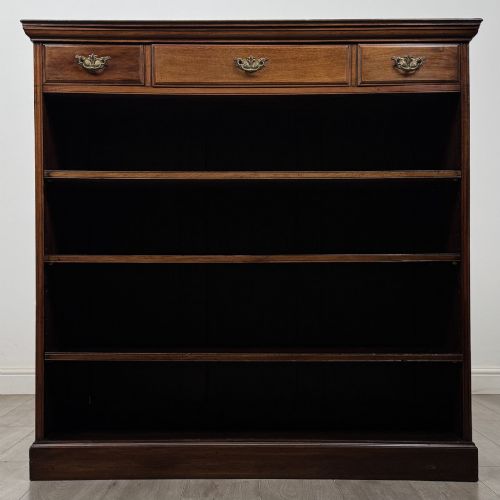
Open standing shelves encompass open bookcases, what-nots, etageres, and tiered stands designed to stand directly on the floor without enclosed doors.
The versions met most frequently on this page span the Victorian and Edwardian periods, constructed primarily in oak and mahogany, alongside Georgian and Regency pieces.
Forms vary from narrow and tall oak shelving units to multi-tiered mahogany waterfall bookcases and serpentine burr walnut what-nots.
How they were made
Timbers such as oak, mahogany, walnut, rosewood, and pine form the primary structure of these freestanding pieces, often shaped with tiered platforms or open shelving bays.
Construction details include adjustable shelves, barley twist supports, inlaid veneers, and additions like brass castors on floor-standing units.
Open Standing Shelves Retail Price Guide 2026
Typical asking prices for open standing shelves among the pieces listed under this phrase on Sellingantiques today, from the lower quarter to the upper quarter. They describe what is for sale here now, not the wider market.
Some pieces roll about on brass castors, ready to chase your reading habits from room to room.
What varies in quality
Quality rests upon the selection of timbers, such as burr walnut or figured mahogany, and the refinement of carving, beading, and inlay work.
Waring & Gillow·Gabriel Viardot
The Open Standing Shelves Glossary
- What-not
- A multi-tiered piece of furniture designed for displaying ornaments, books, or small objects, appearing in various forms from the Georgian period onward.
- Waterfall bookcase
- A tiered open bookcase where each successive shelf steps back from the one below it, creating a cascading profile.
- Etagere
- A piece of furniture consisting of a series of open shelves for displaying small articles, closely related to the what-not.
- Barley twist
- A type of turned furniture leg or support resembling a twisted rope, commonly found on Victorian pieces.
- Serpentine
- A curved line of furniture shaping that undulates inward and outward, seen on finer Victorian and Georgian pieces.
Open Standing Shelves: Frequently Asked Questions
Where should I place open standing shelves?
These freestanding pieces suit studies, living rooms, and hallways where books and display items require accessible vertical storage.
Positioning them away from direct heat sources protects the timber, whether dealing with dark oak, mahogany, or walnut surfaces.
How do I style open shelves?
Balance books of varying heights with decorative objects, ceramics, or small framed pieces across the available tiers.
Leaving breathing room between items highlights the wood grain and structural details of the particular piece.
Are the shelves adjustable?
Many examples feature fixed shelves, though certain editions include adjustable shelf mechanisms to accommodate different book sizes.
Checking the internal configuration helps determine how volumes of varying heights will fit onto the tiers.
How do I tell Victorian from Edwardian pieces?
Victorian examples frequently display denser timbers, rich mahogany, carved details like barley twists, and heavier proportions.
Edwardian editions tend towards lighter oak construction, simpler lines, and practical forms suited to domestic spaces of the early twentieth century.