
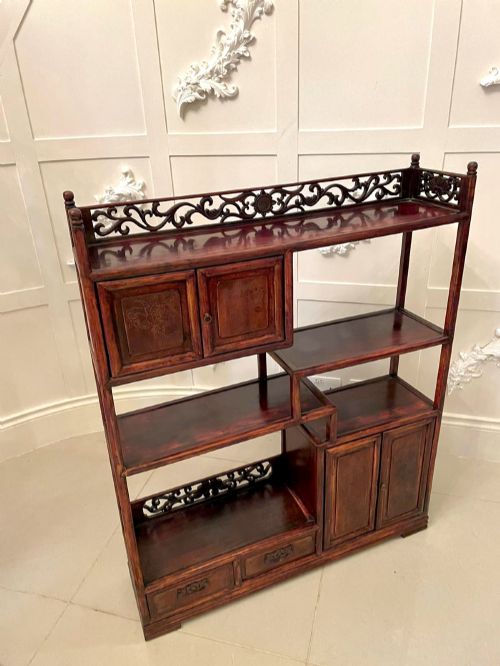
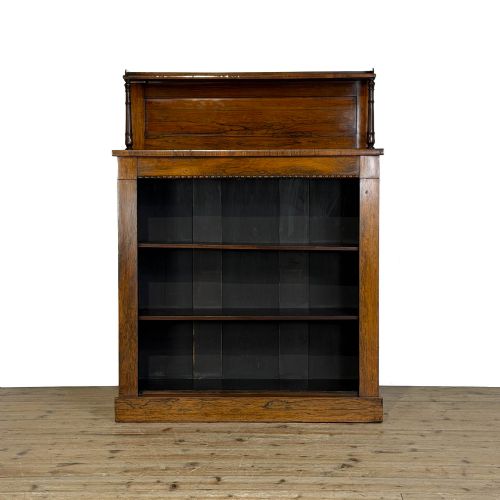
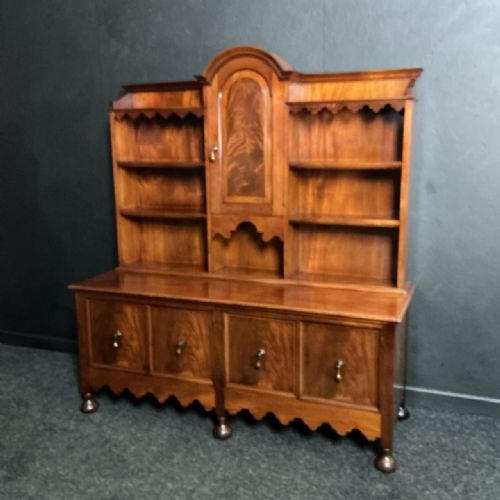
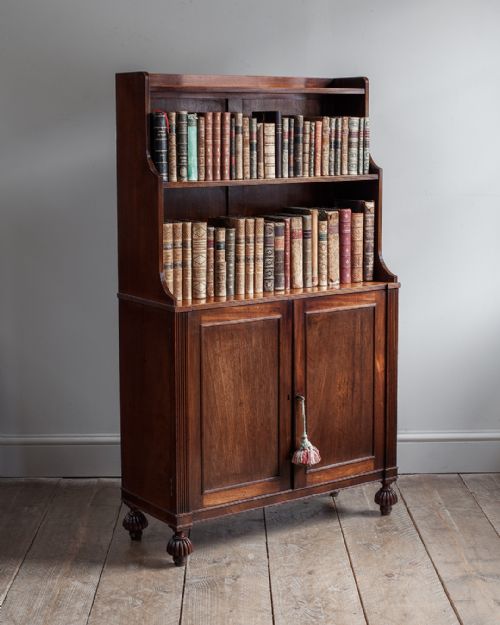


Open Shelf Display Cabinet
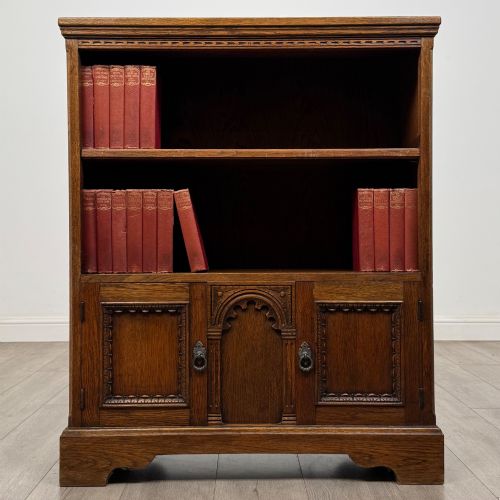
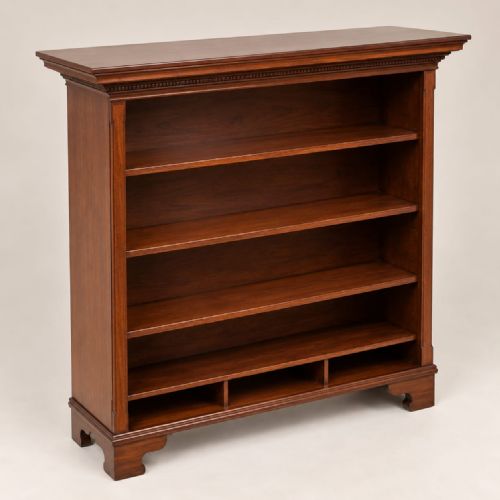
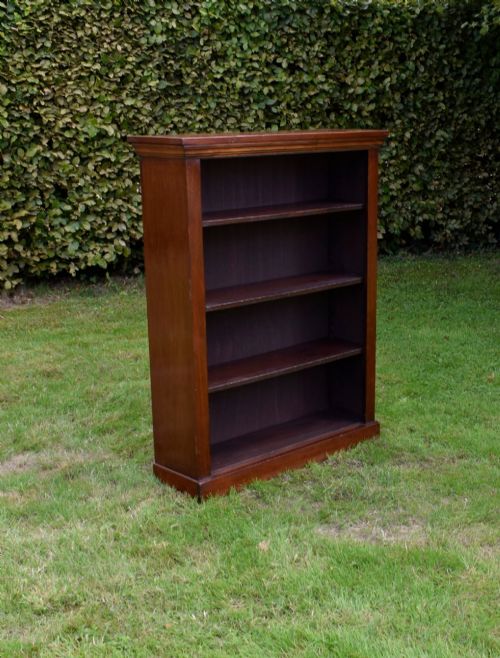
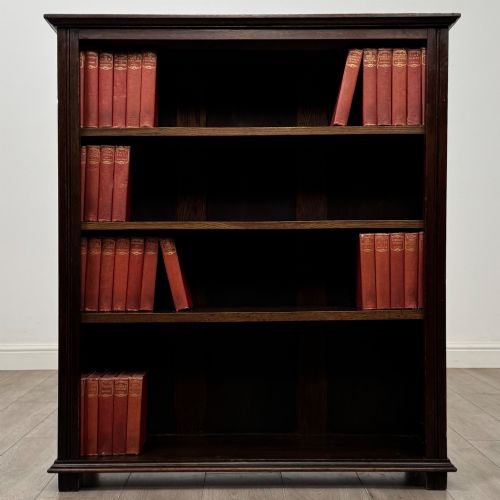
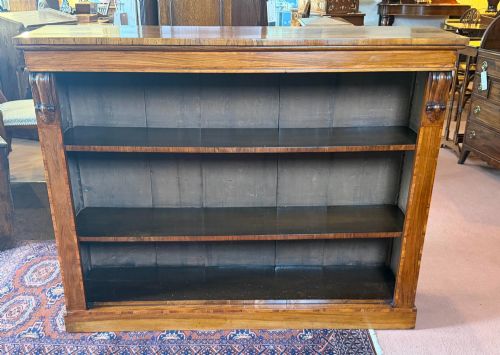
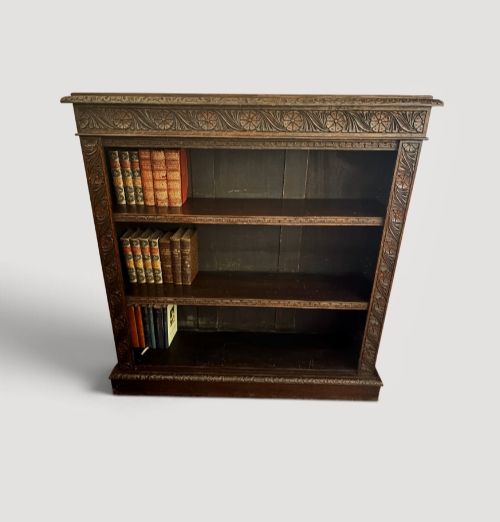
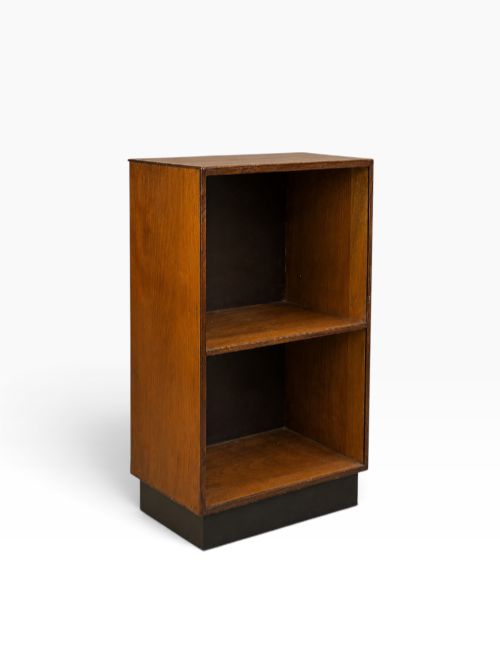
When you search for open shelf display cabinet, you find timber bookcases, credenzas, and etageres built to hold books and objects.
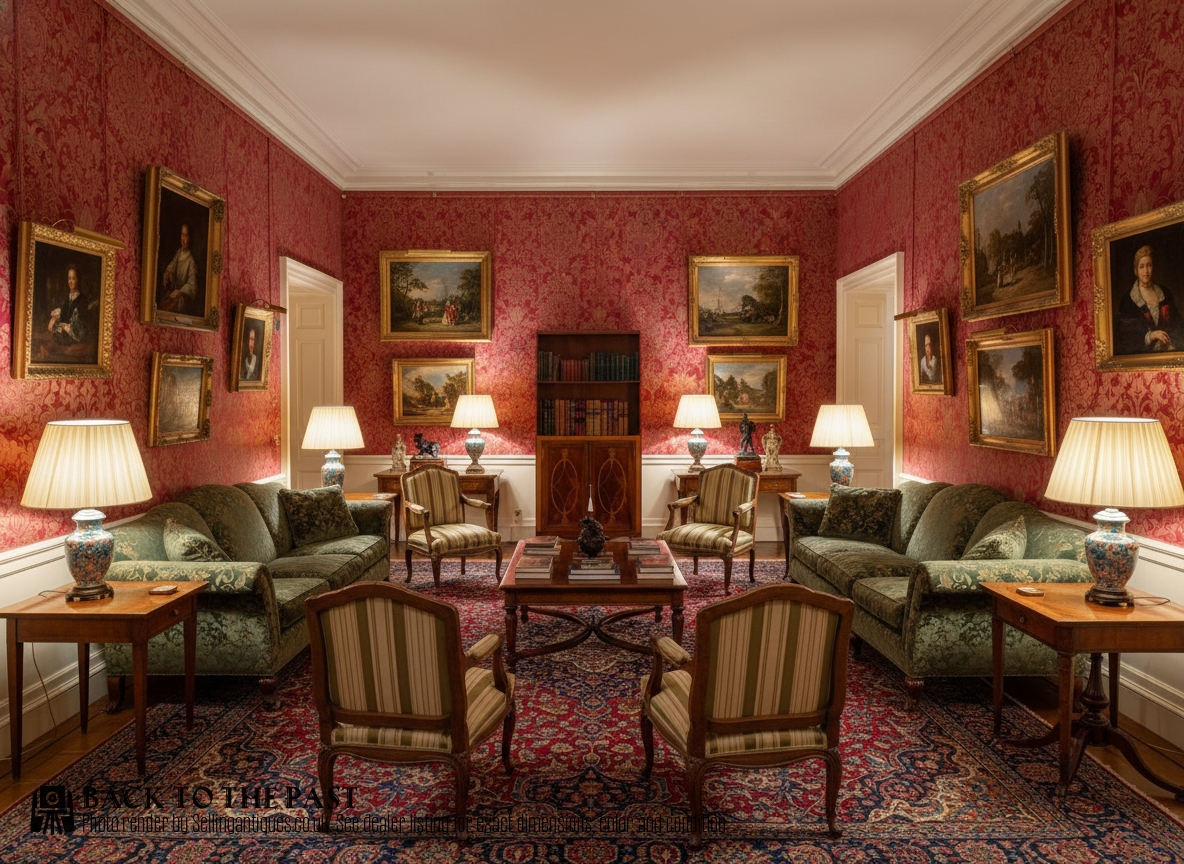
Open Shelf Display Cabinet
An open shelf display cabinet brings together domestic storage and visible display, using open shelving alongside enclosed cupboards or glass vitrines. Pieces matching an open shelf display cabinet appear across the nineteenth and twentieth centuries, spanning Victorian, Edwardian, and Art Deco periods.
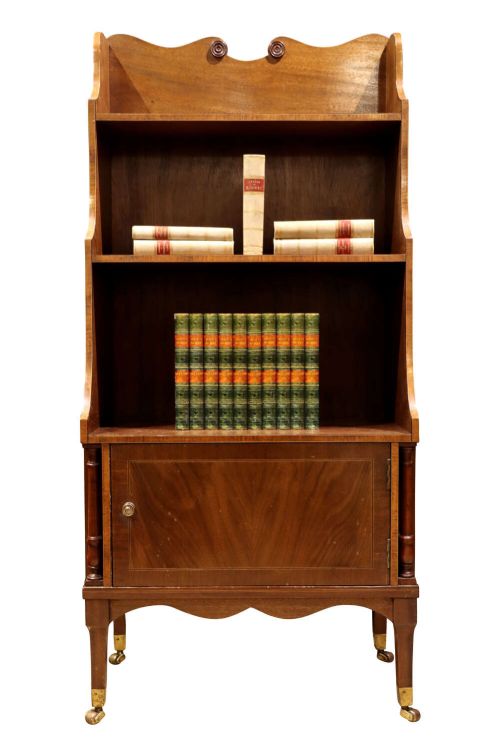
The forms on this page include open bookcases, waterfall bookcases, corner shelves, dressers, and music cabinets. Oak and mahogany dominate the listings, alongside walnut, rosewood, pine, and exotic hardwoods like satinwood and teak.
Makers and origins stretch from English workshops to French provincial pieces and Chinese hardwood furniture. Buyers meet everything from rustic pine country shelving to formal Victorian burr walnut credenzas with brass and ormolu mounts.
How they were made
Cabinet makers used solid timbers and veneers, building structural carcasses in oak, mahogany, walnut, and pine. Decorative surfaces often relied on burr walnut figures, ash grain, or painted finishes, occasionally complemented by applied brass castors and ormolu mounts.
Construction techniques evolved from traditional joined shelving to sophisticated waterfall tiers and multi-section breakfront forms. Details such as carved woodwork, inlay work, and mirrored doors reveal the handwork typical of nineteenth and early twentieth century workshops.
Materials span oak, mahogany, walnut, rosewood, pine, ash, satinwood, and teak, reflecting diverse cabinetmaking traditions.
What varies in quality
The division between standard utility furniture and high workshop production rests on timber selection and cabinetmaking refinement. Pieces featuring figured burr walnut, matched satinwood veneers, or integrated ormolu show a higher grade of craftsmanship than plain pine storage.
Proportion and functional integration also define quality, seen in adjustable shelving systems, balanced waterfall tiers, and crisp carved details rather than simple assembly. The presence of named makers or distinct regional styles elevates the standing of a piece.
Gabriel Viardot·Heals·Gillows
The Open Shelf Display Cabinet Glossary
- Waterfall bookcase
- A tiered shelving unit where each successive shelf steps back from the one below it. This form became popular during the Regency and Victorian periods.
- Credenza
- A low dining room sideboard or cabinet, frequently featuring mirrored doors and ormolu mounts. Victorian examples often incorporate open shelving ends.
- Etagere
- A piece of furniture consisting of a set of open shelves for displaying small objects or ornaments. These emerged strongly in French and English nineteenth-century interiors.
- Shodona
- A Japanese-influenced display cabinet featuring asymmetrical shelving and compartments. They reflect the nineteenth-century European fascination with Eastern design.
- Ormolu
- Gilded bronze mounts applied as decorative highlights on nineteenth-century cabinets and credenzas. This technique enhances the formal appearance of walnut and mahogany furniture.
Open Shelf Display Cabinet: Frequently Asked Questions
What is an open shelf display cabinet used for?
These cabinets serve to store books while displaying decorative objects, ceramics, and curiosities on open tiers.
They function as practical storage and decorative focal points in sitting rooms, studies, and dining spaces.
How do I date a Victorian bookcase?
Dating relies on timber choices, such as burr walnut or rosewood, combined with construction methods and decorative styles like ormolu mounts or carved oak.
Cabinet hardware, timber patination, and shelf adjustability mechanisms also provide clues to the manufacturing decade.
Are these cabinets suitable for small rooms?
Many variations, including corner shelves, petite waterfall bookcases, and narrow etageres, fit comfortably into compact spaces.
Their open shelving reduces visual bulk while offering practical vertical storage.
What is the difference between an etagere and a bookcase?
An etagere is primarily designed for displaying ornaments and small decorative objects across open tiers.
A bookcase focuses on storing volumes, though many Victorian and Edwardian examples combine both functions.