


Open Arm Sofa
An open arm sofa brings architectural timber frames and upholstered comfort together, offering a stately seat with exposed woodwork.
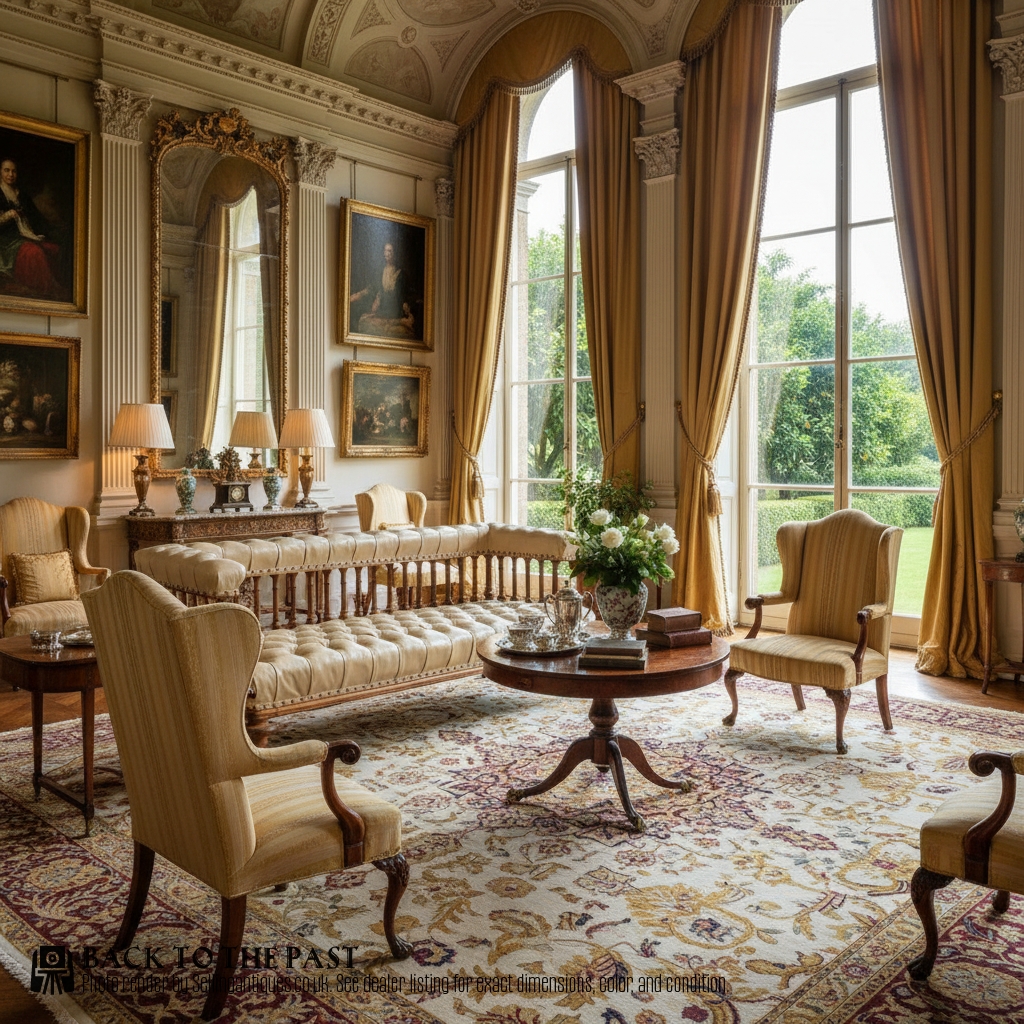
Open Arm Sofa
An open arm sofa provides a sturdy timber framework with exposed arms flanking an upholstered seat and backrest. When you search for an open arm sofa, you encounter a range of nineteenth-century forms including large library models and multi-seat settees.
Makers and makers' styles range from Biedermeier interpretations to French Rococo and Louis-inspired pieces. Settees and chair-back variations dominate the available selection alongside traditional library daybeds.
Materials and construction
Carpenters utilised dense hardwoods including mahogany, walnut, oak, and maple to construct the load-bearing frames. These structural timbers support intricate hand-carved details and inlaid satinwood accents.
Upholstery relies on traditional textiles such as velvet, leather, and patterned fabric secured over sprung or padded seat foundations. Gilding and painted finishes adorn specific decorative wooden frames.
Brass castors and fittings appear on feet to assist mobility, while gold leaf highlights accentuate carved mouldings on revival pieces.
Open Arm Sofa Retail Price Guide 2026
Typical asking prices for open arm sofa among the pieces listed under this phrase on Sellingantiques today, from the lower quarter to the upper quarter. They describe what is for sale here now, not the wider market.
Some nineteenth-century makers evidently decided that sitting upright wasn't enough, inventing chair-back settees that made three people share one wooden spine.
Assessing craftsmanship and condition
The refinement of the timber carving distinguishes standard frames from exceptional examples. Crisp lines on shield-back and chair-back designs indicate skilled hand-tooling by the cabinetmaker.
The integrity of the exposed wooden arm supports and joints determines structural longevity. Superior upholstery retains supportive tension within the fabric and padding.
Howard and Sons
The Open Arm Sofa Glossary
- Chair-back settee
- A seating form featuring multiple backrest sections joined in a continuous line, resembling several chairs linked together.
- Shield-back
- A distinctive Hepplewhite chair or settee backrest shape resembling the outline of a defensive shield.
- Gilt
- A thin layer of gold leaf applied to the surface of wood or gesso to impart a decorative metallic finish.
- Biedermeier
- A Central European style characterised by utilitarian comfort, clean lines, and minimal ornamentation using native timbers.
- Aesthetic Movement
- A late nineteenth-century design ethos prioritising visual beauty and artistic expression over historical revivalism.
Open Arm Sofa: Frequently Asked Questions
How do I identify a Howard style sofa?
Howard style pieces typically exhibit low, generous proportions and distinctive upholstered arms designed for comfort. Look for deep seating areas paired with turned wooden legs and brass castors.
Attributions often point to late nineteenth-century workshop standards, where makers combined substantial frames with quality horsehair stuffing and ticking covers.
What is the difference between a settee and a sofa?
Settees historically reference narrower, lighter wooden-framed seats, often featuring exposed chair-back structures or open timber arms. Sofas traditionally offer heavier, fully upholstered bodies built for lounging.
In nineteenth-century listings, the terms frequently overlap, particularly regarding open arm designs that incorporate settee proportions.
Where should I place an open arm sofa in a room?
Open arm sofas suit drawing rooms, studies, and libraries where the exposed timber frame can be viewed from multiple angles. Their open sides prevent visual bulk in smaller spaces.
Pair them with a central coffee table or position them perpendicular to a fireplace to showcase the carved armrests and woodwork.
How do I care for antique wood and upholstery?
Maintain timber frames by dusting with a dry cloth and occasionally applying suitable beeswax to nourish polished mahogany or walnut surfaces. Protect exposed gilt and painted details from direct sunlight.
Professional cleaning preserves delicate textiles such as antique velvet and patterned fabrics without compromising the underlying padding.