
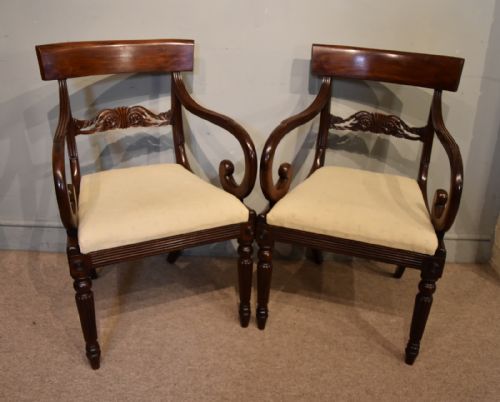
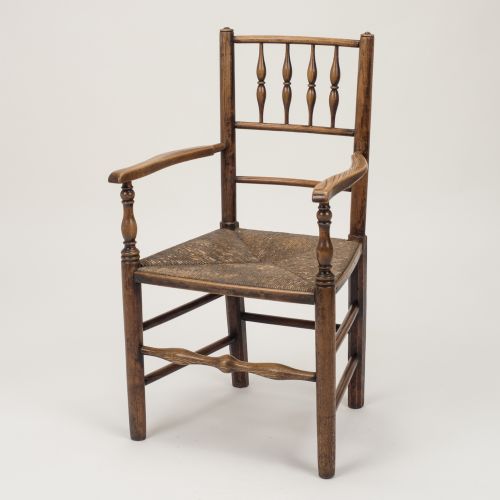
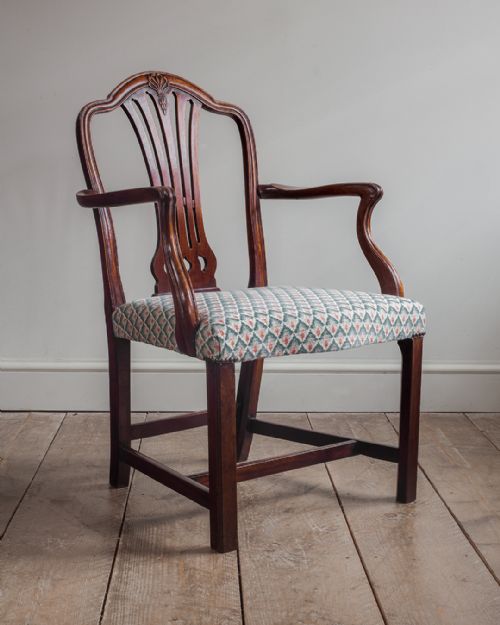


Open Arm Dining Chairs
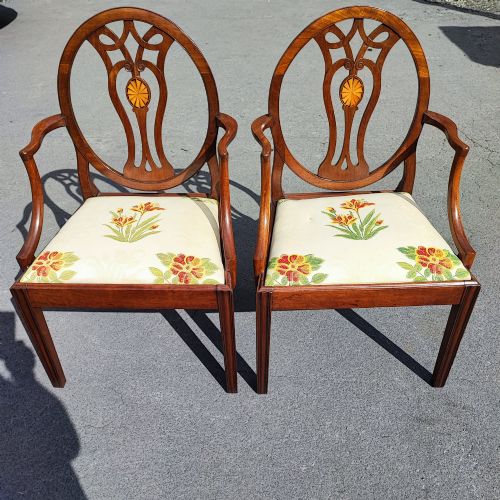
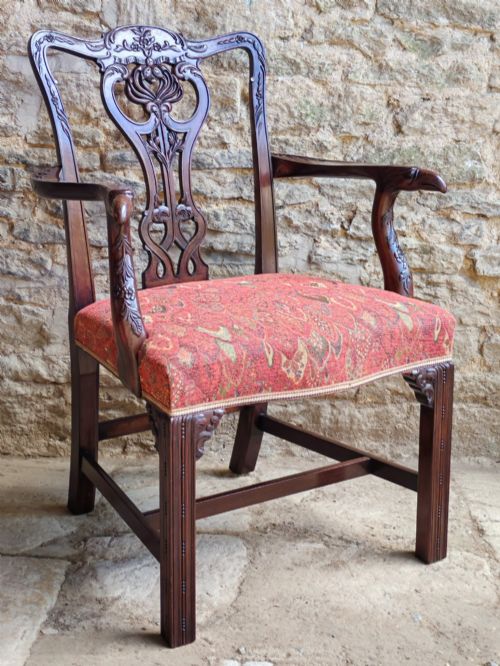
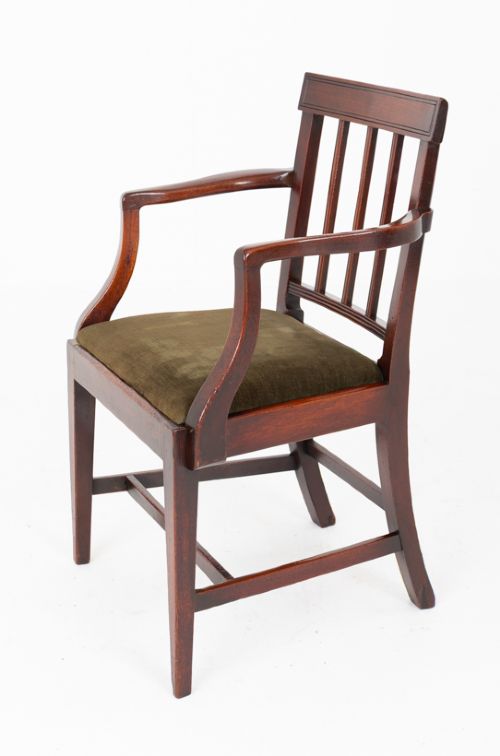
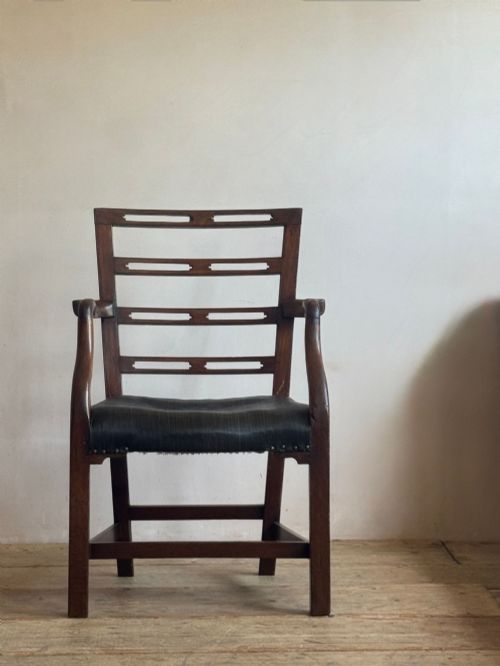
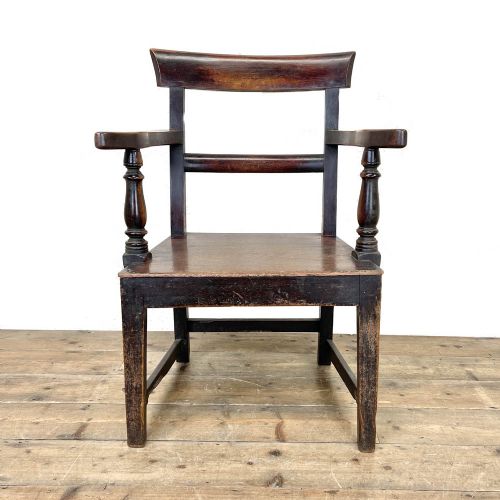
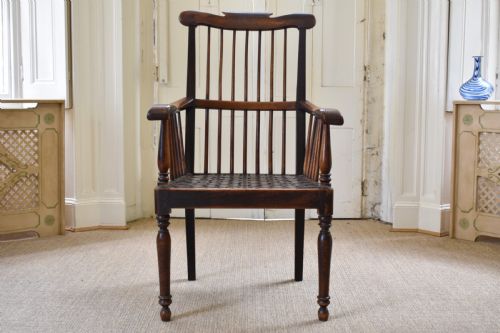
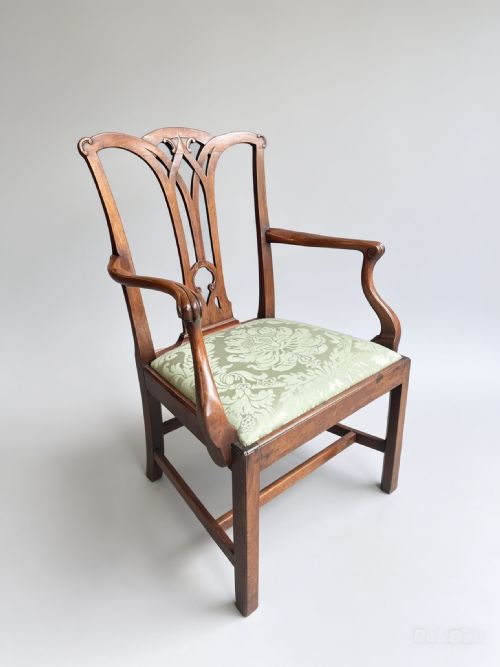
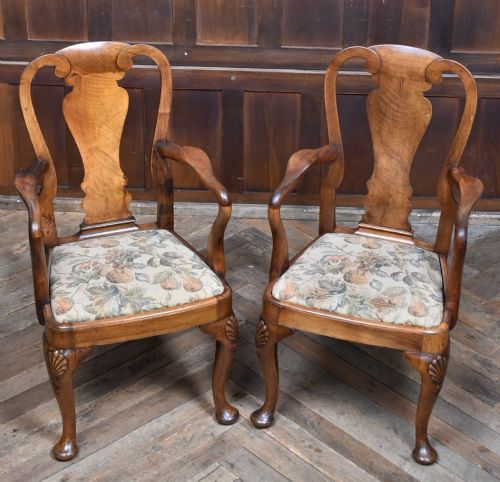
Open arm dining chairs bring substantial presence to the table, offering structural timber frames alongside upholstered seats designed for sustained comfort.
Open Arm Dining Chairs
Open arm dining chairs are seating forms featuring supportive side rests, frequently designated as carvers, elbow chairs, or armchairs across various historical periods. When searching for open arm dining chairs, buyers encounter pieces ranging from formal Georgian and Regency mahogany examples to vernacular country designs in elm, ash, and laburnum.
The selection encompasses original eighteenth-century productions alongside nineteenth-century interpretations, Edwardian iterations, and later revival styles. Dining configurations often pair these larger armchairs with matching single side chairs around a central table.
Origin points span English urban workshops and country districts, alongside French country pieces and occasional examples with Chinese lacquer or broader continental influences. Forms vary from ladder-back frames and Gothic Chippendale interpretations to Sheraton-style inlays and heavy William IV proportions.
How they were made
Makers utilised dense native and imported timbers, predominantly mahogany, oak, walnut, elm, and ash, building rigid skeletal frameworks joined by traditional mortise and tenon construction. Turned components, carved splats, and barley twist members provide structural support and decorative articulation.
Upholstery techniques involved drop-in seats, webbed foundations, and squab cushions covered in leather, velvet, fabric, or rush. Detail elements such as brass fittings, painted surfaces, and subtle string inlay completed the construction of finer urban dining seats.
Open Arm Dining Chairs Retail Price Guide 2026
Typical asking prices for open arm dining chairs among the pieces listed under this phrase on Sellingantiques today, from the lower quarter to the upper quarter. They describe what is for sale here now, not the wider market.
The inventory spans the eighteenth, nineteenth, and early twentieth centuries, featuring mahogany, oak, elm, rush, and leather.
What varies in quality
Quality separates in the crispness of hand-carved details, the selection of figured timber veneers, and the integrity of the underlying joinery. Superior examples retain original timber surfaces with minimal intervention and demonstrate balanced proportions between the open arms and the upright frame.
Subtleties in stylistic adherence - such as the precise execution of Chippendale pierced splats or Hepplewhite shield backs - distinguish master workshop output from later revival volume production.
Howard and Sons
The Open Arm Dining Chairs Glossary
- Carver chair
- An armchair designed to sit at the head of a dining table or accompany a set of side chairs. These pieces feature structural arm supports.
- Elbow chair
- An alternative term for an armchair, often describing seats intended for drawing rooms, studies, or dining settings with shorter arm heights.
- Splat
- The vertical wooden strip down the centre of a chair back, frequently pierced or carved in styles associated with Chippendale and Hepplewhite designs.
- Rush seat
- A seating surface woven from dried marsh plants, commonly found on country vernacular chairs and early nineteenth-century rush-seated armchairs.
- Barley twist
- A decorative turning technique resembling a twisted rope, utilised on the structural legs and stretchers of nineteenth and early twentieth-century chairs.
- String inlay
- Fine, contrasting lines of wood veneer inlaid into channels in the primary timber, characteristic of Sheraton and revival cabinet work.
Open Arm Dining Chairs: Frequently Asked Questions
What is an open arm dining chair?
An open arm dining chair is a seated furniture form featuring lateral supports for the arms, leaving the space beneath the armrests open rather than enclosed. These pieces traditionally functioned as carver chairs positioned at the head and foot of a dining table.
They combine the supportive posture of an armchair with the appropriate height and scale for dining use. The category includes formal eighteenth-century mahogany designs and vernacular country chairs alike.
How do I use them in a modern dining room?
These chairs work effectively when placed at the head and foot of a dining table, paired with simpler armless side chairs along the sides. This arrangement creates a balanced look while providing comfortable seating for hosts or principal guests.
They also function well as individual accent seating in studies, bedrooms, or drawing rooms when not gathered around a table. Their distinct timber frames and upholstery add visual weight to a room.
How do I distinguish between Georgian and revival periods?
Original Georgian pieces display the distinct tool marks, timber oxidation, and construction methods characteristic of eighteenth-century workshop production. The joinery, timber shrinkage, and wear patterns reflect genuine age and continuous historical use.
Revival pieces, produced during the nineteenth and twentieth centuries, often employ machine-assisted manufacturing, standardised hardware, and cleaner timber surfaces. They imitate earlier styles like Chippendale or Queen Anne while exhibiting the industrial capabilities of their actual period of manufacture.
What timber types should I look for?
Mahogany dominates formal urban dining chairs across the Georgian and Regency periods, valued for its stability and rich dark colour. Walnut appears frequently in earlier styles and later revival pieces.
Country versions typically utilise regional timbers such as elm, ash, laburnum, and oak. These native woods provide robust framing for vernacular ladder-back and rush-seated armchairs.