




Opaline Glass Shade Lamp
Opaline glass shade lamps bring a soft, diffused glow to a room through their milk-white translucent glass shades paired with metal mounts.
Opaline Glass Shade Lamp
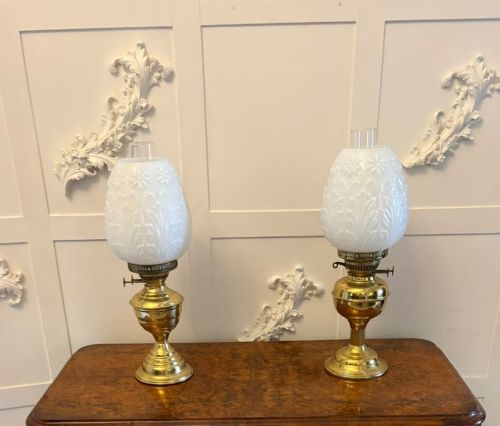
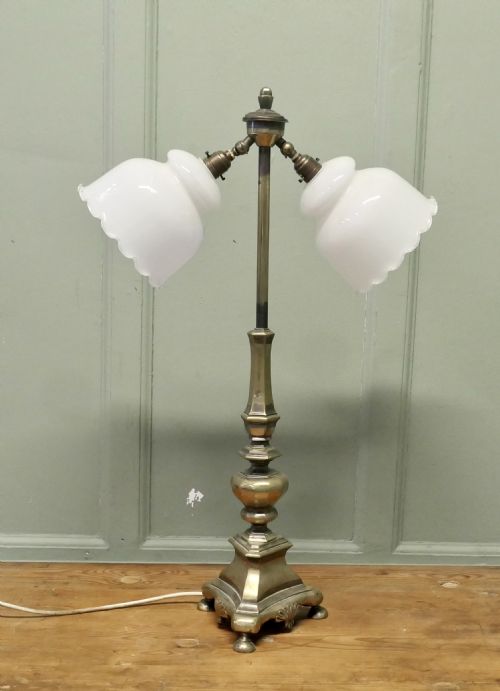
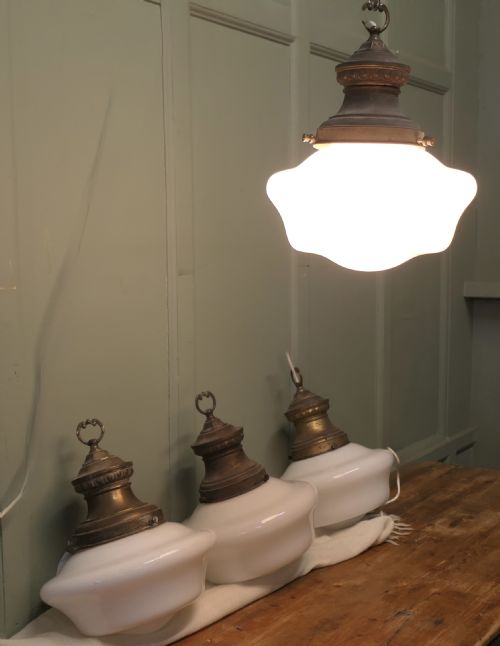
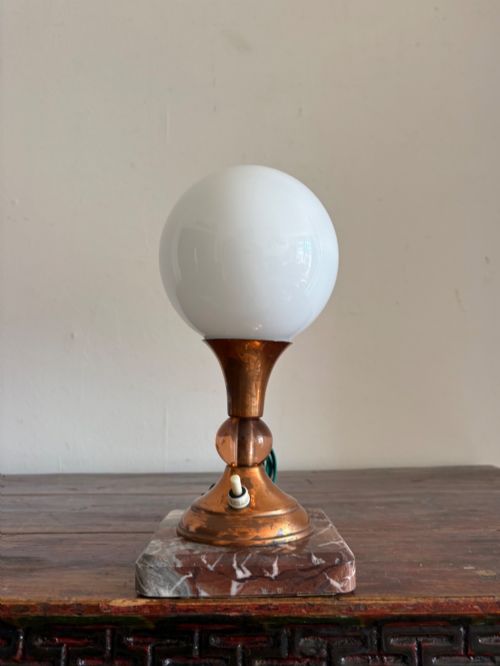
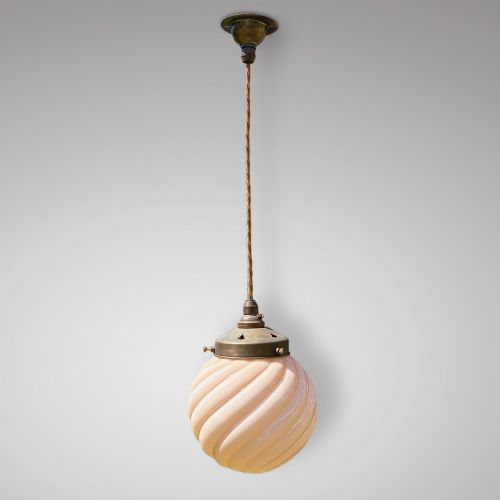
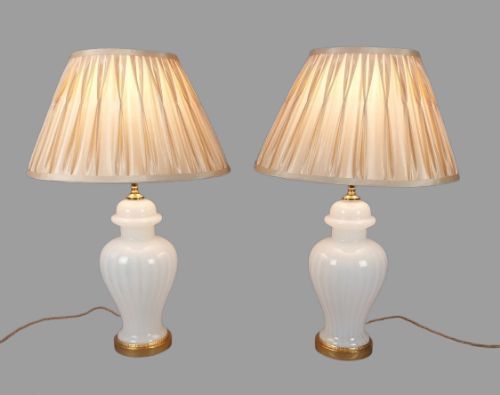
An opaline glass shade lamp combines a translucent white glass diffuser with a base or hanging fixture, forming a staple of lighting design across the Victorian, Edwardian, and Art Deco periods. When you search for opaline glass shade lamp, you encounter diverse formats including table lamps, pendant lights, and converted oil lamps.
The pieces on this page span from the mid-nineteenth century through the 1930s, encompassing French country, industrial, and modernist aesthetics. Pendant lights and desk lamps dominate the selection, often featuring brass or chrome components alongside the signature glass shades.
How they were made
Makers utilised opaline glass, a dense translucent material created by adding bone ash or metal oxides to the molten batch, to diffuse light evenly without harsh glare. This glass is typically mouth-blown into moulds or manipulated by hand into conical, pear-shaped, or frilled forms.
Metal elements such as brass, bronze, copper, and chrome provide the structural support and wiring housing. These metal mounts are cast, turned, or plated, and frequently paired with marble bases or ceramic details.
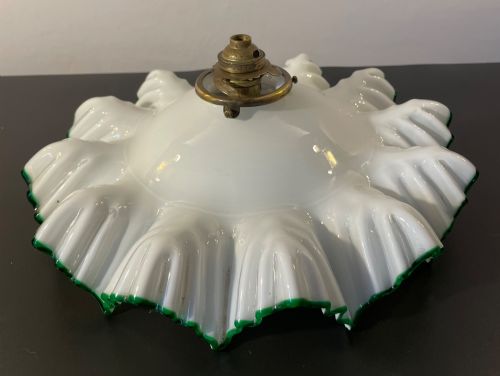
Some Victorian oil lamps were designed with fish scale or frilled glass edges, proving that past generations took their desk illumination very seriously.
What varies in quality
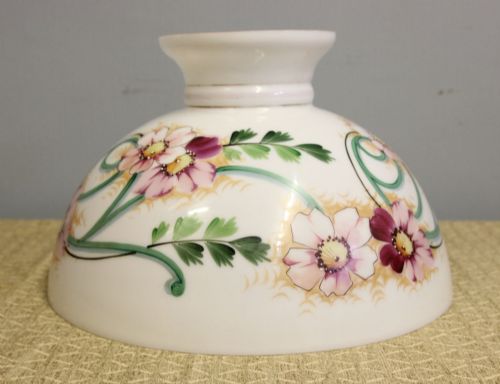
Quality rests in the weight and purity of the opaline glass, where superior examples exhibit an even, dense milkiness without clouding or thin spots. The crispness of hand-painted decoration and the heft of the brass, bronze, or ormolu mounts also set finer pieces apart from standard utility lighting.
The execution of decorative details, such as reeded surfaces, fish scale patterns, or frilled edges, demonstrates the skill of the original workshop. Structural integrity in the metalwork and original period fittings elevate the standing of a piece.
Perry & Co·Wild & Wessel
The Opaline Glass Shade Lamp Glossary
- Opaline glass
- A type of semi-opaque, milky-white glass developed to diffuse light softly while hiding the bulb or burner within. It appears frequently in nineteenth and early twentieth-century lighting.
- Pendant light
- A light fixture suspended from the ceiling by a cord, chain, or metal rod. These fixtures project illumination directly downwards or cast an ambient glow.
- Ormolu
- Gilt bronze produced by applying a finely ground high-carat gold-mercury amalgam to a bronze object. This technique imparts a rich golden finish to nineteenth-century lamp mounts.
- Conical
- Having the shape of a cone, tapering gradually from a wide base to a narrower top. Many industrial and hallway lamp shades utilise this geometric form.
Opaline Glass Shade Lamp: Frequently Asked Questions
How do I clean an opaline glass shade?
Wash the glass gently in lukewarm water using a mild dish soap and a soft cloth. Avoid harsh chemical cleaners that might damage the surface or any hand-painted details.
Dry the shade thoroughly with a lint-free towel before reattaching it to the lamp fixture to prevent water spots.
Were these lamps originally electric?
Many early pieces began as oil or paraffin lamps that were later converted to electricity during the twentieth century. Other items, particularly from the Art Deco period, were manufactured specifically for electrical wiring.
Conversion generally involves replacing the burner mechanism with a lamp holder while retaining the original brass or bronze body and opaline shade.
How do I date an opaline glass lamp?
Examine the metal mounts, construction methods, and overall style to determine the period. Victorian and Edwardian examples often feature heavy brass castings and oil lamp fittings, while 1930s pieces lean towards chrome, streamlined shapes, and dedicated electrical wiring.
French pieces from the early twentieth century frequently incorporate distinctive decorative motifs like frilled edges or copper and marble bases.
Can I use modern LED bulbs in these lamps?
Modern LED bulbs work well in these fixtures provided they match the correct wattage and physical dimensions for the shade space. LEDs emit less heat than traditional incandescent bulbs, which helps protect antique wiring and glass.
Choose a warm white bulb colour temperature to replicate the soft, ambient glow intended by the original makers.