
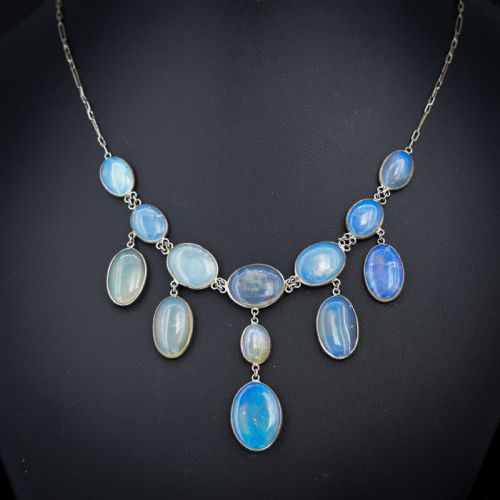


Opal Drop Pendant
An opal drop pendant brings together a play of colour and swinging movement, making these hanging jewels a favourite for collectors of antique and vintage jewellery.
Opal Drop Pendant
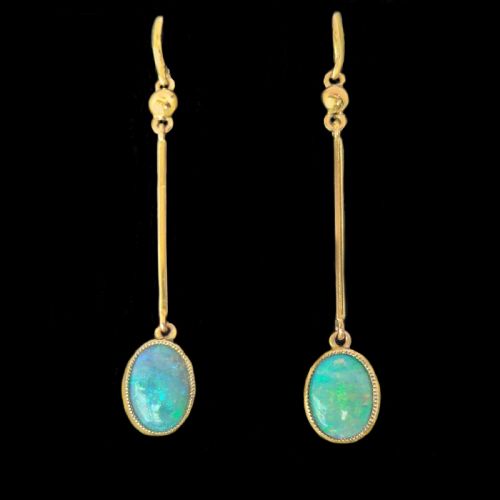
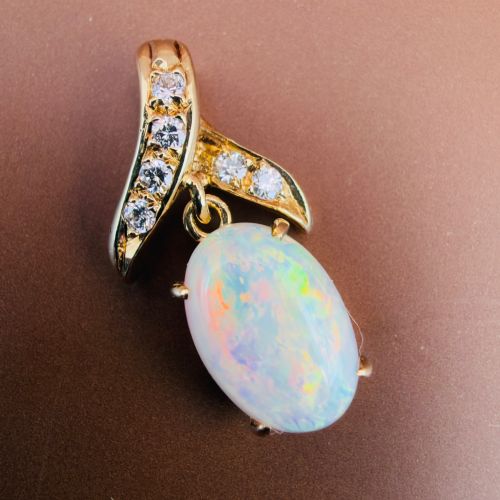
An opal drop pendant suspends a cabochon or faceted stone from a chain, necklace, or smaller fitting so that it moves with the wearer. When you search for an opal drop pendant, you encounter pieces from the Victorian, Edwardian, and Art Deco periods, alongside later mid-century designs.
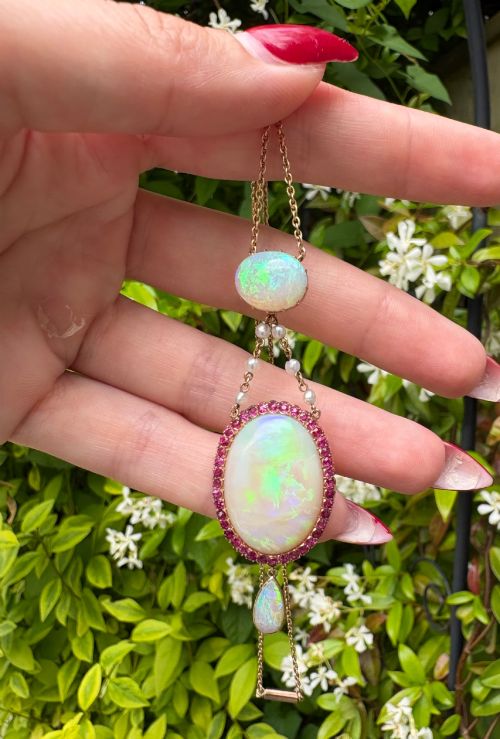
The versions most frequently met on this page combine the gemstone with gold or silver settings, often accompanied by diamonds, pearls, or rock crystal. These jewels take the form of fringe necklaces, lavalieres, cluster drops, and single-stone suspensions.
Origins stretch from late nineteenth-century workshops through to nineteen-fifties studios, reflecting changing tastes in precious metals and gemstone arrangement. Each piece uses the natural play of light across the stone to create a focal point that hangs below the collarbone.
How they were made
Jewellers shaped precious metals such as yellow gold, white gold, silver, and platinum to house the stones, employing techniques like open-backed collet settings to let light pass through the opal. Platinum and 18ct white gold gained favour in Edwardian and Art Deco workshops for delicate pierced work, while earlier Victorian pieces relied on 15ct gold and silver.
Gems were cut into cabochons to display the internal flash of colour, frequently accented with small rose-cut or brilliant-cut diamonds and seed pearls. Master craftspeople linked drops with articulated joints or fine chains to ensure the pendant swayed freely when worn.
The selections span Victorian, Edwardian, Art Deco, and 1950s periods, incorporating opal, diamond, gold, silver, and pearl.
What varies in quality
The calibre of an opal drop pendant rests upon the vibrancy and spread of colour play within the stone itself, alongside the fineness of the metalwork surrounding it. Superior examples display a strong play of spectral colours across the cabochon without dead spots.
Construction details also dictate distinction, such as the weight of the gold or platinum, the symmetry of flanking diamonds or pearls, and the integrity of the original linkages. Pieces that retain their original chain or mounting show a harmony of design that elevates them above later adaptations.
The Opal Drop Pendant Glossary
- Cabochon
- A gemstone cut with a smooth, rounded, convex upper surface rather than faceted. This style of cutting is chosen to showcase the optical phenomenon within opals.
- Fringe necklace
- A necklace design featuring a series of drops suspended along the front section of the chain. Edwardian makers utilised this layout to display graduated opals and pearls.
- Lavaliere
- A pendant featuring a primary drop hanging below a smaller decorative element or chain connector. This style reached great popularity during the late nineteenth and early twentieth centuries.
- Seed pearl
- A very small, naturally occurring saltwater pearl, often drilled and strung in clusters or used as delicate border accents. They frequently accompany opals in Victorian and Edwardian jewels.
Opal Drop Pendant: Frequently Asked Questions
How do I date my pendant?
Dating relies upon examining the metal purity marks, the cut of accompanying diamonds, and the overarching design style. Victorian and Edwardian pieces often feature distinct claw settings and hand-carved details that differ from mid-century forms.
Looking closely at the clasp and the reverse of the mount can also reveal hallmarks or maker's marks that point to a specific decade of manufacture.
Are opals fragile to wear?
Opals contain a percentage of water and possess a moderate hardness on the Mohs scale, meaning they require a degree of care during daily wear. Avoiding sharp impacts and harsh chemicals protects the surface and preserves the internal fire.
Storing the pendant separately from harder gemstones prevents scratching and keeps the metalwork secure around the stone.
What is a fire opal?
A fire opal is a transparent to translucent stone displaying bright orange, red, or yellow body colours, sometimes with the characteristic play of rainbow flashes. These stones bring a warm tone to gold settings.
They appear frequently in mid-century and Edwardian pieces, contrasting sharply with cooler diamonds and white metals.
Can I change the chain?
Many antique pendants were designed to accommodate specific chains, and altering them can affect the balance of the drop. If a piece includes an original chain, keeping them together preserves its historical integrity.
Consulting a jeweller ensures that any replacement chain matches the weight and metal colour of the pendant bail safely.