




Onyx and Bronze Clock
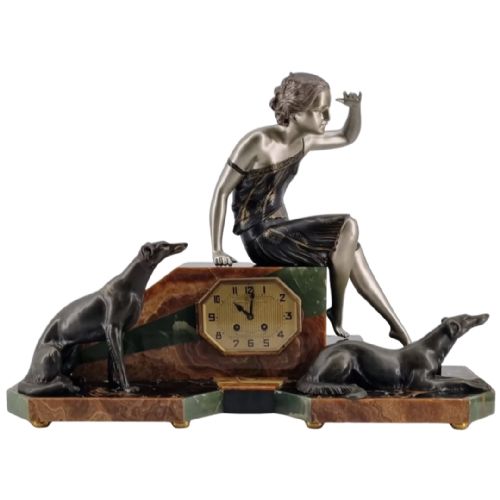
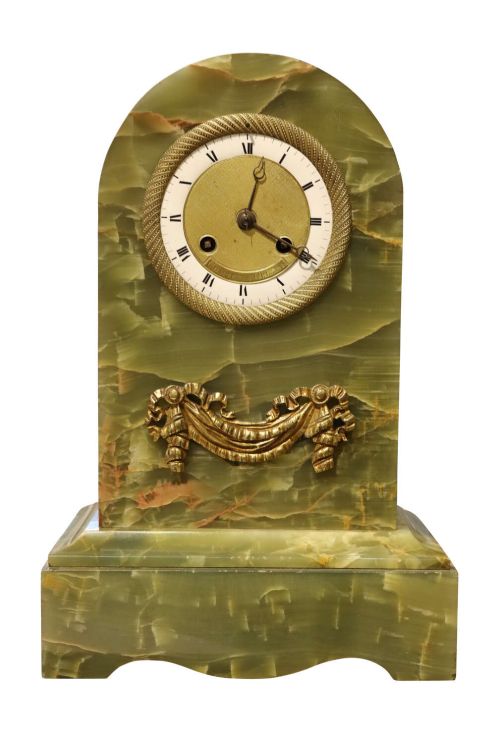
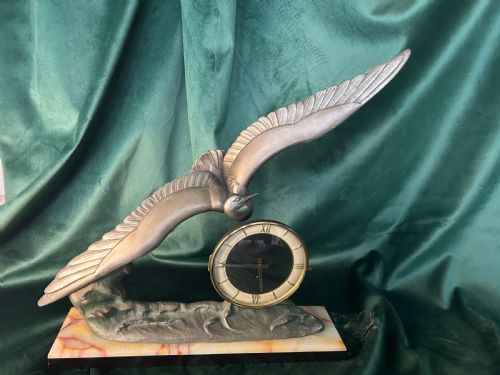
These onyx and bronze clock pieces combine rich stone and cast metal into striking mantel centrepieces that anchor a room.
Onyx and Bronze Clock
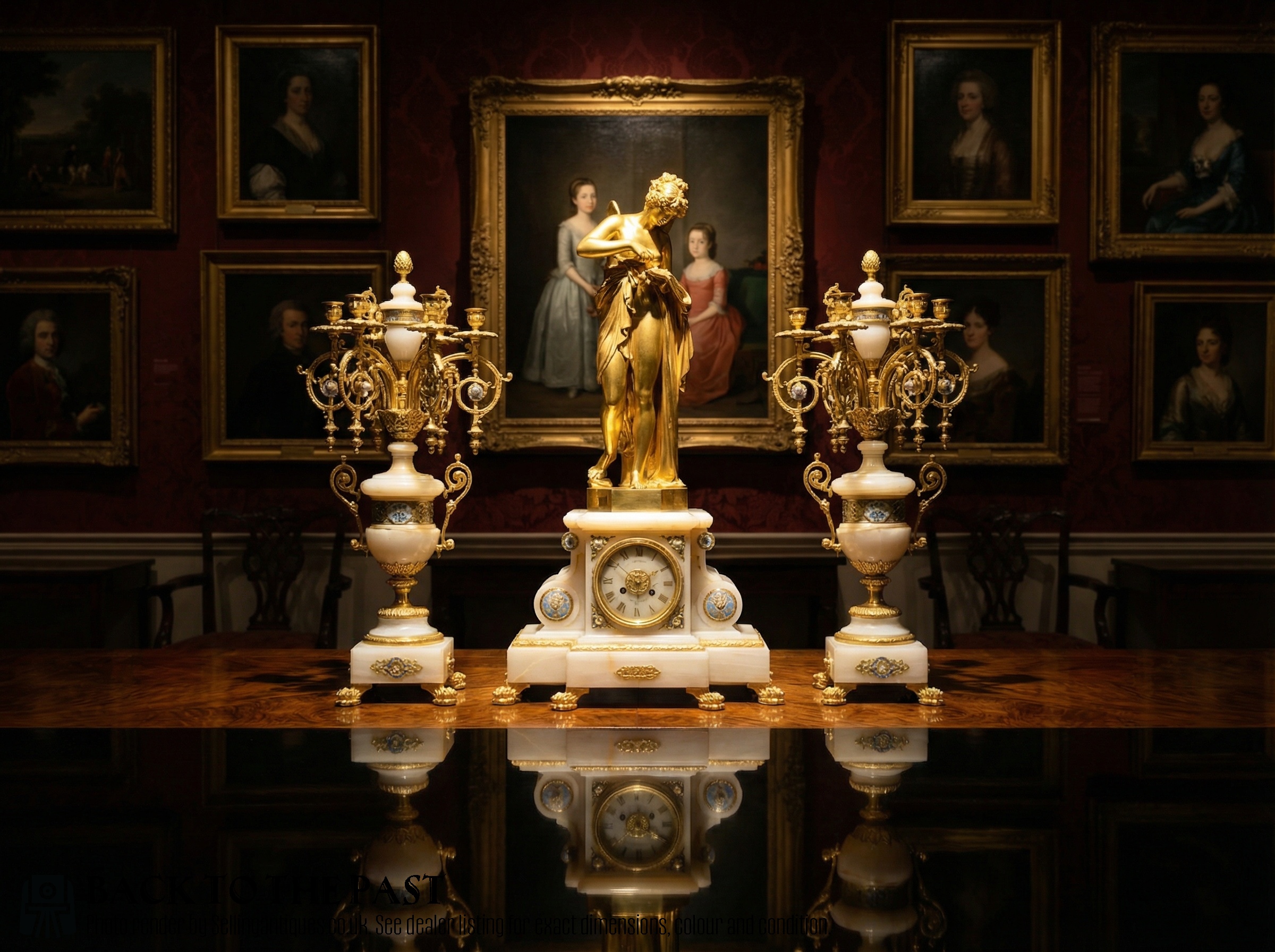
When you search for an onyx and bronze clock, you are looking at substantial timepieces predominantly originating from France during the nineteenth and early twentieth centuries. These works pair natural banded stone with metallic elements, often taking the form of mantel clocks or complete three-piece clock garniture sets with matching side urns or candelabra.
The pieces you are most likely to meet on this page span from Victorian classical revivals to sleek Art Deco designs. Many incorporate figural sculptures, ranging from greyhounds and mythological figures like Amphitrite to literary busts such as William Shakespeare, mounted directly onto the stone bases.
Materials and construction methods
Makers built these pieces using solid blocks of natural onyx, frequently green onyx, paired with structural or decorative metalwork including gilt bronze, ormolu, brass, and spelter. Clock movements were often housed behind glass dials featuring enamel chapter rings, while sculptural figures cast in bronze or spelter were secured atop or beside the stone cases.
The fabrication combined precision horology with classical foundry work and lapidary arts. Stonemasons cut and polished the heavy mineral blocks to geometric or architectural forms, whilst foundries cast the metallic mounts and figures using traditional lost-wax or sand-casting techniques before applying gilding or patination.
Several clocks feature literary and mythological figures, including William Shakespeare keeping watch over the ticking hours.
Distinctions in craftsmanship and design
Quality in these timepieces rests on the crispness of the metal casting and the depth of the stone. Superior examples feature finely chased bronze details and rich, unblemished onyx with strong natural banding, whereas lesser pieces rely on softer spelter metalwork and plain, uniform stone panels.
The integration of the components also separates standard production from finer workshop output. Top-tier pieces show seamless alignment between the heavy stone plinths, the sculptural figures, and the precision of the housed clock movement, often signed by established makers.
Charles à Orléans·Auguste Moreau·F. H. Danvin·H F Moreau·Japy Freres
The Onyx and Bronze Clock Glossary
- Onyx
- A variety of chalcedony quartz featuring parallel bands of colour, highly prized in the nineteenth century for heavy architectural clock cases.
- Gilt bronze
- Metal alloy coated with a thin layer of gold, providing a durable and luminous finish to decorative mounts and figures.
- Spelter
- A zinc-based alloy commonly used as a cost-effective alternative to bronze for sculptural figures on French mantel clocks.
- Clock garniture
- A matching set comprising a central clock flanked by two decorative side pieces such as urns or vases.
- Crystal regulator
- A mantel clock housed in a glass-panelled case that exposes the mechanical movement from multiple angles.
Onyx and Bronze Clock: Frequently Asked Questions
How do I wind an antique clock?
Most mechanical mantel clocks require a specialised key inserted into the dial holes to tension the mainsprings.
Take care not to over-wind the mechanism, and consult a professional horologist if the clock loses time or fails to strike correctly.
What is a clock garniture set?
A garniture set includes a central timepiece accompanied by matching decorative side objects, such as urns or vases, designed to sit together on a mantelpiece.
These sets became particularly popular during the nineteenth century in France as balanced decorative schemes for formal reception rooms.
How do I distinguish bronze from spelter?
Bronze is a heavy copper alloy that takes a crisp chisel mark and ages to a rich, warm patina, whereas spelter is a softer zinc metal that often feels lighter and shows simpler surface detail.
Examining the underside or unpainted sections can reveal the underlying greyish metal of spelter beneath the applied bronze-coloured paint.
Where should I place a heavy stone clock?
Due to the substantial weight of the onyx and metal components, place these clocks on sturdy, level surfaces like a strong mantelpiece or a dedicated console table.
Ensure the surface is flat so the pendulum hangs plumb and the clock beats evenly without stopping.