





Olive Green Pottery
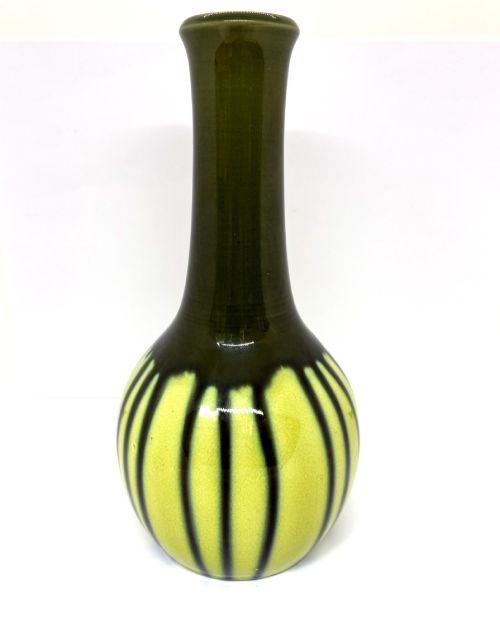
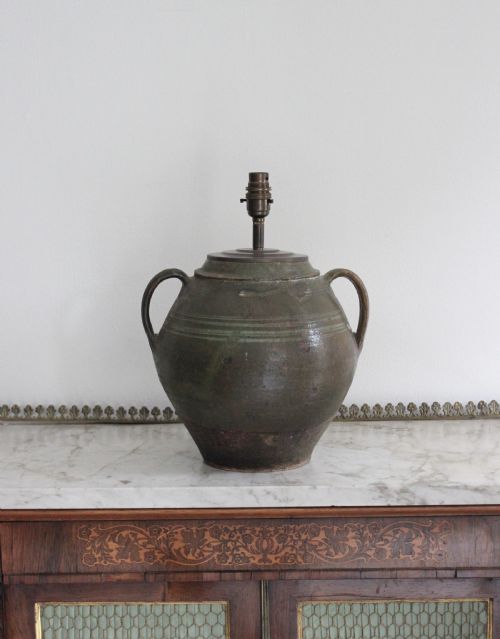
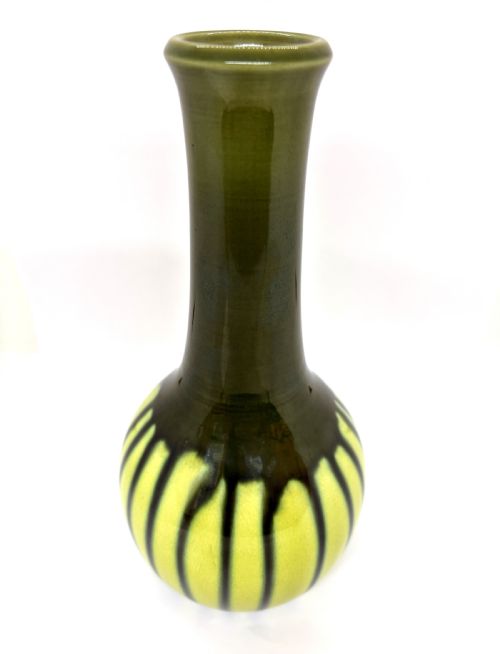
Olive green pottery gathers centuries of ceramic form, bringing earthy tones from French country jars to Art Nouveau vessels into modern interiors.
Materials and construction
Potters utilised earthenware, stoneware, and terracotta as the foundational bodies for these vessels, shaping them by hand or upon the wheel. Glazes applied prior to firing created the signature muted green surface tones, ranging from glossy finishes to subtle tea dust effects.
Specialised techniques such as jasperware production allowed makers to apply contrasting moulded reliefs onto coloured ceramic bodies. Lead and salt glazes frequently sealed porous earthenware and stoneware surfaces on utilitarian jugs and storage vessels.
Assessing quality and execution
Superior examples demonstrate precision in the throwing and moulding stages, where walls remain even and decorative reliefs maintain sharp definition. The depth and consistency of the green glaze often indicate the chemical control achieved during the firing process.
Provenance and attribution elevate certain pieces, particularly when designed by notable factories or individual modellers working within specific stylistic movements. The retention of original accompanying components, such as matching stands for cheese bells or complete tea sets, influences the integrity of the object.
Olive Green Pottery Retail Price Guide 2026
Typical asking prices for olive green pottery among the pieces listed under this phrase on Sellingantiques today, from the lower quarter to the upper quarter. They describe what is for sale here now, not the wider market.
Listings feature earthenware, stoneware, and terracotta alongside specialised styles spanning the eighteenth, nineteenth, and early twentieth centuries.
Burmantoft's Pottery·Doulton Lambeth Ware·Wedgwood·James Dudson·Royal Doulton·Turn Vienna
The Olive Green Pottery Glossary
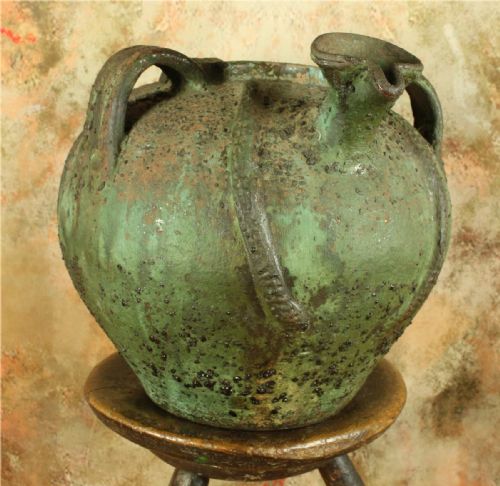
- Confit jar
- A traditional French earthenware vessel featuring handles and a glazed upper section. Originally utilised for preserving meats, these pieces display robust terracotta bodies.
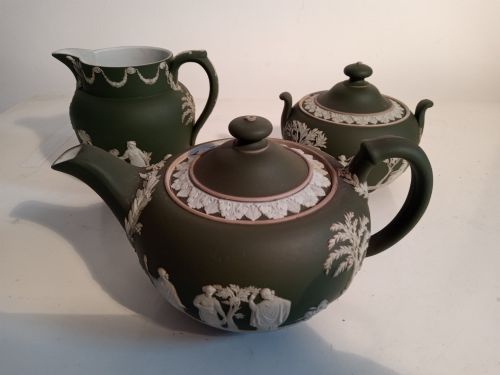
- Jasperware
- A type of fine stoneware pioneered by Josiah Wedgwood, characterised by an unglazed matte body. It frequently incorporates white ceramic reliefs applied onto coloured grounds.
- Ewers
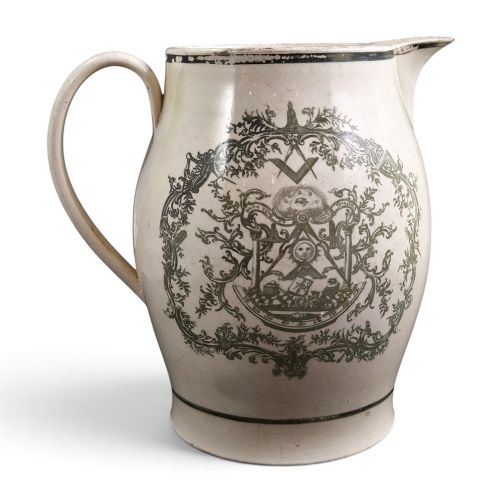
- Large jugs featuring a wide spout and a substantial handle designed for pouring liquids. Historical examples often served decorative functions within domestic interiors.
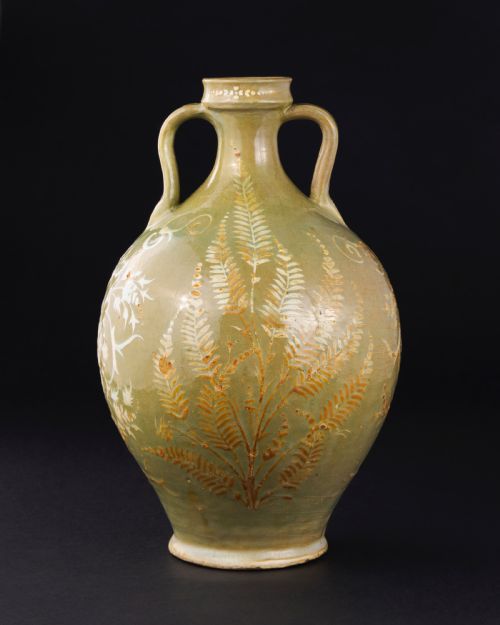
- Celadon
- A term describing ceramic glazes denoting jade or olive green shades. Originating in Eastern traditions, it results from iron oxide interacting within a reduction kiln atmosphere.
Olive Green Pottery: Frequently Asked Questions
How do I clean antique green pottery?
Dust surfaces gently with a soft dry cloth to prevent accumulation within crevices and textured reliefs. Avoid immersing porous earthenware or antique terracotta in water.
Harsh chemical detergents can strip historical glazes and damage exposed ceramic bodies. Consult a conservator if deeper cleaning becomes necessary.
Can I use these vessels for fresh flowers?
Glazed stoneware and porcelain vessels generally hold water safely without seeping moisture through the ceramic body. Confit jars and porous terracotta pieces may require a concealed internal container.
Historical earthenware often develops hairline fissures over centuries of existence. Testing with lukewarm water beforehand protects delicate antique surfaces from unexpected leaks.
What defines Art Nouveau pottery?
Art Nouveau ceramics embrace organic motifs inspired by natural plant forms and flowing asymmetrical lines. Makers utilised fluid glazes that complemented the undulating contours of the vessels.
Turn of the century factories adopted these principles to move away from rigid historical revivals. The resulting pieces emphasise craftsmanship and sculptural presence.
How do I identify Victorian pieces?
Victorian ceramics frequently display registration marks, factory stamps, or specific model numbers impressed into the base. Stylistically, they often combine neoclassical motifs with heavier proportions.
Makers during this era experimented extensively with coloured clay bodies and specialised glazes. Examining the base provides key evidence regarding manufacturing date and origin.