






Old Silver Mug
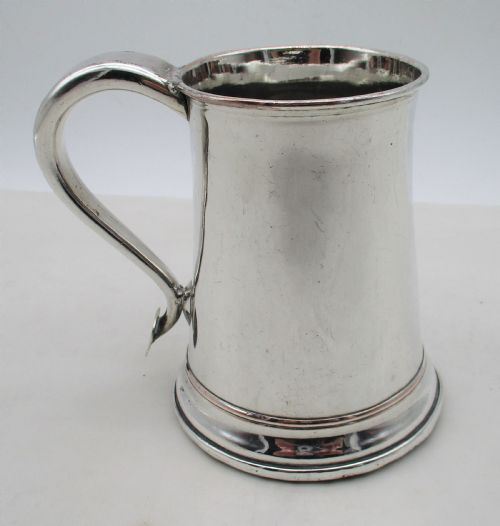
An old silver mug brings heavy Georgian weight and Old Sheffield Plate sheen to the table, offering a tactile piece of drinking history.
Old Silver Mug
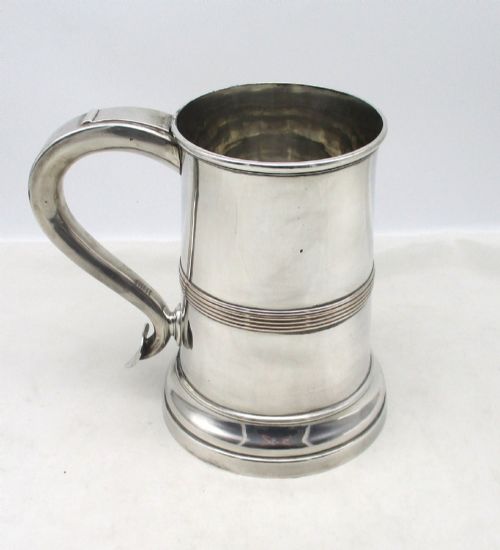
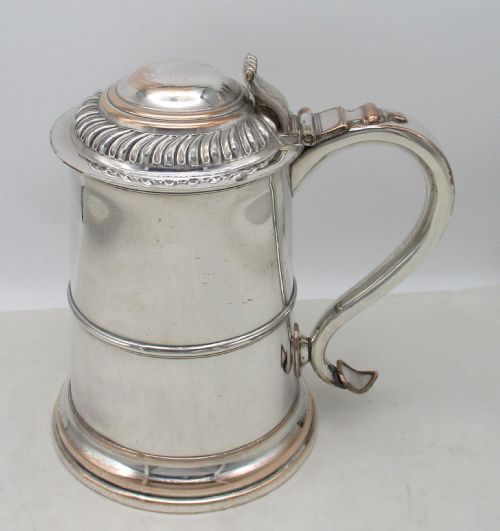
When you search for old silver mug, you are looking at sturdy drinking vessels spanning the eighteenth and nineteenth centuries, taking the form of pint and quart tankards. The examples you meet on this page are predominantly Old Sheffield Plate pieces from the Georgian and Regency eras, alongside child's tankards and lidded variants.
Makers shaped these drinking vessels in large and small sizes, employing copper fused with silver to create robust barware. You will encounter both open mugs and lidded tankards dating from around seventeen eighty through to eighteen twenty.
Materials and plating techniques
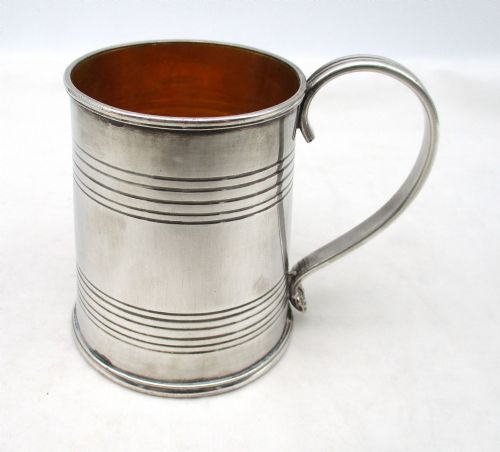
These items rely on Old Sheffield Plate, a technique fusing a thin layer of silver to a thicker copper core. Makers manipulated this composite metal into substantial tankard bodies, often adding gold gilt interiors for drinking safety and luxury.
Craftsmen built these vessels to withstand heavy daily use in taverns and homes, applying strong handles and secure lids to the body. The resulting objects display the characteristic warm glow of fused silver over copper.
Old Silver Mug Retail Price Guide 2026
Typical asking prices for old silver mug among the pieces listed under this phrase on Sellingantiques today, from the lower quarter to the upper quarter. They describe what is for sale here now, not the wider market.
A tiny child's tankard from eighteen twenty sits quietly among massive quart vessels, built for miniature hands that grew up long ago.
Factors that define the better pieces
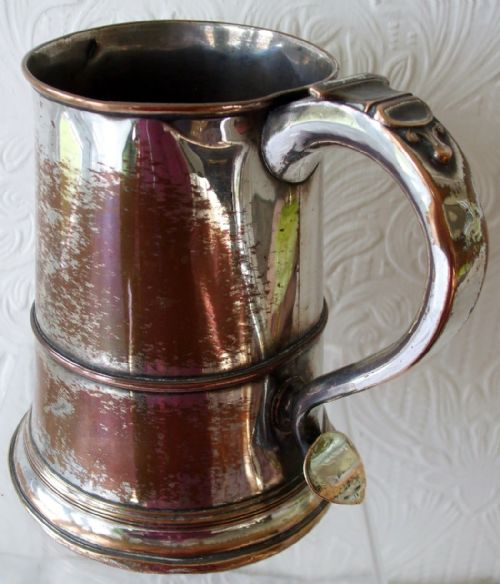
Quality rests upon the preservation of the original fused plating and the crispness of form across large quart tankards or smaller child's versions. Pieces retaining clear proportions and intact gilding inside the bowl sit at the upper end of the range.
The integration of the lid, handle attachment, and the subtlety of the base moulding distinguish superior craftsmanship from standard utilitarian barware. Condition of the underlying copper where the silver layer thinned through polishing dictates the overall integrity.
Richard Morton
The Old Silver Mug Glossary
- Old Sheffield Plate
- A composite material made by fusing a sheet of silver onto a copper ingot, developed in the eighteenth century. This predates modern electroplating and produces a distinct layered appearance.
- Quart Tankard
- A large drinking vessel holding two pints of liquid, commonly found in Georgian taverns and households. These heavy pieces formed the backbone of period barware.
- Pint Tankard
- A standard single-serving drinking mug, typically smaller in scale than a quart vessel. These manageable sizes suited personal daily use.
- Child's Tankard
- A miniature drinking vessel produced for children, often made in smaller capacities during the early nineteenth century. These items served as gifts or family keepsakes.
- Gilding
- A thin layer of gold applied to the interior surface of a mug or tankard. This coating protected the drinker from metallic tastes and added a rich colour.
Old Silver Mug: Frequently Asked Questions
What is Old Sheffield Plate?
Old Sheffield Plate is a material created by fusing silver to a copper base, rather than using electrical current. This method produced durable items with rich surface qualities.
Craftsmen used this fused metal throughout the eighteenth and nineteenth centuries to construct sturdy drinking vessels that mimic solid silver.
How were these tankards used?
These vessels served as everyday drinking mugs for ale, beer, or other beverages in Georgian homes and establishments. Their robust construction handled heavy daily lifting.
Some smaller versions, such as child's tankards, functioned as presentation pieces or personal gifts rather than tavern gear.
How do I care for plated mugs?
These items require gentle cleaning with non-abrasive silver cloths to protect the thin layer of precious metal over the copper core. Avoid harsh dips that strip the surface.
Display them away from direct moisture and handle them carefully by the body and handle to preserve the original finish.
What is the difference between pint and quart sizes?
Pint tankards offer a smaller, single-serving capacity suitable for individual consumption. They present a neat, compact profile on the table.
Quart tankards hold twice that volume, standing much larger and heavier to accommodate communal or heavy tavern drinking.