

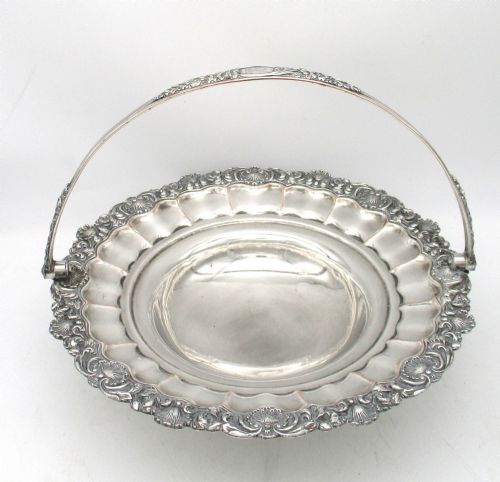


Old Sheffield Plate Centerpiece
An old sheffield plate centerpiece brings substantial Georgian elegance to the dining table through its layered fusion of silver and copper.
Old Sheffield Plate Centerpiece
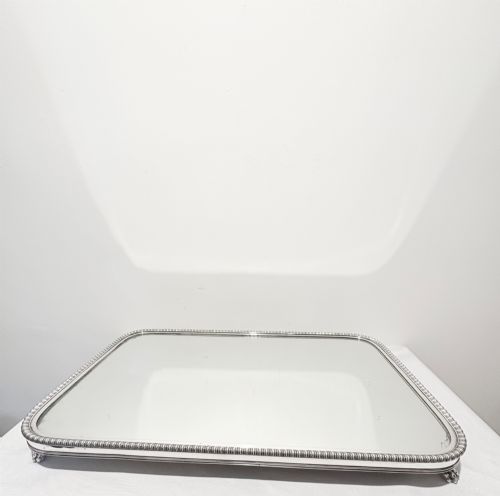
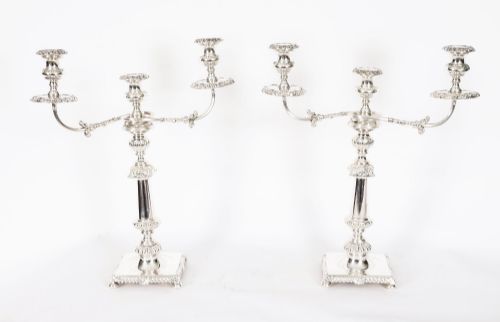
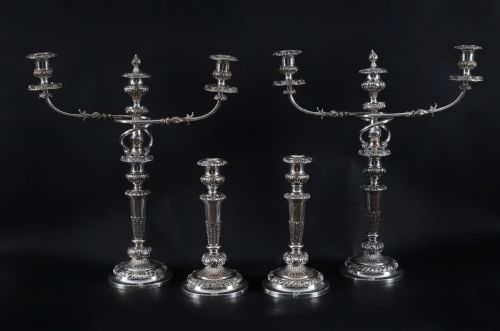
An old sheffield plate centerpiece encompasses impressive dining table showpieces designed during the eighteenth and nineteenth centuries, including mirror plateaus, candelabra, and epergnes. These items served both functional and decorative purposes during formal dining rituals, anchoring large spreads with gleaming display.
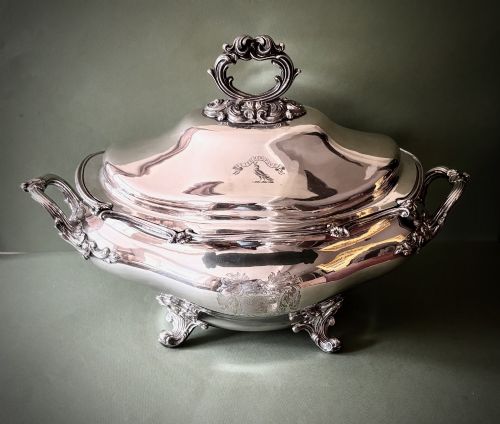
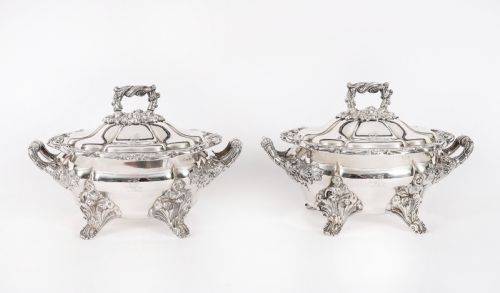
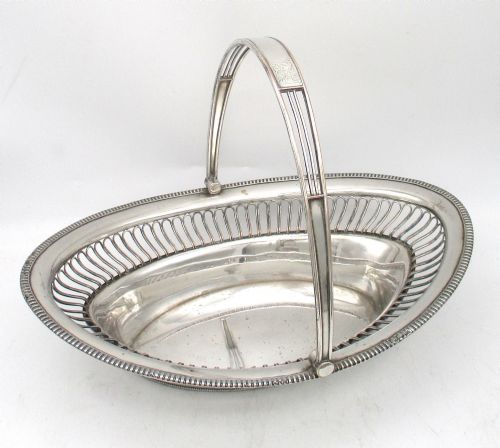
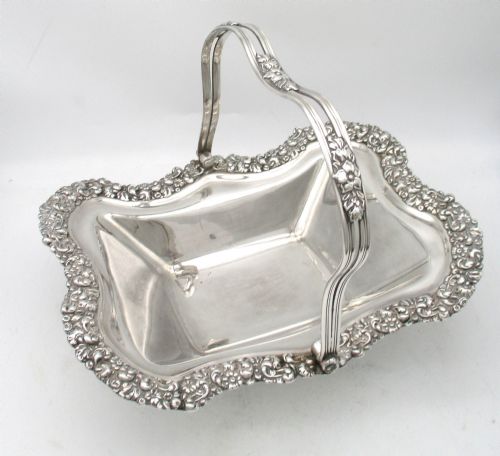
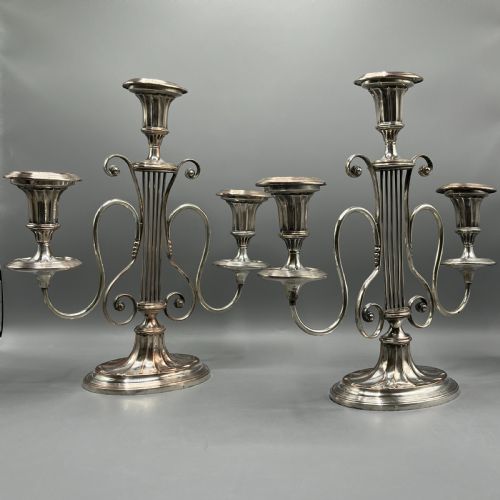
The objects listed under this description span major periods such as the Georgian and Regency eras, alongside specific forms like wine coolers, soup tureens, and baskets. Buyers most frequently encounter multi-light candelabra, elaborate wirework baskets, and integrated mirror plateaus from around eighteen hundred and the early nineteenth century.
How they were made
The primary method behind these pieces involves fusing a thin sheet of silver to a thicker copper core, a technique developed in the eighteenth century that created a durable composite material. Artisans then shaped this fused metal by hand, applying decorative wirework, cast borders, and applied crests to the finished forms.
Many centrepieces integrate additional elements like cut glass bowls or mirrored surfaces alongside the silver plate and copper framework. Candelabra and epergnes often combine soldered branches and removable nozzles to build intricate multi-tier structures.
Old Sheffield Plate Centerpiece Retail Price Guide 2026
Typical asking prices for old sheffield plate centerpiece among the pieces listed under this phrase on Sellingantiques today, from the lower quarter to the upper quarter. They describe what is for sale here now, not the wider market.
Object forms span candelabra, wirework baskets, lidded sauce tureens, soup tureens, wine coolers, and mirror plateaus.
What varies in quality
The preservation of the original silver layer over the underlying copper base dictates much of the visual integrity across these items. Pieces that retain heavy silver fusion without excessive base metal bleeding through from wear display superior execution.
Subtlety and weight in the cast mounts, handles, and branches separate standard domestic items from grander suites. The precision of the piercing in wirework baskets and the clarity of cut glass components further distinguish finer examples.
Blagden Hodgson And Co
The Old Sheffield Plate Centerpiece Glossary
- Old Sheffield Plate
- A material created by fusing silver and copper together through heat and pressure before rolling it into sheets for smithing. This technique preceded modern electroplating.
- Epergne
- A large ornamental centerpiece designed for a dining table, typically featuring multiple tiers, baskets, or branches for holding food or flowers.
- Mirror Plateau
- A low mirrored tray placed in the centre of a dining table to reflect candlelight and tableware, often framed in silver plate or wood.
- Campana
- A bell-shaped vessel form commonly utilised for wine coolers and urns during the Regency period.
- Wirework Basket
- A decorative container formed from interwoven strips or wires of silver-plated metal, popular around the turn of the nineteenth century.
Old Sheffield Plate Centerpiece: Frequently Asked Questions
What is old sheffield plate?
Old sheffield plate is a composite material made by fusing a thin layer of sterling silver to a thick copper ingot. This method was discovered in the eighteenth century and used before electroplating became common.
Items made from this process show a distinctive edge where the copper core meets the silver surface if the metal is examined closely at seams or worn spots.
How do you clean an old sheffield plate centerpiece?
Cleaning requires gentle silver polishes and soft cloths to avoid wearing through the thin silver layer to the underlying copper. Avoid harsh dips or abrasive agents that strip the historical plating.
Regular dusting and careful handling keep the surface bright without accelerating the natural thinning of the silver over decades of use.
How do I identify a Regency period piece?
Regency pieces often display classical revival motifs, bolder proportions, and sharper cast details compared to earlier Georgian designs. Forms like campana wine coolers and heavier candelabra are typical of this period.
Construction techniques and stylistic markers align these items with the early decades of the nineteenth century.
Can I use an epergne for dining?
An epergne functions well for holding fruit, small dishes, or floral arrangements during a formal meal, just as it did historically. The detachable baskets and bowls accommodate various table displays.
Care should be taken with moisture and heavy items to protect the original nineteenth-century surfaces and glass components.