



Silver Plate Vanity Mirror
A silver plate vanity mirror sits on the dressing table to catch the morning light and frame a reflection.
Silver Plate Vanity Mirror
A silver plate vanity mirror brings dressing table elegance to the bedroom through reflective glass and plated metal mounts. When you search for a silver plate vanity mirror, you encounter pieces designed to stand on tables or tilt upon easel backs.
The selection ranges from early nineteenth century plateau designs to twentieth century compacts and dressing table mirrors. Art Deco and Art Nouveau styling frequently appear alongside Victorian and Edwardian examples.
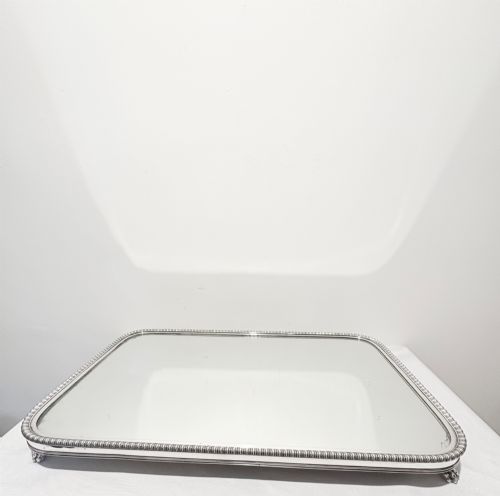
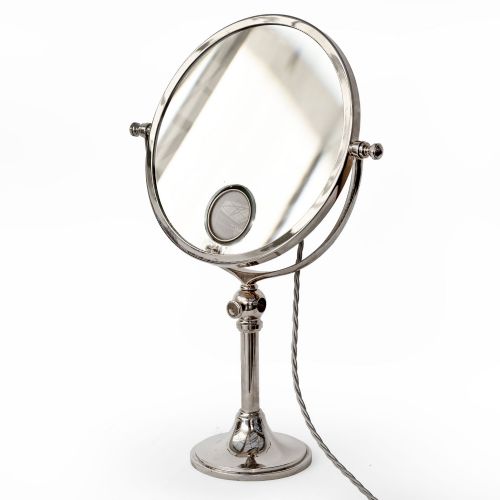
Forms include triptych dressing table mirrors, mirror trays, and adjustable shaving mirrors. These objects combine utility with the decorative metalwork characteristic of their respective periods.
Materials and construction
Makers utilised silver plate over base metals, copper, and brass, alongside solid silver and nickel plating. Old Sheffield plate techniques appear in the earliest examples.
Reflective surfaces combine glass mirrors with etched glass details and cobalt blue mirror glass. Enamel work, wood, and suede lining complete the construction of compacts and trays.
Silver Plate Vanity Mirror Retail Price Guide 2026
Typical asking prices for silver plate vanity mirror among the pieces listed under this phrase on Sellingantiques today, from the lower quarter to the upper quarter. They describe what is for sale here now, not the wider market.
Materials recorded on this site include silver plate, copper, wood, glass, enamel, and nickel plating.
Judging quality and design
Quality reveals itself in the crispness of decorative motifs and the integrity of the silver plate over the underlying metal. Substantial frames with secure easel backs and original mirror glass command greater attention.
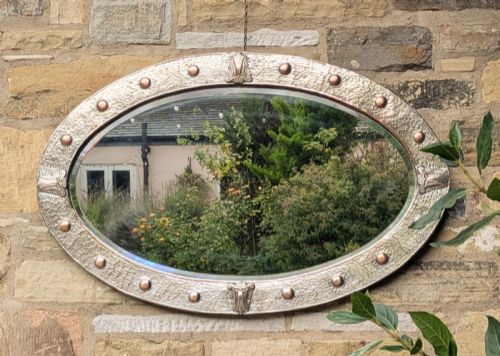
The distinction between standard production and finer pieces lies in the execution of stylistic details, such as Secessionist metalwork or intricate enamel panels.
WMF·Evans
The Silver Plate Vanity Mirror Glossary
- Silver plate
- A layer of silver fused or electroplated onto a base metal such as copper or brass. This method provided the appearance of solid silver at a lower cost.
- Old Sheffield plate
- An early technique of fusing a thin sheet of silver onto a copper core before rolling them together. This method predates modern electroplating.
- Easel back
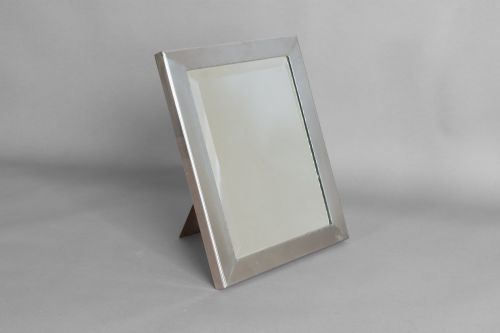
- A hinged support attached to the reverse of a mirror allowing it to stand upright on a flat surface. It provides adjustable angles for dressing table use.
- Triptych
- A mirror composed of three hinged panels allowing the outer sections to angle inward. This configuration offers multiple angles of reflection.
- Mirror plateau
- A mirrored tray designed to sit flat on a table to display objects or serve as a base for centerpieces. It reflects light upward onto items placed upon it.
Silver Plate Vanity Mirror: Frequently Asked Questions
How do I clean a silver plate vanity mirror?
Clean the silver plated frame gently using a soft cloth and a specialised silver cleaner designed not to strip the plating. Avoid getting moisture behind the mirror glass.
Keep abrasive materials away from the metal and enamel surfaces to preserve the finish.
Can I replace the mirror glass?
Replacing the glass is possible, but original mirror glass holds greater historical interest and value for collectors. Look for signs of age such as light foxing which indicate originality.
Professional glaziers can fit new glass if the original is broken beyond use.
Were these mirrors meant for travel?
Some compacts and folding mirrors were designed for pocket or travel use, while heavier triptychs and easel mirrors remained stationary on dressing tables.
Adjustable shaving mirrors served functional daily grooming routines in domestic bedrooms.
How do I date a silver plate mirror?
Dating relies on stylistic clues such as Art Deco geometric lines or Art Nouveau organic curves, alongside construction methods like Old Sheffield plate. Maker marks and stamps also help pinpoint the origin decade.
Materials such as blue enamel or nickel plating often point toward twentieth century production.