


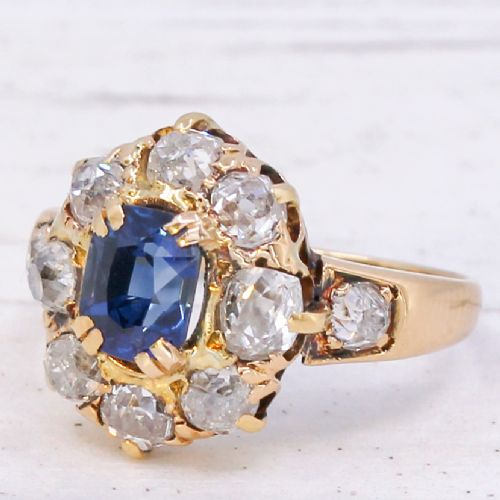
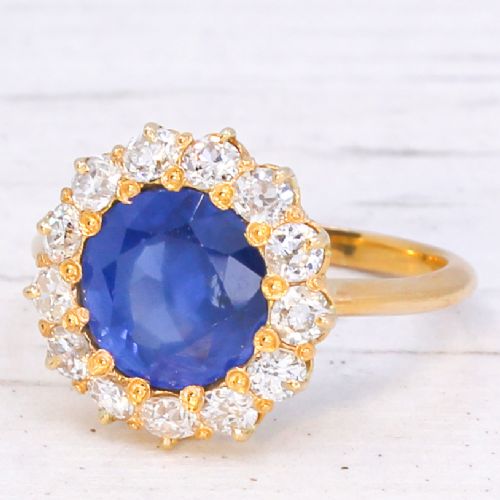
Old Cut Diamond Cluster
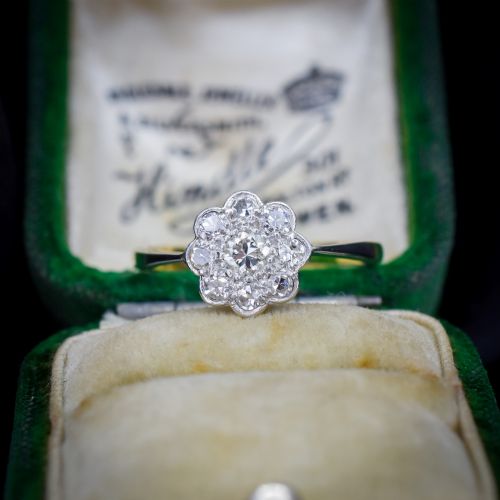
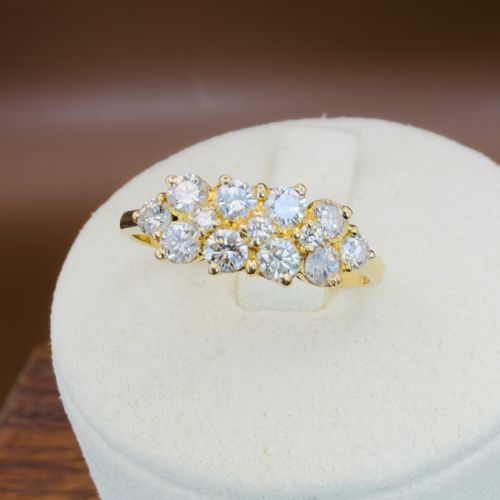
An old cut diamond cluster brings together hand-faceted stones in a central arrangement that catches candlelight with a softer, deeper glow than modern cuts.
Old cut diamond cluster rings and jewels
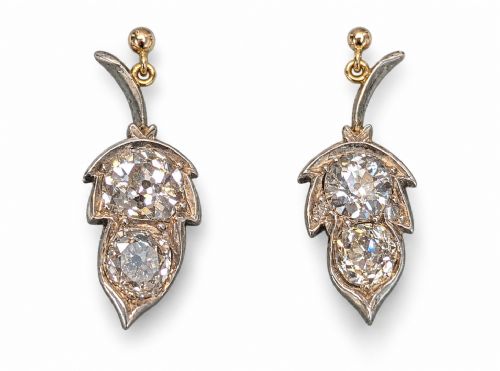
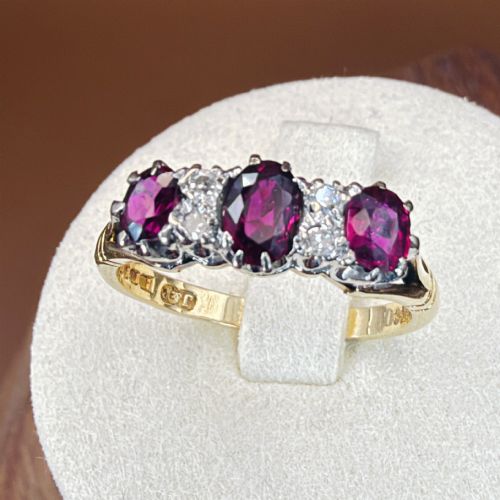
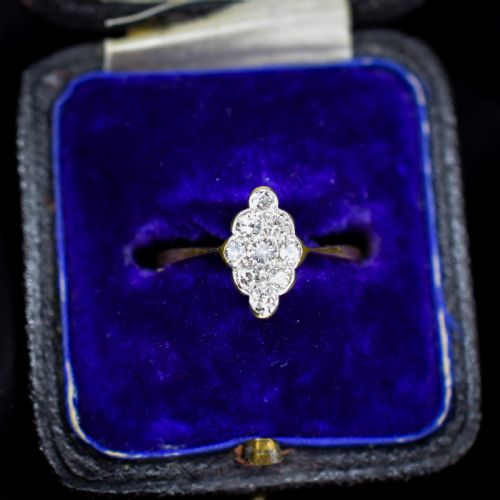
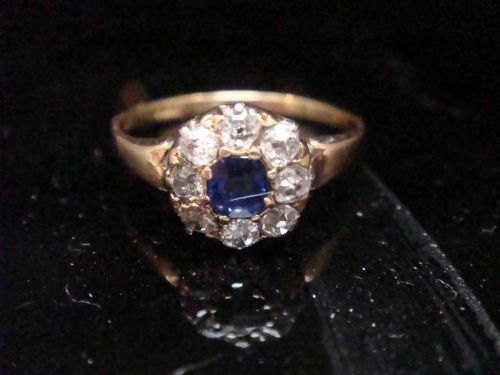
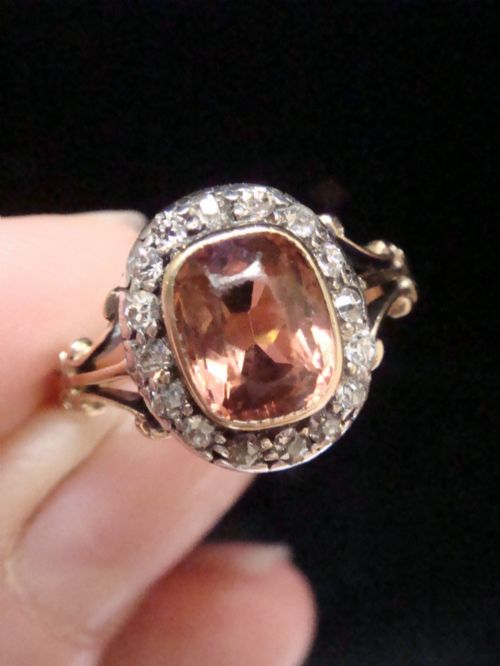
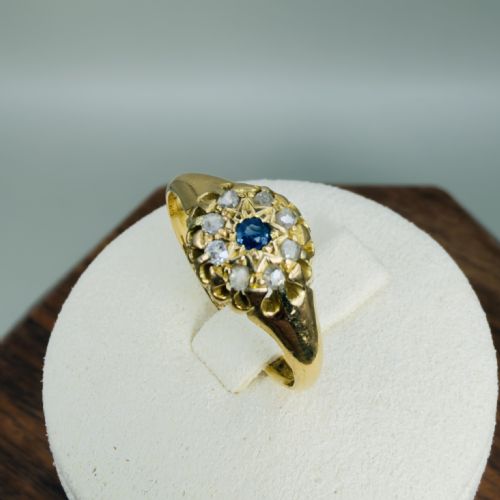
When you search for an old cut diamond cluster, you are looking at multi-stone jewellery designed to maximise the presence and sparkle of antique gems. The pieces on this page are predominantly rings, alongside select pendants and earrings, originating from the Victorian, Edwardian, and Art Deco periods.
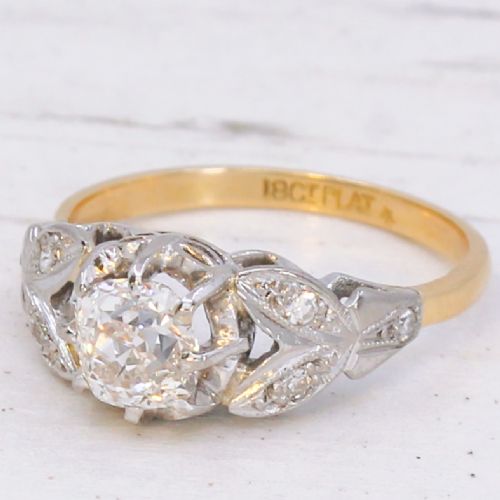
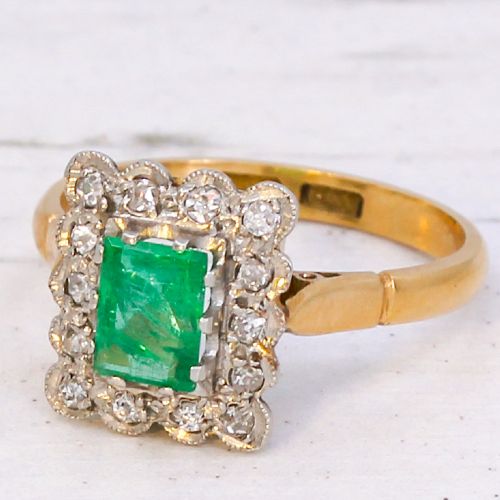
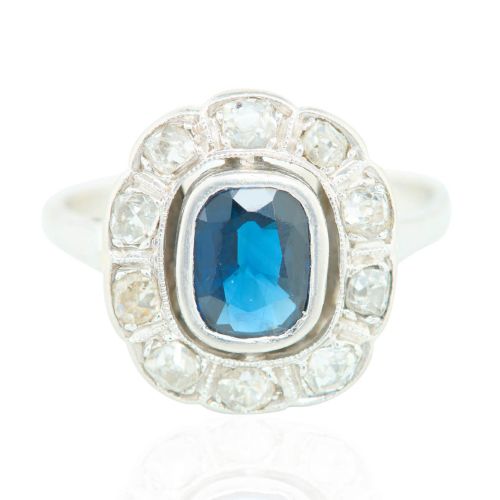
You are most likely to meet rings pairing a central diamond with a surrounding border of smaller diamonds, or flanked by coloured stones such as sapphires, rubies, and emeralds. These configurations follow the aesthetic shifts of the early twentieth century, moving from delicate Edwardian floral motifs to geometric Art Deco platinum settings.
The materials recorded in these pieces include yellow gold, 18ct gold, platinum, and silver, reflecting the changing metallurgical preferences of workshops between 1880 and 1950. Surviving examples demonstrate how individual stones were arranged to create a cohesive face-up display without modern precision tools.
Materials and construction
Gems were shaped by hand before the standardisation of modern facets, resulting in chunky proportions, high crowns, and open culets that produce distinct light dispersion. These stones are set in precious metals such as platinum, 18ct yellow gold, and silver-topped gold, where the metal was worked by hand around each individual facet.
Cluster settings rely on close-set claw, collet, or bezel mountings that hold multiple stones securely while minimising visible metal from the front. Goldsmiths integrated contrasting materials, pairing white platinum or silver with warm yellow gold to frame the central cluster.
Retail Price Guide 2026
Typical UK retail prices for old cut diamond cluster, calculated from the Sellingantiques database of over a million retail prices indexed since 2003. This retail price guide relies exclusively on Sellingantiques data; no external sources or auction records are used, so the figures do not describe the wider market.
Listings span periods from Victorian and Edwardian to Art Deco and mid-century, incorporating diamonds, sapphires, rubies, emeralds, and pearls.
Evaluating quality in antique clusters
Quality rests upon the harmony of the central stone with its surrounding border, where matched proportions and consistent stone heights create a unified face-up profile. Superior pieces display meticulous hand-workmanship in the collets and bezels, ensuring the metal frames the gems without overpowering their natural asymmetry.
The integration of coloured stones alongside diamonds shifts the character of the piece, with high-quality examples using well-matched, untreated rubies or sapphires that maintain strong saturation under varied lighting. The preservation of original mounting work without later alterations distinguishes well-kept examples from those rebuilt over time.
The Old Cut Diamond Cluster Glossary
- Old cut diamond
- A diamond faceted by hand before the invention of modern machinery, characterised by a smaller table, higher crown, and larger culet. This cut produces a distinctive, chunky pattern of light.
- Cluster
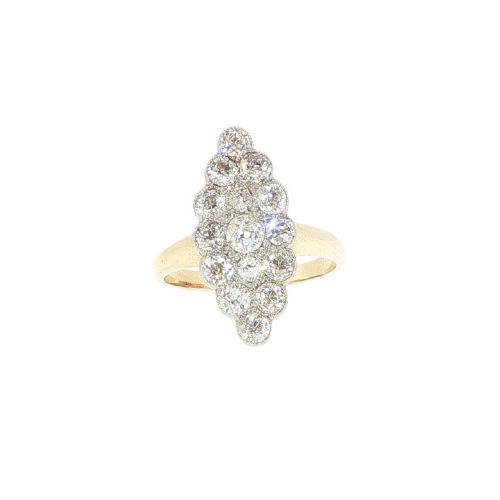
- An arrangement of multiple gemstones set closely together, usually featuring a dominant central stone surrounded by a border of smaller stones. The design creates the visual impact of a much larger single gem.
- Culet
- The small facet at the very bottom of a gemstone, which appears as a tiny open circle or point when viewed through an old cut diamond. Older stones often feature a distinct open culet.
- Navette
- A boat-shaped or marquise-like jewellery silhouette that tapers to points at either end. This elongated form was popular in Victorian and Edwardian cluster designs.
- Collet
- A low metal collar or band that holds a gemstone in place within a setting. In antique pieces, collets are shaped by hand to fit the irregular perimeter of older stones.
Frequently Asked Questions
How do I tell an Edwardian cluster from an Art Deco one?
Edwardian clusters tend to utilise yellow gold and platinum-topped yellow gold, often featuring delicate openwork, millegrain edges, and floral motifs.
Art Deco pieces shift towards geometric lines, straight platinum mountings, and stark contrasts that favour a crisp, architectural silhouette.
Are these rings suitable for everyday wear?
These rings were built for daily use by past generations, combining durable metals like platinum and 18ct gold with secure settings.
Modern wearers should still exercise care during manual tasks to protect the delicate hand-carved claws and older stone proportions.
What metals were used in these antique clusters?
The pieces utilise yellow gold, 18ct gold, 15ct gold, 9ct gold, and platinum, often combined in hybrid mounts such as silver-topped gold.
Platinum rose in popularity during the Edwardian and Art Deco eras for its strength in holding intricate wirework and fine millegrain.
Do old cut diamonds sparkle like modern diamonds?
Old cut diamonds produce wider, broader flashes of white and coloured light rather than the pinpoint brilliance of modern brilliant cuts.
Their larger facets and high crowns are specifically adapted to perform under candlelight and gaslight.