

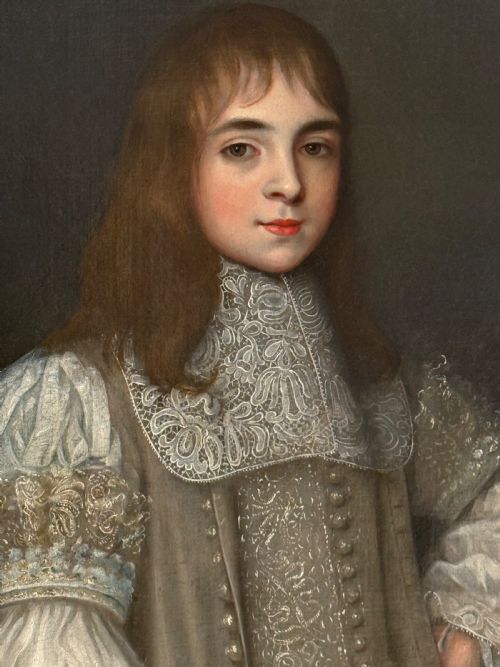
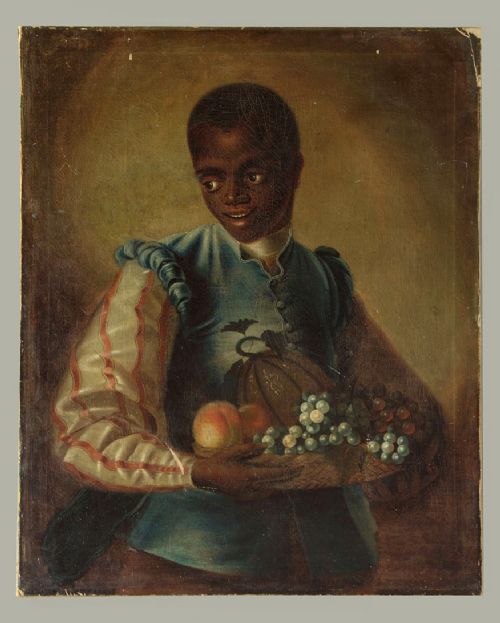
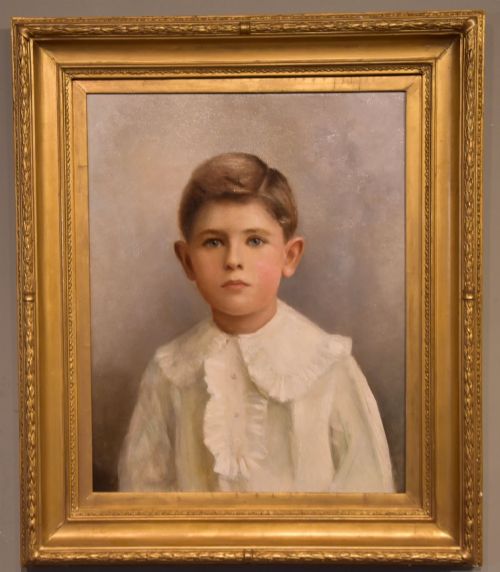


Oil Portrait of Boy
An oil portrait of boy brings centuries of character into a room, capturing children through changing artistic movements from the seventeenth century onward.
Oil Portrait of Boy
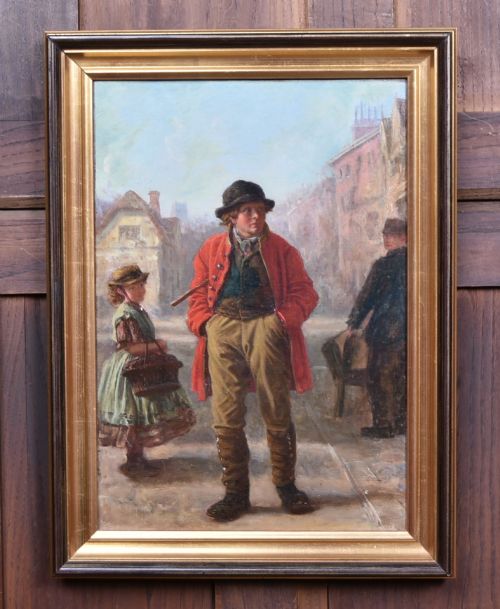
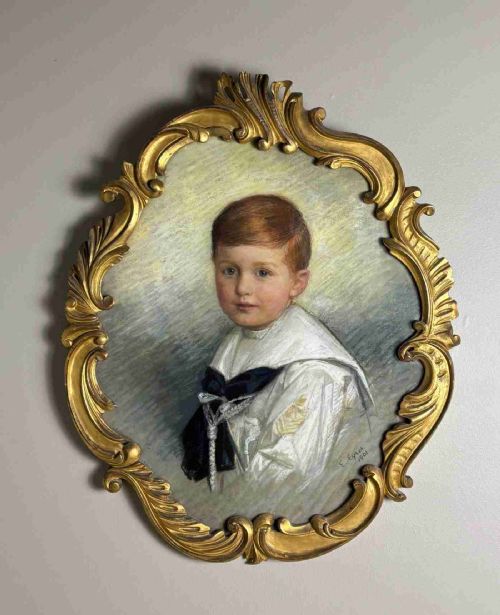
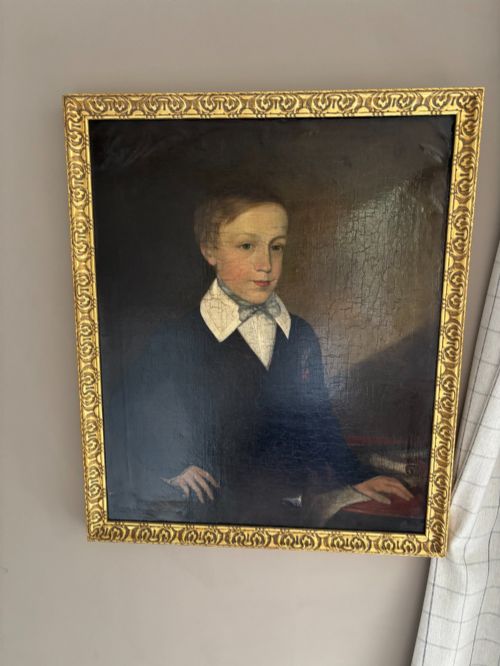
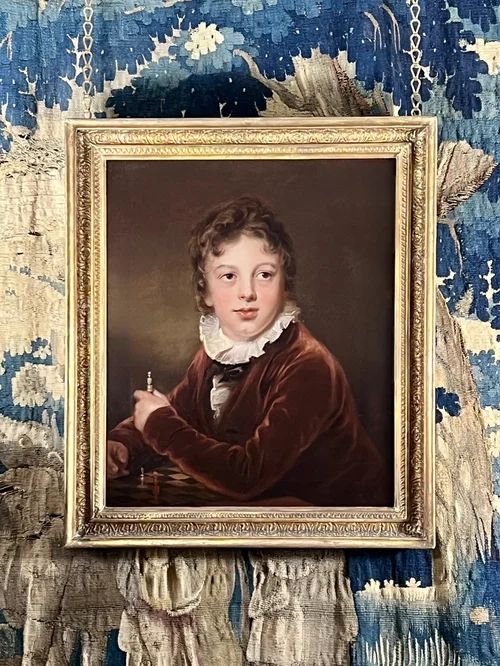
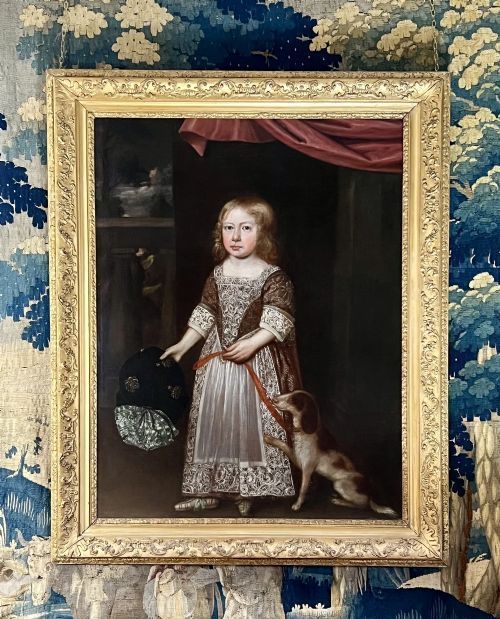
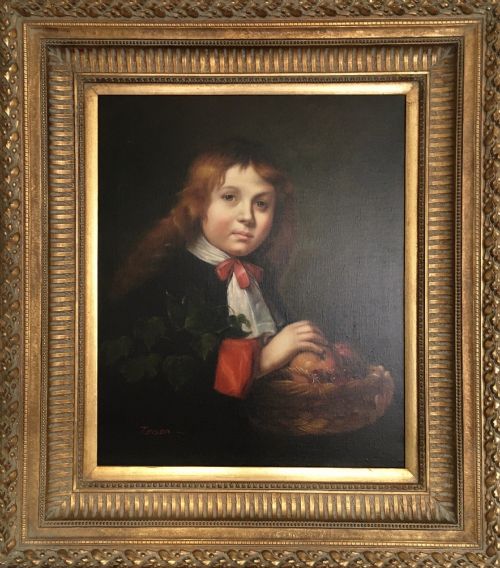
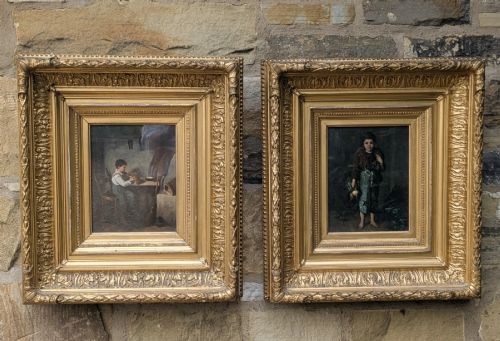
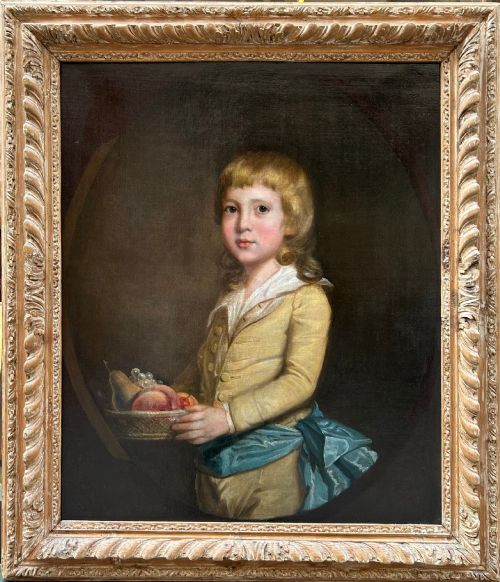
An oil portrait of boy captures juvenile sitters across centuries, ranging from formal aristocratic commissions to intimate domestic studies. A buyer browsing this selection encounters works spanning seventeenth-century Baroque formality, eighteenth-century Georgian elegance, and nineteenth-century realism.
The physical formats vary from modest framed panels to expansive canvas works, often housed within period giltwood frames. Many pieces depict children accompanied by familiar objects like dogs, birds, or spinning tops, reflecting the social conventions of their respective eras.
Materials and Construction
The surviving works rely predominantly on oil paint applied to woven canvas stretched over wooden frames, though wooden panels also appear among earlier examples. Artists built these compositions using layered pigments to achieve depth in skin tones and textiles.
Surrounding many of these paintings are period frames fashioned from carved wood and gesso, often finished in gold leaf or gilt. These frames frequently share the age of the canvas, providing structural support and decorative context.
Oil Portrait of Boy Retail Price Guide 2026
Typical asking prices for oil portrait of boy among the pieces listed under this phrase on Sellingantiques today, from the lower quarter to the upper quarter. They describe what is for sale here now, not the wider market.
Listings feature works from the seventeenth century through the mid-twentieth century, executed in oil on canvas or wood panel.
Judging Quality and Execution
The distinction between ordinary and exceptional works rests on the artist's handling of expression, anatomical proportion, and light. Superior portraits convey psychological depth and lifelike presence in the subject's gaze, whereas lesser examples rely on formulaic rendering.
Condition also separates examples, with undisturbed original paint surfaces and minimal historical restoration holding greater appeal. The craftsmanship of the accompanying giltwood frame contributes significantly to the overall integrity of the piece.
Margaret Sarah Carpenter·John Michael Wright·Thomas Beach·Henry Windsor Fry·Septimus Scott·Evaristo Cappelli·Luca Postiglione·Mary Beale·Paul Jones·William Tate·Joseph Wright of Derby·Jacob Huysmans·Louis Leopold Boilly·Philip Mercier·Frank Owen Salisbury·George Romney·Sir Thomas Lawrence·Robert Byng·Edward Bird·William Orpen·Sir James Guthrie·John Vanderbank·James Maubert·Thomas P Hall·Carl Felkel
The Oil Portrait of Boy Glossary
- Baroque
- A seventeenth-century artistic style characterised by dramatic lighting, rich colour, and dynamic composition. This approach imbues portraits with theatrical presence and deep shadow.
- Gesso
- A plaster-like mixture applied to wooden frames as a smooth base before gilding. It allows craftsmen to carve intricate decorative details.
- Canvas
- The woven fabric substrate, usually linen or hemp, used by artists for oil paintings. It provides a flexible and durable painting surface when properly primed.
- Giltwood
- Wood carved and coated with gold leaf or gold paint. This finish creates a brilliant metallic sheen popular on antique picture frames.
- Provenance
- The documented history of ownership tracing a painting from its creation to the present day. Clear provenance helps verify authenticity and attribution.
Oil Portrait of Boy: Frequently Asked Questions
How do I date an oil portrait of boy?
Dating relies on stylistic clues within the clothing, hair, and surrounding objects, alongside the stretcher construction and canvas type. Costume historians often pinpoint eras by collars, cuffs, and doublet or jacket styles.
Signatures, inscriptions on the reverse, and the construction techniques of the frame offer additional chronological markers. Comparing the brushwork to known dated works by the same school or circle narrows the period further.
Where should I hang an oil portrait of boy?
These portraits suit traditional living spaces, studies, or hallways where lighting can be controlled to prevent glare on the oil surface. Placing them at eye level allows the viewer to engage directly with the gaze of the sitter.
Direct sunlight and excessive humidity should be avoided to protect both the canvas and the wooden frame. Spotlighting with low-heat LED fixtures enhances the depth of the oil paint without causing damage.
What do the animals in these portraits signify?
Animals such as spaniels, greyhounds, or birds frequently appeared in juvenile portraiture to symbolize loyalty, companionship, or innocence. Posing with a pet demonstrated the child's gentle nature and social standing.
These creature additions also served compositional purposes, helping to anchor the young sitter within the pictorial space. Painters rendered breeds like the King Charles Spaniel with careful detail to flatter the family.