



Oil Painting Horse Dog
An oil painting horse dog brings together two steadfast companions of the British countryside across Victorian and twentieth-century rural life.
Oil Painting Horse Dog
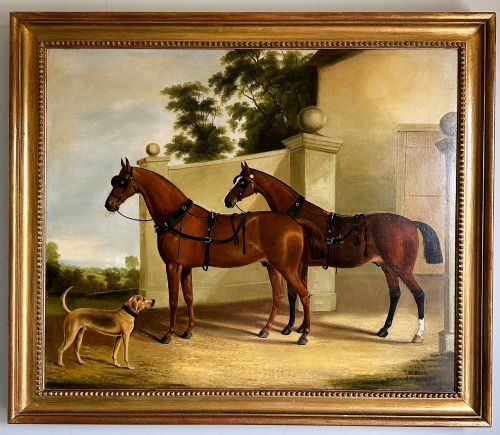
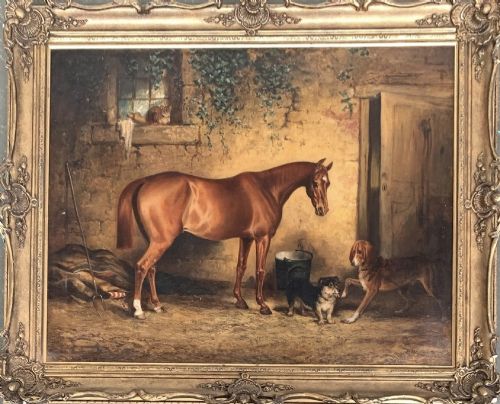
An oil painting horse dog depicts equines alongside hounds, terriers, or working dogs within landscapes, stables, or sporting scenes. The subjects range from individual portraits of hunters and ponies to bustling farmyard scenes featuring plough teams and rustic figures.
Most examples found here originate from the nineteenth century, particularly the Victorian era, alongside pieces from the 1850s, 1870s, 1880s, and into the 1940s. These works bridge British sporting art, equestrian realism, and rural genre painting, reflecting domestic and working connections.
The compositions vary from intimate portraits of a single bay hunter with a terrier to grander landscapes with huntsmen, hounds, and grooms. Buyers encounter works framed in original giltwood or gold leaf frames that complement the canvas.
Materials and methods
Artists painted these works using oil paint applied to prepared canvas or wood panels. The combination of oil medium and canvas allowed painters to build rich textures in the coats of horses and the fur of dogs.
Support materials include wood and canvas, often mounted in decorative wooden frames finished with gilt or gold leaf. The physical structure of panel and canvas supports the survival of these nineteenth-century depictions.
Oil Painting Horse Dog Retail Price Guide 2026
Typical asking prices for oil painting horse dog among the pieces listed under this phrase on Sellingantiques today, from the lower quarter to the upper quarter. They describe what is for sale here now, not the wider market.
Terriers make frequent cameo appearances, keeping a sharp watch while horses rest near barns.
Judging quality and execution
The standard of a work rests on the anatomical accuracy of the animals and the handling of light across the landscape. Master painters capture the muscular tension of a horse and the alert posture of a hound with distinct precision.
Provenance and attribution elevate certain works, particularly those bearing signatures or securely linked to known equine and sporting artists. The integration of figures, animals, and background scenery demonstrates the painterly competence of the English School.
Henry Barraud·C R Breytle·C W Tuck·George E Sharpe·Edwin Frederic Holt·John Alfred Wheeler·Molly Maurice Latham·George Cole·Thomas Blinks·George Wright·E Powell·William Eddowes Turner·Reginald Mills·W J Howden·J Harris
The Oil Painting Horse Dog Glossary
- Bay
- A horse coat colour characterised by a reddish-brown body with a black mane, tail, and lower legs. This coat is frequently depicted in nineteenth-century sporting art.
- Giltwood
- Wood that has been thinly coated with gold leaf or gold paint. Frames of this material often accompany Victorian oil paintings.
- Roan
- A horse coat colour pattern featuring an even mixture of white hairs with darker hairs. Strawberry roans appear in several rural and equestrian compositions.
- Sporting Art
- A genre of art depicting blood sports, racing, hunting, and animals. Works in this category document traditional rural pursuits and equestrian life.
- Genre Painting
- The pictorial representation of scenes from everyday life. These works show farmworkers, ploughmen, and grooms alongside their working animals.
Oil Painting Horse Dog: Frequently Asked Questions
What periods do these paintings come from?
The available works span primarily from the nineteenth century, encompassing Victorian sporting art and rural realism. Pieces date across specific decades such as the 1850s, 1870s, and 1880s, extending into mid-twentieth-century examples.
This timeline reflects the height of British equestrian and sporting painting traditions, where artists documented country life and valued animals.
Where were these paintings originally displayed?
Landowners, squires, and rural households hung these canvases in country houses, estate offices, and stable quarters. They celebrated prized hunters, working farm teams, and favored hunting dogs.
Today, they suit similar traditional interiors, studies, or hallways where equestrian and rural themes remain popular.
How do I identify a Victorian sporting painting?
Victorian sporting works typically feature naturalistic depictions of horses and dogs set within British landscapes or stable interiors. Look for characteristic Victorian attention to anatomical detail and narrative elements involving grooms, huntsmen, or farmworkers.
Signatures, framing styles, and canvas preparation methods further help establish the nineteenth-century origins of the piece.
What framing is common for these oils?
Many of these oil paintings retain their original or period-appropriate giltwood and gold leaf frames. These ornate wooden surrounds were designed to complement the rich tones of the oil on canvas.
Examining the frame construction and gilding provides additional context regarding the age and history of the artwork.