

Oil Painting Harbor
An oil painting harbour captures maritime activity from bustling commercial quays to quiet coastal inlets across past centuries.
Oil Painting Harbor
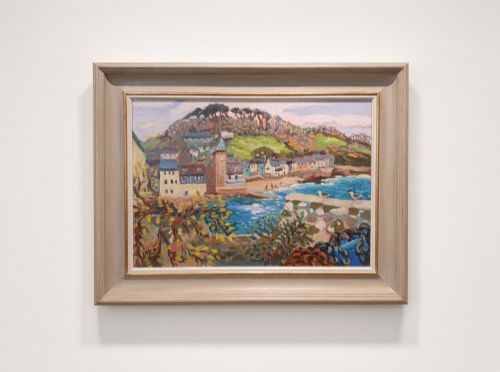
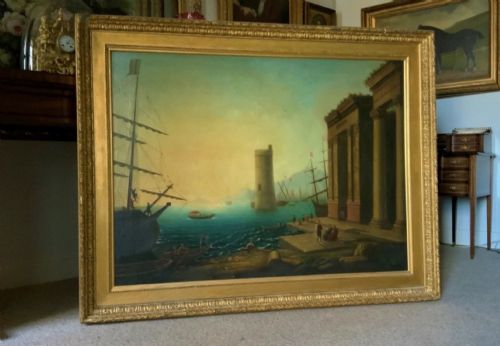
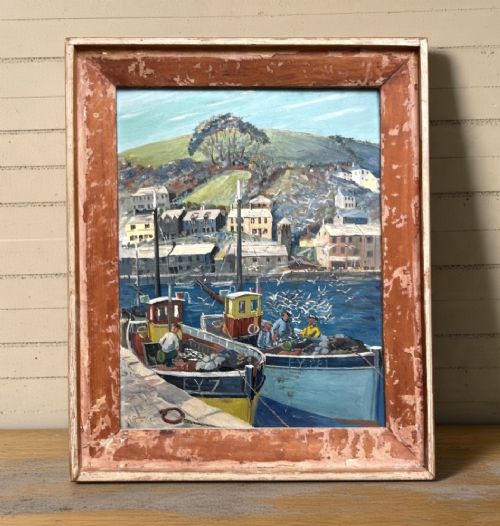
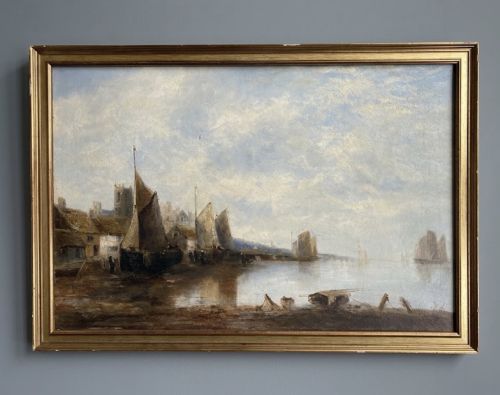
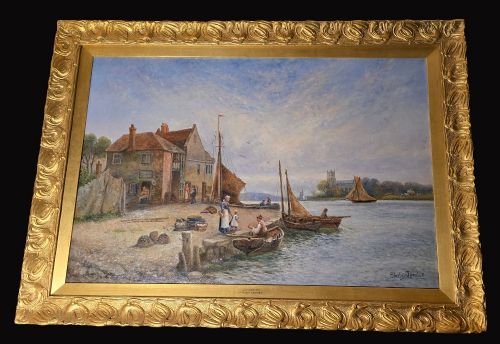
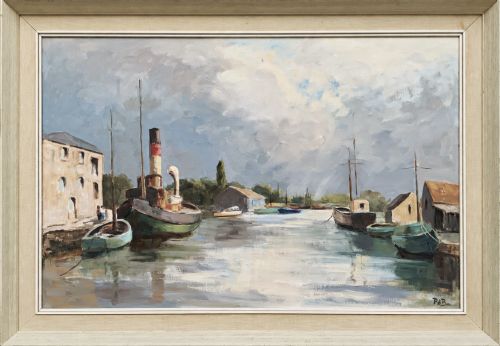
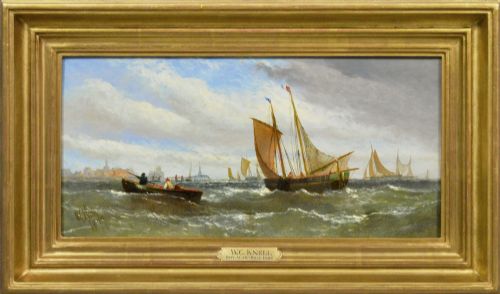
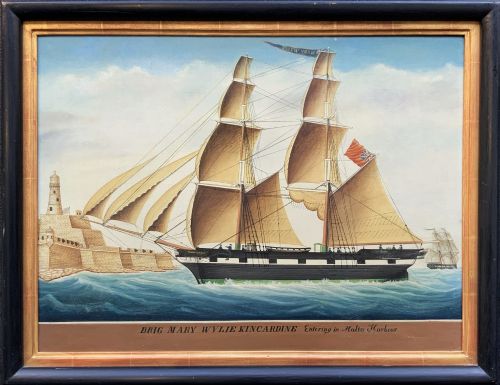
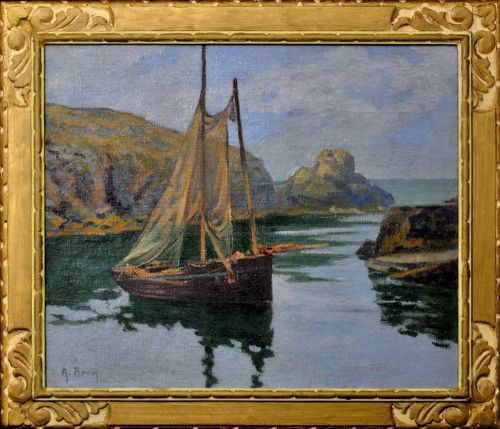
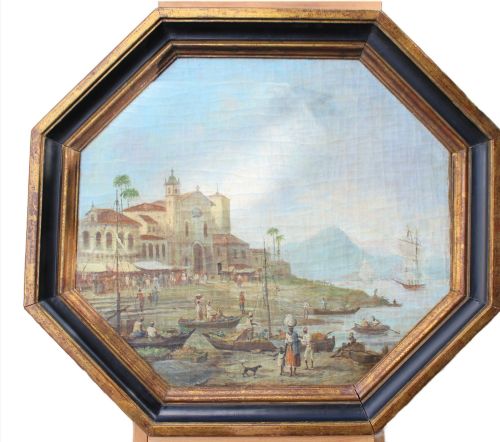
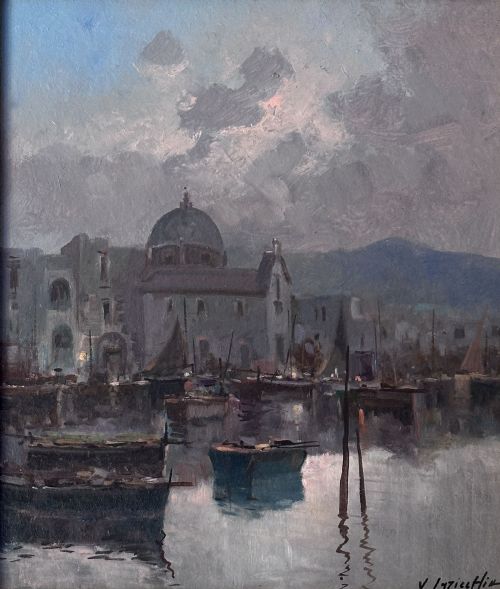
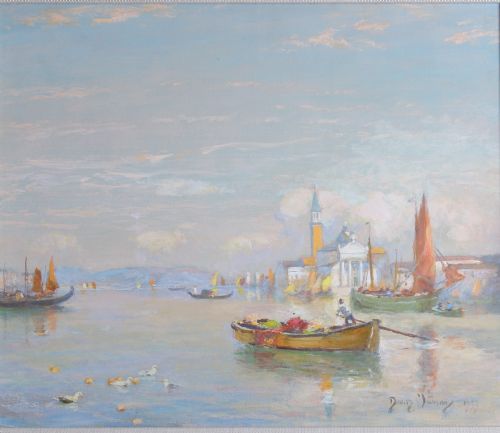
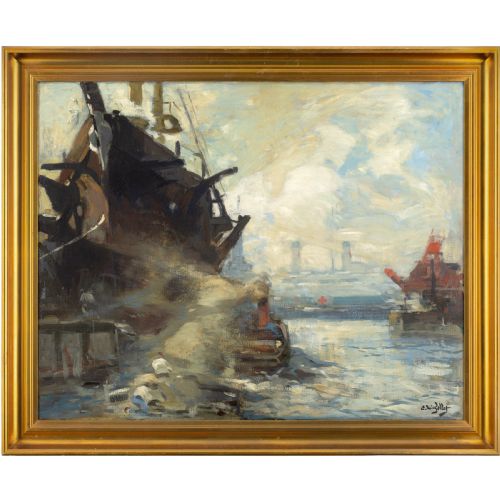
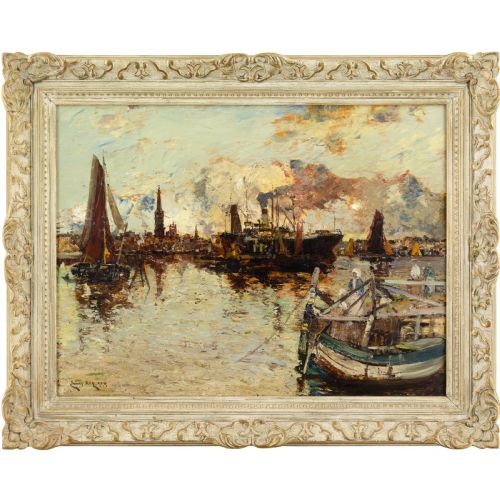
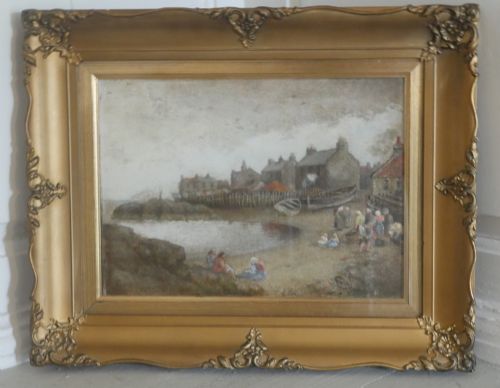
When searching for an oil painting harbour, collectors encounter depictions of coastal life, maritime trade, and naval vessels spanning the nineteenth century through to the mid-twentieth century. These works document specific locations ranging from British fishing ports to Mediterranean lagoons and continental European waterways.
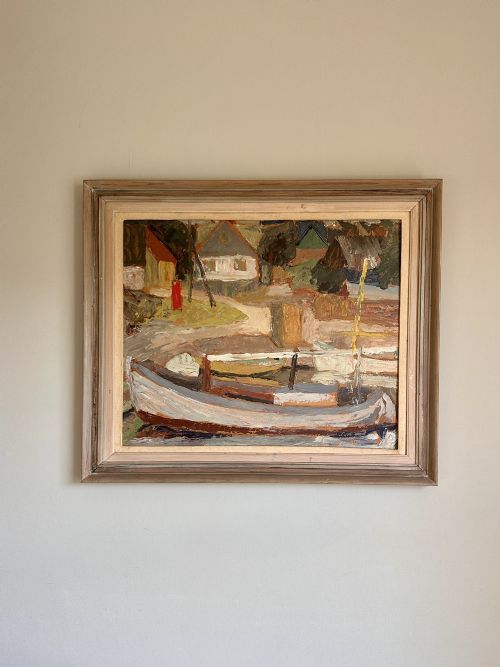
The pieces on this page appear in various aesthetic movements, including Victorian realism, Impressionism, Post-Impressionism, and Mid-Century Modern styles. Common formats include canvases housed in original gilt wood frames, smaller panels, and boards depicting scenes of boats, quaysides, and tidal estuaries.
Materials and construction
Artists painted primarily with oil paint applied to prepared canvas, wood panels, or rigid boards, building texture through brushwork or impasto techniques. These surfaces frequently retain their period characteristics, showing the interplay of pigment and medium over decades.
Many works are enclosed in decorative gilt wood frames adorned with gold leaf, which complemented the maritime subjects and protected the perimeter of the canvas or panel from physical damage.
Oil Painting Harbor Retail Price Guide 2026
Typical asking prices for oil painting harbor among the pieces listed under this phrase on Sellingantiques today, from the lower quarter to the upper quarter. They describe what is for sale here now, not the wider market.
Listings feature works spanning the nineteenth century through the 1960s, executed on wood, canvas, and board.
Distinguishing quality in maritime art
Quality rests in the artist's ability to render light upon water, atmospheric perspective, and the structural integrity of vessels rather than the mere subject matter itself. Superior examples demonstrate confident brushwork, balanced composition, and a clear sense of place.
The preservation of the original paint layer and the authenticity of the associated frame contribute significantly to the standing of a piece. Works that retain their surface integrity without extensive restoration stand apart from compromised examples.
Stanley Leader·Sir David Murray RA·Johann Moritz Rugendas·Eugène-Louis Gillot·James Kay RSW·Augusto Alberici·Peter Brannan·Willem Bos·Charles William Wyllie·William Edward Webb·Jean-Baptiste Olive·James Fry
The Oil Painting Harbor Glossary
- Impasto
- Paint applied thickly to a canvas or board, leaving visible brush or palette knife marks that create a three-dimensional texture. This technique gives water and clouds a tangible sense of movement.
- Gilt wood
- Wood carved and covered with a thin layer of gold leaf or metallic gilt finish. It serves as the primary material for traditional frames enclosing period canvases.
- Maritime painting
- Artworks focusing primarily on ships, harbours, coastal views, and the sea. These scenes document naval history and commercial shipping lanes.
- Post-Impressionism
- An art movement following Impressionism that extends its use of vivid colours and thick application while emphasising geometric forms and expressive content. Artists in this tradition often simplified harbour structures to focus on colour relationships.
Oil Painting Harbor: Frequently Asked Questions
How do I identify the period of a harbour painting?
Examine the style of the vessels depicted, the clothing of any figures on the quayside, and the framing materials used. Maritime technology changed rapidly between the nineteenth and mid-twentieth centuries, providing clear chronological markers.
Additionally, stretcher construction, canvas types, and signature styles help narrow down the decade in which the work was produced.
Where should I hang an oil painting of a harbor?
These works suit well-lit spaces away from direct sunlight and excessive humidity, which can affect the stability of both the canvas and the oil pigments. Placing them at eye level allows the textures and details of the water to be appreciated.
Pairing the piece with a wall colour that complements the tones of the sky or sea enhances its visual impact within a room.
What is the difference between an oil on canvas and an oil on board?
An oil on canvas involves pigment applied to a woven fabric stretched across a wooden frame, offering a slight give and a traditional texture. Oil on board uses a rigid wooden or composite panel as the support.
Boards were frequently favored for plein air painting because they provided a sturdy surface that resisted damage during transport.
How do frame styles relate to maritime paintings?
Frames often reflect the aesthetic preferences of the era in which the painting was created or exhibited. Elaborate gilt wood frames were common during the Victorian period, while simpler mouldings gained favour in mid-century works.
Original frames provide context about how the artwork was presented to contemporary audiences.