

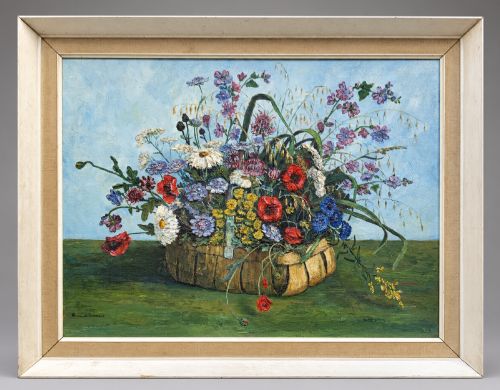
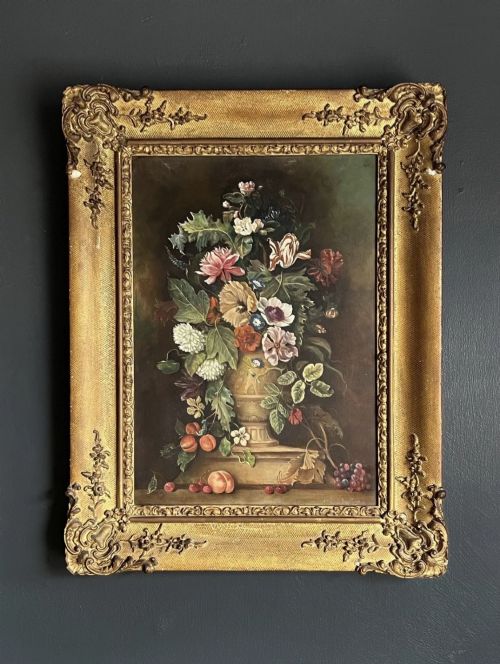
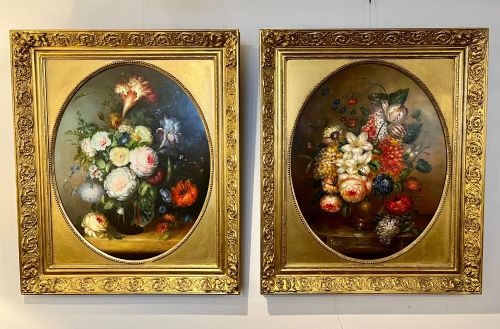
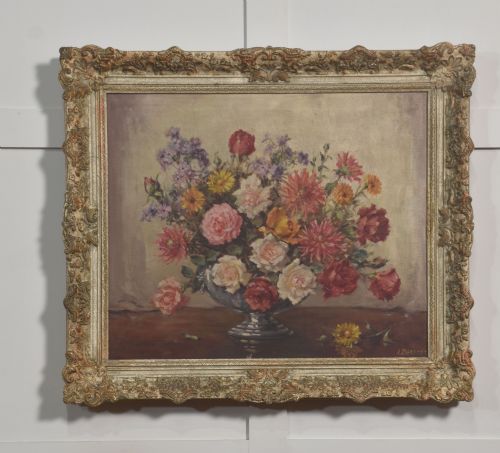
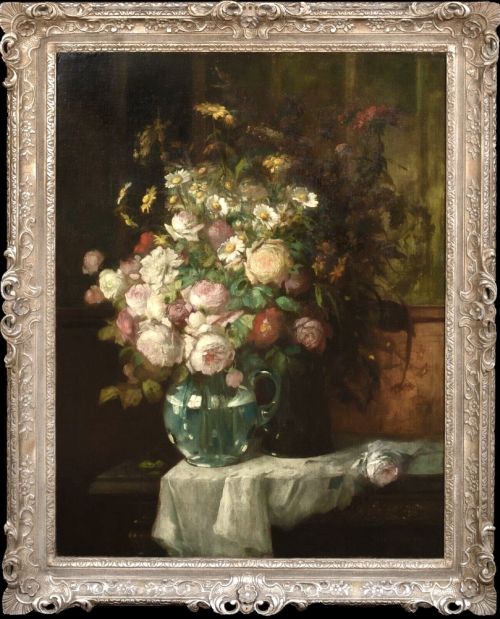


Oil Painting Bouquet Flowers
These oil painting bouquet flowers bring the quiet weight of traditional flora and mid-century brushwork directly into a room.
Oil Painting Bouquet Flowers
When you search for oil painting bouquet flowers, you encounter works spanning the nineteenth century through to the nineteen-sixties, capturing botanical subjects in various regional styles. The selections range from traditional still life compositions to post-impressionist and mid-century modern interpretations.
You are most likely to meet canvases executed in oil paint, occasionally accompanied by oil on board or tempera, housed within wooden or gilded frames. These works originate from diverse European hands, including British, Austrian, Swiss, French, and Italian artists.
The subjects focus heavily on vases filled with spring flowers, polyanthus, or Dutch-inspired floral arrangements. They offer a tangible record of historical painting techniques applied to enduring natural themes.
How they were made
The physical construction relies fundamentally on oil paint applied to stretched canvas or wooden board supports. Artists manipulated the pigment to achieve varied textures, ranging from smooth traditional blending to thick impasto applications.
Framing is an integral component of the physical object, frequently utilising wood, gilt, or gesso to complement the painted imagery. These protective and decorative housings range from simple wooden profiles to ornate gilded structures.
Oil Painting Bouquet Flowers Retail Price Guide 2026
Typical asking prices for oil painting bouquet flowers among the pieces listed under this phrase on Sellingantiques today, from the lower quarter to the upper quarter. They describe what is for sale here now, not the wider market.
Listings feature works spanning the nineteenth century through the nineteen-sixties, executed in oil paint, tempera, and canvas.
What varies in quality
Quality rests primarily in the handling of the medium and the confidence of the brushwork, distinguishing hurried decorative pieces from considered artistic studies. A stronger work demonstrates deliberate command over light, shadow, and botanical form.
The integrity of the physical materials also separates pieces, with well-preserved canvases and original period frames holding greater structural and aesthetic coherence. The pedigree of named artists adds further distinction to individual works.
I. Berezny·Konstantin Stoitzner·Terence Loudon·Freda Marston·Stuart Armfield·Bertoldo Taubert·Elizabeth Rouviere
The Oil Painting Bouquet Flowers Glossary
- Impasto
- Paint applied thickly to a canvas, standing out in relief from the surface. This technique adds visible texture and three-dimensional presence to floral petals.
- Still Life
- A painting featuring inanimate subject matter, typically commonplace objects or natural items such as cut flowers. These arrangements allow artists to focus entirely on colour, form, and composition.
- Gesso
- A plaster-like mixture applied to wood frames or panels as a base before gilding or painting. It provides a smooth foundation for decorative surface treatments.
- Post-Impressionism
- An art movement extending beyond impressionism while rejecting its limitations, focusing on symbolic content and expressive use of paint. Artists working in this manner emphasised vivid colour and structure.
Oil Painting Bouquet Flowers: Frequently Asked Questions
How do I hang a heavy framed oil painting?
Ensure your wall fixings are anchored securely into brickwork or wall studs rather than relying solely on plasterboard.
Use heavy-duty picture wire and suitable wall hooks rated well above the weight of the framed canvas.
How do I date a vintage still life?
Examine the style of the canvas stretcher, the composition of the frame, and any artist signatures or dates recorded on the reverse.
Stylistic markers such as mid-century modern flattening or nineteenth-century academic realism also offer clear chronological indicators.
Where should I place these paintings at home?
Select walls with stable ambient temperatures, avoiding direct, harsh sunlight and damp areas such as unventilated bathrooms.
Natural indirect light works best to reveal the true depth of the oil pigment and the detail of the gilt frames.