
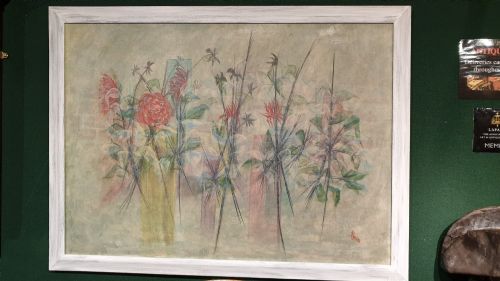
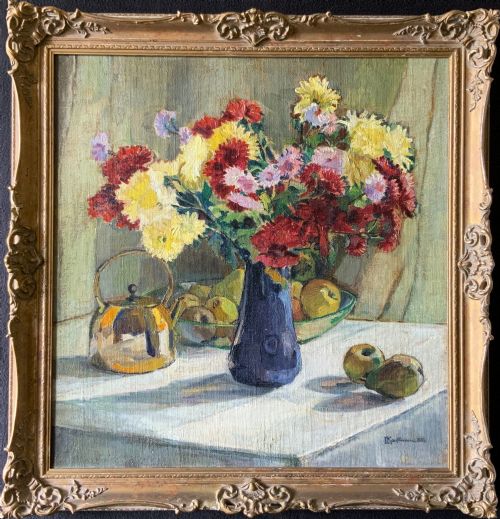
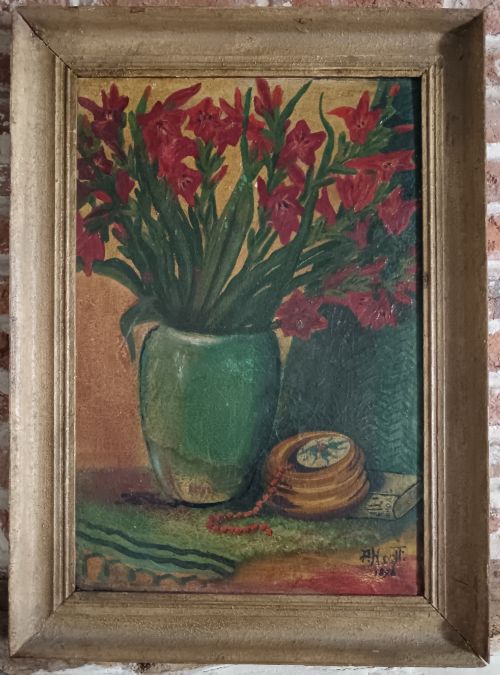


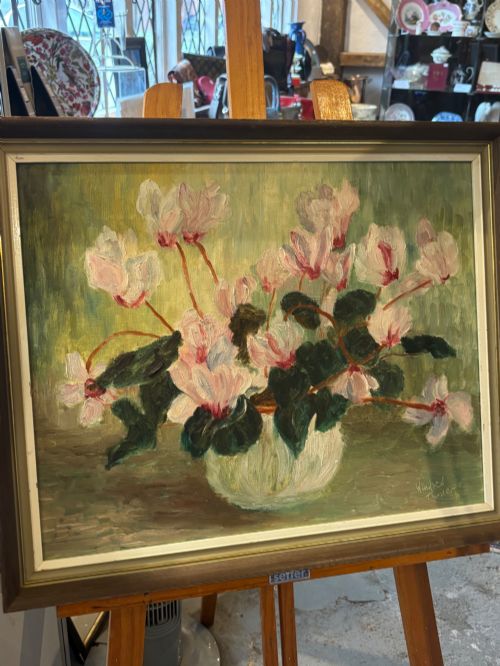


Signed Floral Still Life
A signed floral still life brings domestic quiet and colour to a wall, combining careful handwork with the lasting record of a painter's signature.
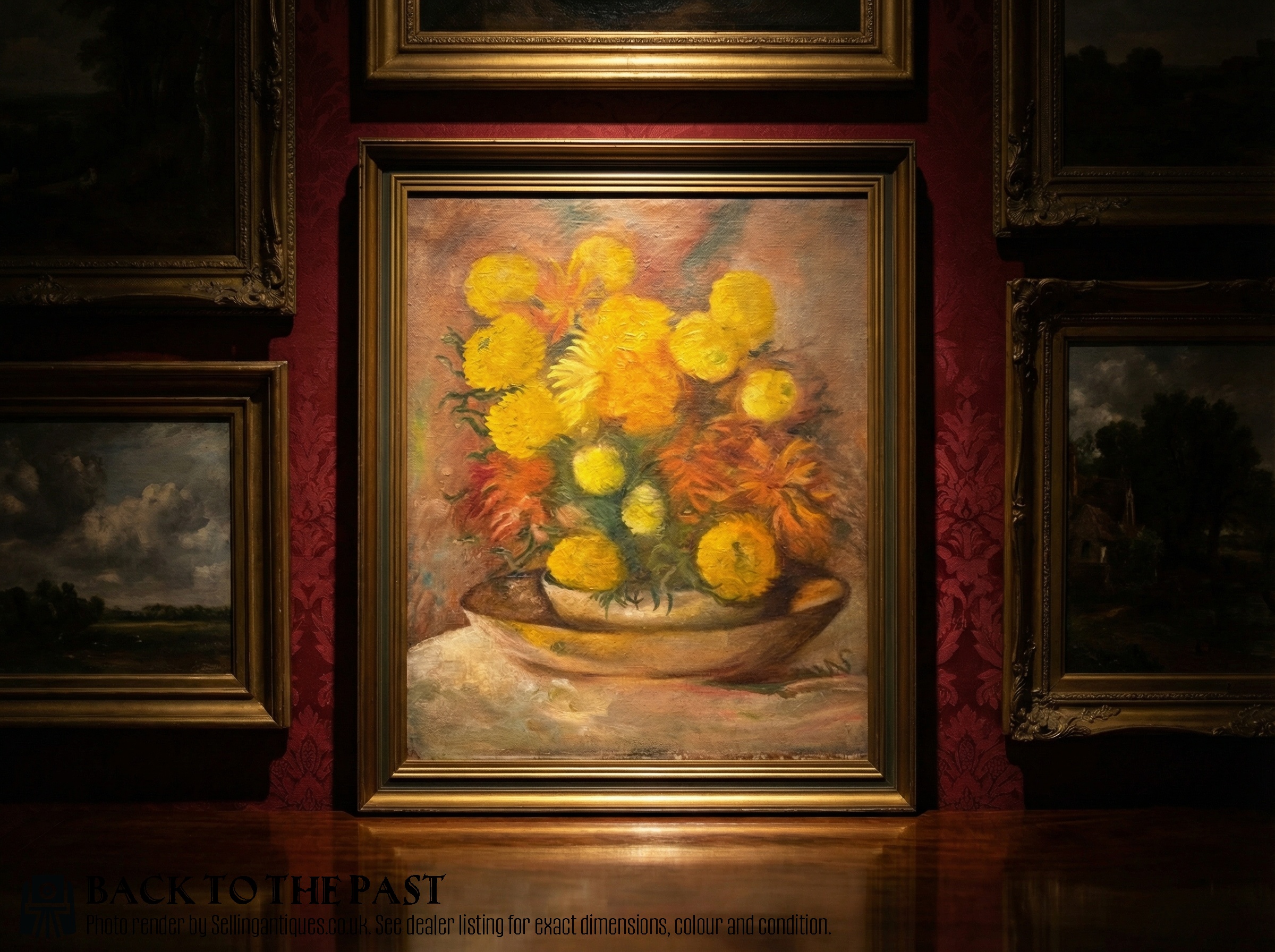
What a signed floral still life is
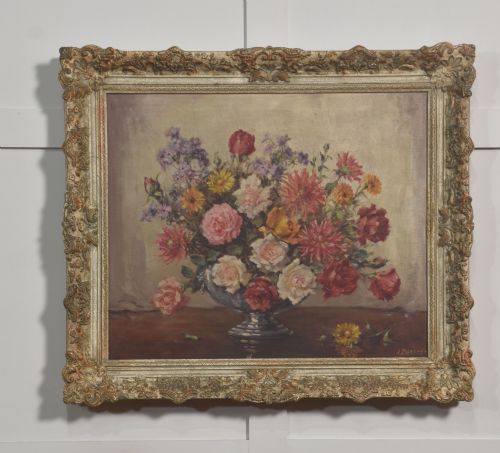
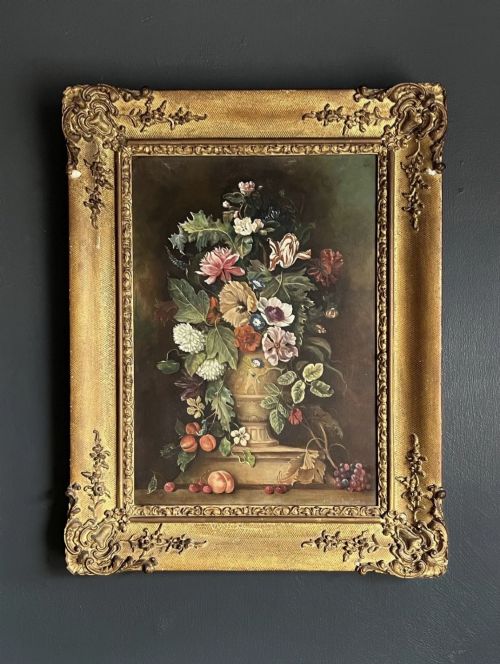
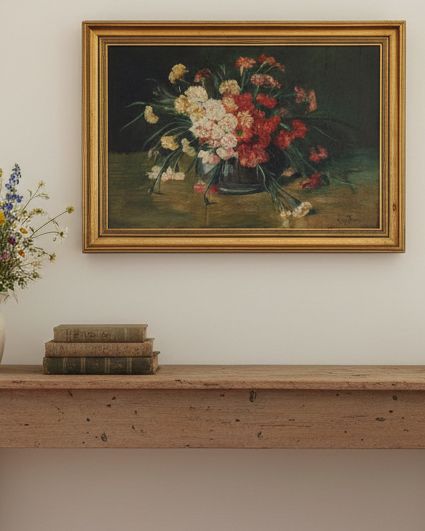
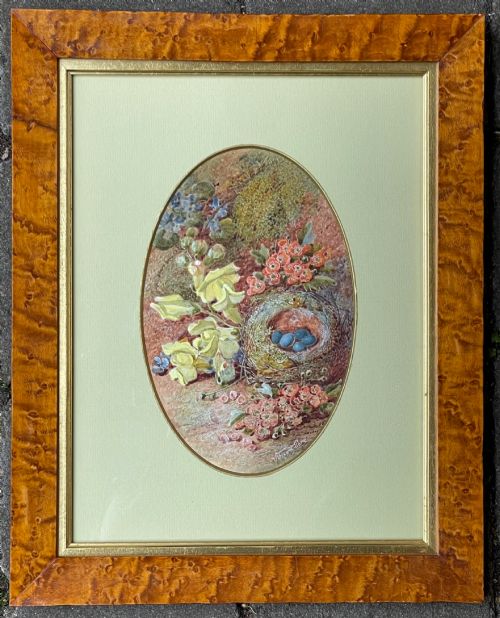
When you search for a signed floral still life, you look for composed studies of flowers rendered by named painters across the nineteenth and twentieth centuries. These works capture arrangements in bowls, jugs, urns and baskets, preserving botanical forms through paint and watercolour on various supports.
The pieces on this page lean heavily towards twentieth-century British and Continental works, alongside traditional Dutch Golden Age revivals. You will encounter oil paintings on canvas and board, watercolours on paper, and works executed on metal panels.
Dated examples from the nineteen-thirties, nineteen-fifties and nineteen-sixties sit alongside earlier nineteenth-century studies. Mid-century British and Post-Impressionism styles dominate the selection, offering both loose brushwork and precise botanical observation.
Materials and construction
Artists painted these subjects using oil paint and watercolour, applying pigments to prepared supports including canvas, wooden board, card, paper and metal panels. Oil on canvas and oil on board provide durable surfaces that hold thick impasto and subtle tonal gradations over decades.
Many works retain their original frames constructed from wood, gesso and gold leaf, occasionally featuring decorative mouldings or gilt finishes. These frames complement the paintings, utilising carved plaster and leaf gilding to frame the visual space.
Retail Price Guide 2026
Typical UK retail prices for signed floral still life, calculated from the Sellingantiques database of over a million retail prices indexed since 2003. This retail price guide relies exclusively on Sellingantiques data; no external sources or auction records are used, so the figures do not describe the wider market.
Flowers in these paintings include dahlias, roses, carnations, tulips, Michaelmas daisies and mock orange blossoms.
What separates the finest examples
Quality in these paintings rests upon the confidence of the brushwork and the structural balance of the composition. A superior hand captures light falling across petals and foliage with economy and precision, avoiding static or heavy-handed placement.
The integrity of the support and the preservation of the original surface also distinguish better works. Clean oil paint with minimal craquelure and watercolours retaining their original pigment vibrancy elevate a piece above standard decorative production.
I Berezny·Winifred Turner·Sir Matthew Smith·Margaret Laing·Phyllis I Hibbert·Albert E Jackson·Isabelle Cohen·H C Mellor·W E Littlewood
The Signed Floral Still Life Glossary
- Oil on canvas
- A painting technique where pigment suspended in drying oil is applied to stretched woven fabric. This method allows for rich texture and deep blending of colours.
- Gesso
- A plaster-like mixture used as a base coat on wooden frames before gilding. It provides a smooth surface for gold leaf application.
- Impasto
- Paint applied thickly to a canvas or board so that the strokes stand proud of the surface. It adds physical depth and catches ambient light.
- Post-Impressionism
- An art movement extending beyond Impressionism that prioritised expressive forms and symbolic use of colour. Painters rejected strict naturalism in favour of structural brushwork.
Frequently Asked Questions
What is a signed floral still life?
A signed floral still life is a painted or drawn study of flowers bearing the artist's personal signature. These works document botanical subjects arranged in domestic vessels by named painters.
They reflect the stylistic approaches of their period, ranging from traditional Dutch-inspired arrangements to mid-century British interpretations.
How do I date these paintings?
Dating relies on visible artist signatures, inscribed dates, framing styles and the material support used. Oil on metal panels and card often point towards nineteenth or early twentieth-century production.
Twentieth-century examples frequently employ board or canvas alongside modernist brush techniques typical of nineteen-thirty to nineteen-sixty works.
Where were these paintings displayed?
These paintings historically hung in domestic interiors, studies and drawing rooms as decorative focal points. Their modest scale suited them for intimate spaces within the home.
Today they continue to function as wall art, bringing historical floral studies into modern rooms.
What frames accompany these works?
Many works retain period frames made from wood decorated with gesso and gold leaf. These surrounds protect the edges of the canvas or board and complete the visual presentation.
Original frames often feature decorative mouldings characteristic of the painting's era of creation.