



Oil Lamp Globe Shade
An oil lamp globe shade diffuses soft light from period lighting, combining decorative colour with practical function.
Oil Lamp Globe Shade
An oil lamp globe shade crowns Victorian and Edwardian lighting, shaping the illumination from oil or converted table lamps. These spherical and bulbous glass covers sit atop brass and ceramic fonts, completing domestic lighting schemes from the nineteenth and early twentieth centuries.
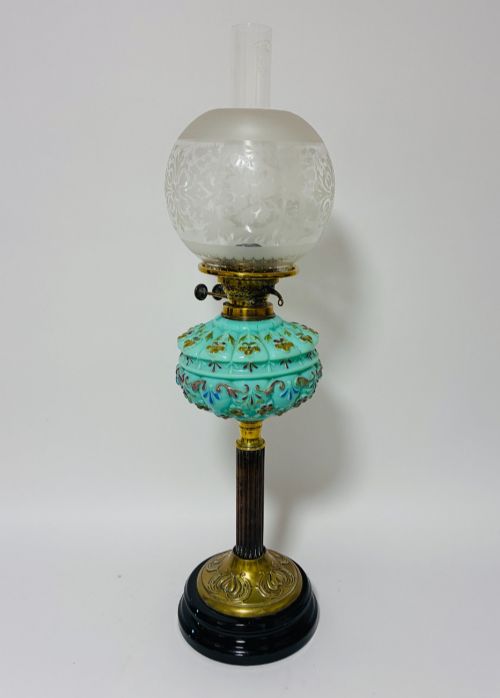
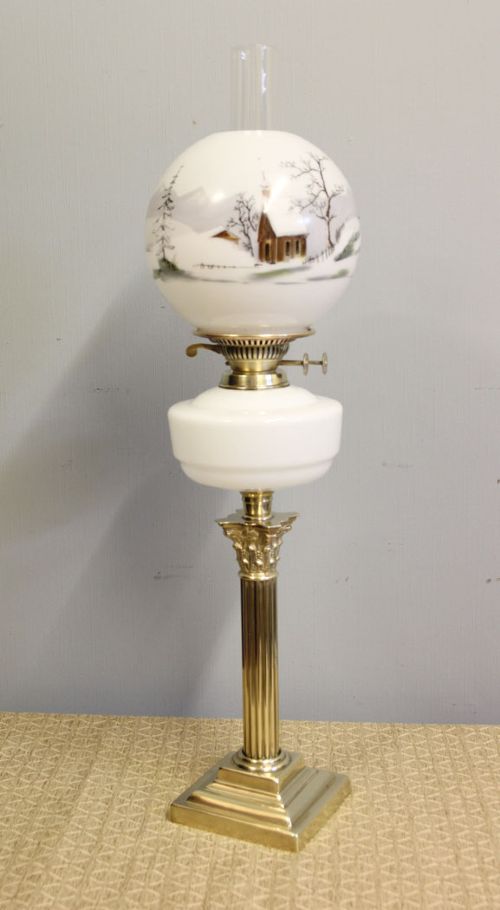
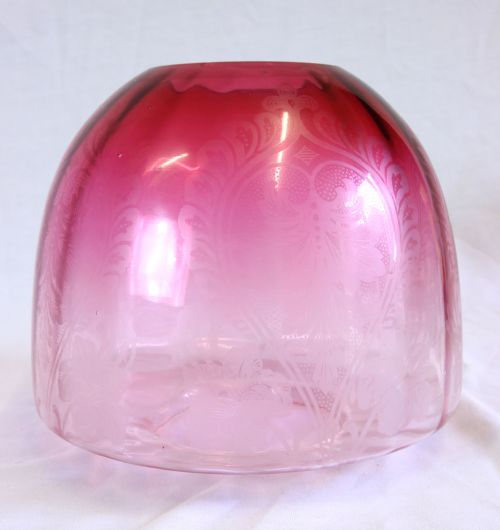
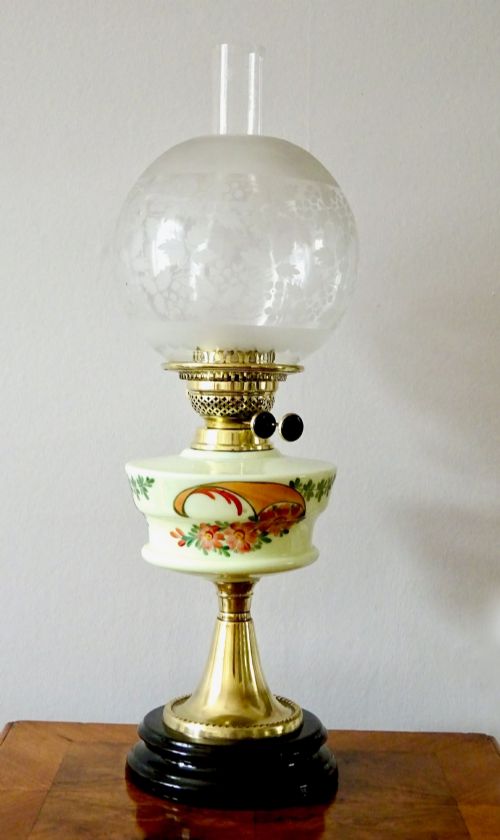
The selections available here range from plain opaque milk glass globes to richly coloured cranberry and opaline pieces. Buyers most frequently encounter Victorian and Edwardian examples featuring etched patterns or vibrant hues designed to soften bright flames.
Many of these glass fixtures survive alongside their original brass or bronze columns, though some appear as standalone globes ready for pairing with compatible lamps. The variety spans simple spherical forms to tulip-shaped shades with distinctive brass mounting rings.
Materials and construction methods
Makers produced oil lamp globe shade designs primarily from glass, utilising techniques such as mould-blowing and acid-etching to achieve decorative surface patterns. Cranberry and vaseline glass varieties required specific mineral additives in the molten batch to produce deep red or yellowish-green translucent tones.
Opaline and milk glass globes relied on dense, light-diffusing ingredients to create opaque white surfaces that concealed the oil burner mechanics beneath. Artisans often added brass fitter rings to secure the glass securely to the lamp galleries.
The inventory records glass materials including cranberry, opaline, vaseline, and etched varieties spanning the Victorian and Edwardian eras.
Distinctions in craftsmanship
The distinction between standard production and superior work rests on the depth of the glass colour and the crispness of any acid-etched decoration. Heavier glass vessels with even wall thickness and finely rendered floral or terrestrial motifs represent more accomplished manufacturing standards.
Mould seams that have been carefully polished down and mount rings that fit the gallery without wobble indicate higher production values from period workshops and makers.
Hinks of Birmingham·Messengers·Harrods
The Oil Lamp Globe Shade Glossary
- Opaline Glass
- A translucent, milky-white glass that diffuses light gently. It gained popularity during the nineteenth century for domestic shades.
- Vaseline Glass
- A yellowish-green glass containing uranium dioxide that glows under ultraviolet light. Collectors prize this material for its distinct colour.
- Etched Glass
- Glass decorated by applying acid to eat away exposed surfaces, leaving frosted patterns. This technique created intricate floral and geometric designs.
Oil Lamp Globe Shade: Frequently Asked Questions
Are these shades suitable for electric lamps?
Many period oil lamps have undergone conversion to electricity while retaining their original brass standards and glass shades. These converted pieces integrate safely into modern domestic interiors.
Check that the internal wiring and bulb fittings comply with current safety standards while preserving the antique components.
How do I clean an etched glass shade?
Wash the glass gently in lukewarm water using mild washing-up liquid and a soft cloth. Avoid harsh scrubbing brushes that might scratch delicate etched surfaces.
Dry the shade thoroughly with a lint-free towel to prevent water spots from forming on cranberry or opaline glass.
How can I date an oil lamp globe shade?
Examine the manufacturing traits, such as the ground rim edges, colour saturation, and style of any etched decoration. Victorian pieces often display rich cranberry or green hues with organic motifs, while later Edwardian examples lean toward opaline finishes.
Compare the fitter dimensions and glass weight against documented pieces from the nineteenth and early twentieth centuries.