



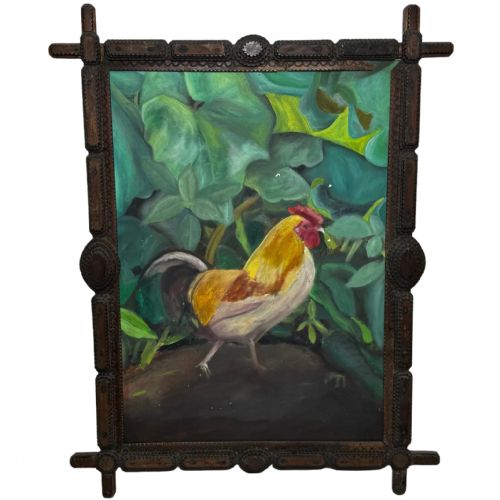


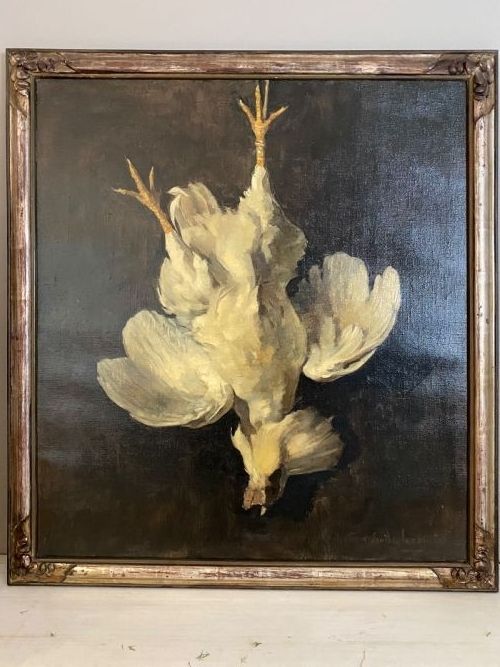

Oil Canvas Poultry Painting
An oil canvas poultry painting captures farmyard life and exotic birds with rich textures across centuries of European art.
Oil Canvas Poultry Painting
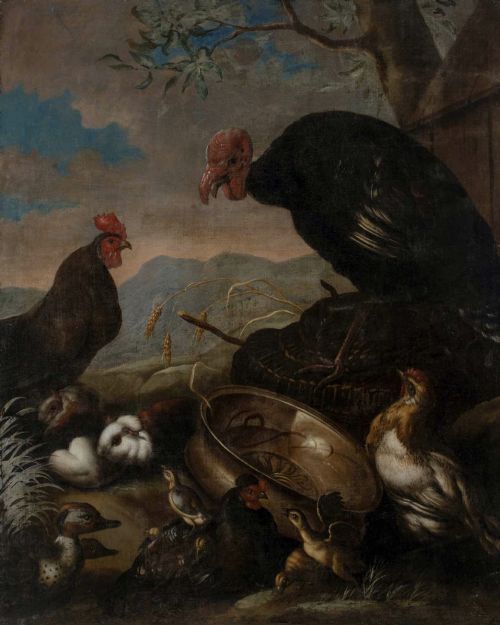
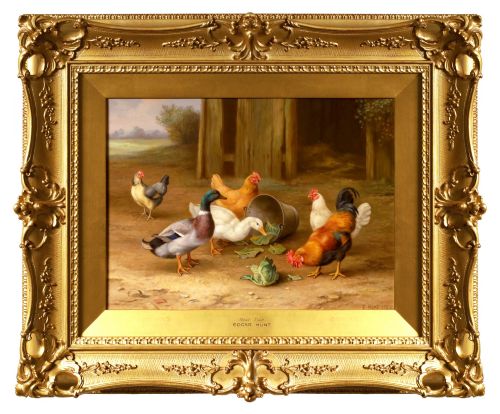
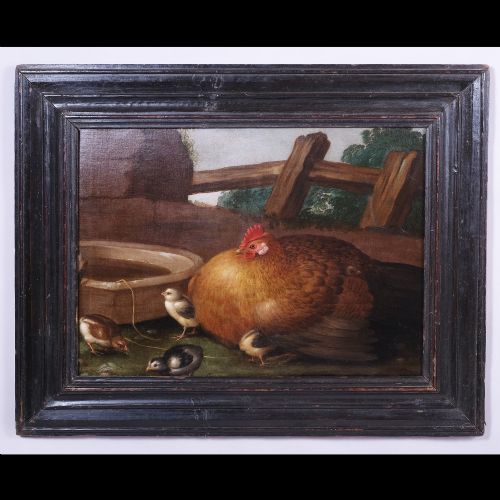
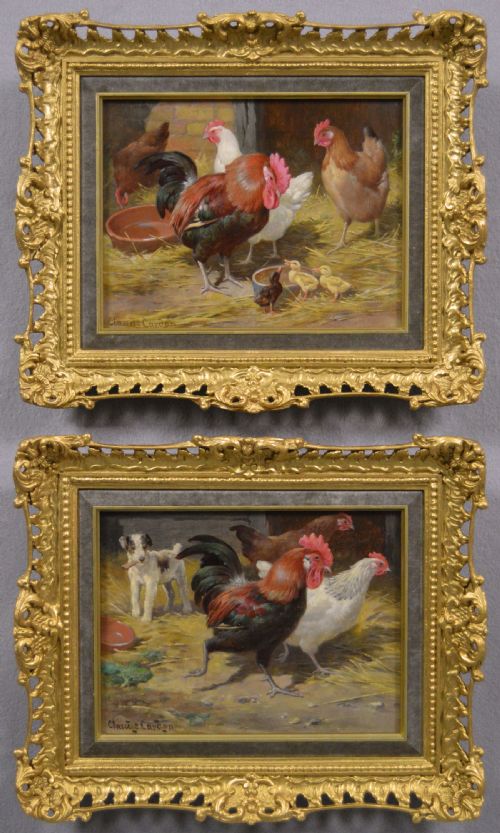
An oil canvas poultry painting brings domestic fowl and farmyard scenes into interior spaces through works spanning the seventeenth century to the twentieth century. These canvases record farmyard animals, roosters, and chicks alongside broader pastoral and interior settings.
Buyers will encounter Victorian realism, British animalier, and seventeenth-century European styles among the selections. Works range from intimate depictions of cockerels and hens to large-scale landscapes featuring castle ruins and farm animals.
The assortment includes pieces from British, Dutch, Flemish, Spanish, and Italian traditions. Formats vary from individual character studies of poultry to bustling farmyard scenes populated by horses, pigs, and cattle.
How they were made
Artists built these works using oil paint applied to stretched canvas or board surfaces. The medium allowed painters to layer rich pigments and create depth in the feathers of birds and the surrounding landscapes.
Many of these paintings retain their original giltwood or carved wood frames. These surrounds complement the oil on canvas works and provide structural stability to the older pieces.
Several canvases feature moody roosters surveying farmyard domains that once belonged to nineteenth-century gentlemen.
What varies in quality
Quality rests in the precision of brushwork and the anatomical accuracy of the birds and animals depicted. Master painters captured light on feathers and textures in farmyard straw with distinct vitality.
The handling of the broader landscape or interior setting contributes significantly to the overall merit of a piece. Stronger works integrate the poultry naturally into a cohesive spatial arrangement rather than isolating them against a flat backdrop.
Angelo Maria Crivelli·Edgar Hunt·Claude Cardon·Marmaduke Cradock·Jacob Bogdani·Percival Glenfern·Owen Bowen·Gustav Goemans·John Frederick Herring Jnr·J L Van Leemputten·Emile Lecomte
The Oil Canvas Poultry Painting Glossary
- Oil on Canvas
- A painting medium where pigments suspended in drying oil are applied to a woven fabric support. This combination allows for rich colour blending and lasting durability.
- Giltwood Frame
- A wooden picture surround covered with a thin layer of gold leaf or gilt. These frames often reflect the period aesthetic of the painting they enclose.
- Animalier
- A style focusing on the realistic portrayal of animals. Artists working in this manner studied the specific anatomy and behaviour of farmyard birds and livestock.
- Realism
- An artistic movement dedicated to representing subject matter truthfully without artificiality. In these works, it manifests in the accurate depiction of poultry and farm environments.
- Still Life
- A painting featuring inanimate subject matter, though often including living birds or animals in these agricultural compositions. It emphasises form, texture, and light.
Oil Canvas Poultry Painting: Frequently Asked Questions
What is an oil canvas poultry painting?
These works are traditional fine art pieces executed in oil paint upon canvas or board, focusing on chickens, cockerels, and farmyard birds.
They range from intimate nineteenth-century character studies to large seventeenth-century master paintings set within pastoral landscapes.
How were these paintings displayed originally?
Landed gentry and farmers alike hung these canvases in country houses, farm estate offices, and formal dining rooms to celebrate rural life.
They were typically mounted in heavy giltwood frames designed to anchor the composition within a domestic interior.
How do I care for an oil painting?
Keep the canvas away from direct sunlight and damp environments to protect the oil pigments and the wooden stretcher bars.
Dust the surface gently with a soft, dry brush and avoid using liquid cleaners on the paint or the giltwood frame.
How can I tell the period of a painting?
Examine the preparation of the canvas, the style of the clothing or architecture in the background, and the framing techniques used.
Stylistic shifts from seventeenth-century Dutch influence to Victorian realism provide clear clues to the date of execution.