
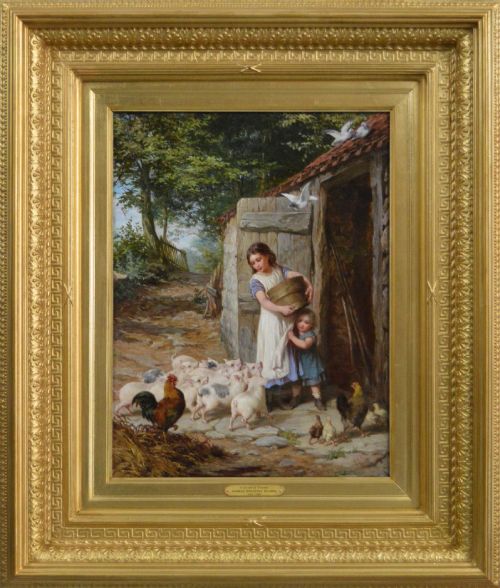

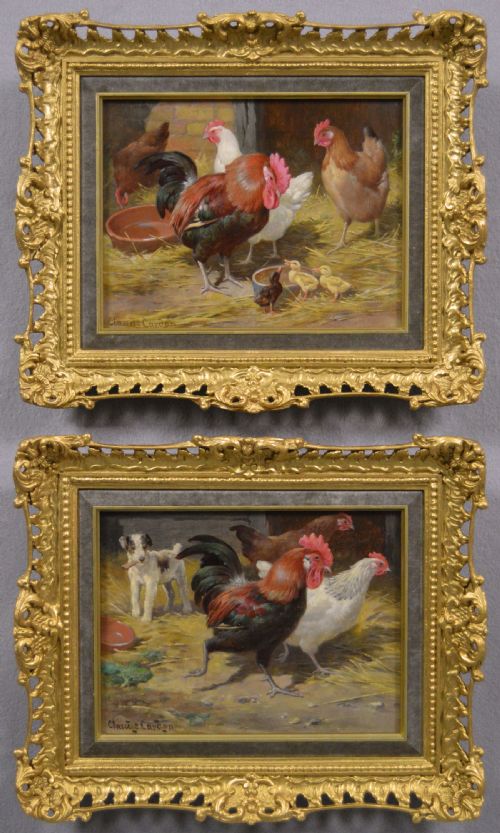


Victorian Farmyard Oil Painting
A victorian farmyard oil painting brings rural life and domestic animals into the home with rich pastoral detail.
Victorian Farmyard Oil Painting
A victorian farmyard oil painting depicts rural life, domestic animals and agricultural scenes across the nineteenth and early twentieth centuries. These works frequently feature horses, pigs, cattle, chickens, and poultry situated near barns, stables, and country landscapes.
The pieces appearing on this page span the Victorian and Edwardian eras, encompassing styles such as Victorian realism, pastoral scenes, and genre painting. Buyers frequently encounter representations of daily farm activities, often populated by poultry, horses, and figures at work.
Originating from British artistic traditions, these canvases capture an idealized yet observant view of the countryside. They serve as historical records of agricultural practices while offering decorative warmth through traditional rural subjects.
Materials and construction
These works are executed in oil paint predominantly upon canvas or wood supports. Artists built up compositions using layered brushwork to render the textures of feathers, fur, and weathered timber.
Frames play an integral part in the presentation of these pieces, frequently constructed from wood, gesso, and finished with gold leaf or giltwood. The combination of oil on canvas with ornate gilt framing defines the physical presence of the genre.
Listed works span the nineteenth century into the early twentieth century, incorporating Victorian realism and pastoral styles.
Evaluating quality and execution
Quality rests upon the artist's ability to render animal anatomy and natural light convincingly. Masterful handling of fur, feather textures, and atmospheric landscape backgrounds elevates an example above routine studio output.
Compositional balance and the vitality of the figures distinguish superior pieces. Works that capture distinct animal behaviour and detailed environmental elements demonstrate greater artistic engagement.
George Augustus Holmes·Edgar Hunt·Claude Cardon·John Frederick Herring Jnr·Percival Glenfern·John Linnell·Pierre Emmanuel Dielmans·Arthur Charles Dodd·Arthur Walker Redgate·Georgina Lara·Thomas Blinks·Henry Charles Woollett·Harry Graff
The Victorian Farmyard Oil Painting Glossary
- Genre painting
- Depiction of aspects of everyday life by depicting ordinary people and animals engaged in common activities. These scenes often tell a domestic or rural story.
- Pastoral
- Relating to the countryside and farm life, typically presented in a romantic or idealized manner. Such scenes emphasise peaceful rural harmony.
- Giltwood
- Wood that has been carved and covered with a thin layer of gold leaf or gold paint. It is commonly found on traditional picture frames.
- Gesso
- A paint mixture consisting of a binder mixed with chalk, pigment, or plaster used to prepare surfaces for painting or framing. It provides a smooth base for subsequent gilding.
Victorian Farmyard Oil Painting: Frequently Asked Questions
What subjects appear in these paintings?
The compositions concentrate on agricultural subjects, featuring farm animals such as horses, pigs, cattle, and poultry alongside barns and rural landscapes.
Human figures occasionally appear as labourers, women feeding livestock, or children tending to animals within the farmyard setting.
How do I date a victorian farmyard oil painting?
Dating relies on stylistic markers, artist signatures, and framing materials characteristic of the nineteenth and early twentieth centuries. Many pieces carry explicit dates or reflect the specific realism styles popular during the Victorian and Edwardian periods.
Archival records and listed biographical dates for named artists further help establish the period of execution.
Where should I hang these paintings?
These works suit traditional reception rooms, studies, or dining spaces where their warm rural palettes complement classic interior decor. They pair effectively with wood panelling and traditional furnishings.
Direct sunlight should be avoided to protect the oil paint and canvas from gradual fading or degradation over time.
What is the difference between realists and pastoral painters?
Realist painters focused on capturing detailed anatomical accuracy and naturalistic working conditions within the farmyard. Their approach prioritized observational truth over romantic idealization.
Pastoral painters emphasised the picturesque, tranquil qualities of rural life, often softening the daily toil of agricultural work into scenic harmony.