
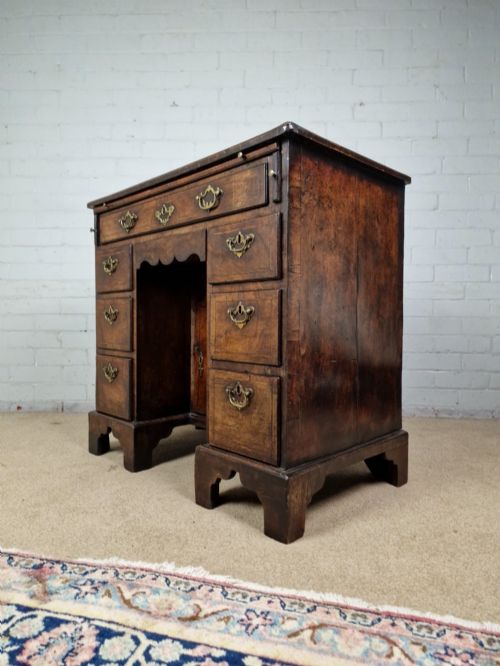
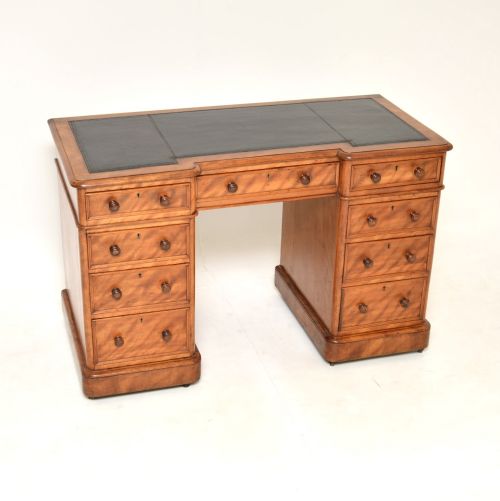
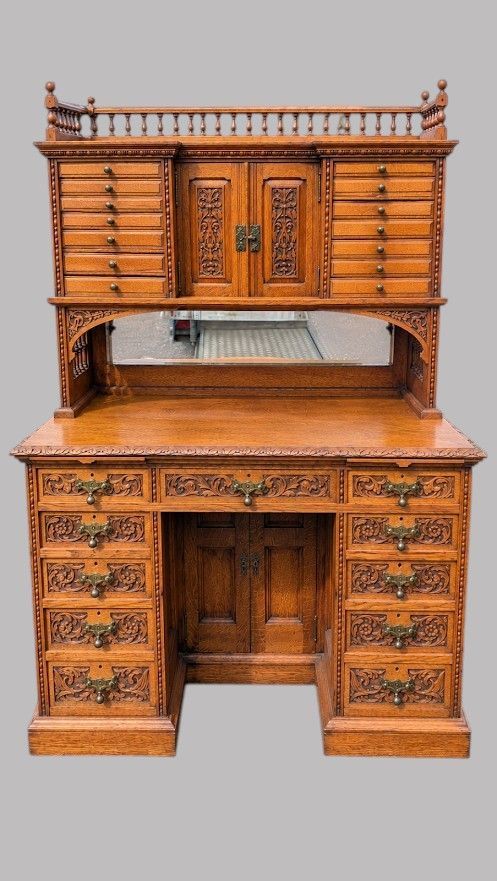
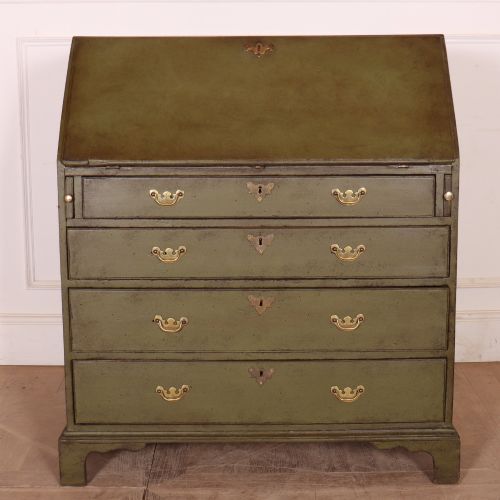

Office Writing Bureau
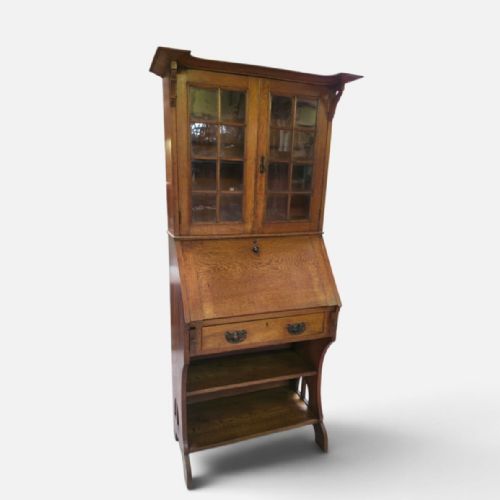
An office writing bureau offers a dedicated workspace fitted with fall fronts, drawers, and pigeonholes to organise correspondence.
Office Writing Bureau
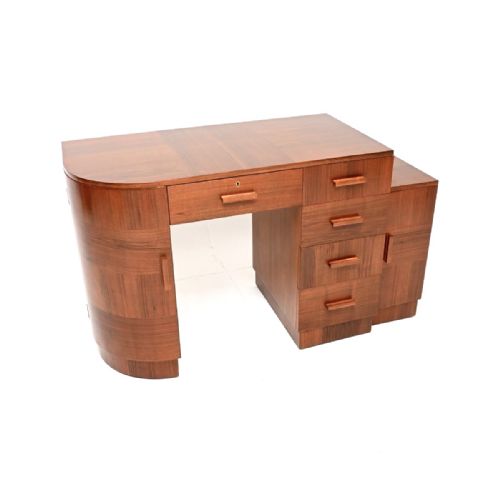
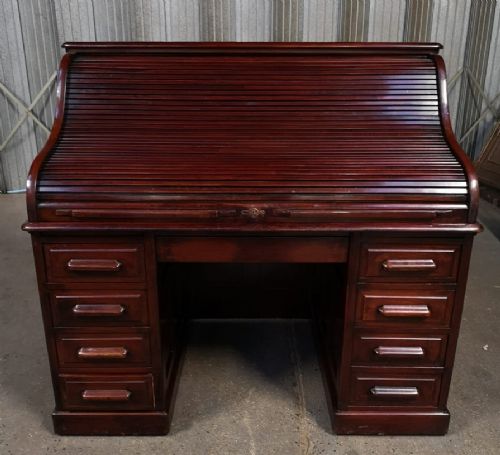
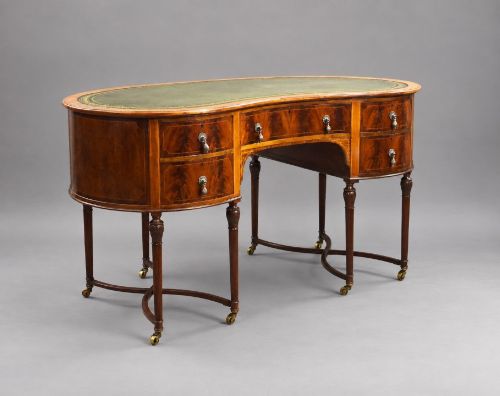
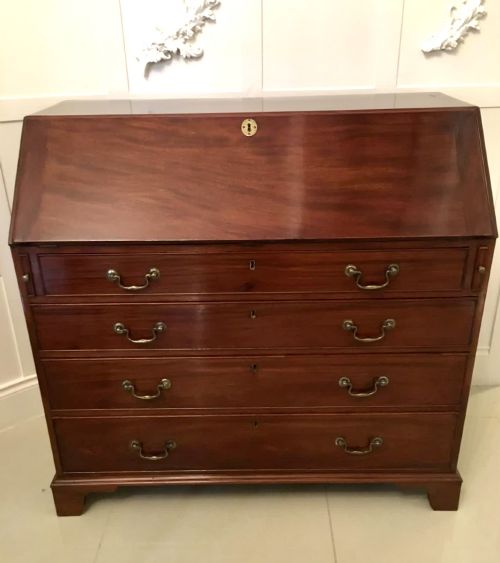
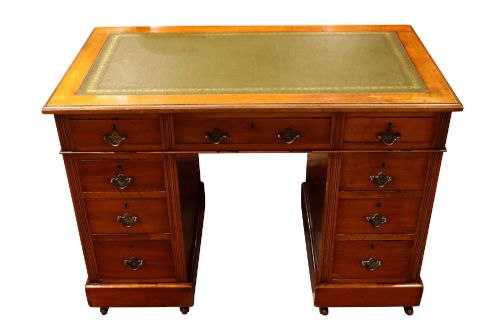
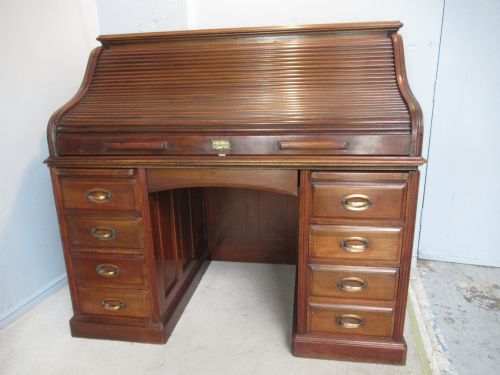
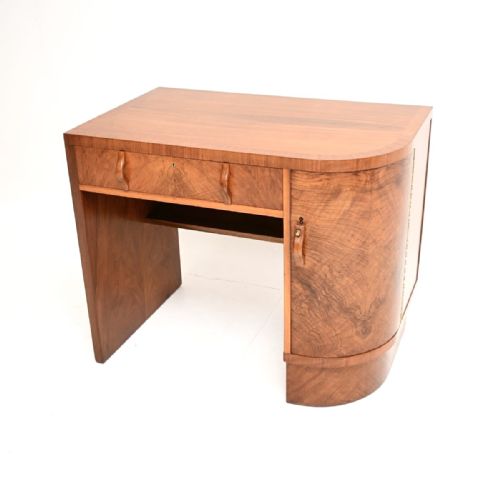
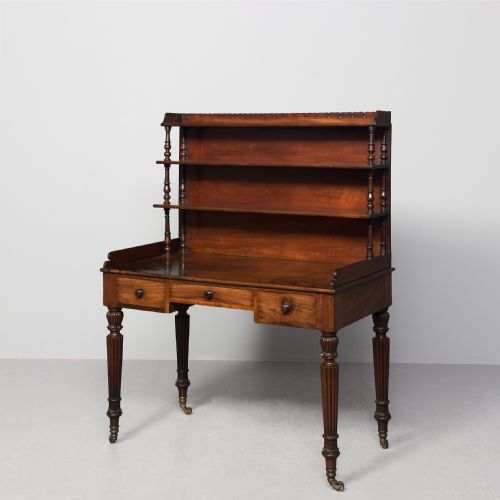
An office writing bureau encompasses practical writing furniture designed for study and professional correspondence across several historical periods. Pieces range from eighteenth-century mahogany examples and nineteenth-century pedestal and cylinder desks to twentieth-century Art Deco walnut designs.
Craftsmanship and proportion
Quality rests in the selection of timber veneers, the precision of dovetail joints on drawers, and the integrity of internal stationery compartments. Superior examples display thoughtful grain matching and robust mechanical action in roll-top or cylinder mechanisms.
Makers integrated carved detailing, such as paw feet or panel mouldings, with restraint on finer items. The presence of original hardware, working locks, and balanced proportions distinguishes workshop production from standard utility items.
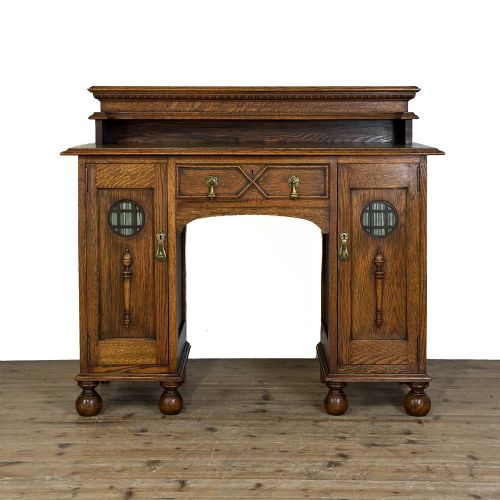
Listings feature woods such as mahogany, walnut, burr walnut, and oak alongside leather and brass across multiple centuries.
James Mein of Kelso·Maple and Co.·Rurka
The Office Writing Bureau Glossary
- Bureau
- A desk featuring a sloping hinged flap that drops down to form a writing surface, concealing internal drawers and pigeonholes.
- Pedestal desk
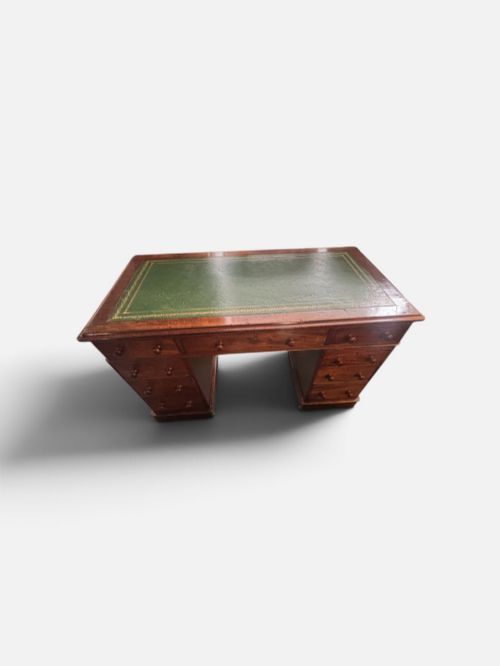
- A heavy free-standing desk supported by two banks of drawers running down to the floor.
- Kneehole desk
- A compact desk with a central recess for the user's legs, flanked by pedestals containing small drawers.
- Tambour
- A sliding door or shutter constructed from narrow vertical strips of wood glued to a fabric backing.
- Secretaire
- A piece of furniture containing a pull-down writing drawer disguised as a standard drawer.
Office Writing Bureau: Frequently Asked Questions
What is an office writing bureau?
An office writing bureau is a dedicated piece of furniture designed for correspondence and administrative work, typically combining a writing surface with enclosed storage for stationery and papers.
These pieces range from drop-front cabinets to elaborate pedestal desks fitted with drawers and pigeonholes.
How do I identify the period?
Period identification relies on observing timber choices, construction techniques, and stylistic ornament such as Chippendale carving or Art Deco geometric lines.
Drawer joints, handle styles, and secondary woods offer further clues to whether a piece originates from the eighteenth, nineteenth, or twentieth century.
Were these used in homes?
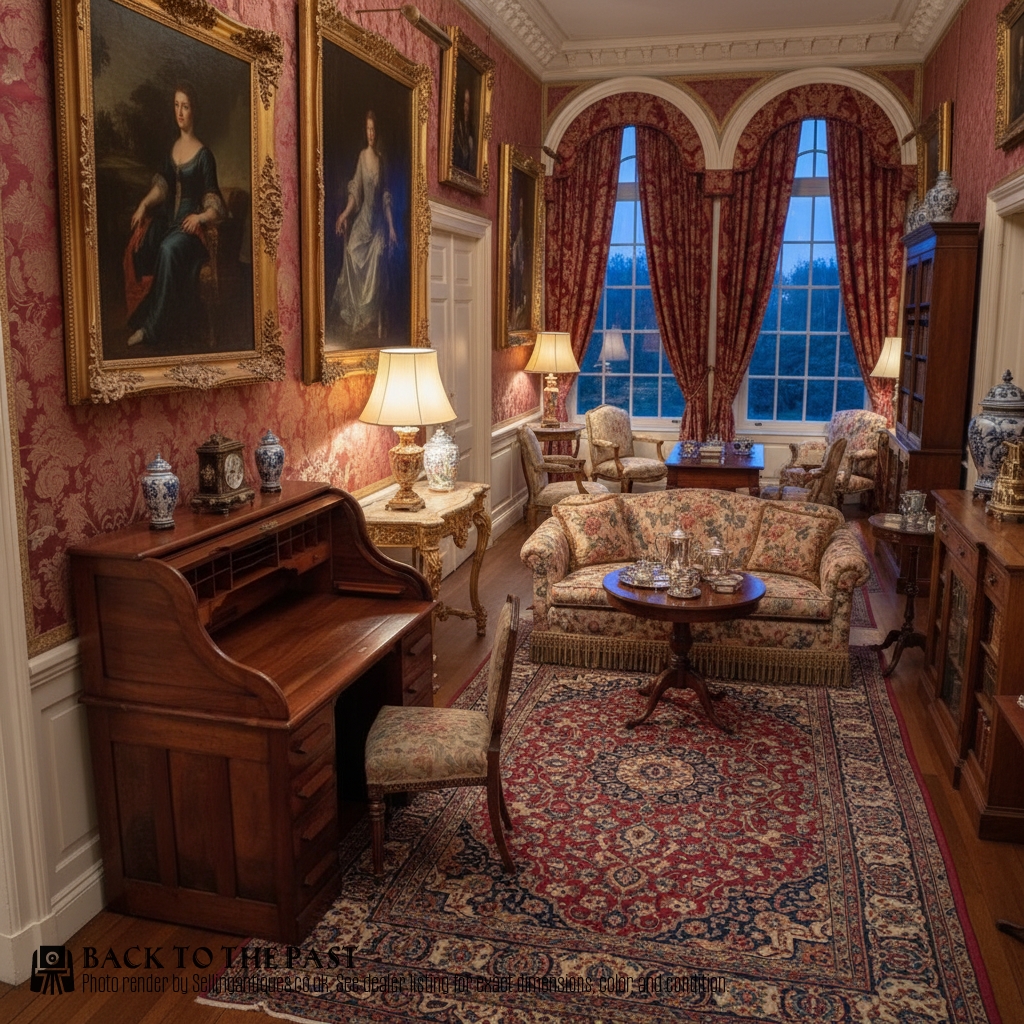
Bureau desks served as essential furniture for private studies, libraries, and drawing rooms where households managed personal accounts and correspondence.
Larger pedestal and roll-top variants also equipped professional offices and banks during the Victorian and Edwardian eras.
How do I care for leather tops?
Leather writing surfaces benefit from gentle cleaning with a damp cloth and occasional treatment with appropriate leather balms to prevent drying.
Avoiding direct sunlight and excessive moisture preserves the supple quality and the gold tooling often applied to the edges.