





Octagonal Walnut Side Table
An octagonal walnut side table brings geometric form and rich timber grain to a room, ranging from Victorian marquetry to clean Art Deco lines.
Octagonal Walnut Side Table
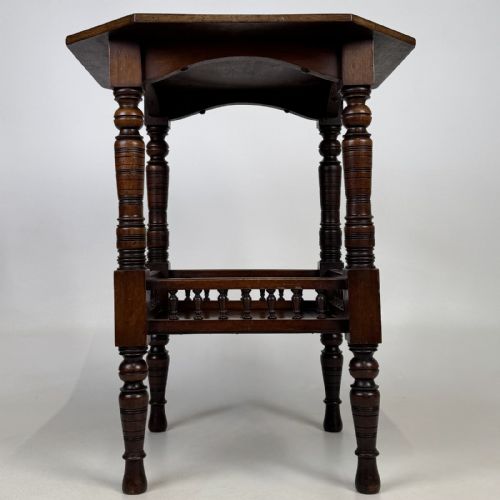
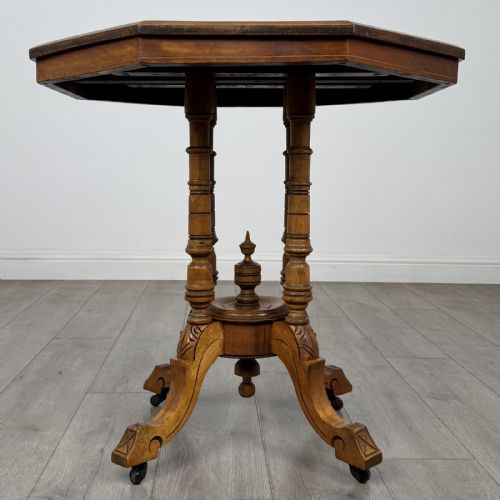
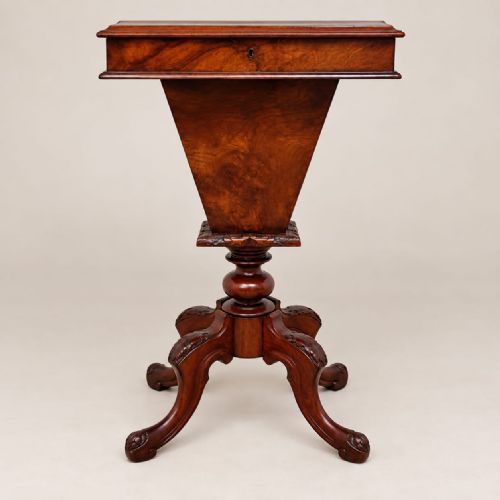
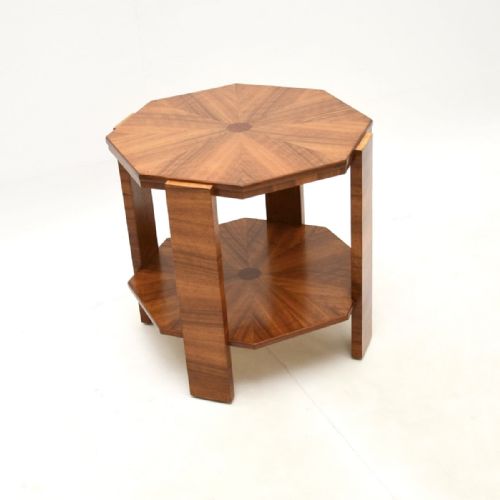
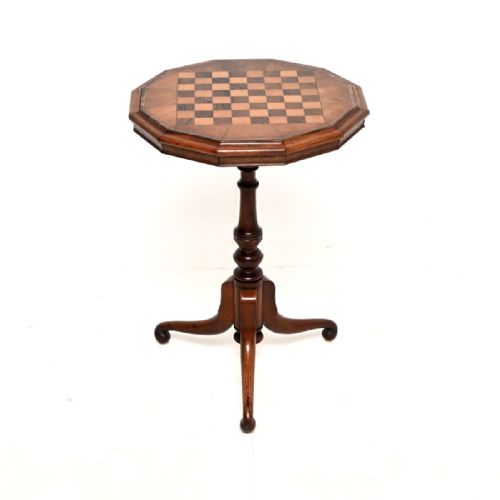
An octagonal walnut side table appears across several distinct periods, most frequently originating in the Victorian era, the Edwardian period, and the 1930s. These pieces function as occasional tables, centre tables, and coffee tables, often featuring eight-sided tops supported by pedestals or four legs.
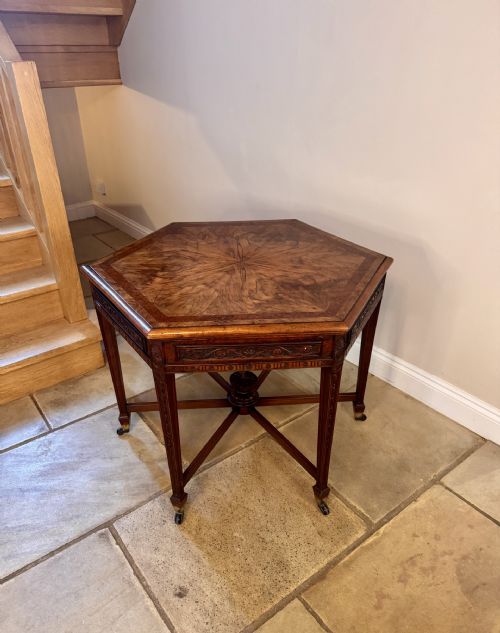
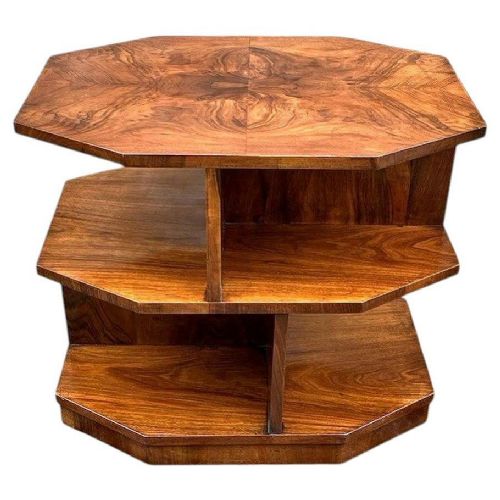
Victorian examples tend to display intricate marquetry, parquetry, or inlaid specimen woods, while later Edwardian and Art Deco iterations favour figured veneers and geometric simplicity. Makers utilised the distinct eight-sided format to showcase complex wood grain patterns across the top surface.
Materials and Technique
Cabinet makers constructed these tables using solid walnut frameworks combined with burr walnut or straight walnut veneers applied to top surfaces. Burr walnut yields highly figured, swirling grain patterns that catch the light, making it the preferred choice for prominent table tops.
Inlay techniques incorporate contrasting timbers such as tulipwood, yew, and fruitwood, alongside mother-of-pearl details in Moorish and Sorrento styles. Joinery methods rely on sturdy pedestals, tripod bases, or traditional four-leg frames designed to support the weight of the dense hardwood.
Octagonal Walnut Side Table Retail Price Guide 2026
Typical asking prices for octagonal walnut side table among the pieces listed under this phrase on Sellingantiques today, from the lower quarter to the upper quarter. They describe what is for sale here now, not the wider market.
Listings feature walnut, burr walnut veneer, mahogany, fruitwood, and ebonised wood across Victorian, Edwardian, and Art Deco periods.
Standards of Execution
The distinction between ordinary and exceptional pieces lies in the precision of the timber selection and the execution of surface decoration. Finer examples display symmetrical book-matched burr veneers and crisp, hand-cut marquetry rather than simpler printed or stamped motifs.
Structural integrity and the quality of the underlying secondary woods also divide the range. Superior construction involves stable core timbers that prevent the walnut veneer from lifting, coupled with cleanly turned pedestals and tight joints.
Shoolbred
The Octagonal Walnut Side Table Glossary
- Burr walnut
- A prized timber harvested from growth excrescences on walnut trees, yielding intricate swirling grain patterns. Cabinet makers slice this wood into thin veneers for decorative table tops.
- Marquetry
- The art of applying small pieces of veneer to a structure to form decorative patterns and pictures. Makers utilise various contrasting woods to create floral or geometric designs.
- Parquetry
- Geometric mosaic woodwork used for repeating patterns on table surfaces. It relies on precise angles and contrasting timber strips.
- Sorrento ware
- Inlaid woodwork originating from southern Italy, frequently featuring micro-mosaics and geometric motifs. These pieces often incorporate olive wood and walnut.
- Centre table
- A freestanding piece designed to be viewed from all sides rather than pushed against a wall. Octagonal versions provide equal visual weight from any angle.
Octagonal Walnut Side Table: Frequently Asked Questions
Where should I place an octagonal walnut side table?
These tables suit corners, beside armchairs, or as freestanding centre pieces in a room. Their eight-sided shape allows them to sit comfortably in spaces where rectangular furniture might feel too blocky.
Because the top offers equal dimensions on all sides, the table works well in open floor plans or beside curved seating arrangements where a softer silhouette is required.
How do I clean walnut veneer?
Dust the surface regularly with a soft, dry cloth to prevent grit accumulation. Avoid modern silicone sprays and harsh chemical polishes that can degrade historical finishes.
Occasional application of high-quality beeswax nourishes the timber and maintains a soft lustre. Keep the table away from direct heat sources and strong sunlight to prevent the veneer from drying or fading.
How do I date an octagonal walnut table?
Examine the construction methods, secondary timbers underneath, and overall stylistic markers. Victorian examples frequently feature heavy turned pedestals and complex floral marquetry.
Art Deco pieces from the 1930s lean towards streamlined geometric forms with highly figured book-matched veneers and minimal carving. Edwardian versions sit between these extremes, often lighter in build with subtle stringing.
What is the difference between a side table and a centre table?
Centre tables are built to stand freely in the middle of a room, finished with decorative detail across the entire top and base. Side tables are generally smaller and designed to sit against or near room boundaries.
An octagonal format blurs this distinction slightly because the balanced shape looks correct from any angle, making many of these pieces adaptable to both placements.