
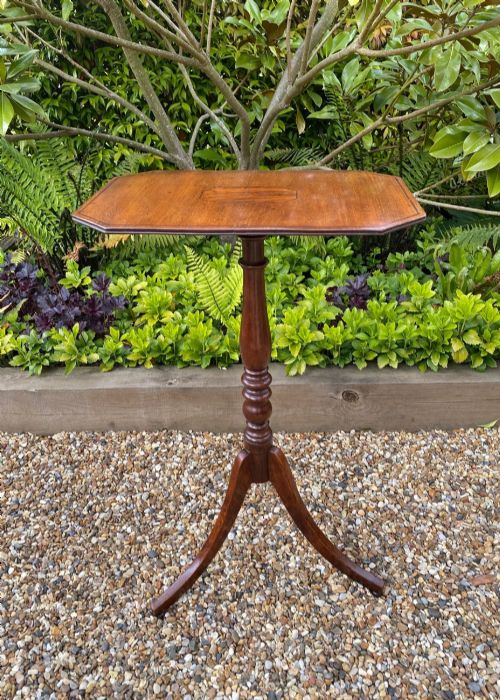
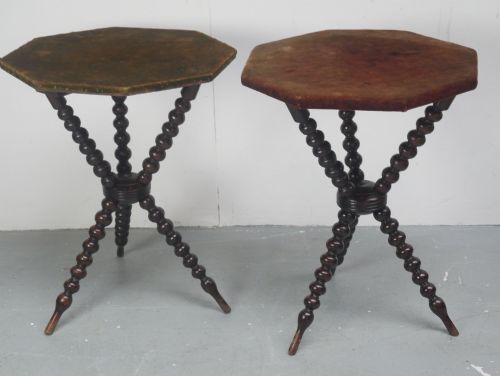
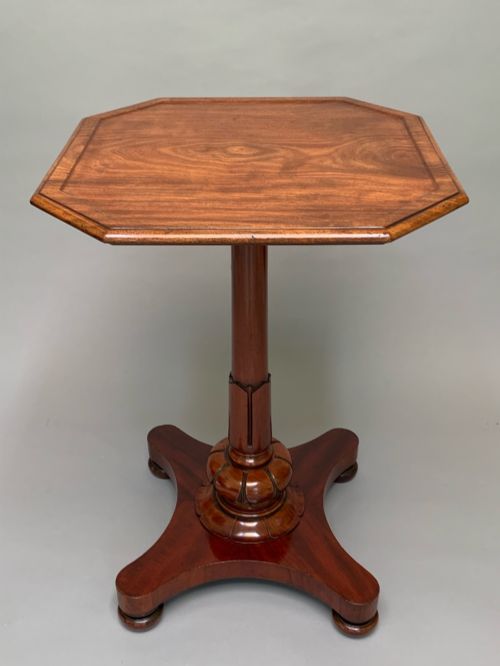
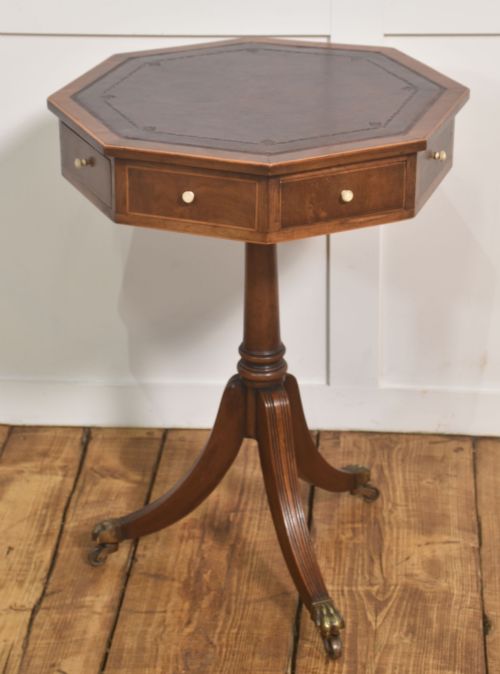
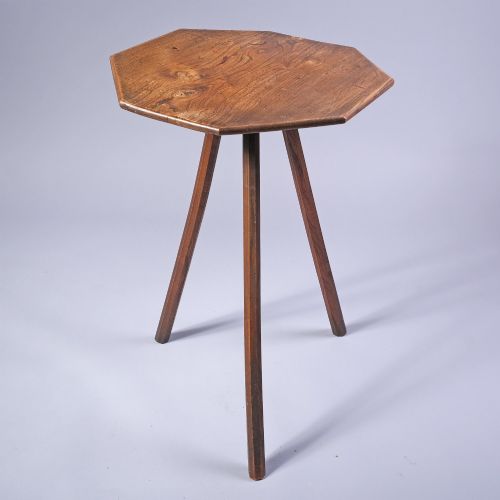
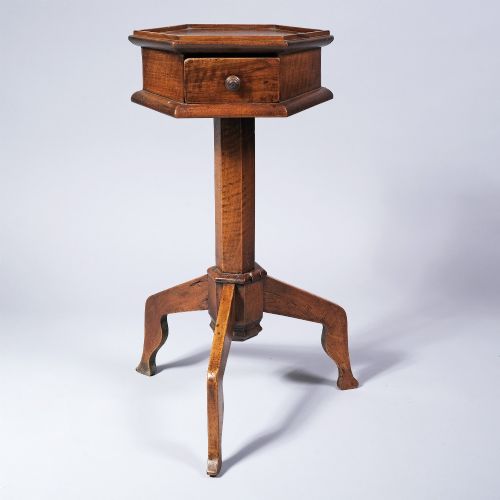
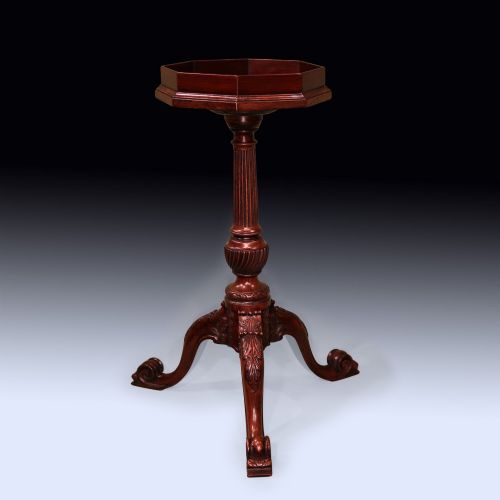
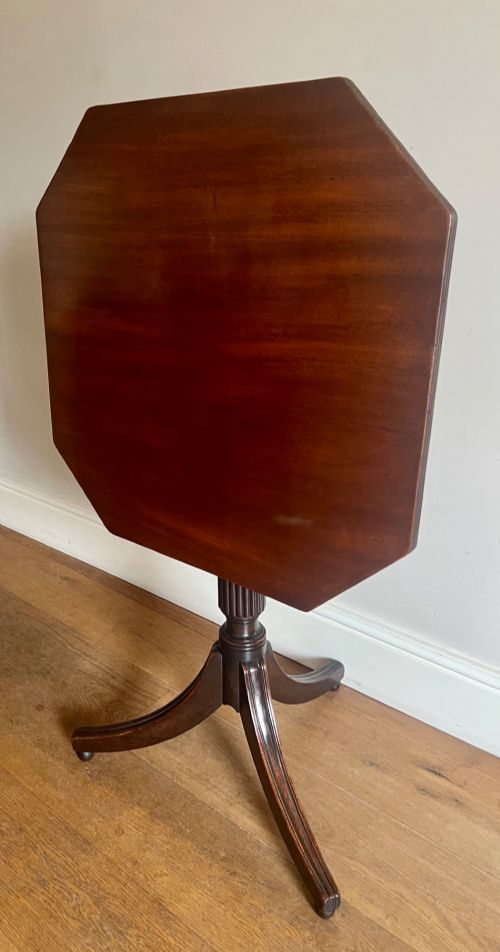
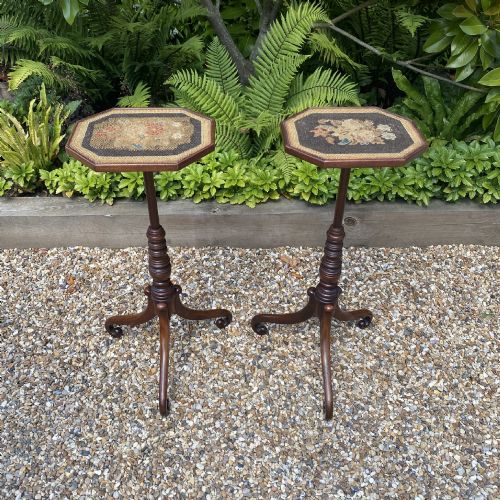
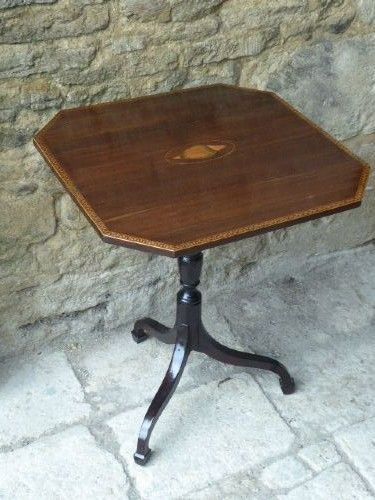
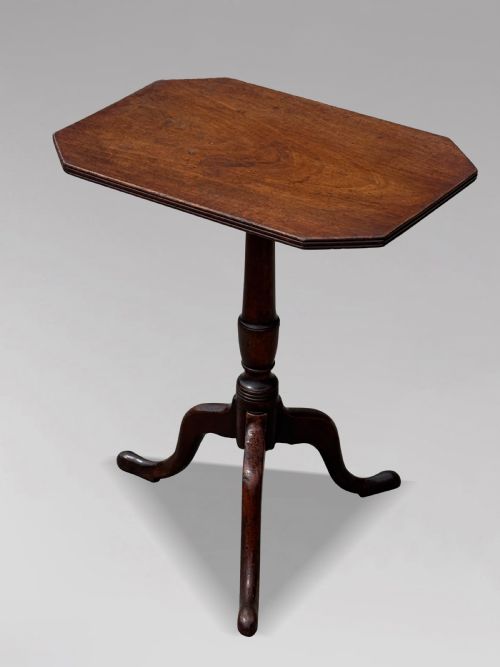
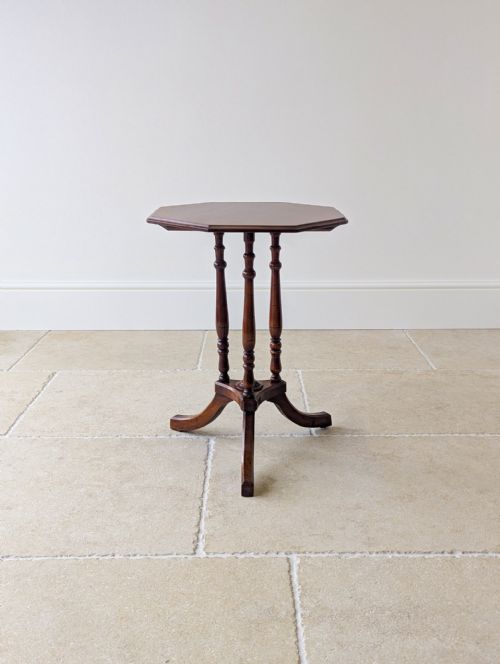
Octagonal Top Wine Table
An octagonal top wine table brings geometric form and practical small-scale furniture together, offering a sturdy multi-sided surface suited to holding drinks or lamps.
Octagonal Top Wine Table
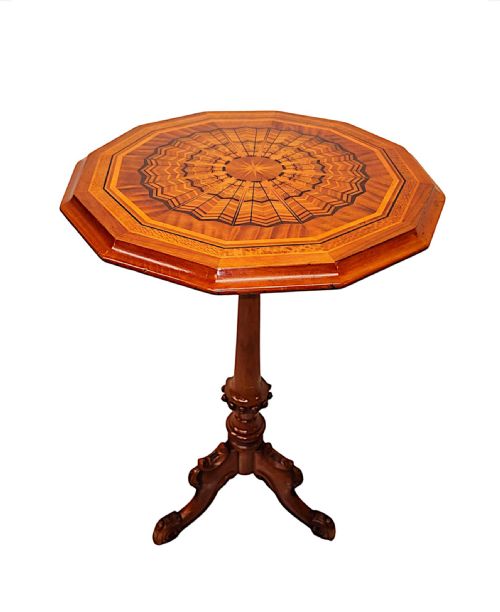
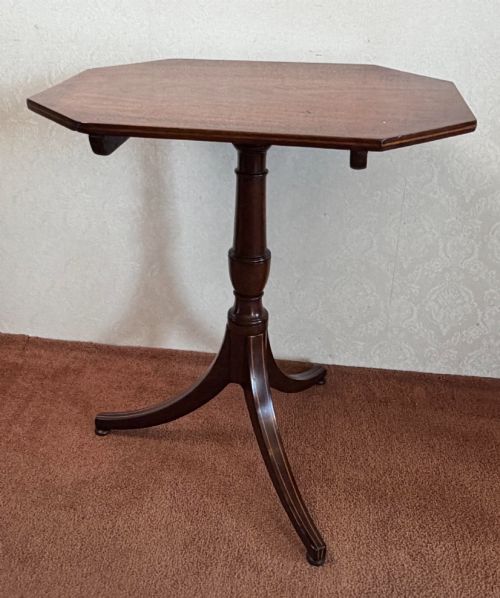
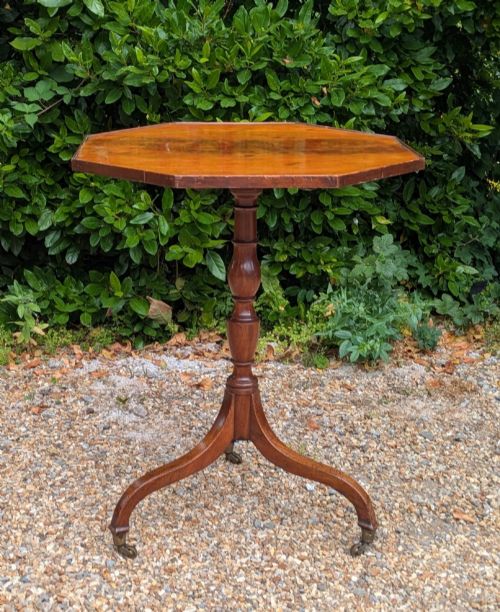
An octagonal top wine table stands on a central pillar supported by tripod legs, presenting an eight-sided surface rather than the more common round or square top. These pieces appear across the 18th century, Georgian, Regency, and Victorian periods, often functioning as portable side or occasional furniture.
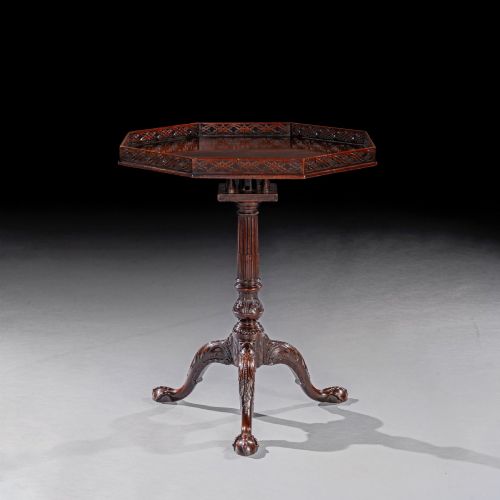
The version most commonly met on this page combines a mahogany timber body with a pillar and tripod base, frequently incorporating a tilt-top action or birdcage mounting to allow the surface to fold away when not in use.
Materials and construction methods
Cabinet makers utilised dense hardwoods such as mahogany, rosewood, walnut, and fruitwood for the structural tops and turned pillars, often adding contrasting inlay work in boxwood or satinwood around the edges.
Joinery techniques included sturdy tripod leg assemblies and pivoting mechanisms like tilt-top actions or birdcage mountings, which required precise carpentry to ensure the multi-sided tabletop remained balanced on its central column.
Octagonal Top Wine Table Retail Price Guide 2026
Typical asking prices for octagonal top wine table among the pieces listed under this phrase on Sellingantiques today, from the lower quarter to the upper quarter. They describe what is for sale here now, not the wider market.
Listings span the 18th, 19th, and early 20th centuries, showing materials from mahogany and rosewood to marble and oak.
Judging quality and craftsmanship
The distinction between standard examples and superior pieces rests on the crispness of the carving on the pillar and legs, the selection of timber grain, and the precision of the boxwood or satinwood inlay on the octagonal surface.
Finer items display harmonious proportions between the eight-sided top and the supporting tripod base, alongside smooth operation in the tilt-top or birdcage mechanism without looseness in the central joint.
Gillows
The Octagonal Top Wine Table Glossary
- Tilt-top action
- A pivoting mechanism beneath the tabletop that allows the surface to swivel into a vertical position for compact storage.
- Tripod base
- A support structure consisting of three curved legs radiating from a central turned pillar.
- Birdcage
- A revolving wooden framework beneath the tabletop that permits both rotation and tilting of the surface.
- Boxwood-strung
- Inlaid with narrow strips of pale boxwood to create contrasting linear borders on dark timber tops.
- Specimen wood
- A tabletop assembled from multiple different decorative timber varieties arranged in geometric or pictorial patterns.
Octagonal Top Wine Table: Frequently Asked Questions
What was an octagonal top wine table originally used for?
These small tables were designed to hold wine glasses and bottles beside seating areas during social gatherings in the evening.
Their compact size and movable tops made them easy to shift around a room as needed.
How do you operate a tilt-top mechanism?
A release catch or catch block beneath the surface allows the top to unlatch and swivel from horizontal to vertical.
This function enabled the furniture to stand flat against a wall when the room was cleared.
Where should I place this table at home?
An octagonal table fits well beside an armchair or sofa as a compact surface for a lamp or book.
Because the footprint of the tripod legs is modest, it occupies very little floor space in a hallway or corner.
How can I tell a Georgian piece from a Victorian one?
Georgian examples often show restrained mahogany carving with simpler pillar turnings and elegant proportions.
Victorian pieces frequently introduce bolder walnut timbers, burr elm veneers, or heavier pedestal bases.