
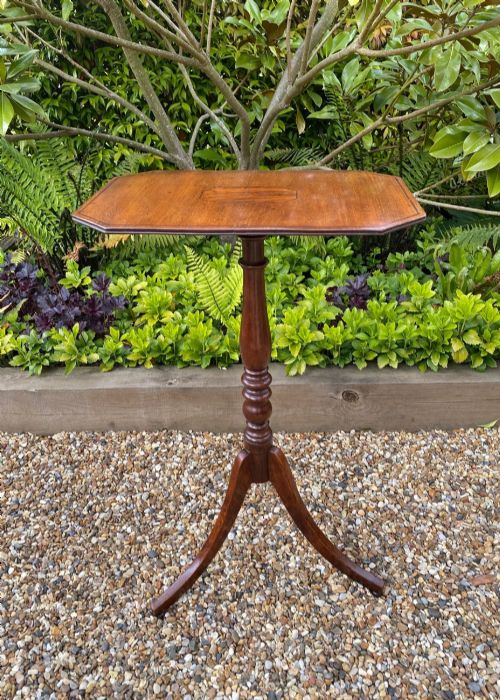
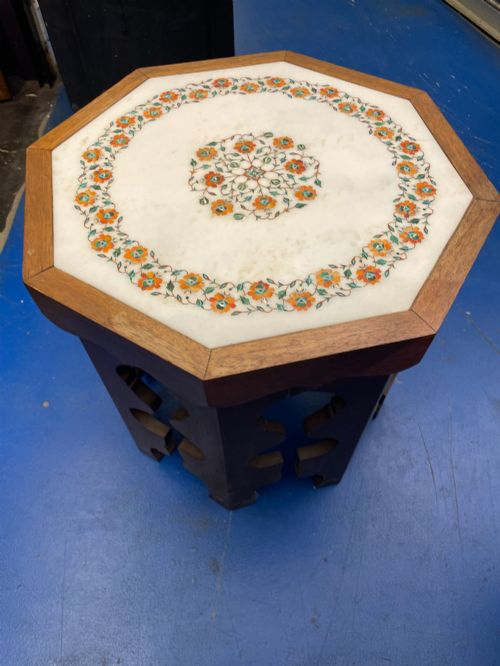
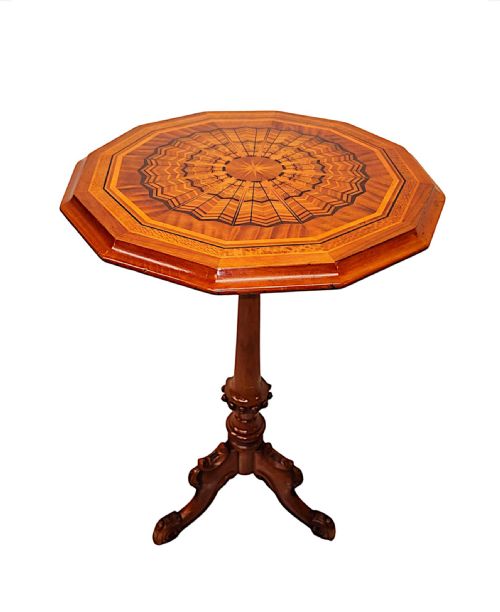
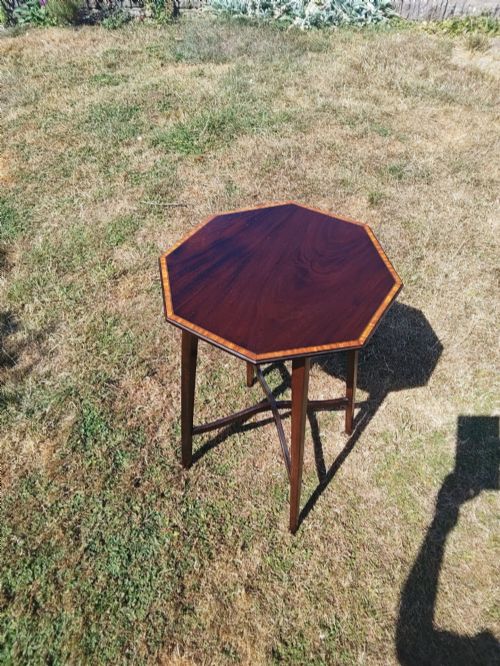



Octagonal Inlaid Accent Table
An octagonal inlaid accent table brings geometric form and intricate surface detail to a room, offering a compact surface for lamps and displays.
Octagonal Inlaid Accent Table
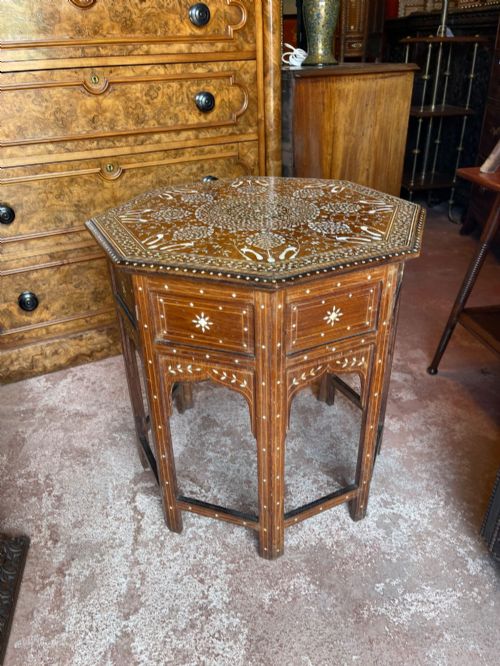
An octagonal inlaid accent table serves as a versatile occasional, lamp, or wine table within domestic spaces. These pieces span the nineteenth century, the Edwardian era, and the early twentieth century, showing influences from Anglo-Indian, Moorish Revival, and Victorian styles.
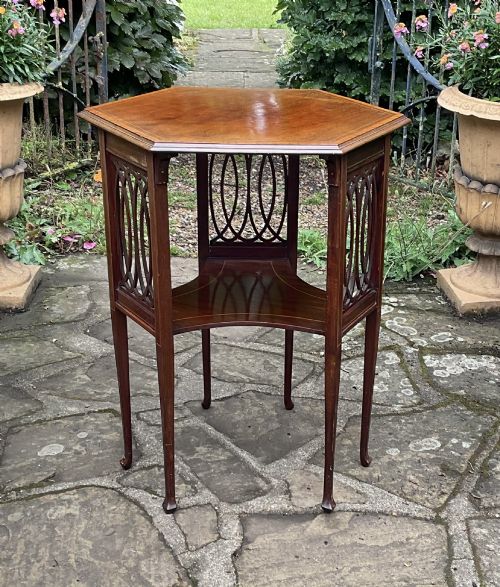
The form appears in various timber structures ranging from mahogany and rosewood to birch and satinwood. Many examples utilise traditional folding mechanisms or tripod bases suited for smaller reception rooms.
Makers and workshops from diverse origins, including Hoshiarpur and Sorrento, contribute distinct decorative vocabularies to the selection. Buyers encounter both British cabinet-making traditions and imported regional craftsmanship.
How they were made
Carpenters constructed the eight-sided tops and supporting frames using dense hardwoods like mahogany, rosewood, and sheesham. Surface enrichment relies on detailed parquetry, geometric mosaic work, and contrasting timber veneers.
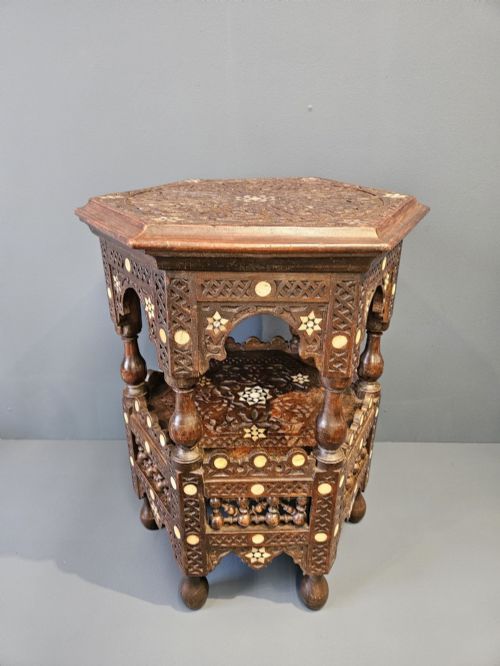
Inlayers integrated bone, brass, mother-of-pearl, and various specimen woods into carved channels across the timber surface. Tables originating from specific regional workshops often employ intricate pierced carving alongside multi-material inlay.
Listings feature eighteenth-century pieces alongside Victorian and Edwardian examples utilising mahogany, rosewood, and bone inlay.
What varies in quality
The density and precision of the inlaid elements dictate the visual standard of the piece. Fine geometric banding and complete bone or brass tessellation demonstrate higher standards of workshop execution.
The integrity of the timber ground and the stability of the multi-sided frame influence overall construction merit. Tables retaining crisp carved relief and tightly fitted veneer sections represent superior production.
Gillows·Liberty and Co·Collinson and Lock·Almerico Gargiulo
The Octagonal Inlaid Accent Table Glossary
- Parquetry
- Geometric mosaic woodwork formed by fitting small pieces of wood together to create a decorative surface pattern.
- Pietra dura
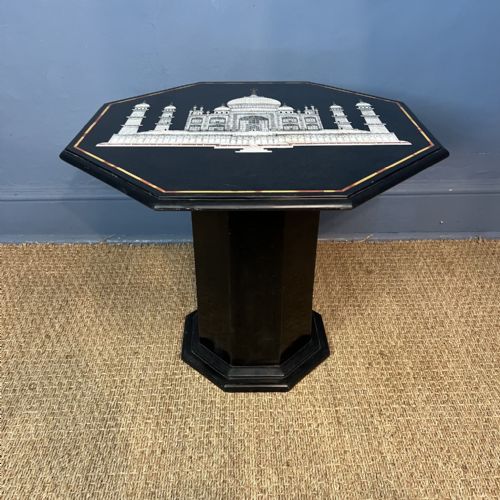
- Inlay technique using cut and fitted polished coloured stones to create pictorial or geometric designs on a stone tabletop.
- Specimen wood
- Furniture constructed using a variety of native and exotic timbers selected for contrasting natural colours and grain patterns.
- Bone inlay
- Decorative technique involving carved animal bone embedded into channels cut within a wooden substrate.
- Moorish style
- Design aesthetic featuring intricate geometric carving and star motifs inspired by Islamic architecture.
Octagonal Inlaid Accent Table: Frequently Asked Questions
How do I clean an inlaid table?
Dust the surface regularly with a soft, dry cloth to prevent particles from settling into the inlaid recesses. Avoid liquid cleaners that might loosen bone, brass, or wood elements.
Maintain low humidity levels in the room to protect fragile veneers and prevent the timber base from warping or cracking over time.
Where were Hoshiarpur tables made?
These tables originated in the city of Hoshiarpur in Punjab, India, becoming popular in Britain during the nineteenth century. Artisans carved local timbers and applied detailed bone or brass inlay.
Many examples feature folding bases designed for ease of transport and storage during the colonial period.
Can I use an accent table for a lamp?
Most octagonal occasional tables provide a stable platform for small table lamps and decorative objects. Ensure the weight sits evenly across the eight-sided top to maintain balance.
Check the joinery of the central stem or legs before placing heavier lighting fixtures on older occasional furniture.
What is Sorrento inlay?
Sorrento inlay refers to the woodworking tradition from the Italian town of Sorrento, specialising in intricate floral and geometric veneer work. Craftsmen utilised various fruitwoods to achieve tonal shading.
These pieces frequently incorporate micro-mosaic patterns into occasional tables and display surfaces.