



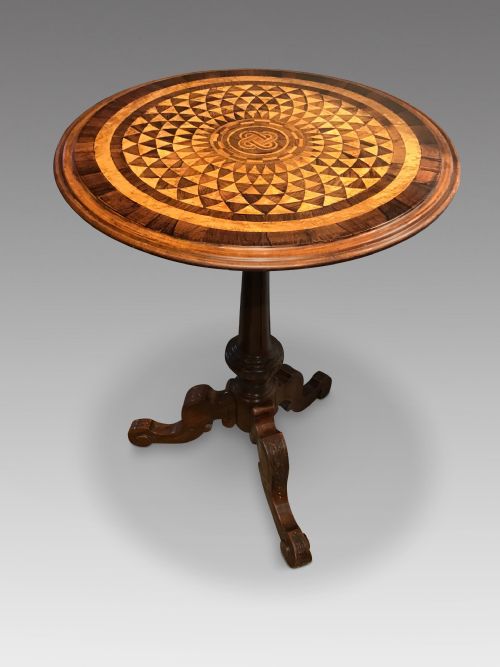


Geometric Inlaid Wine Table
A geometric inlaid wine table brings intricate wood and marble patterns into a room, offering a small surface rooted in nineteenth-century and early twentieth-century design.
Geometric Inlaid Wine Table
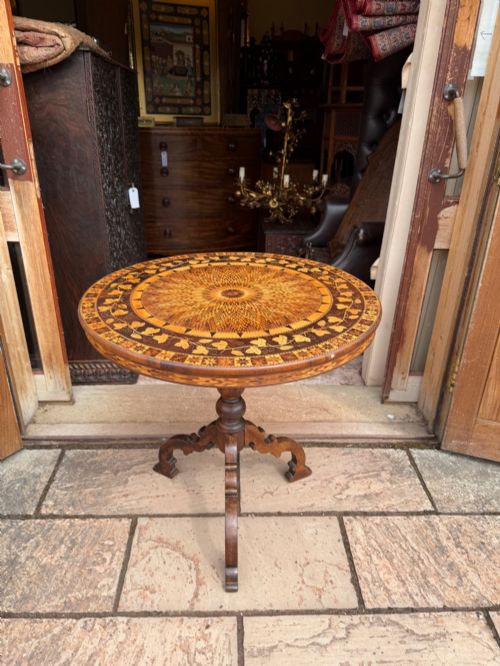
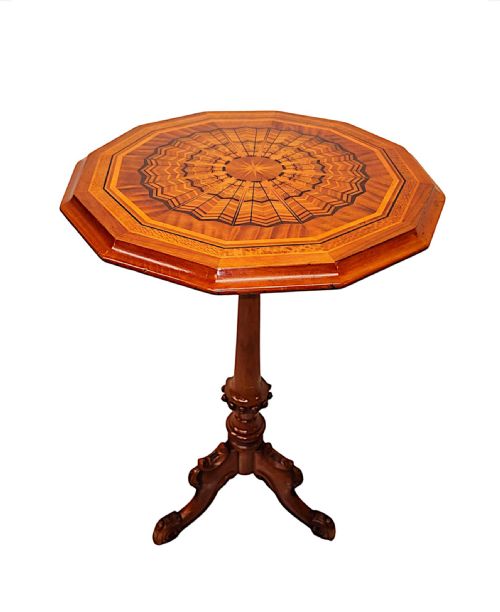
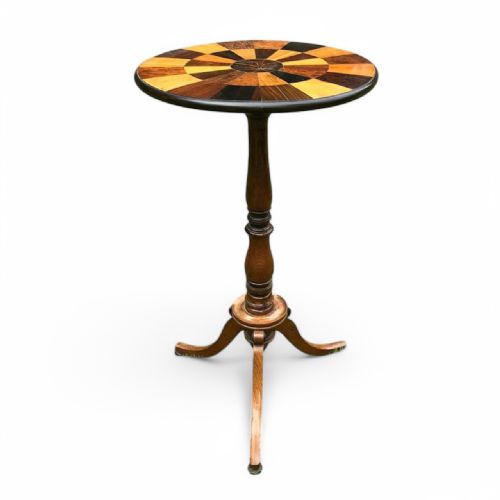
The version most frequently encountered on this page combines a timber base in walnut, mahogany, oak, fruitwood, rosewood, or birch with an elaborate inlaid top. Italian Sorrento and parquetry designs dominate the selection, alongside specimen wood and specimen marble surfaces.
Originating from British workshops as well as Italian centres, these occasional tables reflect diverse regional specialisms. Makers such as Gillows and Anton Seuffer appear in the wider stylistic tradition, alongside unmarked pieces reflecting Victorian and Edwardian craftsmanship.
Materials and construction
The construction relies on a combination of solid timbers for the structural base and intricate veneering or marquetry for the top. Walnut, mahogany, rosewood, oak, and birch form the primary frames, supporting tops built from numerous contrasting timber species or cut stone.
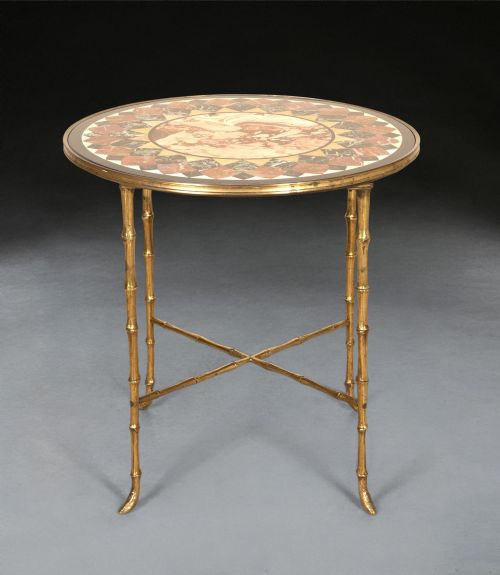
Inlaid geometric patterns and parquetry require precise cutting of thin wood veneers, which are then assembled into repeat motifs or pictorial designs. Specimen marble tops involve fitting shaped pieces of coloured stone together to create geometric or architectural compositions.
Listings feature occasional tables spanning the Regency period, the Victorian era, and the early twentieth century, utilising walnut, mahogany, oak, and marble.
Distinctions in quality
Quality rests upon the precision of the parquetry or inlay work and the choice of materials. Tables featuring diverse specimen woods or finely cut specimen marble demonstrate a higher degree of artisan skill than simpler geometric arrangements.
The structural integrity of the tripod base and the harmonious pairing of the timber base with the inlaid top determine the overall success of the piece. Timbers like satinwood, rosewood, and figured walnut indicate a higher tier of production.
Gillows·Anton Seuffer
The Geometric Inlaid Wine Table Glossary
- Parquetry
- Geometric mosaic woodwork arranged in regular patterns such as cubes, triangles, or squares. It provides the decorative surface seen on many occasional tables.
- Sorrento ware
- Woodwork decorated with intricate micro-mosaic inlay, originating from the town of Sorrento in Italy. These pieces frequently feature architectural or geometric motifs.
- Specimen marble
- A decorative top composed of various coloured marbles fitted together to form a geometric or pictorial design. Such tops are often supported by walnut or mahogany bases.
- Tripod table
- A small freestanding table supported by a central pillar resting on three feet. This form is common among nineteenth-century occasional and wine tables.
- Occasional table
- A small, movable table designed for light use in a principal room. These pieces function as side tables or lamp tables.
Geometric Inlaid Wine Table: Frequently Asked Questions
What is a geometric inlaid wine table?
A geometric inlaid wine table is a small occasional or side table featuring a decorative top made from multiple woods or marble pieces arranged in patterns. These tables date primarily from the nineteenth and early twentieth centuries.
They serve as functional display surfaces while showcasing traditional parquetry, marquetry, or stone-setting techniques.
Where were these tables made?
These tables originate from various European centres, with British and Italian workshops representing the primary sources. Italian Sorrento and specimen marble examples reflect distinct regional traditions.
British cabinet makers produced similar occasional tables utilising imported exotic timbers alongside native woods like oak and mahogany.
How do I identify the period of a table?
Period identification relies on examining the timber species, construction methods, and stylistic markers associated with Victorian, Regency, or Edwardian design. Regency and William IV pieces often display heavier classical proportions, while later examples show lighter birch or oak framing.
The complexity of the inlay work and the specific combination of woods also offer clues regarding the date of manufacture.
How should I place one in a room?
These compact tables suit placement beside seating or in corners where a small surface is required. Their decorative tops allow them to function as visual focal points.
Care should be taken to protect antique wood and marble surfaces from direct heat, strong sunlight, and excess moisture.