


Parquetry Top Accent Table
A parquetry top accent table brings intricate geometric wooden surfaces and period craftsmanship into a room.
Parquetry Top Accent Table
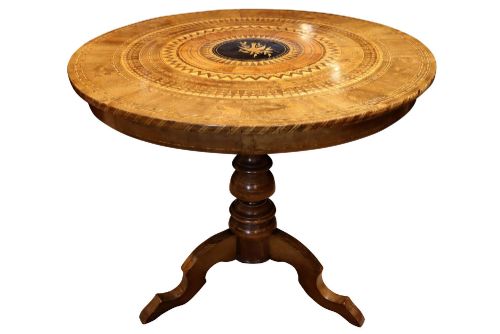
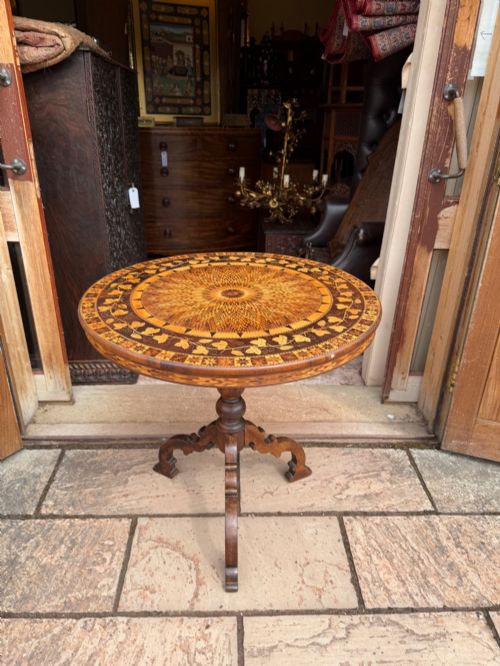
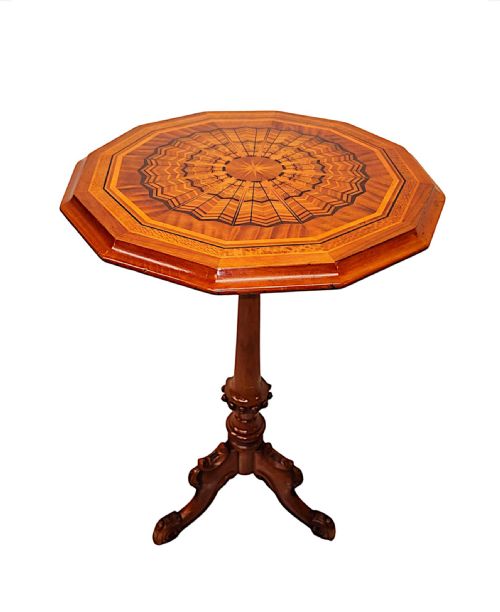
A parquetry top accent table involves compact surfaces designed for occasional use, displaying geometric wood veneers arranged in patterns such as cubes, starbursts, or simple grids. These pieces emerge across the nineteenth century, with strong representation from Victorian and continental French workshops.
The selections span several practical forms, including side tables, occasional tables, wine tables, hall tables, and guéridons. Buyers encounter variations ranging from circular walnut pedestal pieces to rectangular specimens supported by slender legs.
Origins stretch from English workshops to French neoclassical and Louis XV revival pieces, alongside specific regional traditions like Italian Sorrento work. The predominant materials framing these geometric tops include walnut, kingwood, rosewood, and oak.
How they were made
Cabinetmakers constructed these tables using solid carcase woods like oak, mahogany, or walnut, upon which intricate timber veneers were applied to form the geometric parquetry and specimen designs. Woods such as kingwood, satinwood, and coromandel provided contrasting tones and grain patterns for the surface enrichment.
Metal mounts in brass or ormolu frequently decorated the edges, aprons, and feet of French revival pieces, complementing the inlaid woodwork. Marble inserts also appear inset into circular tops, providing a contrasting cool stone surface to the warm timber parquetry.
Listings for this phrase feature walnut, kingwood, rosewood, and oak, alongside brass, marble, and ormolu mounts.
What varies in quality
The precision and complexity of the geometric veneer work define the upper tier of these tables, where individual wooden tesserae fit together with absolute tightness and visual harmony. Lesser examples display wider joints, simpler wood choices, or less disciplined compositional geometry across the surface.
The quality of the underlying structural joinery and the selection of secondary timbers separate standard production from exhibition pieces. Finer iterations incorporate chased ormolu mounts, well-figured cabinet woods like quarter-veneer kingwood, and sophisticated pedestal or leg turning.
Gillows·Collingson & Lock·Almerico Gargiulo
The Parquetry Top Accent Table Glossary
- Parquetry
- Geometric mosaic woodwork formed by small veneer tiles arranged in repeating patterns such as cubes or lozenges. It provides durable surface ornamentation on table tops.
- Guéridon
- A small French round table supported by a central pillar or slender legs. These tables often feature marble tops or intricate parquetry inlays.
- Ormolu
- Gilded bronze mounts applied to furniture for decorative enrichment. This technique is frequently seen on nineteenth-century French revival tables.
- Specimen wood
- Furniture tops composed of multiple native and exotic timber species chosen for their contrasting natural colours and grain configurations. They are often arranged in sunburst or geometric motifs.
- Bouillotte table
- A small French card or occasional table featuring a raised brass gallery around the edge of the top. They typically stand on slender legs and date from the eighteenth and nineteenth centuries.
Parquetry Top Accent Table: Frequently Asked Questions
What is a parquetry top?
A parquetry top consists of thin wooden tiles cut and fitted together in geometric patterns to create a decorative surface on a table. These designs often feature cubes, triangles, or complex tiling arrangements.
Cabinetmakers used contrasting timbers to give these geometric patterns a sense of three-dimensional depth and visual movement across the surface of the table.
Where were these tables placed?
These tables served as versatile occasional furniture in nineteenth-century drawing rooms, parlours, and halls. They were moved easily to hold lamps, small ornaments, or writing materials.
Smaller guéridons and wine tables sat beside seating or in corners, while larger centre and hall tables stood as focal points within reception spaces.
How do I care for inlaid wood?
Inlaid wooden surfaces require protection from direct sunlight and excessive moisture to prevent the delicate veneers from lifting or drying out. Gentle dusting with a soft cloth maintains the finish.
Periodic application of suitable furniture wax preserves the timber sheen without sealing the natural grain beneath.
How do I date a table?
Dating relies on examining the secondary timbers used in the carcase, the style of the leg supports, and the specific veneer combinations typical of periods like the Victorian era or the Regency. French revival pieces often emulate earlier reigns while retaining nineteenth-century construction methods.
Architectural clues in the turning, mounting style, and assembly techniques help narrow the decade of manufacture when makers marks are absent.