



Ochre Sky Landscape Painting
Ochre sky landscape painting captures atmospheric daylight through warm mineral pigments, offering collectors vibrant depictions of rural expanse.
Ochre Sky Landscape Painting
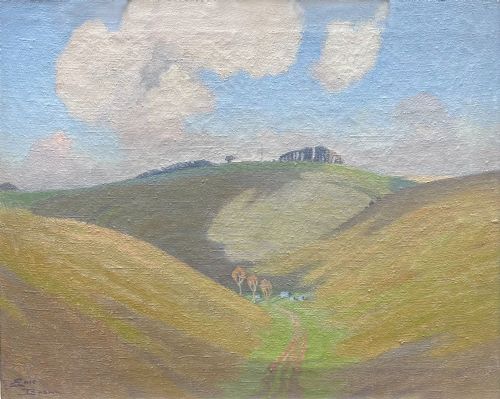
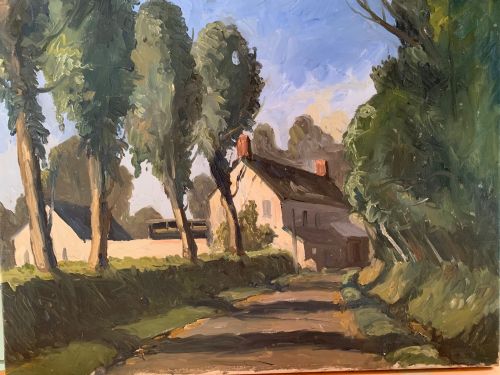
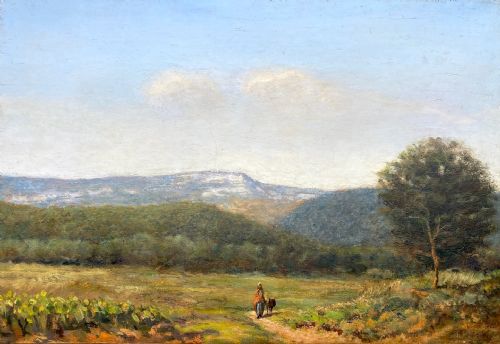
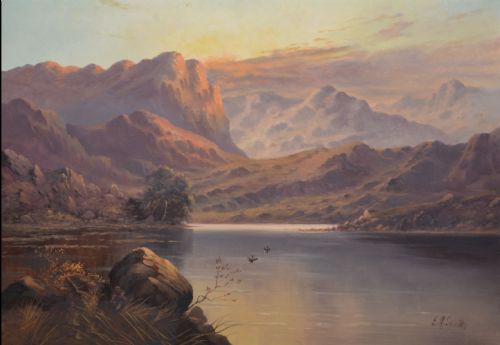
An ochre sky landscape painting presents rural and coastal scenery dominated by yellow, gold and brownish atmospheric tones. These works capture specific times of day, particularly harvest seasons and dramatic weather across British and European views.
The pieces on this page span from the late nineteenth century through the mid twentieth century. Visitors will encounter works representing British schools, French Impressionism, and Post-Impressionist movements.
Mediums range from traditional watercolours on paper to textured oil paintings on canvas and panel. Each piece records the changing light of rural valleys, chateaus, and highland terrain through distinct regional palettes.
How these paintings were made
Artists built these compositions utilising oil paint on canvas or board, alongside delicate watercolours and gouache on paper. Pigments were applied with varied brushwork to render the luminosity of natural light.
Many works incorporate gilded wood frames that complement the warm golden tones of the painted skies. Plein air techniques allowed painters to capture immediate atmospheric conditions directly on location.
Ochre Sky Landscape Painting Retail Price Guide 2026
Typical asking prices for ochre sky landscape painting among the pieces listed under this phrase on Sellingantiques today, from the lower quarter to the upper quarter. They describe what is for sale here now, not the wider market.
What varies in quality
Quality rests upon the artist's ability to handle light and atmospheric depth within the skyscape. Stronger examples demonstrate confident brushwork and a coherent palette that unifies the landscape.
Condition varies between well-preserved watercolours under glass and relined oil canvases showing appropriate age. The framing also contributes to the overall presentation and historical integrity of the piece.
Gaston Cornil·Frederick Mayor·Rowland Henry Hill·Edmond Defonte·John J Hamer·Tom Dudley·E M Seaton·Robert Thorne Waite
The Ochre Sky Landscape Painting Glossary
- Gouache
- An opaque water-based medium that provides solid blocks of colour and matte highlights. It is frequently combined with transparent watercolour to add depth to skies.
- Plein air
- Painting executed outdoors in direct natural light. This method enables artists to capture fleeting atmospheric effects in real time.
- Post-Impressionism
- An art movement extending beyond Impressionist ideals towards bolder colours and expressive forms. It appears in several twentieth century works on this page.
- Watercolour
- Pigments suspended in a water-soluble vehicle, typically painted on paper. This technique relies on the white of the paper to provide luminosity through translucent washes.
Ochre Sky Landscape Painting: Frequently Asked Questions
How do I date an ochre sky landscape painting?
Dating relies on stylistic clues, framing methods, and signatures recorded within the composition. Artists often inscribed titles or dates directly onto the reverse of the canvas or mount.
Period markers such as Edwardian dress or post-first world war modernist influences also help narrow the timeframe of creation.
Where were most of these landscapes painted?
The geographical scope spans rural Britain, including Welsh valleys, Yorkshire spots, and Scottish highlands. Continental scenes from Provence and the Loire river valley also feature prominently.
Artists travelled extensively to capture diverse regional topography under dramatic meteorological conditions.
How should I care for watercolour landscapes?
Watercolour paintings require protection from direct sunlight to prevent fading of sensitive pigments. Framing behind conservation glass ensures the paper remains stable in varied indoor environments.
Keep these works away from excessive moisture and fluctuating humidity levels to preserve the paper support.
What is the difference between oil and watercolour versions?
Oil paintings utilise heavy pigment bound in drying oils on canvas or board, offering rich texture and deep colour saturation. Watercolours depend on translucent washes across paper to achieve luminosity.
Both mediums handle the warmth of ochre skies differently, with oils providing heavier impasto and watercolours offering delicate transparency.