



Ochre Landscape Canvas Painting
An ochre landscape canvas painting brings warmth and earthy depth into a room through rich tones applied directly to woven fabric.
Ochre Landscape Canvas Painting
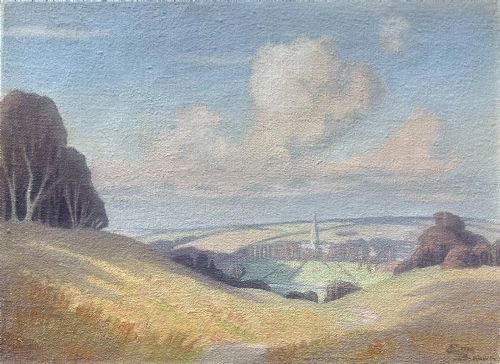
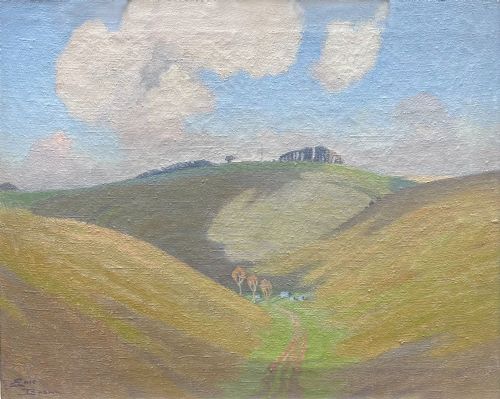
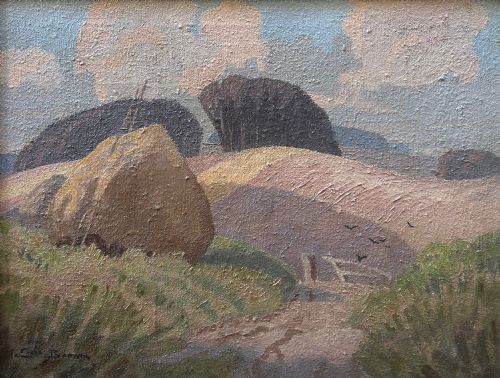
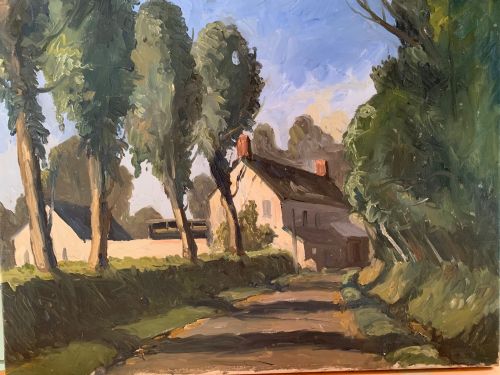
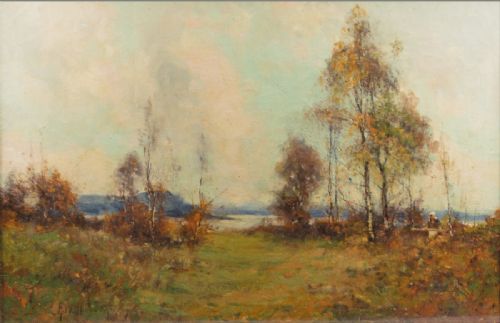
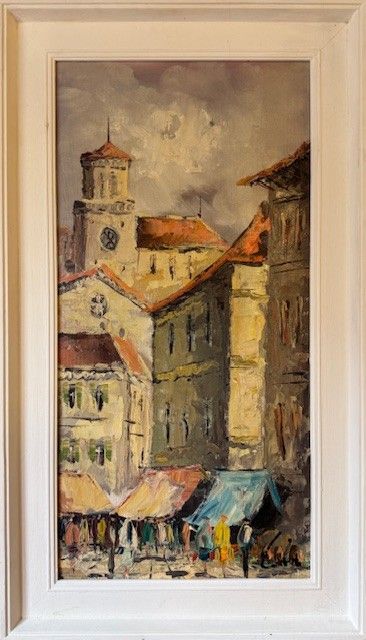
An ochre landscape canvas painting captures natural scenery dominated by yellow-brown earth pigments, rendered across various periods from the nineteenth century to the mid-twentieth century. Buyers searching this phrase typically encounter framed oils depicting pastoral fields, riverbanks, and rural towns created by British and European artists. The selection ranges from Victorian and Edwardian pastoral scenes to mid-century impressionist and modernist interpretations.
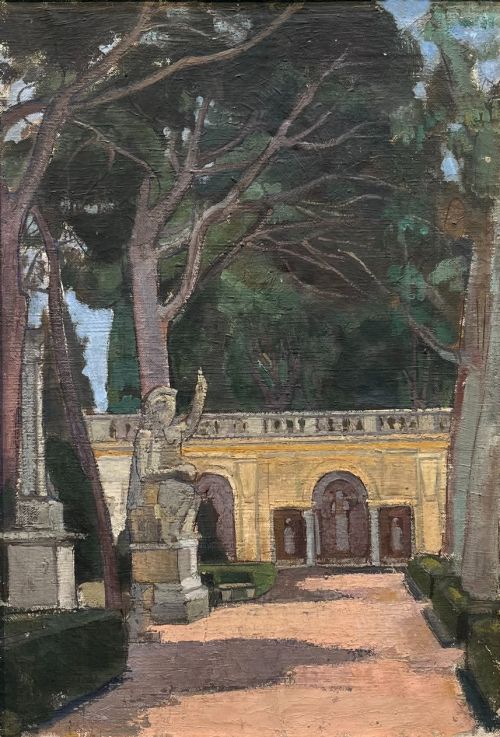
Works span styles including British Impressionism, Post-Impressionism, and nineteenth-century realism, reflecting how different generations approached the outdoors. A canvas might present a quiet Yorkshire evening, a French market square, or a sunlit Mediterranean view using that signature warm palette. These paintings serve as historical windows into regional topography and period artistic technique.
How they were made
Makers built an ochre landscape canvas painting by stretching woven fabric over a wooden frame, often preparing the surface with gesso before applying oil paint. Artists worked with oil pigments mixed from natural earths, sometimes incorporating gold leaf or textured brushwork to catch the light. The combination of absorbent canvas and slow-drying oil allowed painters to layer rich tones and build up atmospheric depth.
Camels, desert dunes, and Yorkshire rivers share wall space in this eclectic gathering of earth tones.
What varies in quality
Quality in an ochre landscape canvas painting rests on the confidence of the brushwork and the artist's command of light and atmospheric perspective. Superior compositions manage tone and pigment density to create convincing depth, whereas lesser works rely on flat application and formulaic scenery. The handling of the oil medium itself distinguishes a skilled hand from a routine studio piece.
Preservation of the original canvas, stability of the ground layer, and the presence of period-appropriate framing also influence the standing of a work. The integration of the warm palette must feel deliberate and balanced rather than heavy or monotonous.
Alexander Wellwood Rattray·Raymond Picque·Reginald Grange Brundrit·Cecil Rochfort Doyly John·Ron Folland·Charles Malfroy·William George Meadows·James William Booth·Claude Thomas Stanfield Moore·Arthur Winter Shaw·Frederick William Jackson·John Cawthorn·Ernest Higgins Rigg·William Greaves·Ludwig Hermann·Abdul Kadir Al Rassam·E M Seaton·Francis Wall
The Ochre Landscape Canvas Painting Glossary
- Canvas
- A heavy woven fabric, typically linen or cotton, stretched tightly over a wooden frame to serve as the painting surface. It provides a durable ground that responds well to oil paint.
- Oil Paint
- A slow-drying paint made by mixing pigments with oils such as linseed. This medium allows for rich blending, luminous glazes, and varied surface textures.
- Gesso
- A primer mixture consisting of a binder mixed with chalk, gypsum, or pigment applied to canvas. It prepares the fabric to receive oil paint and prevents the oil from rotting the fibres.
- Impressionism
- A nineteenth-century art movement characterised by relatively small, thin, yet visible brush strokes and an emphasis on accurate depiction of light. Artists working in this style prioritized natural illumination over strict academic finish.
- Stretcher
- The internal wooden frame upon which the canvas is mounted and pulled taut. Traditional corners often feature wedges or keys to adjust the tension of the fabric.
Ochre Landscape Canvas Painting: Frequently Asked Questions
Should I re-stretch a sagging canvas?
A slight looseness in older canvas is normal and often preferred by conservators over excessive tension. Many traditional stretchers feature corner keys that allow minor adjustments.
Forceful re-stretching can crack brittle historical oil paint and damage the fabric fibres. Seek expert advice if the canvas bows significantly.
How do I date a landscape painting?
Dating relies on examining the stretcher construction, canvas weave, nail types, and framing style alongside any artist signatures. Pigment analysis and written records on the reverse of the stretcher also provide clues.
Stylistic markers within the landscape, such as clothing or architecture depicted, help narrow down the decade of creation.
Where should I hang a canvas painting?
Hang the work away from direct sunlight and fluctuating heat sources like radiators to protect the oil paint and canvas. Stable indoor humidity prevents the wooden stretcher and canvas from warping.
Keep the piece at eye level on an interior wall where it receives gentle, ambient illumination.