


Oak Writing Bureau Drawers
Oak writing bureau drawers combine fitted desk spaces with practical storage, offering traditional craftsmanship and enduring utility for modern homes.
Oak Writing Bureau Drawers
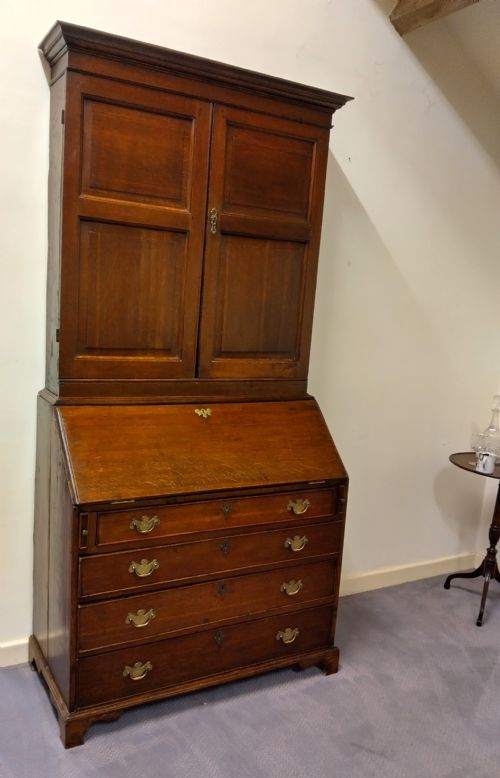
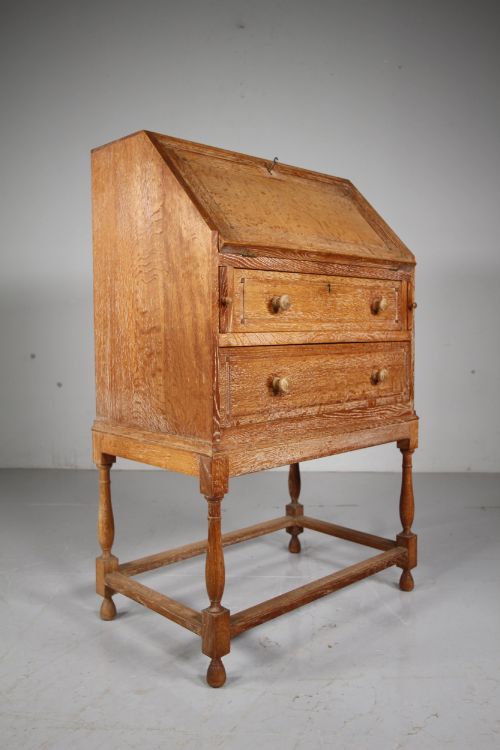
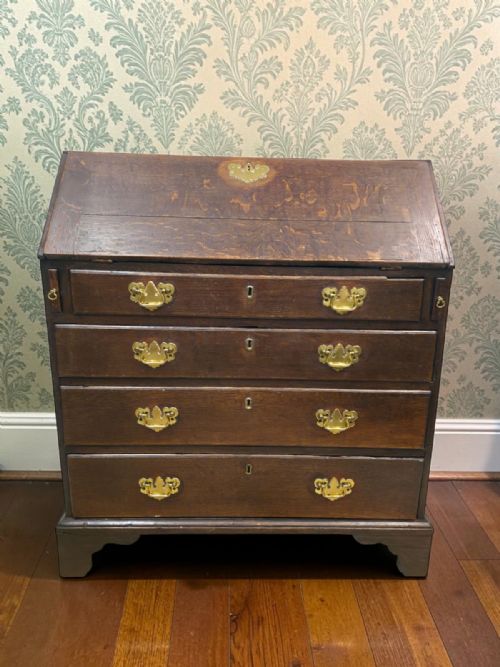
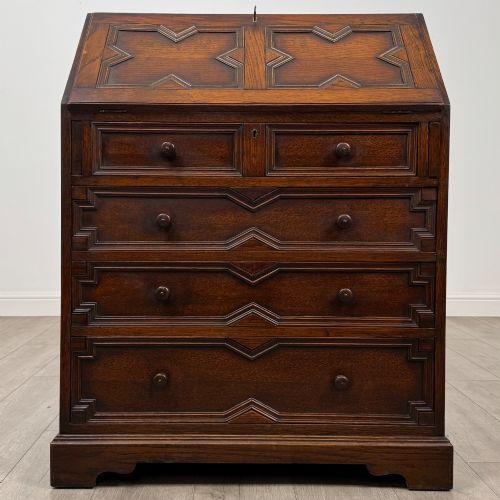
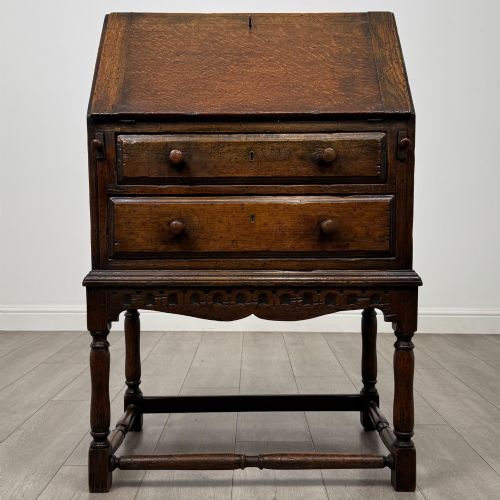
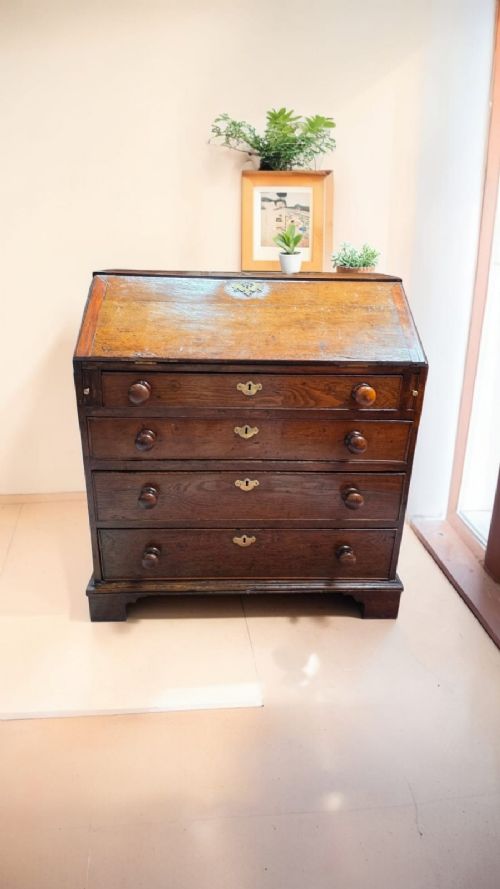
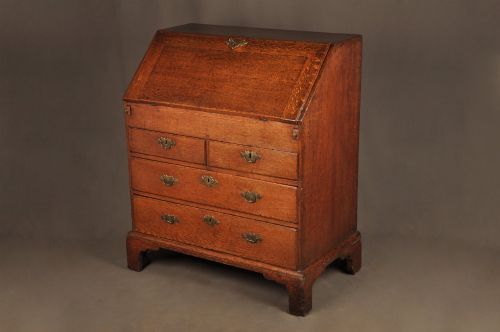
Oak writing bureau drawers are functional workspace furniture pieces designed with drop-front writing surfaces and integrated drawer storage below. These items span multiple centuries, appearing in forms ranging from compact country pieces to grand bureau bookcases with upper shelving. Buyers seeking oak writing bureau drawers will encounter numerous examples originating from the eighteenth, nineteenth, and twentieth centuries.
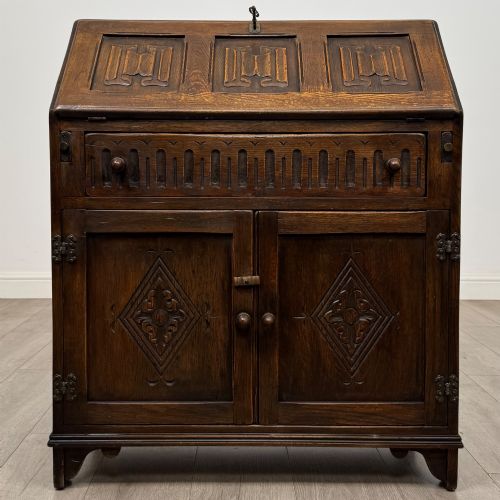
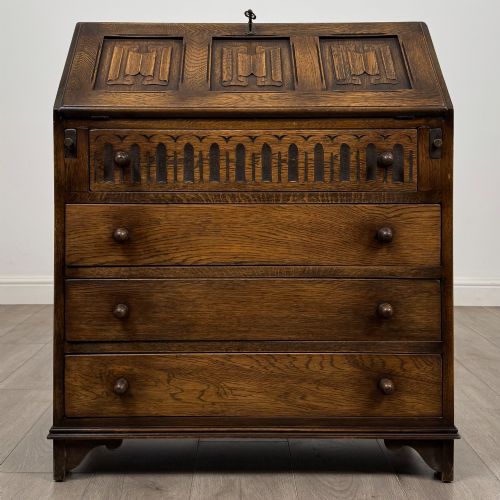
The selection includes vernacular 17th-century pieces, elegant Georgian fall-front designs, and later Edwardian variations incorporating linenfold carving or revival styles. Many pieces integrate stationery compartments and secret drawers behind the fall front, positioned directly above functional storage drawers. Buyers frequently meet compact Edwardian models and robust Georgian editions across this inventory.
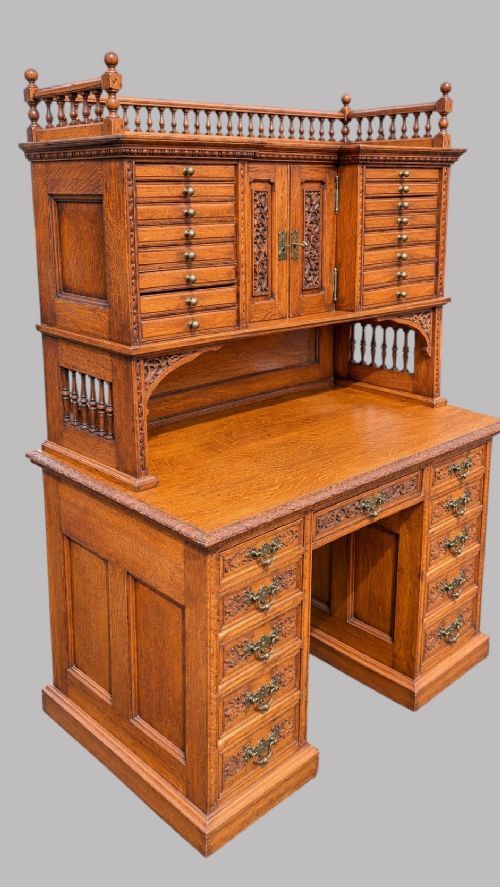
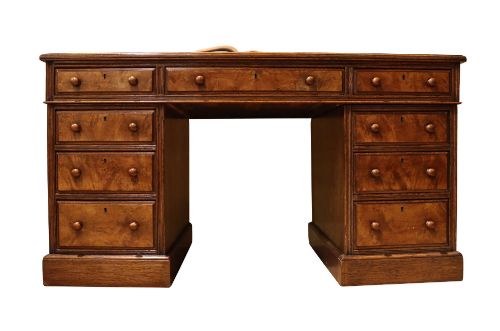
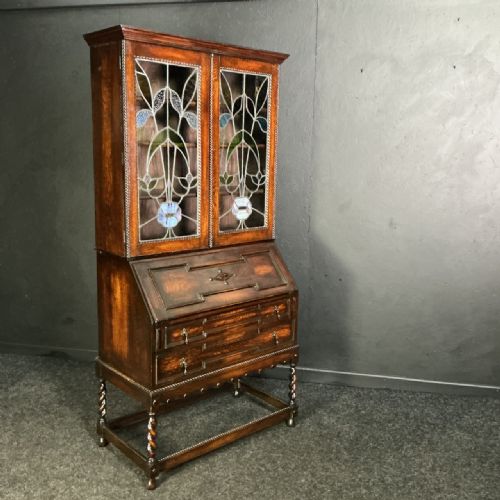
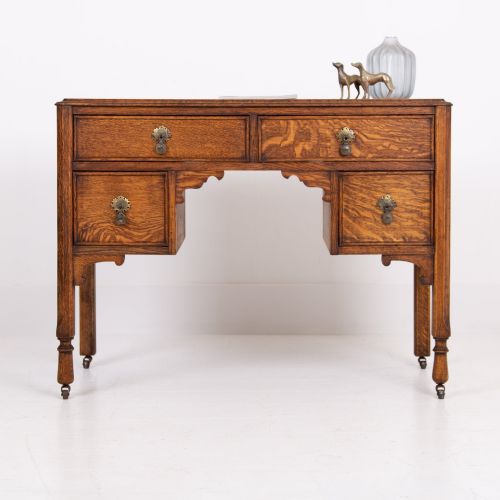
Object variations include pedestal desks, kneehole desks, Davenport desks, and towering bureau bookcases designed for both writing and display. Materials extend beyond standard oak to encompass pollard oak, burr walnut, and mahogany accents, complemented by brass and glass elements. These forms serve as practical writing surfaces while concealing correspondence and papers within fitted internal compartments.
Construction and Materials
Makers constructed these pieces primarily using solid oak timbers, often complemented by secondary woods and decorative veneers like pollard oak, burr walnut, and satinwood crossbanding. Structural integrity relied on traditional joinery techniques, including panelled construction for doors and backboards, alongside hand-dovetailed drawer boxes. Internal compartments required precise miniature joinery to form pigeonholes, small drawers, and secret enclosures.
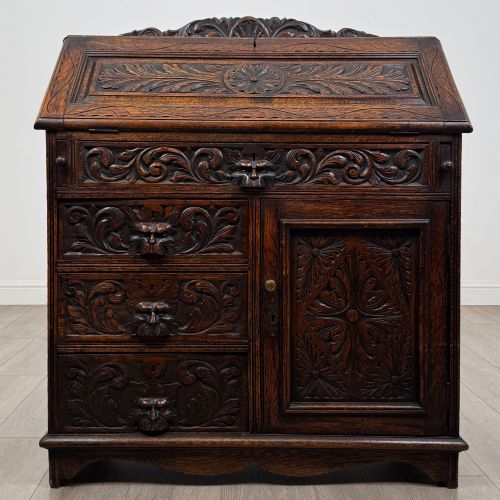
Metal hardware played a crucial functional and decorative role, with brass handles, drop pulls, and key escutcheons fitted to drawers and fall fronts. Writing surfaces frequently incorporated applied leather writing inserts, providing a durable platform for ink and paper. Carved ornamentation, such as Jacobean revival motifs or linenfold panels, was executed directly into the solid timber.
Listings feature oak writing bureau drawers spanning from seventeenth-century vernacular pieces to twentieth-century Edwardian and Jacobean revival styles.
Judging Quality
Quality in these pieces is determined by the selection of timber and the precision of the underlying joinery, particularly in the dovetailing of internal and external drawers. Superior examples display carefully matched grain patterns across the fall front and drawer faces, utilising quarter-sawn oak or burr veneers effectively. The complexity and execution of the internal stepped stationary fittings also indicate the maker's skill level.
The survival of original elements, including brass handles, keyplates, locks, and leather writing inserts, significantly elevates an example. Structural alterations, such as adaptations for modern technology like televisions, separate modified historical items from intact originals. Finally, the crispness of hand-carved details, whether linenfold panels or geometric mouldings, distinguishes high-grade workshop output from simpler vernacular production.
Heals of London·Blyth and Son London·Robert Mouseman Thompson·Jenners
The Oak Writing Bureau Drawers Glossary
- Fall Front
- A hinged writing flap that drops down to create a horizontal desk surface. It conceals internal pigeonholes and small drawers when closed.
- Bureau Bookcase
- A dual-purpose furniture form featuring a writing bureau base combined with an upper glazed or panelled bookcase section. These taller pieces provide extensive storage for books and writing materials.
- Kneehole Desk
- A freestanding desk featuring a central recess for the user's knees, flanked by pedestals of drawers on both sides. They offer symmetrical storage and a dedicated seating position.
- Linenfold
- A style of wood carving that mimics the appearance of folded fabric or linen cloth. This decorative motif appears frequently on Edwardian oak panels.
- Davenport Desk
- A compact form of small desk featuring a sloped, hinged writing surface and drawers accessed from the side. They often incorporate internal stationary compartments.
- Crossbanding
- A decorative border technique where thin strips of veneer are laid perpendicular to the grain of the primary surface. This frames the drawer fronts or top surfaces with contrasting wood grain.
Oak Writing Bureau Drawers: Frequently Asked Questions
What is a fall front bureau?
A fall front bureau is a desk featuring a hinged writing flap that pulls down to reveal a fitted interior of small drawers and pigeonholes. When closed, the flap conceals the working area and keeps writing materials out of sight.
These pieces combine the utility of a writing surface with the storage capacity of chest drawers positioned underneath. They were widely produced across the eighteenth and nineteenth centuries in various scales.
How do I identify an 18th-century oak bureau?
Eighteenth-century oak bureaux typically feature hand-cut dovetails on the drawers, pegged mortise and tenon joints, and solid timber construction without modern plywood backing. The interior fittings often include stepped drawers, secret compartments, and shaped pigeonholes reflecting Georgian or earlier vernacular design.
Secondary woods, patination through age, and wrought iron or brass hardware also help indicate an eighteenth-century origin. Examining the construction methods inside the drawer boxes reveals the age of the piece.
Where were bureau bookcases used?
Bureau bookcases served primarily in studies, libraries, and principal reception rooms of larger homes as multi-functional furniture for reading, writing, and correspondence. The upper bookcase section stored reference volumes and ledgers, while the lower bureau provided a private space for writing letters.
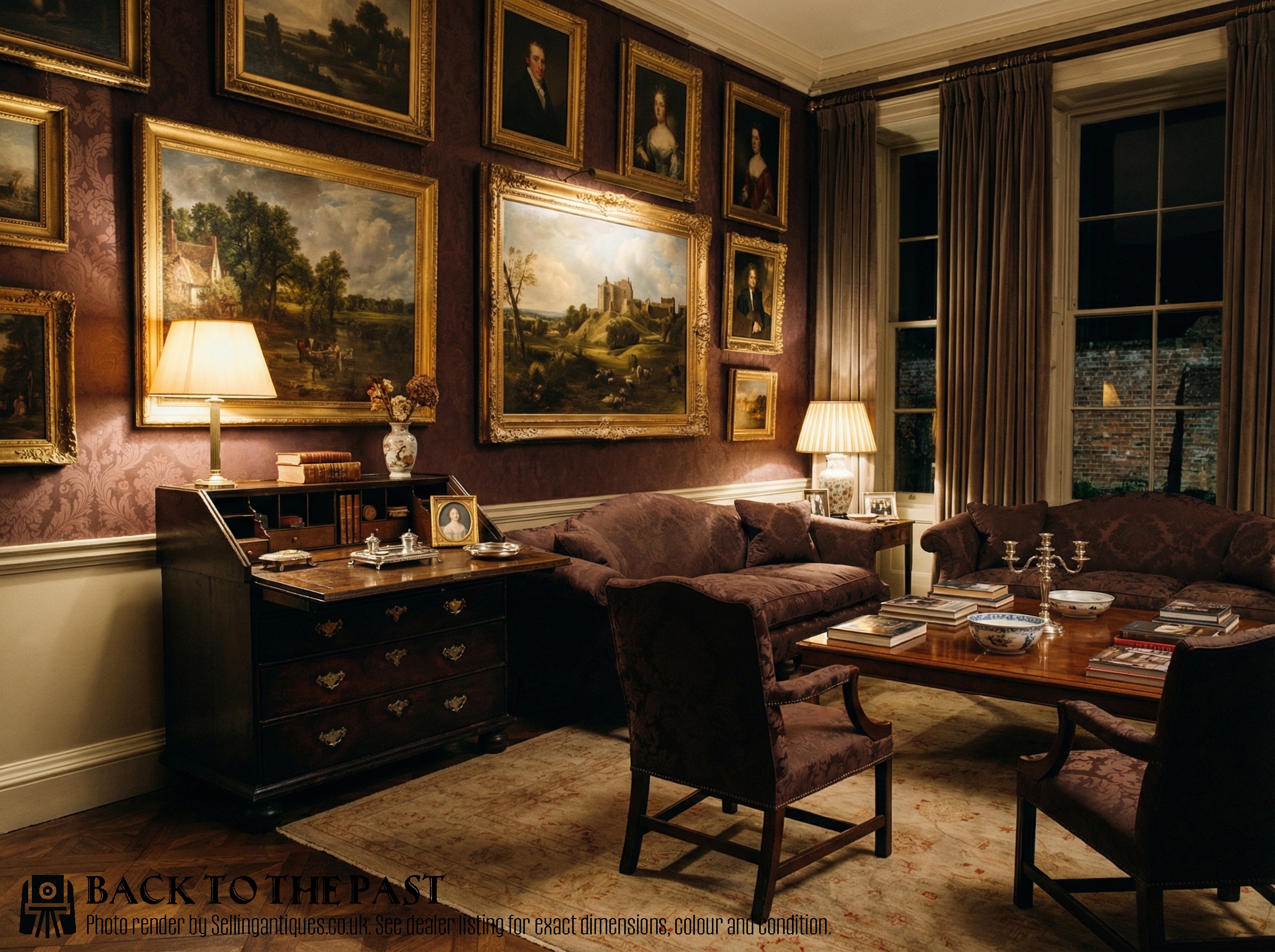
In modern settings, these tall combination pieces work well in living rooms or home offices where vertical storage is beneficial. They anchor a room while offering enclosed desk space.
What is pollard oak?
Pollard oak is a decorative wood derived from trees that were pollarded, a pruning practice that produced dense clusters of branches and resulted in highly figured, mottled grain patterns. Cabinetmakers utilised these distinctive veneers on prominent surfaces like drawer fronts and desk lids to create visual contrast.
Furniture featuring pollard oak typically dates to the nineteenth century, adding texture and rich patterning to the design. It highlights the natural variations within oak timber.
How do I care for an antique oak desk?
Care for an antique oak desk by maintaining stable indoor humidity levels and keeping the wood away from direct heat sources and strong sunlight. Regular dusting with a soft, dry cloth preserves the finish, while periodic application of appropriate furniture wax nourishes the timber.
Avoid using silicone-based polishes or harsh chemical cleaners that can damage historical finishes. Treating leather writing inserts with specialist balms helps prevent cracking over time.