
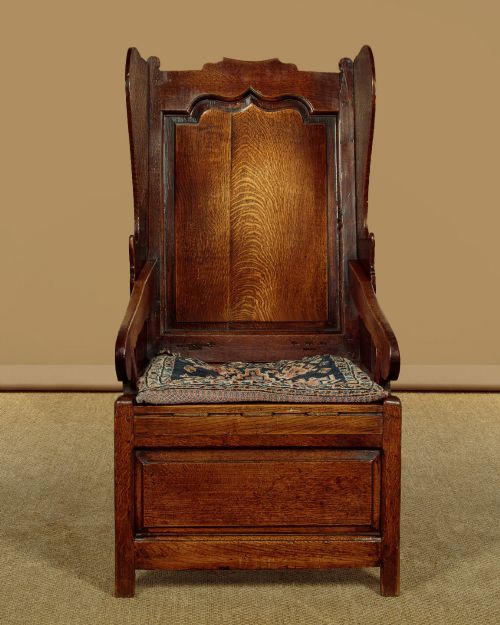
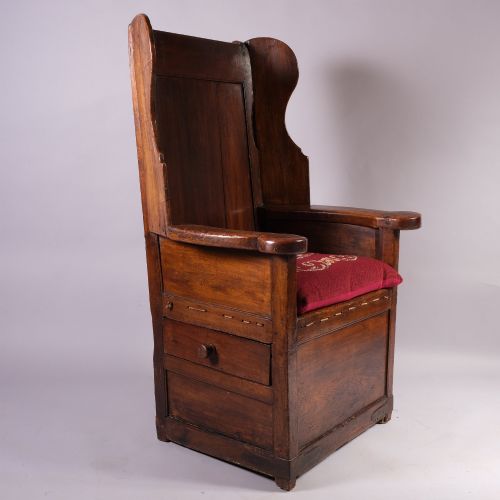
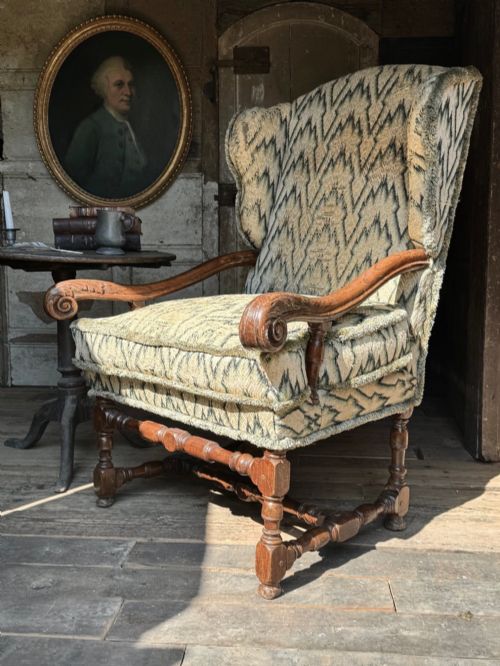


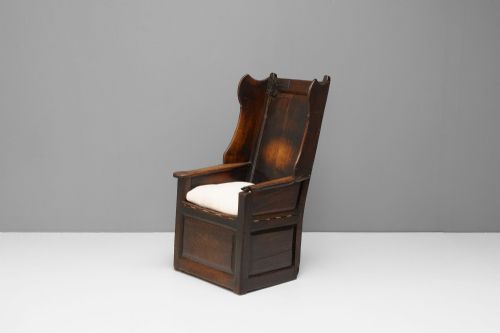


Oak Wingback Armchair
An oak wingback armchair is a substantial seating form designed to shield the sitter from draughts, offering both deep comfort and sturdy period character.
Oak Wingback Armchair
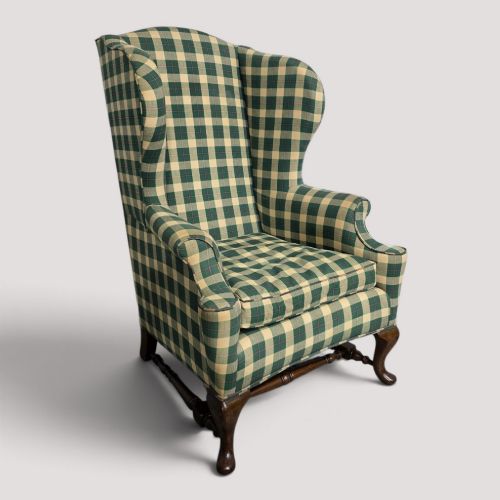
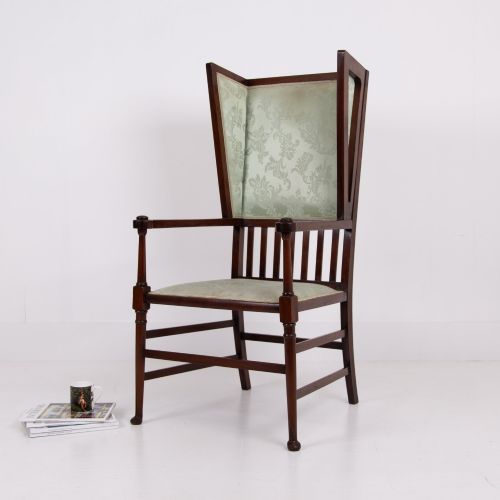
When you search for an oak wingback armchair, you are looking at substantial seating designed to shield the sitter from draughts by enclosing the head and shoulders in protective wings. These pieces span several centuries, drawing on 18th century vernacular traditions as well as later Victorian and Edwardian interpretations.
Makers utilised solid timber frames, often pairing the exposed oak with traditional upholstery fillings and coverings. This mix of structural woodwork and tactile textiles defines the overall presence of the form across different eras.
How they were made
The primary structural material is oak, fashioned into robust frames that support the characteristic high back and projecting side panels. Timber components display traditional joinery methods suited to heavy daily use.
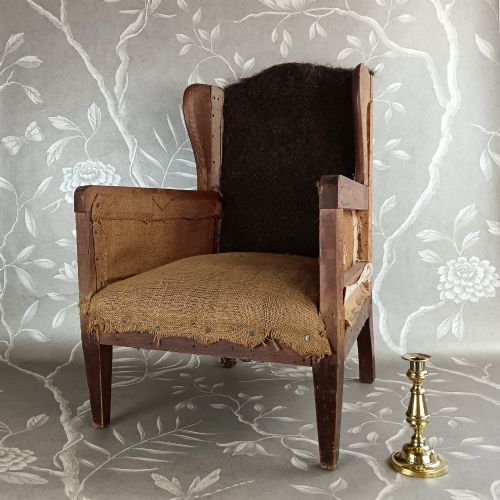
Upholstery materials range from plain hessian and textile to damask fabric and supple leather, often secured with brass detailing. Interior stuffing relied on period materials to achieve the firm support expected of these chairs.
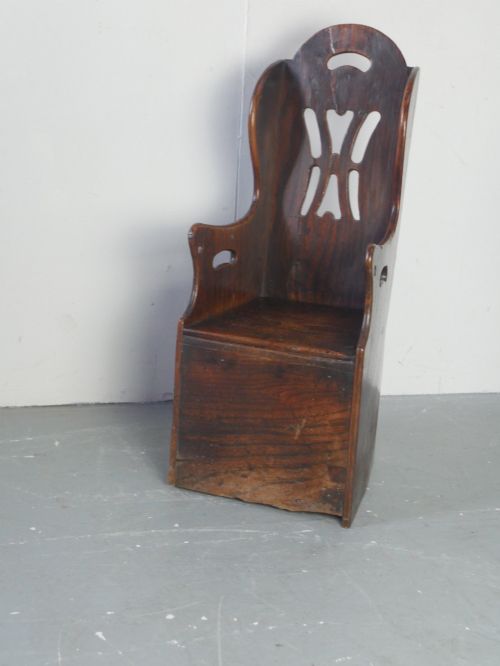
Some early examples feature enclosed wooden hoods designed specifically to keep shepherds warm during late winter lambing duties.
What varies in quality
Quality rests upon the integrity of the timber frame and the proportion of the wings in relation to the seat. Superior examples maintain firm structural joints and retain their original structural timber without excessive replacement.
The grade of the covering material and the execution of the upholstery work also set pieces apart. Finer items demonstrate careful attention to the relationship between the exposed oak framework and the textile or leather elements.
The Oak Wingback Armchair Glossary
- Lambing chair
- A traditional vernacular armchair featuring solid wooden sides and a high panelled back designed to keep out cold air. These typically date from the eighteenth century.
- Wingback
- An armchair style featuring protective side panels attached to the arms and framing the head. This design originally served to deflect room draughts towards an open fire.
- Vernacular
- Everyday furniture built by local craftsmen using regional materials rather than following strict metropolitan design books. These pieces prioritise functional utility and honest construction.
- Carolean
- A decorative style spanning the seventeenth century, characterised by rich carving and scrolled woodwork. Later nineteenth century pieces often revived these ornate motifs.
- Damask
- A reversible figured fabric traditionally woven on a loom with patterns formed by contrasting warp and weft threads. It offers a formal finish for period upholstery.
Oak Wingback Armchair: Frequently Asked Questions
What is a lambing chair?
A lambing chair is a traditional form of seating featuring solid timber sides and a high back intended to provide shelter from cold draughts. They often date from the eighteenth century and display vernacular regional characteristics.
Such chairs differ from standard upholstered wingbacks by substituting wooden panels for padded arms, reflecting their practical agricultural origins.
How do I date an oak armchair?
Dating relies on examining the construction methods, timber patination and stylistic details present in the woodwork. Tool marks and joinery techniques offer clear clues regarding the period of manufacture.
Comparing the proportions and carving motifs with known examples from the eighteenth, nineteenth and early twentieth centuries helps narrow down the origin.
Where were these chairs placed?
These chairs were traditionally positioned near hearths and fireplaces where the wings could effectively trap heat and block cold air currents. Their sturdy construction made them central items in domestic living spaces.
In modern rooms, they function well as fireside seating or as statement reading chairs in studies and bedrooms.
Are leather and fabric equally correct?
Both leather and fabric coverings appear across different periods and regional styles within the selection. Leather was frequently chosen for durability in heavy use settings, while textiles offered softer comfort.
Original coverings are uncommon due to natural wear, meaning many period frames have received later re-upholstery.