
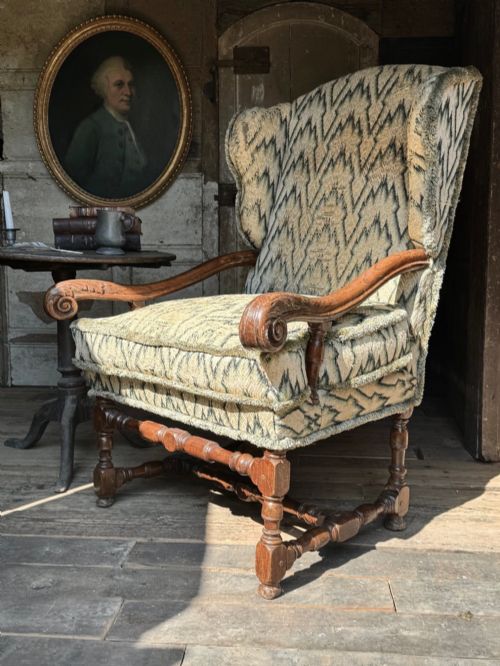


French Wing Chair
These french wing chair examples combine generous proportions with upholstered wings, designed to shelter the sitter from draughts.
French Wing Chair
A french wing chair provides deep seating enclosed by upholstered side panels, known as wings, designed originally to keep out cold air in large rooms. These seating pieces appear across various periods, most frequently from the nineteenth century alongside eighteenth-century examples.
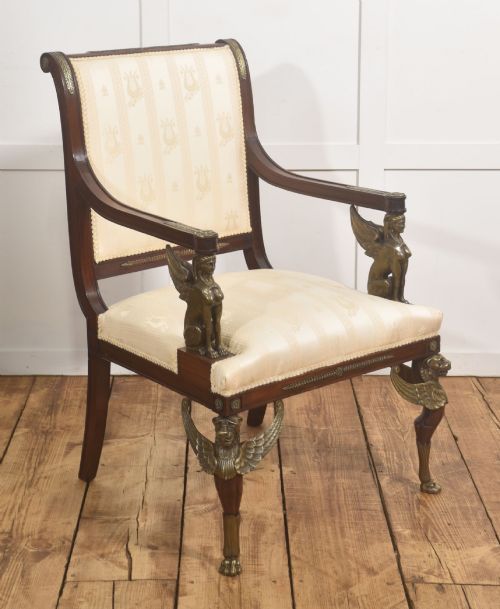
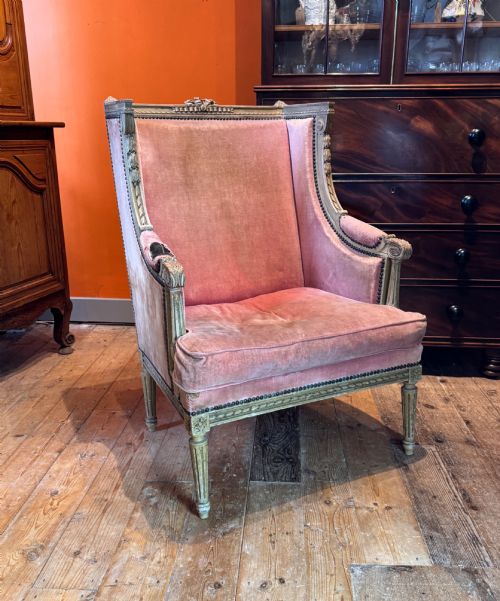
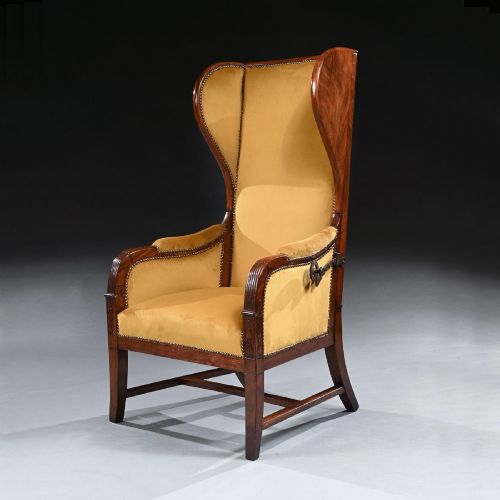
The forms span from heavy walnut and oak frames with high backs to giltwood and painted finishes following Louis styles. Many examples exhibit classic revival details, incorporating open arms or reclining mechanisms alongside traditional wingback silhouettes.
Materials and Construction
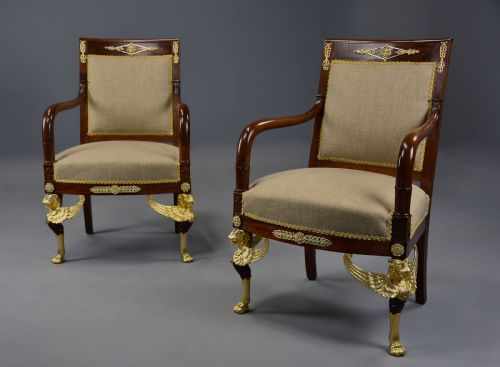
Frames rely on hardwoods such as mahogany, walnut, oak, beech, and giltwood, carved with classical motifs or finished in original paint. Metal accents including brass, ormolu, and iron appear on structural elements and reclining hardware.
Upholstery materials range from leather and velvet to linen, textile, and tapestry. These fabrics are secured to the wooden frames to enclose the high backs and prominent side wings.
Several armchairs incorporate nineteenth-century reclining mechanisms, proving that afternoon naps required engineered comfort long before modern loungers.
Evaluating Quality
Quality depends upon the crispness of the wood carving and the integrity of the frame timbers, whether walnut, mahogany, or carved giltwood. Superior examples retain original painted finishes or distinct patination rather than later alterations.
Proportion and scale distinguish the finer pieces, particularly where the curve of the wings meets the arms. The depth of the carving on the exposed wood dictates the distinction between standard production and exceptional craftsmanship.
The French Wing Chair Glossary
- Wingback
- An armchair featuring protective side panels attached to the arms and extending up to the headrest. This design historically blocked draughts in large rooms.
- Bergere
- A closed-upholstered armchair with wooden frames exposed around the border and a built-in upholstered back and seat. It often includes a loose seat cushion.
- Fauteuil
- An open-arm armchair with upholstered back and seat supported by an exposed wooden framework. The arms typically feature padded elbow rests.
- Ormolu
- Gilded bronze used for decorative mounts and hardware on furniture frames. It provides a metallic accent against wood surfaces.
French Wing Chair: Frequently Asked Questions
What is a french wing chair?
A french wing chair is an upholstered seating piece featuring protective side panels attached to the backrest. These wings were originally designed to shield the occupant from draughts in large, cold rooms.
Such chairs appear in various wood types and revival styles across the nineteenth century and earlier periods. They combine deep seats with substantial frames intended for comfortable lounging.
How do I identify the period?
Dating relies on examining the timber species, framing construction, and decorative carving styles. Eighteenth-century examples typically feature solid oak or walnut with simpler, heavier proportions, whereas later pieces often adopt revival aesthetics like Louis XVI or Empire.
Hardware components and upholstery methods also offer clues to the decade of manufacture. Original painted surfaces and patination help confirm the age of the wooden frame.
How were they used historically?
These armchairs served as comfortable seats near fireplaces or in drawing rooms where warmth was required. The enclosed wings trapped heat around the head and shoulders of the person sitting.
They functioned as primary seating for reading, resting, or conversation in formal domestic interiors. Reclining versions offered additional comfort for relaxation.
Are they comfortable for daily use?
These seats offer generous proportions and deep cushioning suited for modern living. Many feature upholstered backs and reclining mechanisms that accommodate relaxed postures.
Placement should consider the scale of the room, as high backs and expansive wings require adequate floor space. Pairing them with appropriate footstools enhances their utility as lounge seating.