





Antique Highback Accent Chair
An antique highback accent chair commands a room through sheer vertical presence, offering tactile connection to centuries of fine seating design.
Antique Highback Accent Chair
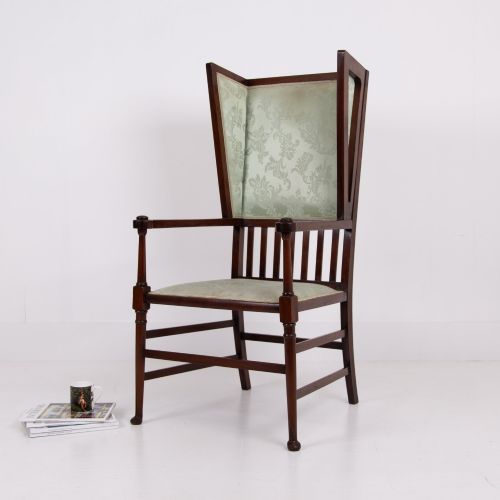
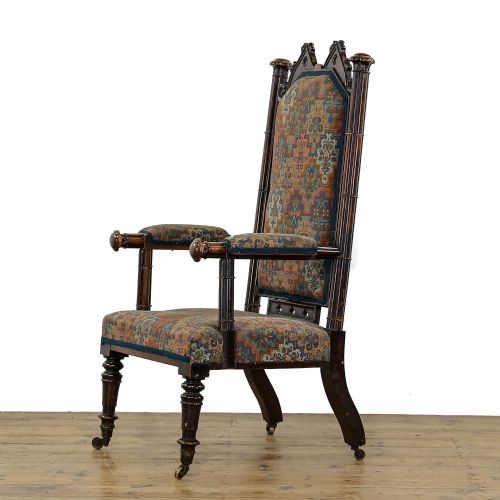
When searching for an antique highback accent chair, buyers encounter striking seating forms spanning the nineteenth and early twentieth centuries, including Gothic Revival, Art Nouveau, and William and Mary revival styles. These pieces function primarily as decorative yet functional armchairs and side chairs, often utilised to anchor a corner or provide a commanding focal point in a traditional interior.
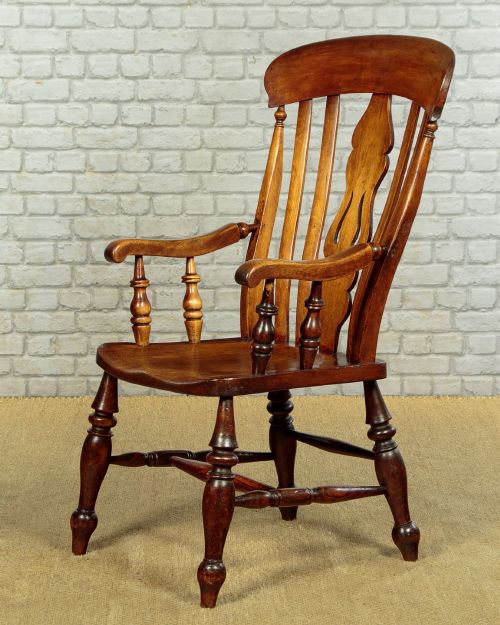
The most common variants on this page include robust oak kitchen armchairs from around eighteen-eighty, walnut framed caned chairs, and heavily carved throne chairs reflecting Victorian and earlier design influences. Makers varied from cottage workshops to commercial firms such as Liberty Morris and Company, incorporating diverse materials from rush to giltwood.
Originating across British and continental workshops, these chairs display substantial variation in height and structural framing while maintaining the characteristic tall backrest that defines the grouping. Whether upholstered in plush velvet or fitted with simple rush seats, each piece reflects the domestic tastes of its specific decade of production.
How they were made
Cabinetmakers constructed these frames using dense timbers like oak, mahogany, and walnut, frequently employing traditional joinery alongside intricate hand carving to achieve deep relief ornamentation. Many examples integrate structural elements such as brass fittings or turned wooden stretchers to reinforce the tall upright frames.
Seating surfaces demonstrate diverse craftsmanship, ranging from tightly woven natural cane and rush to heavy textile upholstery including velvet and assorted woven fabrics. Giltwood accents appear on continental pieces, applied over carved wooden bases to create a luminous decorative surface.
Some Victorian kitchen chairs spent decades watching pies cool before moving into the drawing room.
What varies in quality
The distinction between standard domestic seating and superior examples lies primarily in the depth and crispness of the hand carving upon the wooden framework. Finer pieces exhibit harmonious proportions where the height of the backrest balances cleanly with the width of the seat and arms.
Material selection and execution of secondary elements, such as the precision of caning or the quality of timber grain, separate workshop production from mass commercial output. Original upholstery treatments and untouched patination on older timbers generally indicate a higher grade of preservation.
Liberty Morris and Co
The Antique Highback Accent Chair Glossary
- Highback
- A chair design featuring an elevated backrest that rises significantly above the seat level. This proportion provides distinct visual weight and additional head or shoulder support.
- Caned
- A seating or backrest method utilising woven rattan or similar plant material in an open mesh pattern. This technique introduces light texture and flexibility to rigid wooden frames.
- Giltwood
- Timber coated with a thin layer of gold leaf or metallic gilt paint for decorative enhancement. It appears frequently on formal continental seating of the nineteenth century.
- Rush
- Dried marsh grass twisted into cords and hand-woven to form durable, textured seating surfaces. It is commonly found on Arts and Crafts and vernacular kitchen chairs.
- Throne Chair
- An imposing, high-backed armchair designed with regal proportions and heavy ornamentation. Such pieces often serve as decorative focal points rather than casual everyday seating.
Antique Highback Accent Chair: Frequently Asked Questions
Where should I place a highback chair?
These tall chairs suit corners, hallways, or reception spaces where their vertical frames can be appreciated without blocking room circulation. They function well as standalone statement pieces.
Avoid positioning them in narrow walkways where the protruding arms or extended backrests might suffer accidental impact from daily traffic.
How do I care for antique wood?
Maintain timber surfaces by dusting with a soft, dry cloth and applying traditional beeswax sparingly to nourish the grain. Keep chairs away from direct heat sources and strong sunlight to prevent wood splitting.
Refrain from using modern chemical sprays or abrasive cleaners, which strip historical patination and damage polished finishes.
Are these chairs comfortable for daily use?
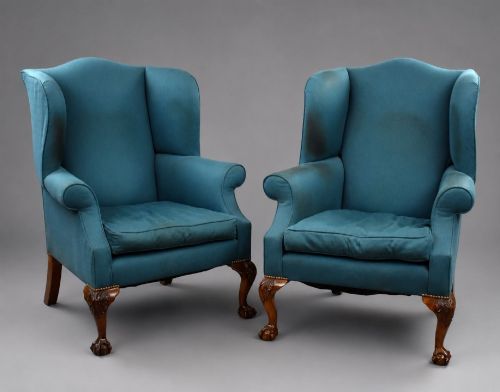
Comfort varies significantly depending on the specific period and design intent, as many historical chairs prioritised formal posture over relaxed lounging. Upholstered wingbacks offer supportive cushioning, while carved wooden or rush-seated versions feel firmer.
Consider adding a simple matching cushion if you intend to sit in an un-upholstered wooden or caned model for extended periods.
How do I identify a revival style?
Revival pieces incorporate historical design motifs from earlier centuries, such as seventeenth-century William and Mary turning or Gothic pointed arches, executed with nineteenth-century tools and timber selection. Look closely at the tool marks and wood seasoning to determine the actual period of manufacture.
Consulting construction methods on the underside often reveals machine-cut elements that distinguish a later nineteenth-century interpretation from an original antique.