


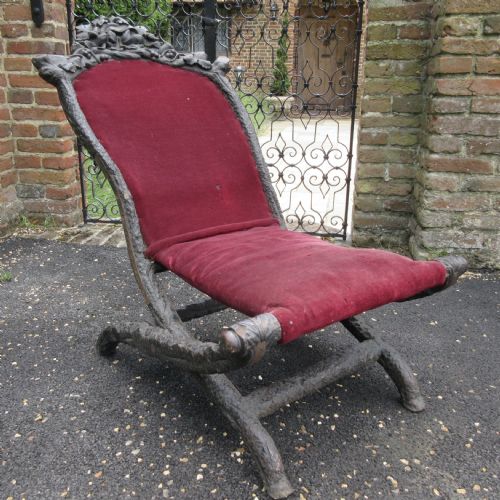


Oak Frame Lounge Chair
An oak frame lounge chair brings solid timber construction and comfortable seating into a room, offering durability alongside period character.
Oak Frame Lounge Chair
An oak frame lounge chair is a sturdy seating option built from durable timber, appearing across multiple eras from the eighteenth century to the twentieth century. These pieces encompass open armchairs, wingback forms, low armchairs, and folding chairs designed for relaxation in parlours, living spaces, and garden rooms.
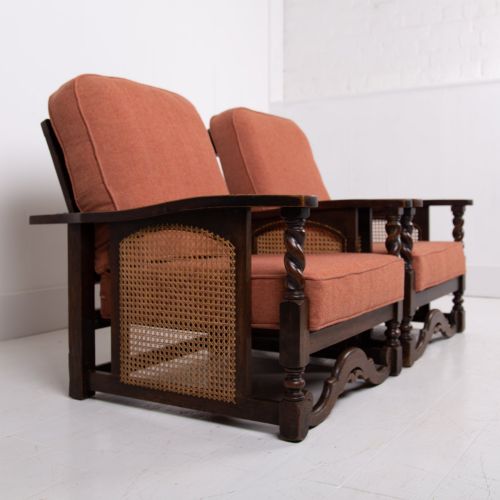
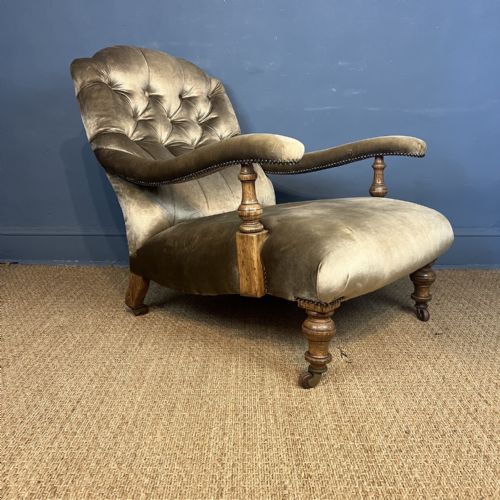
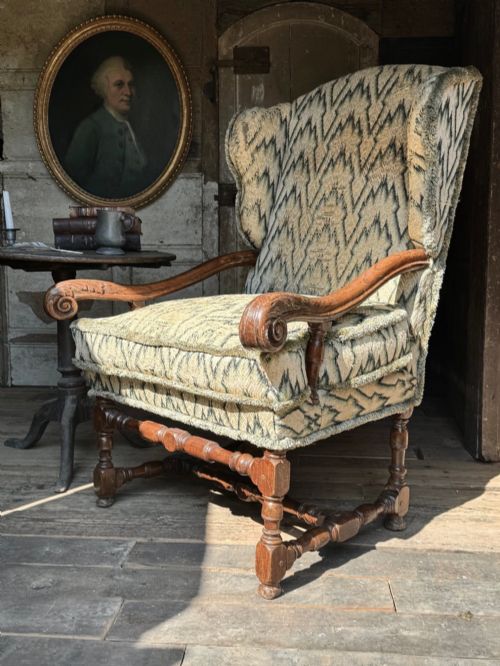
The selections available here range from early eighteenth-century French wingback designs and nineteenth-century Victorian carved armchairs to Arts and Crafts recliners and 1930s Art Deco styles. Buyers will frequently encounter Victorian and early twentieth-century interpretations featuring substantial wooden construction paired with various upholstery materials.
How they were made
Makers constructed the structural frames of these seats using solid oak, sometimes embellishing the timber with detailed hand carving, as seen in Black Forest examples and Victorian revival pieces. Joinery relied on traditional methods to ensure the wooden frameworks could support daily use and heavy upholstery.
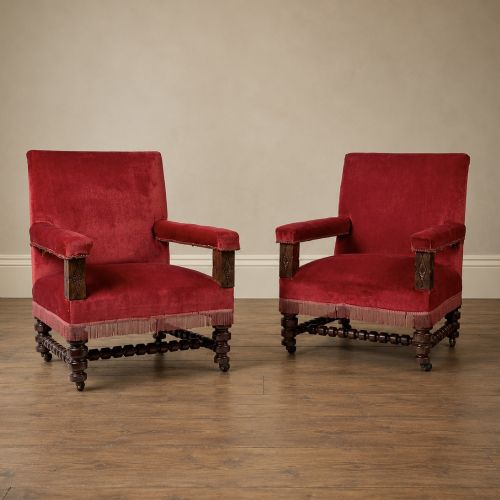
Upholstery and secondary materials completed the construction, incorporating leather, velvet, red velvet, fabric, cane, and woven Lloyd Loom alongside brass hardware. Cushions varied from period-appropriate stuffing to newly fitted pads designed for modern comfort.
Current listings incorporate oak alongside cane, leather, brass, and Lloyd Loom across periods spanning the eighteenth to the twentieth century.
What varies in quality
The distinction between standard examples and superior pieces rests upon the crispness of the timber carving and the architectural proportion of the oak frame. Finer specimens display harmonious joinery and thoughtful detailing, such as the distinctive turnings found in Jacobean revival models or the clean geometric lines of Art Deco designs.
The integrity of the structural frame and the quality of the accompanying materials also define the grade of the piece. Original elements like cane panels, brass mounts, and period leather or velvet elevate the standing of an armchair compared to heavily altered or mismatched components.
The Oak Frame Lounge Chair Glossary
- Bergere
- A traditional enclosed armchair with upholstered back and sides, often featuring exposed wooden frames and woven cane panels. This style provides a lighter visual presence while maintaining substantial comfort.
- Wingback
- An armchair with high back and flanking side panels designed to shield the sitter from draughts. Early examples frequently utilise heavy timber frames and upholstered wings.
- Lloyd Loom
- A material created from twisted cellulose fibre woven over a wire core, patented in the early twentieth century. It appears in garden room seating combined with wooden framing.
- Arts and Crafts
- A design movement prioritising traditional craftsmanship and visible construction methods over mass-produced ornamentation. Chairs from this period emphasise honest materials and functional forms.
- Jacobean Revival
- A nineteenth-century stylistic movement copying the heavy, ornate furniture forms of the seventeenth century. Pieces in this style typically feature dark carved oak and turned supports.
Oak Frame Lounge Chair: Frequently Asked Questions
What periods do these chairs cover?
The selection spans several centuries, ranging from eighteenth-century French designs through nineteenth-century Victorian eras to early twentieth-century twentieth pieces including 1930s creations.
Buyers will find historical styles like Jacobean Revival sitting alongside Arts and Crafts recliners and Art Deco armchairs.
Are original cushions common?
Many older armchairs have undergone reupholstery or received replacement pads to ensure practical usability in contemporary homes.
Listings specify when cushions are newly made or when traditional materials like leather and velvet remain intact.
How do I identify an Arts and Crafts chair?
Arts and Crafts examples usually feature straightforward, unpretentious construction that highlights the natural grain and structural joinery of the oak.
These pieces often take the form of functional recliners or open armchairs with minimal decorative carving.
What materials are used besides oak?
While oak forms the primary structural framework across all listed items, secondary materials vary significantly depending on the period and style.
Common additions include brass hardware, cane panels, woven Lloyd Loom, and upholstery coverings in leather, velvet, and general textiles.
How do Victorian pieces differ from 1930s models?
Victorian armchairs tend to feature heavier proportions, dark wood, rich velvet upholstery, and elaborate carved details or revival styling.
Nineteen-thirties models lean towards cleaner lines, lower profiles, and distinct Art Deco forms or light garden room constructions.