


Oak Trestle Desk
An oak trestle desk provides a sturdy workspace, combining timber grain with simple side supports for practical daily use.
Oak Trestle Desk
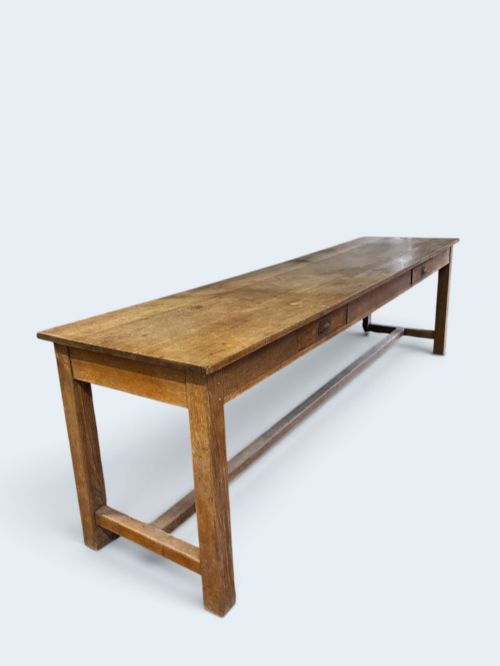
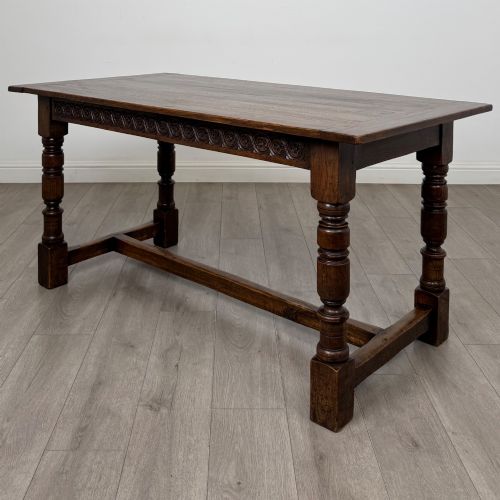
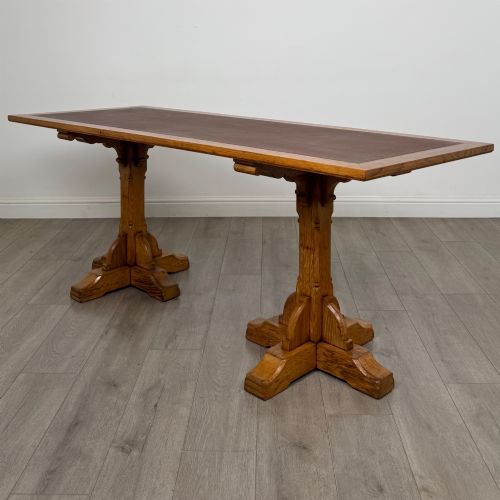
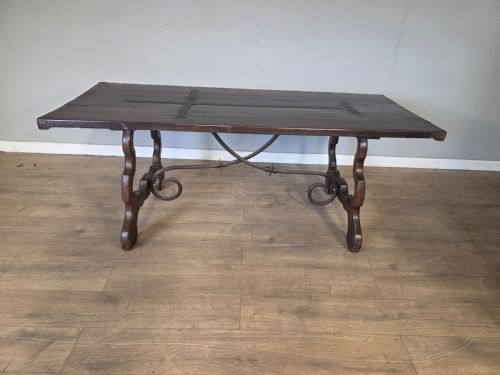
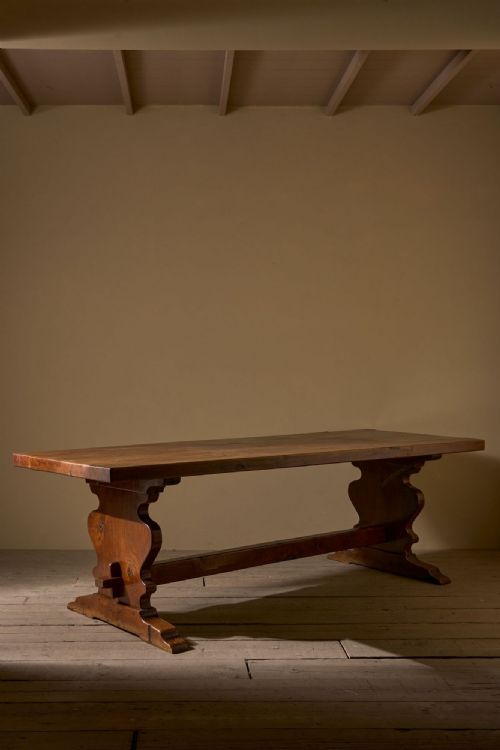
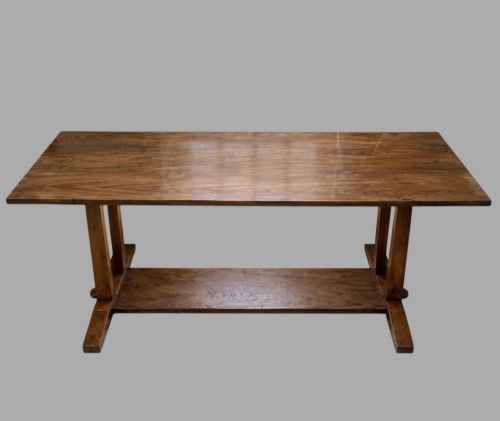
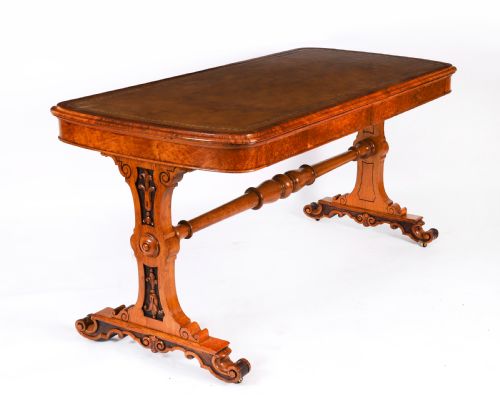
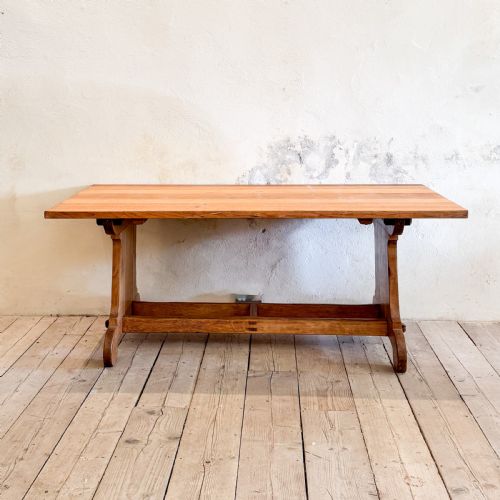
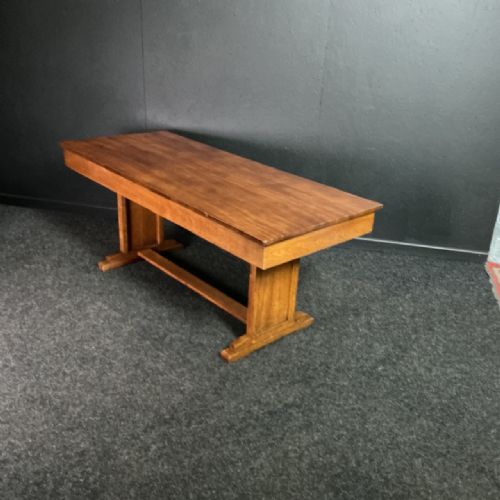
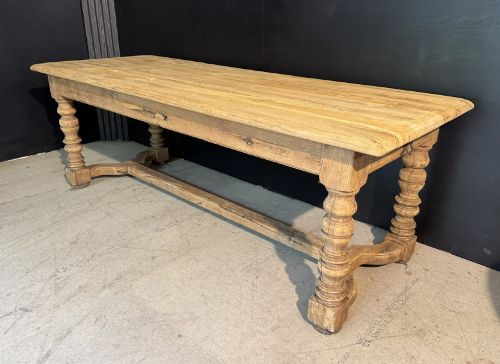
An oak trestle desk is a workspace grounded by vertical end supports rather than standard legs, offering clear legroom beneath a broad top. When searching for an oak trestle desk, you encounter pieces spanning from the seventeenth century through to the 1930s, alongside related refectory and library tables adapted for similar use.
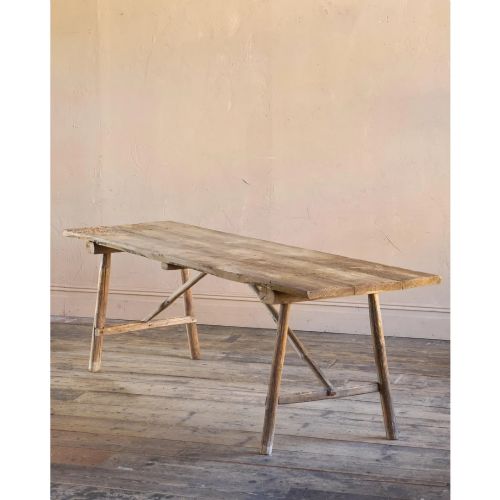
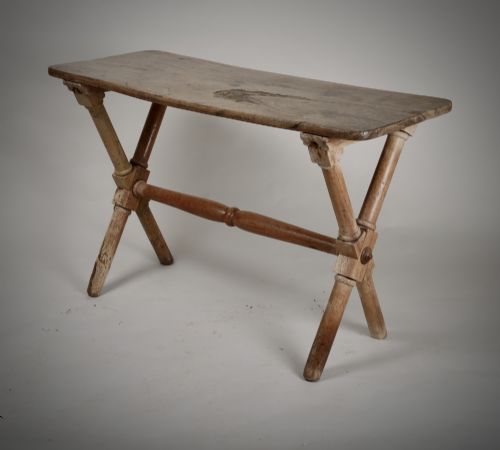
The selection includes styles such as Arts and Crafts, Gothic Revival, and rustic farmhouse variants from French and Spanish traditions. Many examples utilise solid timber construction, sometimes incorporating secondary woods like pine or poplar alongside iron braces.
Assessing the build
The grade of timber dictates the visual weight of the piece, with quartered oak yielding finer grain patterns than plain sawn boards. Heavier gauge ironwork and solid brass fittings indicate superior execution compared to light stamped metal.
Joinery execution separates robust examples from simpler forms, particularly where trestle feet meet central beams and top boards connect to the apron. The retention of original surface treatments, whether bleached finishes or dark patinas, preserves the integrity of the piece.
Listings span from seventeenth-century Spanish designs to 1930s industrial metal bases topped with solid oak.
Heals·Gillows·Charles Bevan·Pairs MFG Co
The Oak Trestle Desk Glossary
- Trestle
- A support structure consisting of a horizontal beam fixed to two vertical feet or frames. This design distributes weight evenly and maximises legroom.
- Quartered oak
- Timber sawn radially from the log to produce characteristic medullary ray flecks. This cut increases dimensional stability.
- Refectory table
- A long dining or working table originally used in monastic refectories. These pieces often share structural similarities with trestle desks.
- Pollard oak
- Timber taken from trees that were cut back to promote a dense head of branches, creating highly decorative growth patterns. It appears frequently on nineteenth-century writing surfaces.
- Gothic Revival
- An architectural and decorative style drawing on medieval forms, featuring pointed arches and heavy carved ornamentation. This aesthetic appears on nineteenth-century library tables.
Oak Trestle Desk: Frequently Asked Questions
What is an oak trestle desk?
An oak trestle desk is a sturdy flat-surface workspace supported by two upright trestles joined by a stretcher bar. This configuration removes corner legs, allowing unhindered movement beneath the top.
These pieces range from rustic farmhouse variants to formal nineteenth-century library tables adapted for writing.
How do I date an oak desk?
Dating relies on examining construction marks, timber preparation methods, and stylistic indicators such as Gothic Revival carvings or Arts and Crafts framing. Tool marks left by hand saws differ visibly from later mechanised milling.
Hardware types, including brass handles and wrought iron brackets, also provide reliable chronological markers.
Are these desks suitable for daily work?
These pieces function well for daily tasks, offering stable surfaces and generous proportions inherited from library and refectory tables. Their robust construction handles modern computer equipment and paperwork easily.
Care should be taken with historical leather surfaces by using appropriate writing pads to prevent marking.
What maintenance do oak surfaces need?
Solid oak surfaces require minimal upkeep beyond regular dusting with a dry cloth to prevent grit accumulation. Occasional applications of natural beeswax maintain the timber moisture and lustre without building up heavy chemical layers.
Direct sunlight and excessive heat sources should be avoided to prevent timber splitting.
What is pollard oak?
Pollard oak is timber harvested from trees pruned close to the trunk to encourage dense, knotty branch growth. This process creates swirling, highly figured grain patterns prized for decorative furniture.
It appears on select nineteenth-century writing tables and desks.