


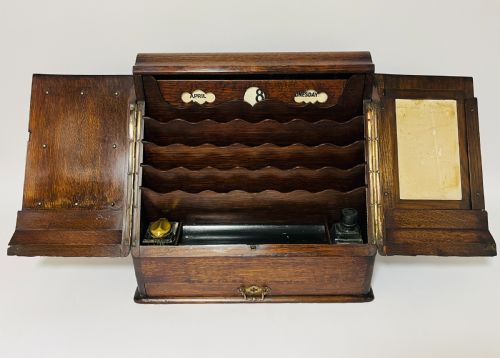


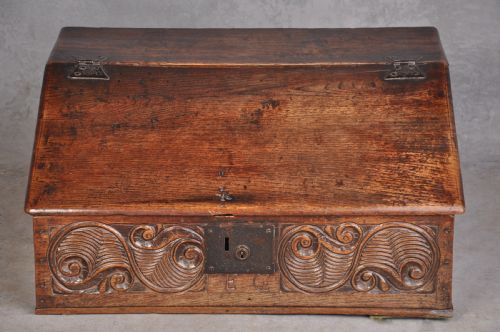


Oak Stationery Box
An oak stationery box is a purposeful desk tidy designed for letters and post, appearing most often in nineteenth-century Victorian and Edwardian forms.
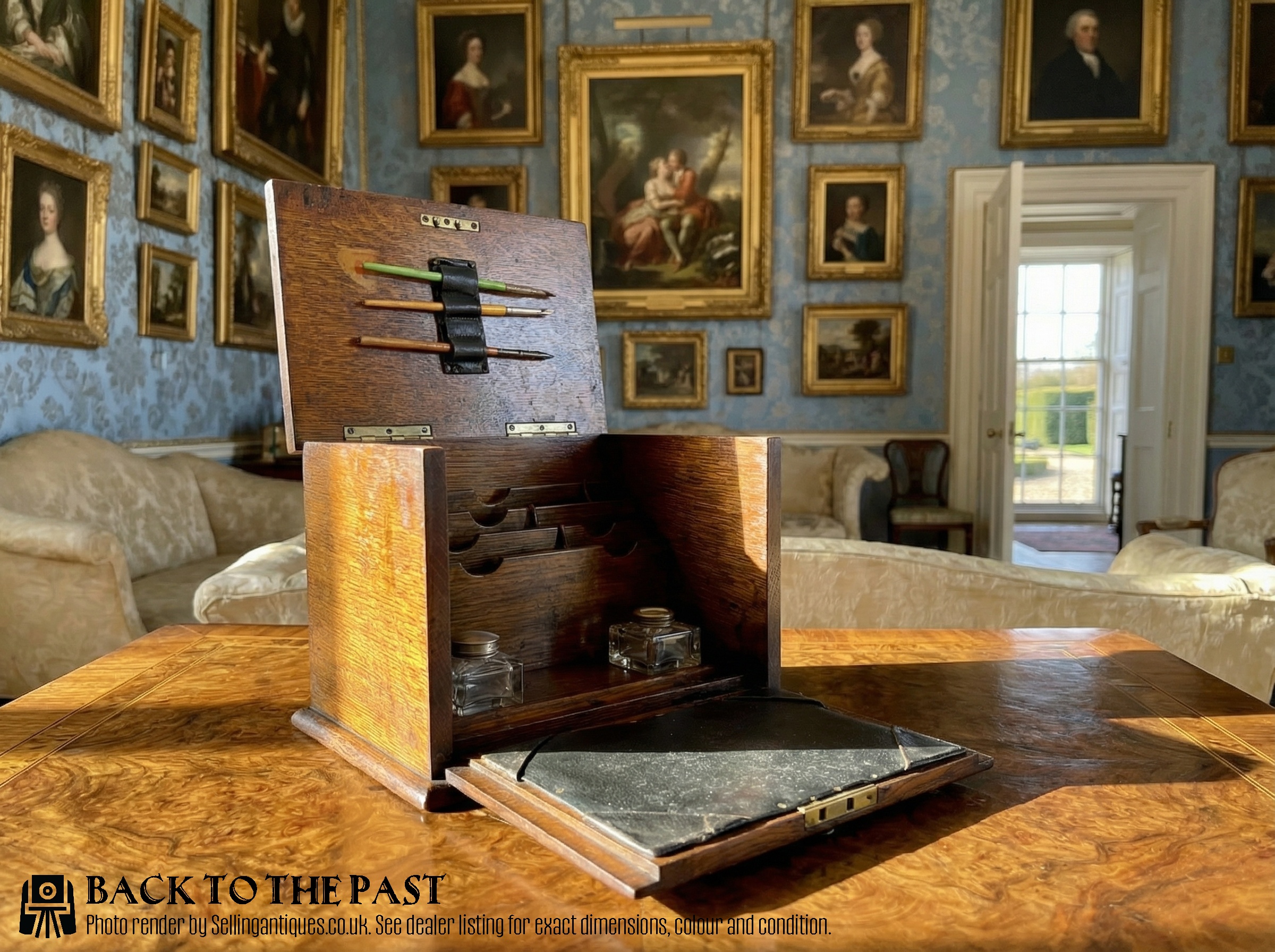
Oak Stationery Box
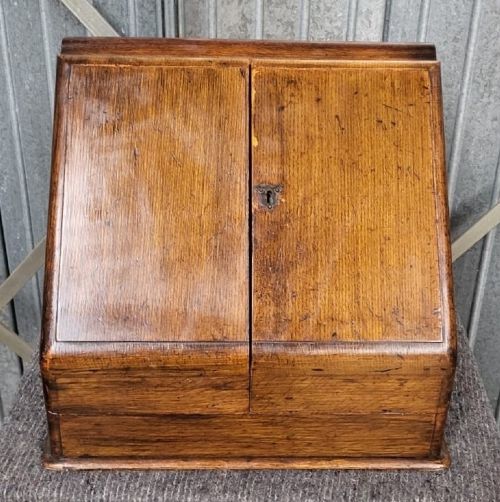
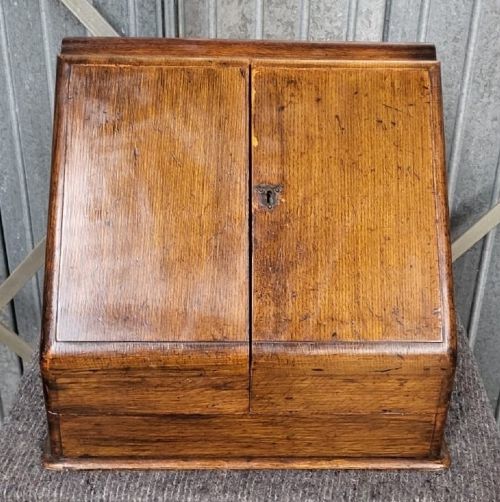
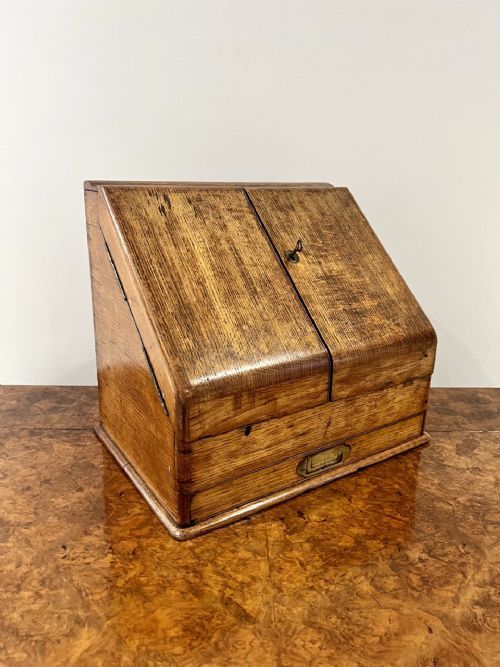
An oak stationery box serves as a desk accessory designed to house letters, correspondence, and writing equipment within domestic and professional interiors. The phrase oak stationery box encompasses varied forms such as fall-front cabinets, letter boxes, and slope-front chests.
Most pieces encountered on this page belong to the Victorian and Edwardian eras, spanning the nineteenth and early twentieth centuries. Examples range from simple country house postboxes to elaborate desk cabinets fitted with inkstands and calendars.
Materials and construction
Makers utilised timber alongside structural and decorative metals, most frequently mounting oak carcasses with brass hinges, locks, and handles. Glass and ceramic ink bottles frequently accompany the internal compartments of these cabinets.
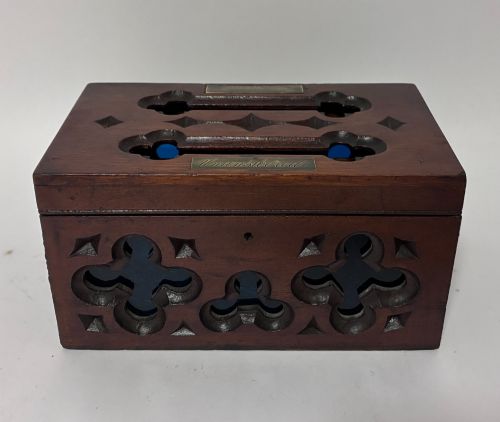
Joinery techniques varied from straightforward box construction to architectural carving in Gothic Revival and Arts and Crafts styles. Fall-front mechanisms and internal letter tiers required precise carpentry to ensure smooth operation on the desktop.
Oak Stationery Box Retail Price Guide 2026
Typical asking prices for oak stationery box among the pieces listed under this phrase on Sellingantiques today, from the lower quarter to the upper quarter. They describe what is for sale here now, not the wider market.
Several boxes contain secret compartments and hidden drawers, designed to keep private correspondence safe from wandering eyes.
Craftsmanship and appointment
The distinction between standard utility boxes and superior examples lies in the selection of timber figure, such as pollard or golden oak, and the integration of auxiliary functions like secret drawers or perpetual calendars. Superior pieces exhibit crisp carving and substantial brass mountings rather than pressed metal elements.
Interior layout and hardware complexity determine the caliber of a desk cabinet, with fitted stationery slots and matched ink bottles indicating a higher grade of commission.
The Oak Stationery Box Glossary
- Fall-front
- A hinged front panel that drops downward to reveal internal letter compartments and writing surfaces. This mechanism allows immediate access to stored correspondence.
- Letter box
- A desktop or wall-mounted container featuring a slotted aperture for posting mail. Such boxes were common in country houses and hotels.
- Desk tidy
- A compartmentalised desktop accessory designed to hold stationery, pens, and inkwells in an organised manner. These pieces keep work surfaces clear of clutter.
- Pollard oak
- Timber taken from trees that have been pollarded, producing a knotty and highly figured grain pattern. Cabinet makers valued this wood for decorative veneer and panels.
- Campaign box
- Portable storage fitted with brass corners and flush handles intended for travel. These sturdy pieces were built to withstand movement.
Oak Stationery Box: Frequently Asked Questions
How were stationery boxes used?
They kept incoming and outgoing correspondence organised before the widespread use of modern filing systems. Many included slots for specific categories of letters, stamps, and note cards.
Some incorporated inkwells, pen trays, and perpetual calendars to function as complete desk organisers.
How do I date an oak stationery box?
Stylistic clues such as Gothic Revival carving or Arts and Crafts ironwork help assign pieces to specific decades. Victorian examples often feature heavy mouldings, while Edwardian versions tend to display lighter proportions.
Internal mechanisms, brass hardware styles, and occasional dated inscriptions or calendar adjustments provide further chronological evidence.
Where should I place a stationery box?
These boxes suit study desks, hall tables, and living room surfaces where their compartments can hold everyday post or stationery. Placing them away from direct heat sources protects the oak timber and any paper contents.
They function as practical storage while adding period character to a workspace.