
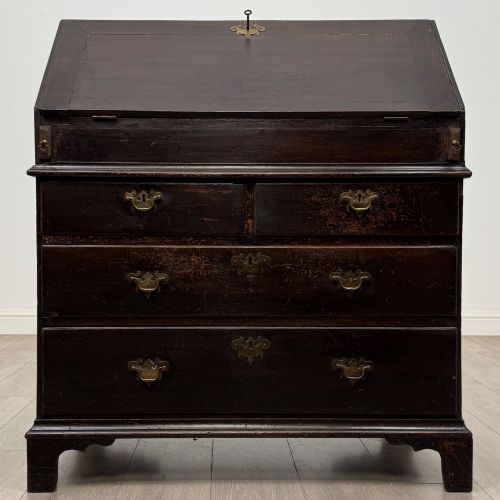
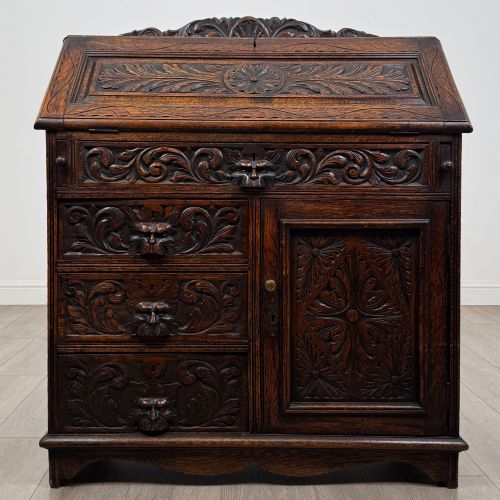
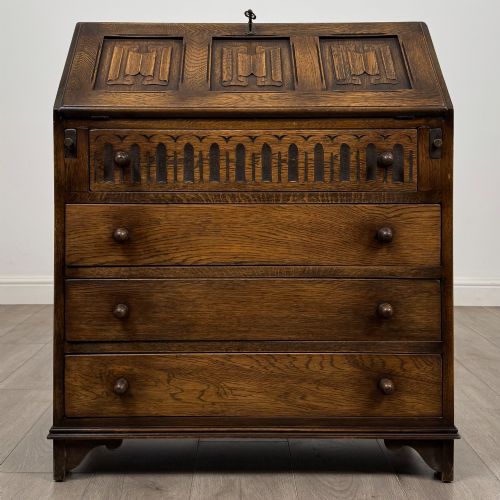
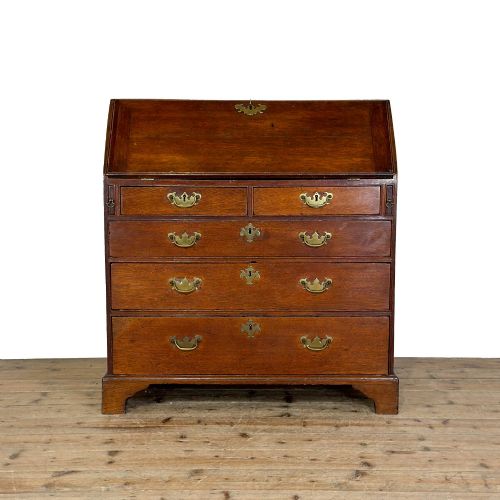
Oak Sloping Desk
An oak sloping desk offers a sturdy writing surface with practical storage, appealing to anyone who values traditional craftsmanship.
Oak Sloping Desk
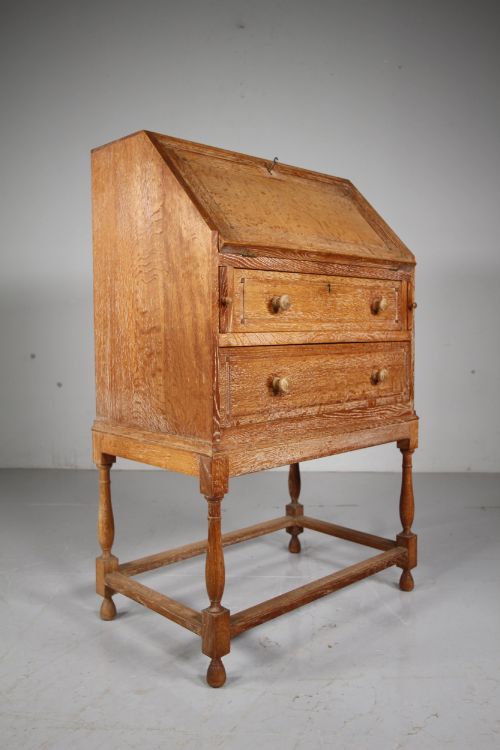
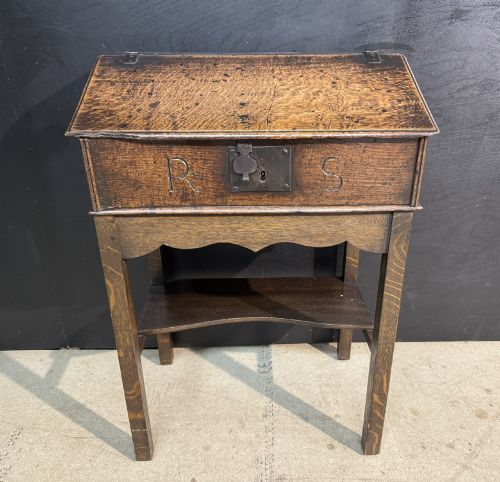
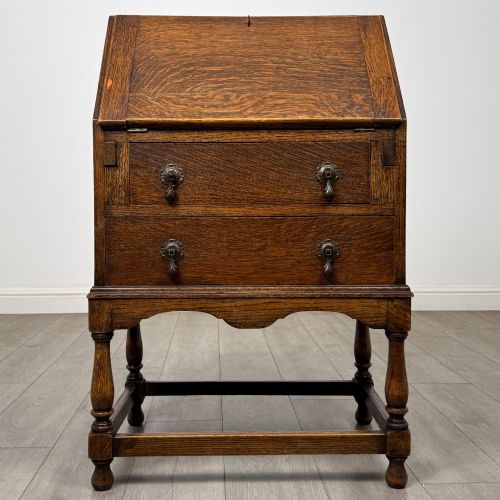
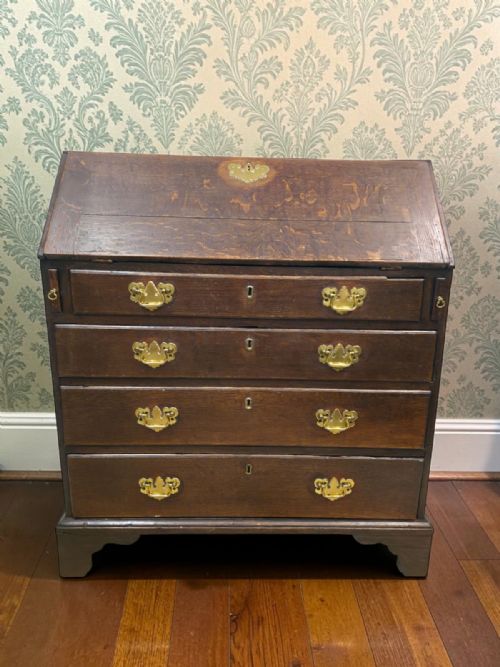
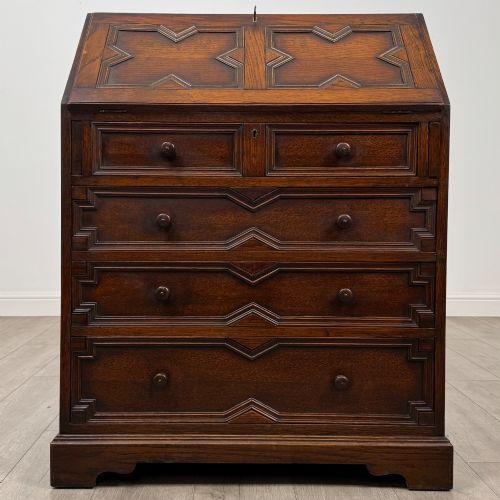
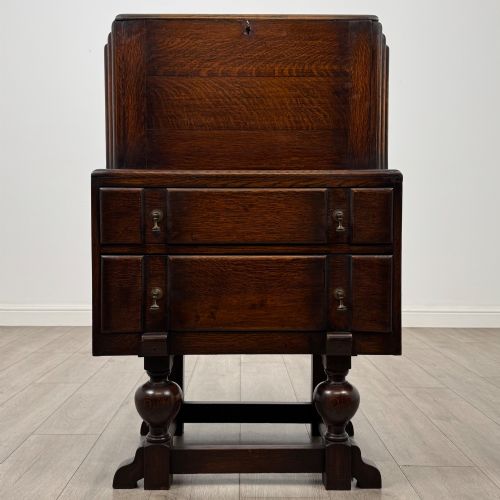
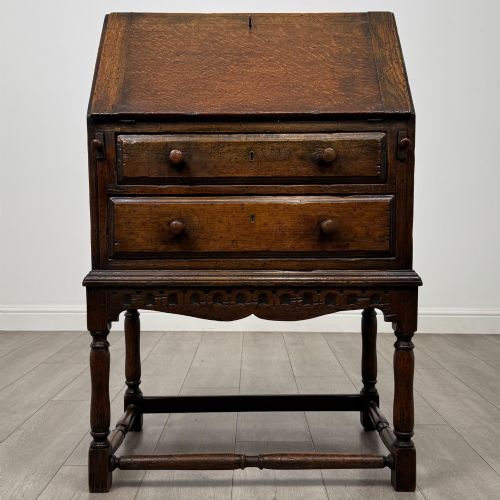
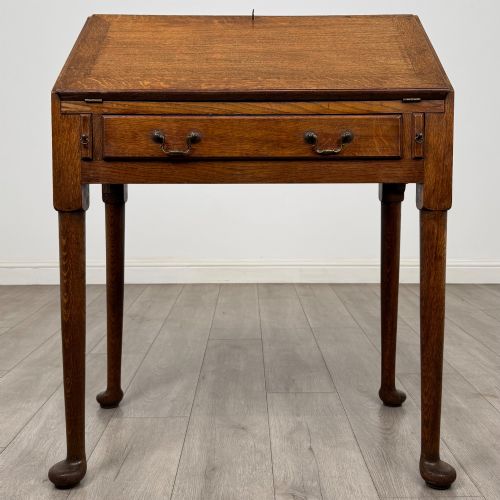
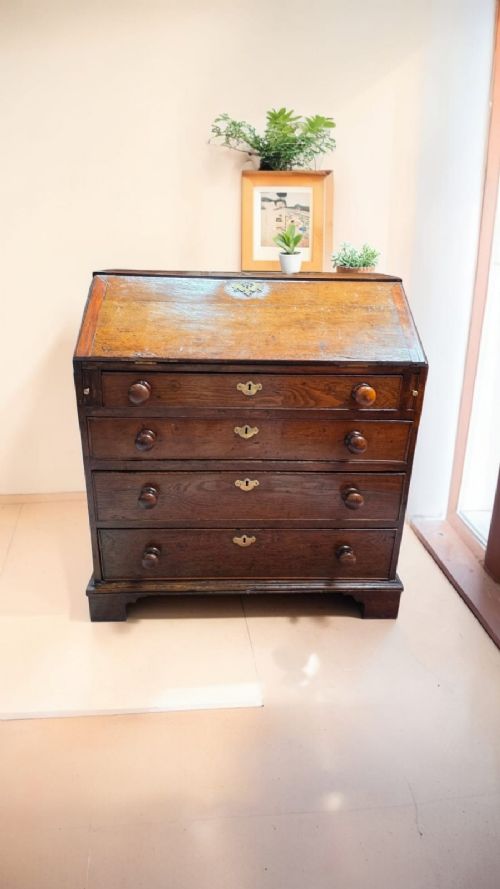
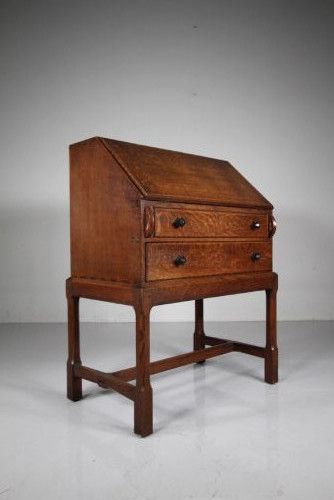
An oak sloping desk encompasses several utilitarian forms designed for writing and document storage, ranging from compact desk boxes and bible boxes to full-sized bureaux and clerks' desks. Buyers frequently encounter Edwardian and Victorian interpretations alongside pieces originating in the 17th, 18th, and 19th centuries.
The selection includes fall front bureaux, writing slopes, and stationary cabinets constructed primarily in solid oak. Pieces emerge from various British and European traditions, incorporating regional vernacular details and revival styles such as Jacobean and Gothic Revival.
Materials and Techniques
Cabinet makers utilised solid oak as the principal timber, occasionally pairing it with secondary materials like pollard oak, walnut, or fruitwoods. Hardware elements typically feature cast brass handles, escutcheons, and iron fixings.
Construction techniques rely on traditional joinery to support heavy writing flaps and sloping lids. Many examples incorporate leather inserts on writing surfaces, interior pigeonholes, and detailed hand-carved ornamentation such as linenfold panels and Green Man motifs.
Several Victorian desks hide secret compartments inside, designed to keep private letters safe from curious household guests.
Evaluating Standards
Quality rests heavily on the integrity of the timber selection, the crispness of any hand-carved details, and the complexity of the internal fittings. Early 17th and 18th-century examples often demonstrate superior vernacular joinery and untouched patination compared to later mass-produced alternatives.
The sophistication of the interior layout - such as concealed compartments, multiple pigeonholes, and original brass hardware - separates standard utility desks from finer, more ambitious cabinet work.
Heals of London·Stanley Webb Davies·Pairs MFG Co
The Oak Sloping Desk Glossary
- Bureau
- A writing desk with a sloping hinged lid that opens to form a writing surface above a bank of drawers. These pieces often conceal small drawers and pigeonholes inside.
- Bible Box
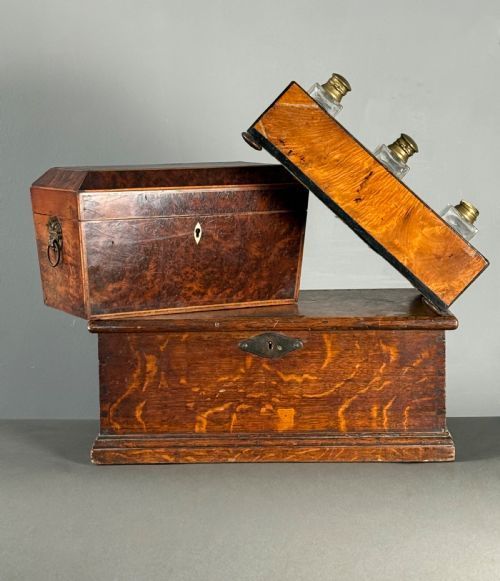
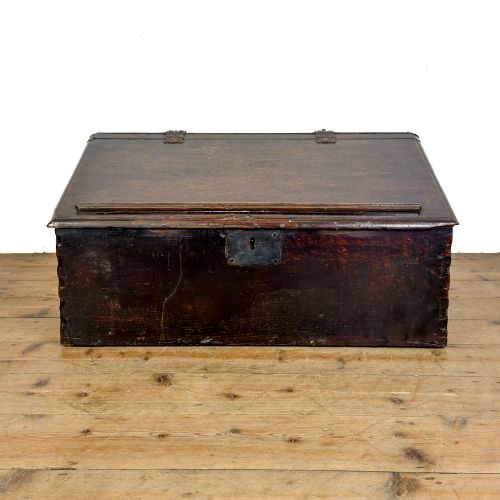
- A small wooden box with a slanted lid, originally built to store religious texts and writing materials. These portable containers sit upon tables or desks.
- Fall Front
- A hinged panel that drops down into a horizontal position to provide a writing surface. This feature is common on bureaux and stationary cabinets.
- Linenfold
- A style of wood carving that imitates folded linen cloth. This technique appears frequently on panels of 17th-century and revival pieces.
- Green Man
- A sculptural architectural ornament depicting a human face surrounded by or disgorging foliage. Victorian carvers frequently applied this motif to desks and bureaux.
Oak Sloping Desk: Frequently Asked Questions
What is a bible box?
A bible box is a compact wooden container featuring a slanted lid, designed originally to safeguard sacred texts and writing equipment. These portable pieces date back to the 17th and 18th centuries.
Owners placed them on tables or desks to write upon, utilising the internal cavity for storage before dedicated writing furniture became common in homes.
How do I use a sloping desk?
A sloping desk provides an angled surface that places paper at a comfortable viewing and writing angle. The hinged lid typically lifts or drops to reveal internal compartments.
Modern owners use the writing flap for correspondence or laptop placement while storing stationery in the internal pigeonholes and small drawers.
How do I identify a 17th-century piece?
Seventeenth-century pieces display robust vernacular construction, pegged joints, and hand-carved decoration such as geometric mouldings or early panel designs. The oak timber often shows deep natural patination.
Examining the interior construction and iron or brass hardware helps confirm the age and hand-built origin of these early boxes and desks.
What is a Davenport desk?
A Davenport desk is a compact writing desk featuring a sloping top with a leather writing surface, supported by a pedestal of drawers. This form became popular during the Victorian era.
Side drawers and stationary compartments maximise utility in smaller rooms, combining a sloping writing desk with secure cabinet storage.