
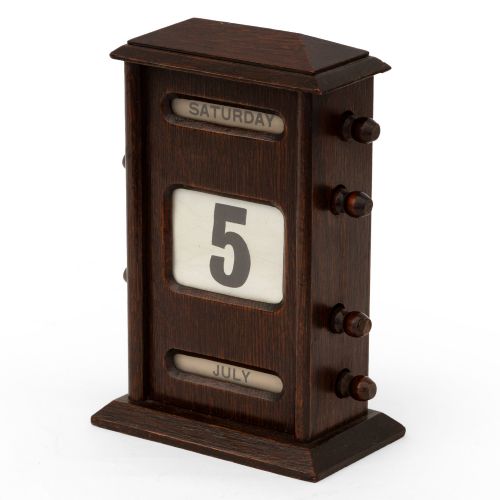
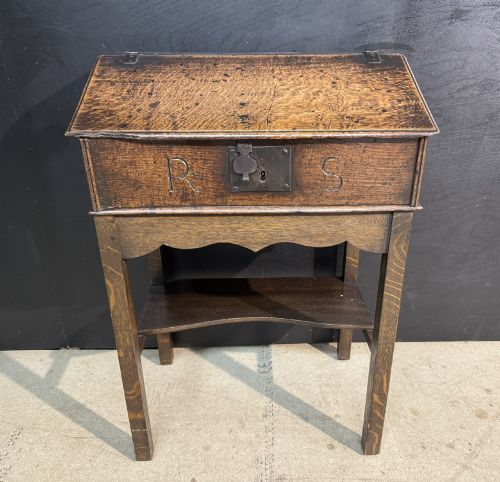
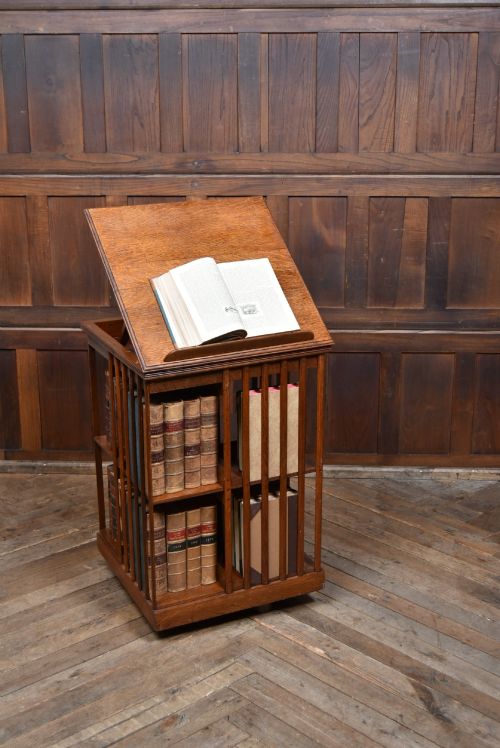
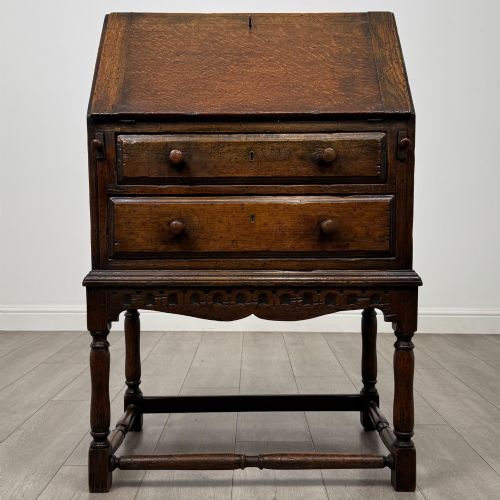





Brown Oak Desk on Stand
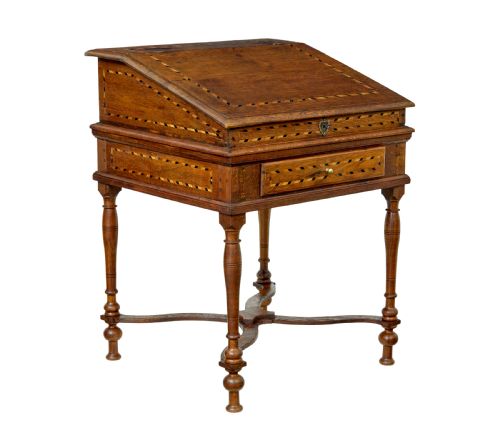
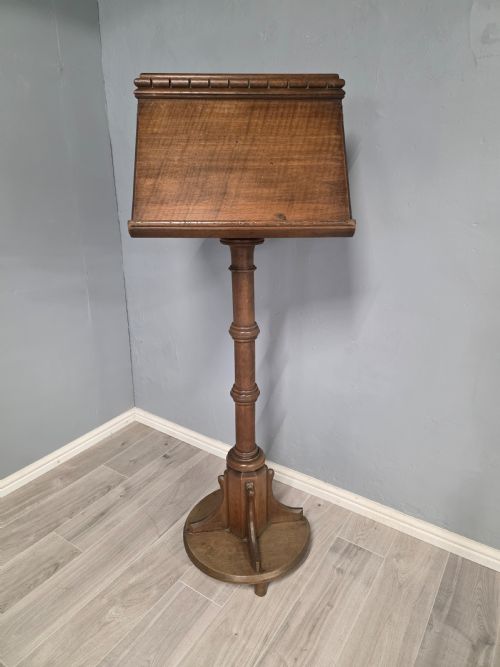
A brown oak desk on stand brings together solid timber and elevated form, offering a practical writing surface with distinct period character.
Materials and Construction
Construction relies primarily on solid oak, selected for durability and distinctive grain patterns, occasionally complemented by mahogany. Metal elements such as brass, iron, and cast iron appear in hardware, hinges, and structural adjustments.
Joinery techniques vary by period, moving from seventeenth-century pegged framing to later Victorian and Edwardian manufacturing methods. Accessories incorporate secondary materials including glass, paper, and silver details.
Quality and Distinction
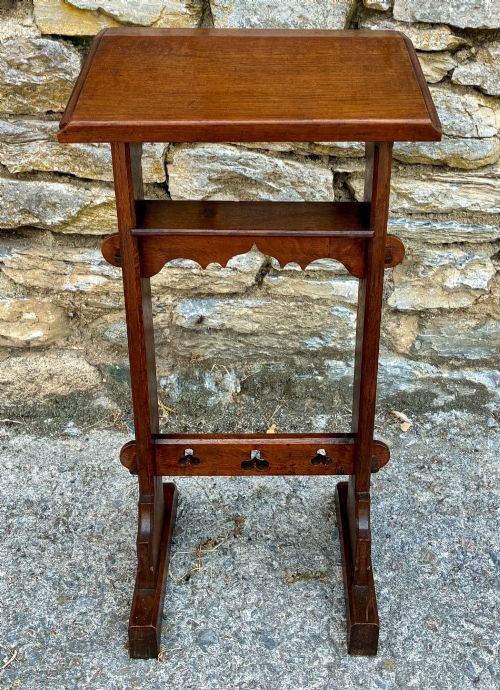
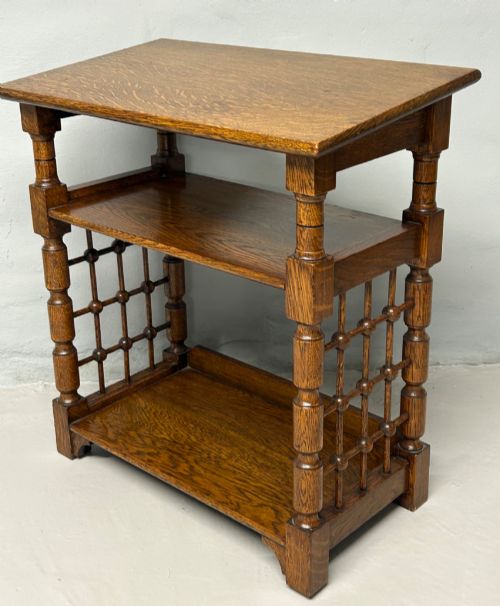
Quality rests upon the integrity of the timber, the crispness of any carved detailing such as Gothic Revival motifs or Arts and Crafts ornamentation, and the preservation of original stands. Pieces retaining their original configuration demonstrate greater architectural coherence than those united with later bases.
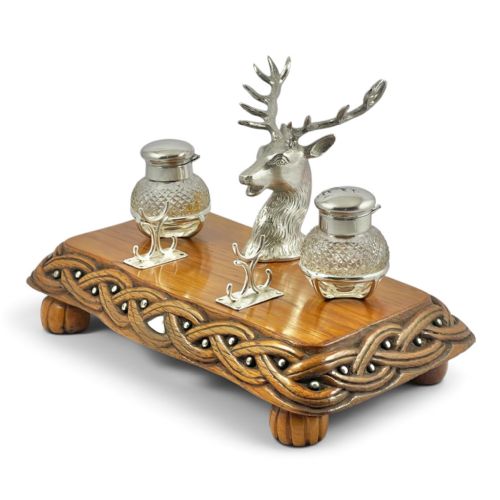
Execution in secondary elements, from brass mounts to silver fittings on inkstands, distinguishes standard utility pieces from finer examples. The proportional balance between the upper desk compartment and the supporting stand dictates visual success.
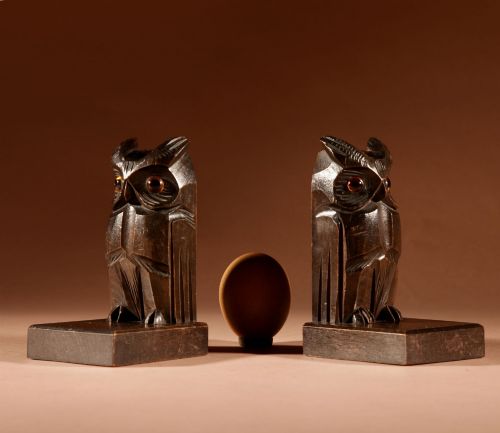
An amusing pair of owl-carved bookends keeps watch over your correspondence.
The Brown Oak Desk on Stand Glossary
- Bureau
- A desk with a sloping lid that opens to reveal a writing surface and small compartment drawers. It is frequently elevated on a frame or stand.
- Stand
- A raised supporting structure beneath a desk, cabinet, or table. It elevates the primary working surface off the floor.
- Lectern
- A slanted reading stand designed to hold books or papers at an angle for a standing reader. These are often carved in oak.
- Inkstand
- A portable tray or stand holding inkwells, pen holders, and sanders. They are frequently fashioned in silver and oak.
- Writing Slope
- A portable box with an angled lid that opens to provide a writing surface and interior stationery storage.
Brown Oak Desk on Stand: Frequently Asked Questions
How do I date an oak desk on stand?
Dating relies on observing construction methods, joinery, and stylistic markers such as Gothic Revival carving, Arts and Crafts simplicity, or seventeenth-century framing.
Hardware materials like brass and cast iron also provide chronological clues when aligned with known period aesthetics.
Were these desks used for writing?
These pieces served multiple clerical and literary functions, from formal letter writing at a bureau to holding texts on church lecterns and reading stands.
Many incorporate integrated compartments for inkstands, paper, and stationery accessories to support daily correspondence.
How do I care for antique oak furniture?
Antique oak benefits from stable indoor environments away from direct heat sources and extreme humidity fluctuations to protect the timber.
Regular dusting with a dry cloth maintains the surface finish without requiring heavy polishes or chemical treatments.