


Oak Pot Board Cupboard
An oak pot board cupboard is a substantial storage piece built for domestic utility, bringing timber grain and historic character into a modern room.
Oak Pot Board Cupboard
An oak pot board cupboard combines lower shelving with enclosed cabinet space, designed for practical storage in traditional kitchens and dining rooms. The evidence shows these pieces span multiple centuries, appearing in vernacular regional styles as well as revival movements.
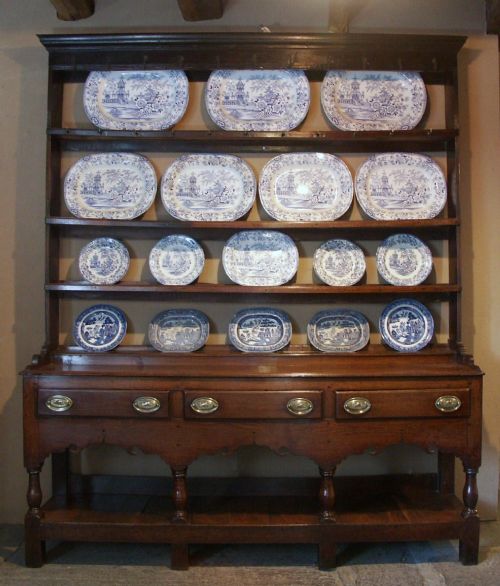
The version most commonly met on this page is the dresser or buffet configuration featuring an open lower shelf, known as a pot board, positioned beneath the main body. These forms emerge strongly from eighteenth-century Welsh workshops alongside later revival interpretations.
Makers utilised sturdy timbers to construct furniture that endured generations of daily household use. Collectors encounter varied formats, from narrow hall cupboards to expansive sideboards incorporating fruitwood marquetry inlay or carved panels.
How They Were Made
Carpenters relied primarily on solid oak for the structural framework, paneling and shelving of these cupboards. Secondary materials like pine appear occasionally in backing boards and internal compartments.
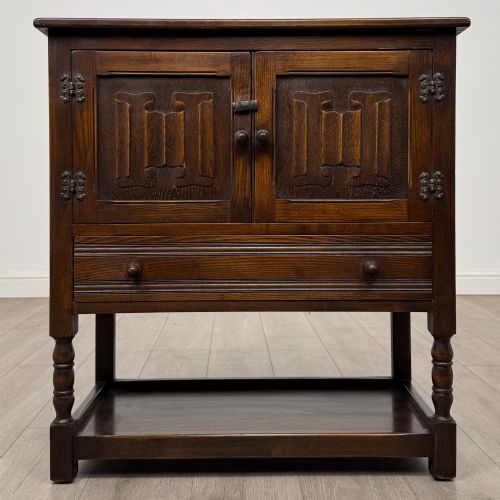
Surface decoration frequently involves hand carving, paneling such as linenfold, and occasional fruitwood marquetry inlay. Hardware elements including brass handles and iron hinges secure operational doors and drawers.
The listings show oak pot board cupboards appearing across the 17th, 18th, 19th, and 20th centuries, alongside Edwardian and Victorian revivals.
What Varies in Quality
The integrity of the timber and the crispness of the hand-carved details separate standard regional output from superior examples. Timbers selected with rich figuring and deep natural patination elevate the visual presence of the piece.
Construction methods reveal the standard of workshop execution, seen in the joinery of the pot board tier and the alignment of cabinet doors. Original brass or iron hardware and unaltered structural proportions distinguish better survivals.
The Oak Pot Board Cupboard Glossary
- Pot board
- The open lower shelf situated near the floor on traditional dressers and cupboards, originally intended for storing heavy pots and pans. This lower tier defines the classic regional dresser form.
- Linenfold
- A style of carved wooden paneling resembling folded vertical lengths of cloth. Craftsmen used this motif frequently on Tudor and revival cabinet doors.
- Marquetry
- Decorative patterns formed by fitting small pieces of contrasting veneer into a prepared wooden surface. Fruitwood elements often provide lighter tones against an oak background.
- Buffet
- A low side table or enclosed cabinet used for serving food and storing tableware. The term frequently overlaps with sideboard and regional dresser definitions.
- Dresser
- A kitchen or dining room storage unit featuring shelving for display above a base of drawers and cupboards. Welsh regional examples often include the characteristic pot board below.
Oak Pot Board Cupboard: Frequently Asked Questions
What is a pot board on a cupboard?
The pot board is the open shelf located near the floor beneath the main cabinet structure. It provided stable storage for heavy cooking pots in traditional kitchens.
Over time, this practical lower shelf became a defining aesthetic feature of regional dressers and buffets.
How do I date an oak cupboard?
Dating relies on examining construction techniques, joinery methods, hardware types, and stylistic motifs present in the wood. Eighteenth-century pieces often display vernacular hand-planed surfaces and regional quirks.
Revival pieces from the nineteenth and twentieth centuries typically mimic earlier Tudor or Georgian styles with machine-finished accuracy.
Where were these cupboards made?
Many traditional examples originate from regional workshops in Wales and provincial English counties like Lancashire and Carmarthenshire. Local craftsmen utilised accessible native timber.
Later revival pieces emerged from larger commercial furniture factories during the Victorian and Edwardian eras.
How do I care for antique oak?
Maintain antique oak by keeping it away from direct heat sources and sudden humidity changes that cause timber to split. Regular dusting with a dry cloth preserves the historic wax finish.
Avoid modern silicone polishes which build up residue and dull the natural grain over time.