


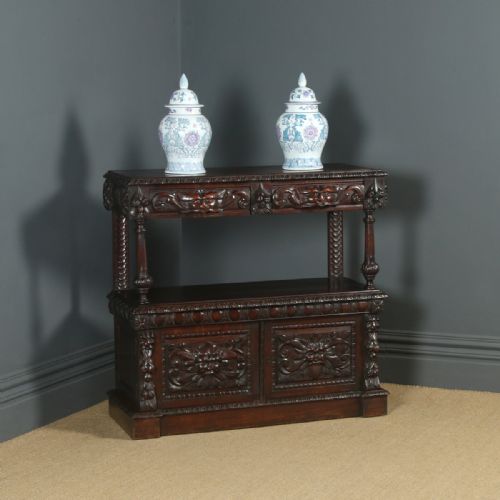


English Oak Server Cabinet
An english oak server cabinet brings robust timber and centuries of domestic craft straight into a modern dining room.
English Oak Server Cabinet
An english oak server cabinet encompasses heavy timber furniture designed for storing and serving food, ranging from early dresser bases to later sideboards. These pieces span multiple centuries of British cabinet making, reflecting shifting domestic habits from the seventeenth century through the Edwardian era.
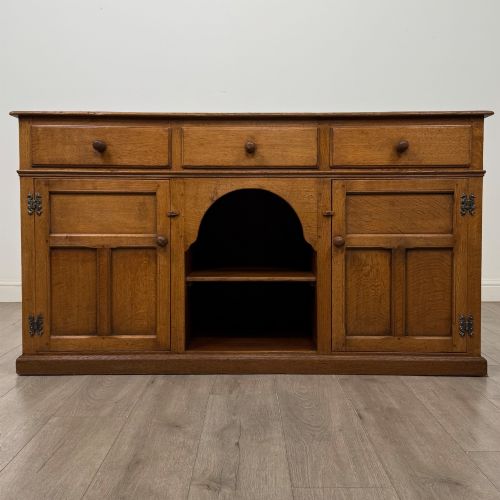
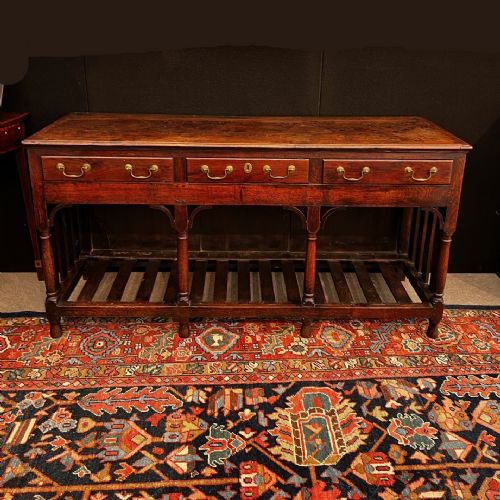
The versions most commonly met on this page include sturdy eighteenth-century dresser bases and nineteenth-century sideboards built in solid oak. Stylistic influences vary widely across the selection, taking in Arts and Crafts simplicity, Tudor Revival heaviness, and Georgian utility.
Form follows function across these examples, offering deep cupboards, wide top surfaces, and occasionally upper display shelves. Buyers will encounter both rustic country pieces and heavily carved urban interpretations.
Materials and Construction
Timbers are dominated by solid oak, frequently paired with secondary woods such as elm for structural elements and occasional decorative highlights of pollard oak. These woods were chosen for their durability and distinctive grain patterns, which take decades of daily use and polishing.
Metal fittings rely heavily on brass and iron for hinges, handles, and locks, providing functional contrast to the dark timber. Glazing appears in select pieces utilising leaded glass to protect contents while maintaining visibility.
Joinery methods range from traditional pegged mortise and tenon joints in seventeenth and eighteenth-century examples to later mechanical framing in Victorian and Edwardian workshops.
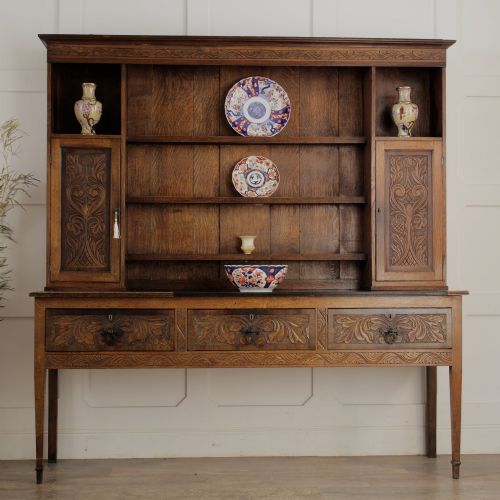
Stare long enough into the nineteenth-century carving and a green man will stare back through a thick tangle of carved oak foliage.
Judging Quality and Execution
The grade of timber selection dictates much of the visual appeal, with quartersawn oak showing pronounced medullary rays that signal superior log preparation. Figured grains, particularly in pollard oak sections, elevate the decorative ambition of individual pieces.
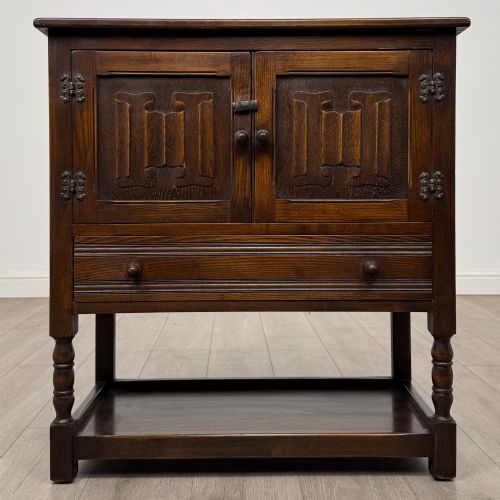
Carving depth and execution distinguish standard utility furniture from high-status commissions. Crisp hand-chiselled details, such as green man motifs or linenfold panels, demonstrate superior craftsmanship compared to shallow or mechanical milling.
Structural integrity depends on the retention of original timber components, proper board thickness in table tops and shelves, and the alignment of heavy doors over centuries of settling.
The English Oak Server Cabinet Glossary
- Dresser base
- A low wooden storage unit featuring drawers and cupboards, traditionally used for food preparation and serving before evolving into display furniture. It forms one of the core variants found within this category.
- Pollard oak
- Timber taken from a tree that has been pruned at a height above animal browsing, resulting in dense, highly figured grain patterns. Cabinet makers prized this wood for striking panel veneers.
- Linenfold
- A style of wood carving that mimics folded parchment or linen cloth, commonly used on fifteenth to seventeenth-century panels and revived during later periods. It adds texture and vertical emphasis to cabinet doors.
- Court cupboard
- A heavy seventeenth-century storage piece featuring recessed upper sections supported by pillars, primarily used for displaying plate and storing provisions. These represent some of the earliest items in this timber tradition.
- Green man
- A sculptural architectural ornament depicting a human face disgorging foliage, frequently encountered on nineteenth-century revival sideboards. It symbolizes rebirth and the spirit of vegetation.
English Oak Server Cabinet: Frequently Asked Questions
What is an english oak server cabinet used for?
These cabinets serve as practical storage and display surfaces in dining rooms, hallways, or living spaces. They accommodate tableware, linens, and provisions while providing a broad top surface for serving food or displaying decorative objects.
Historically, these forms evolved from simple utilitarian kitchen tables with storage into grand dining room sideboards. Today, they function effectively as focal points that anchor a room with traditional British craftsmanship.
How do I date an antique oak sideboard?
Dating relies on examining construction methods, tool marks, and stylistic motifs. Earlier pieces from the seventeenth and eighteenth centuries often display hand-sawn board edges, pegged joinery, and simpler hardware, whereas nineteenth-century examples incorporate machine sawing and revival styling.
Stylistic influences also provide clear markers, as pieces reflecting Arts and Crafts ideals differ markedly from heavily carved Victorian or Tudor Revival iterations. Hardware changes over time offer further clues, though hinges and handles are frequently replaced.
Are these cabinets suitable for modern homes?
Solid oak furniture adapts easily to contemporary interiors due to neutral wood tones and straightforward geometric forms. Their robust construction handles daily use effortlessly, making them reliable storage solutions for modern households.
Placing these pieces requires measuring clearance for wide doors and heavy drawers. Their substantial weight means they anchor a room visually, pairing well with both minimalist modern decor and traditional spaces.