

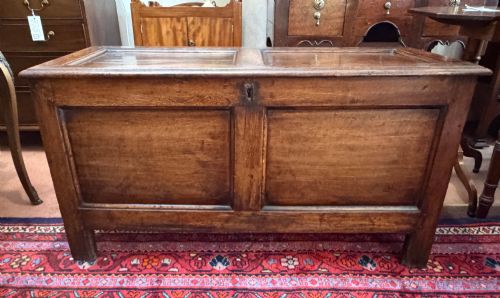
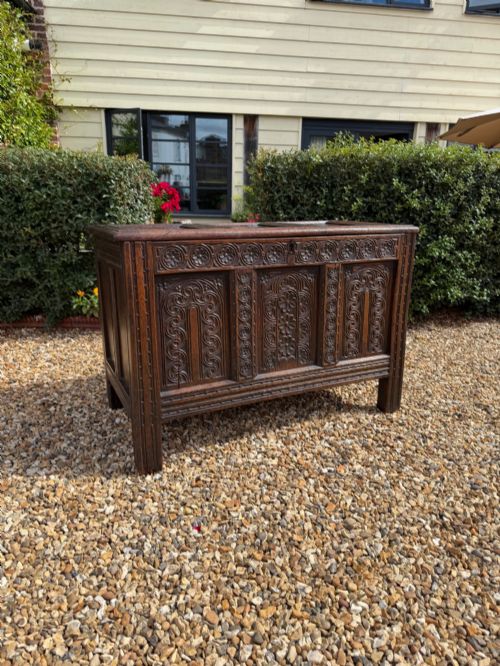
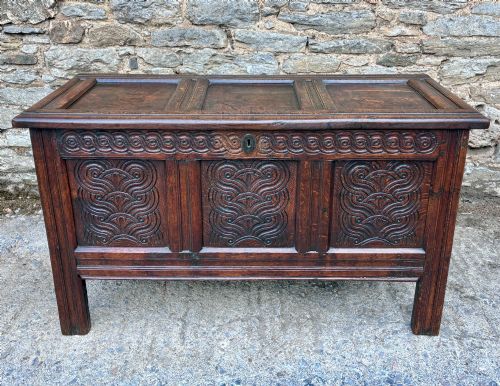
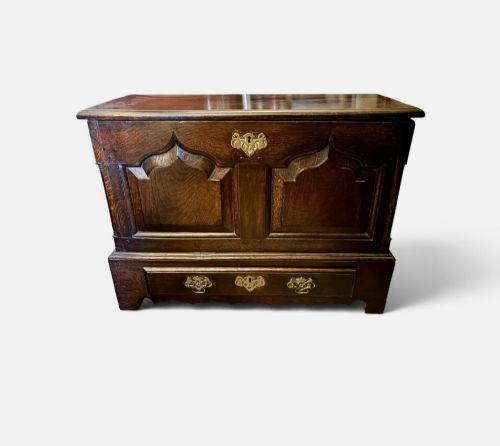
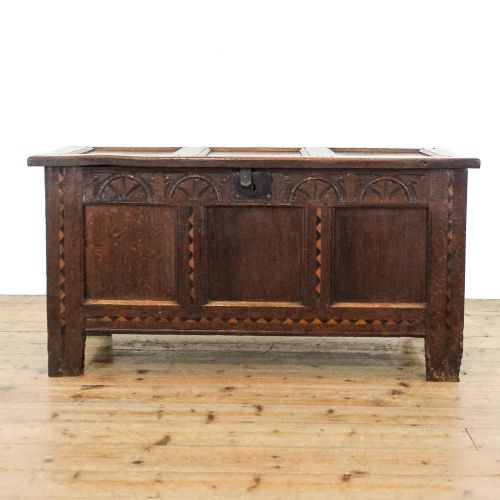
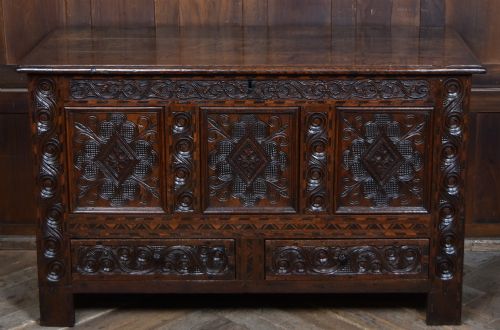
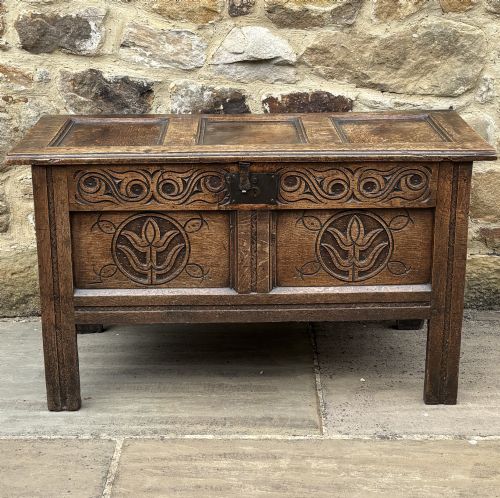
Oak Mule Chest Coffer
When you search for an oak mule chest coffer, you are looking at sturdy historical storage that bridges the gap between a simple blanket box and a drawer chest.
Oak Mule Chest Coffer
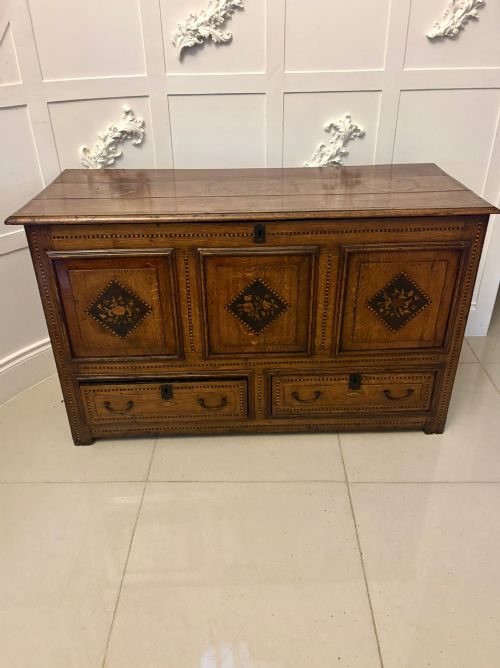
An oak mule chest coffer typically combines a hinged lid compartment with one or more lower drawers, evolving from basic seventeenth-century blanket chests into more accessible household storage.
The pieces you will encounter on this page span several centuries, with particular concentrations from the seventeenth and eighteenth centuries, alongside later nineteenth-century examples and revival pieces.
Regional variants like the Welsh coffer bach or Carmarthenshire pieces appear alongside standard English country designs, showing local preferences in proportion and layout.
How they were made
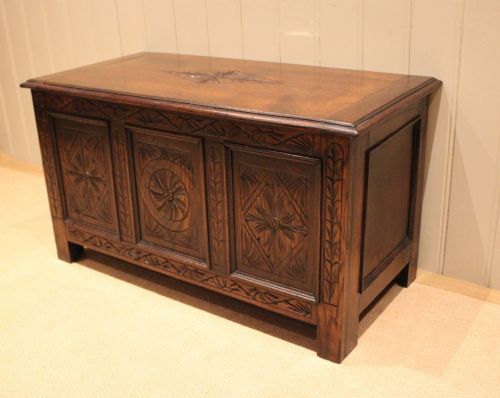
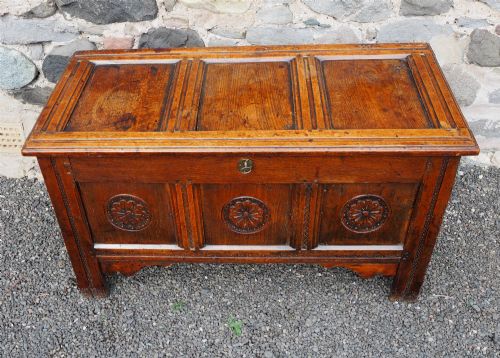
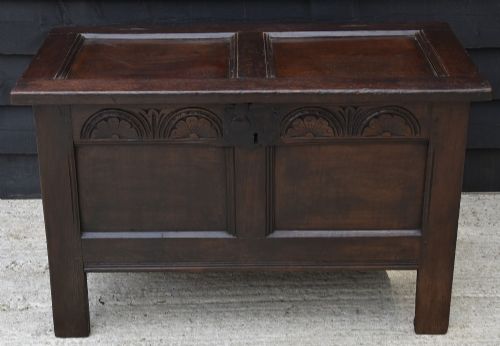
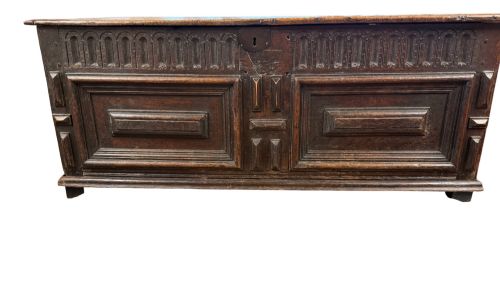
Carpenters relied primarily on solid oak, frequently constructed using framed panels and joined techniques that allowed the timber to move naturally over decades of use.
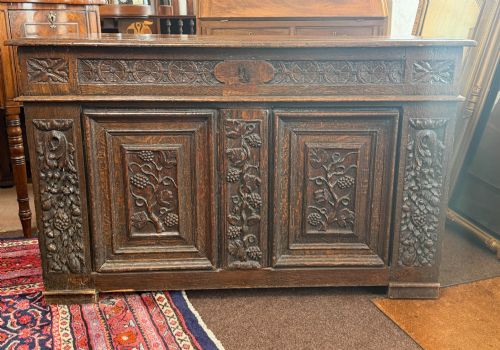
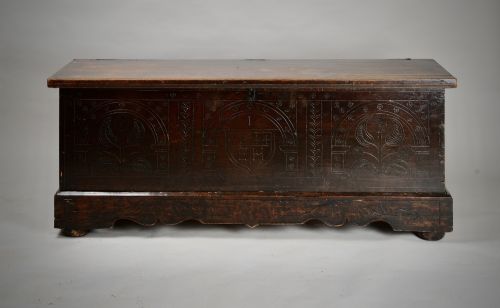
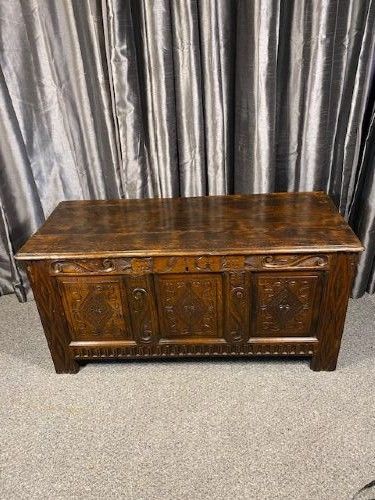
Many surfaces feature carved decoration, while finer examples incorporate marquetry inlay, wood inlay, or mahogany and burr elm elements to add contrast to the primary timber.
Iron and brass hardware, including hinges, lock plates and drawer pulls, secure the structural elements and provide functional contrast to the dark oak surfaces.
Several miniature Welsh coffers turn up on the market, proving that seventeenth-century carpenters occasionally suffered from tiny house syndrome.
What varies in quality
Quality rests heavily on the crispness and depth of any carved detailing, as well as the balance of proportions between the upper coffer section and the base drawers.
The choice of secondary woods and the precision of inlaid panels, such as marquetry or crossbanding, distinguish simpler utilitarian items from more ambitious cabinet work.
The Oak Mule Chest Coffer Glossary
- Coffer
- A large wooden chest traditionally used for storing valuables or household goods. Most examples feature a hinged lid and robust joined construction.
- Mule chest
- A storage chest distinguished by the addition of one or more drawers built into the base beneath the main compartment. This design bridged the gap between traditional coffers and drawer chests.
- Coffer bach
- A small Welsh tabletop or miniature coffer, translated literally as little chest. These pieces often mirror the construction of larger mule chests on a reduced scale.
- Marquetry
- Decorative veneer work created by fitting together small pieces of different woods to form pictorial or geometric patterns. It appears on select high-status eighteenth-century panels.
- Crossbanding
- A border technique where thin strips of wood veneer are laid running across the grain of the surrounding panel. This creates a neat framing effect around drawer fronts and lids.
Oak Mule Chest Coffer: Frequently Asked Questions
How do I date an oak coffer?
Dating relies on observing construction methods, timber selection, and decorative styles such as linen fold panels or geometric carvings. Seventeenth-century pieces typically show joined frame-and-panel construction.
Later eighteenth and nineteenth-century examples often incorporate mahogany crossbanding, brass fittings, or integrated base drawers that reflect changing interior tastes.
Were these chests used in Wales?
Yes, Welsh makers produced distinct regional variations including the coffer bach and Carmarthenshire blanket chests. These items often display vernacular construction methods typical of rural Welsh workshops.
Such pieces range from small tabletop boxes to larger mule chests featuring local timber selections like burr elm panels.
How do I live with a mule chest?
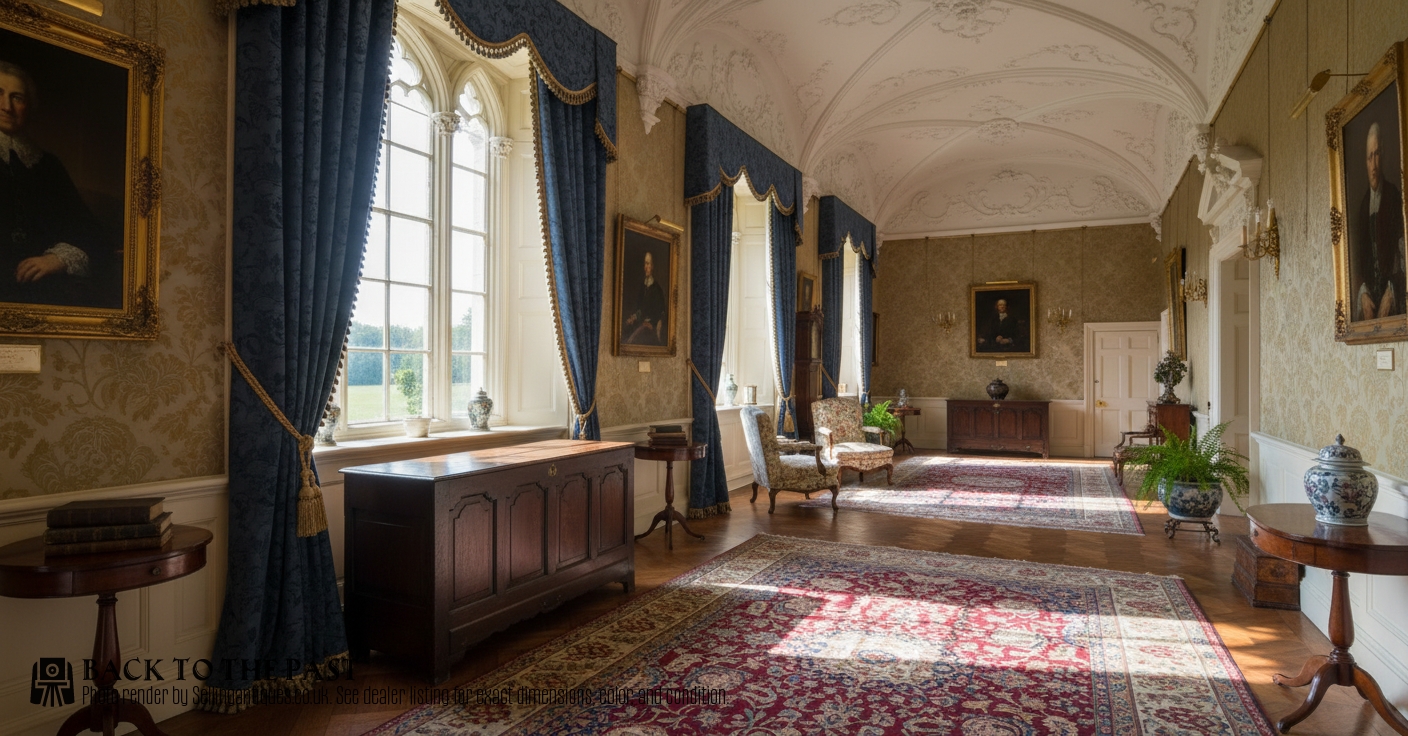
These robust chests function well as living room coffee tables, hallway storage benches, or bedroom blanket boxes. Their flat tops and sturdy oak construction suit daily domestic use.
Placing them away from direct heat sources helps protect the historic timber and maintains the movement of the paneled joints.