

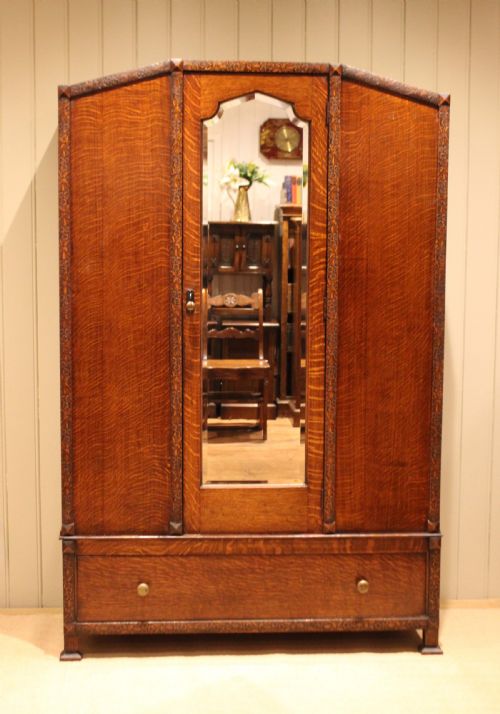
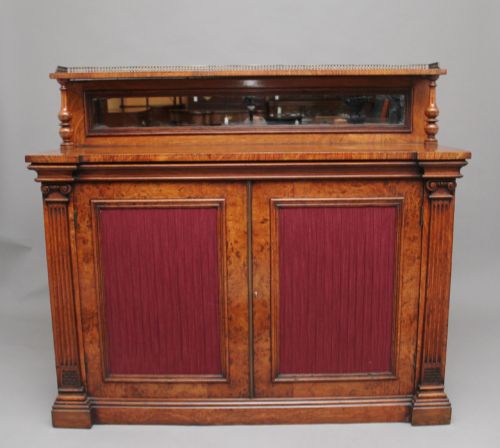
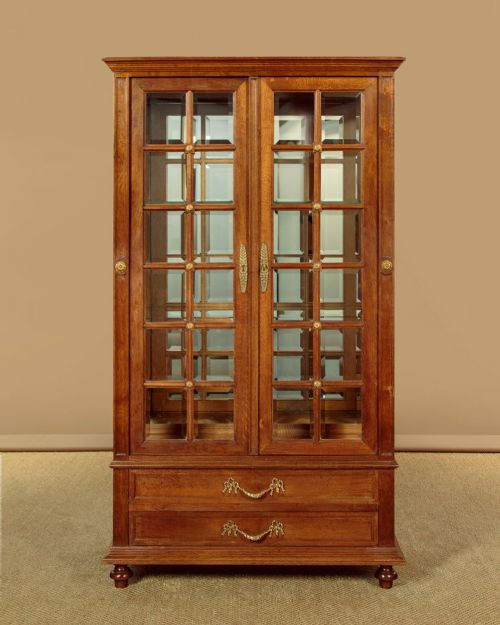


Oak Mirrored Cabinet
An oak mirrored cabinet brings depth and utility to a room, combining solid timber with functional reflective glass.
Oak Mirrored Cabinet
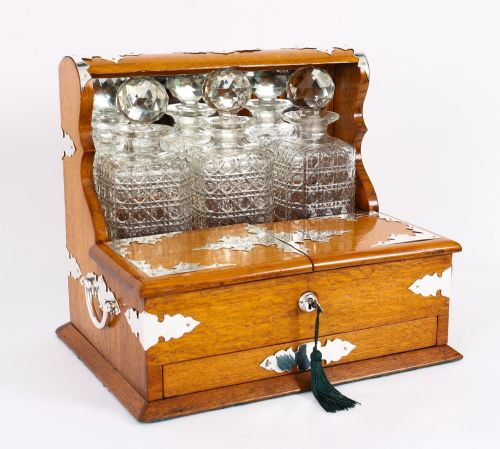
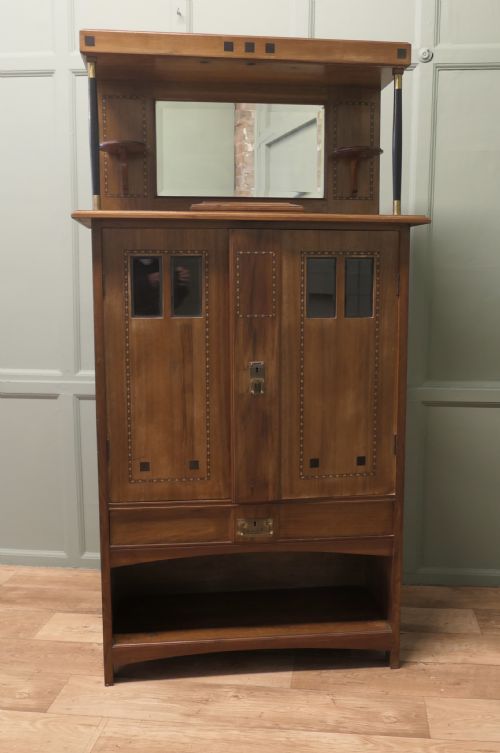
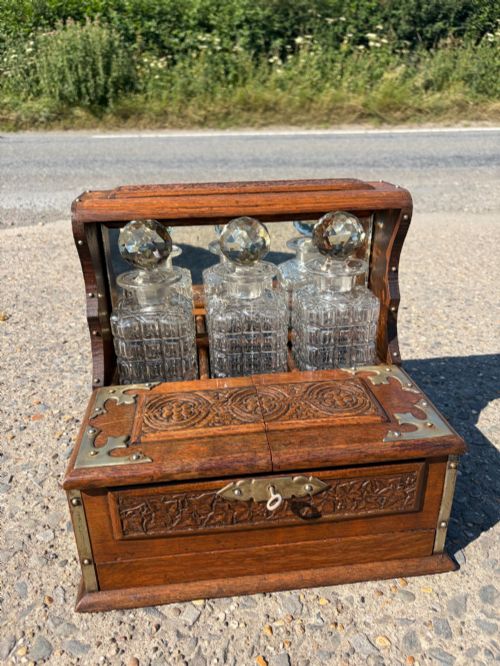
When searching for an oak mirrored cabinet, you encounter forms that span sideboard buffets, wall-hanging cupboards, and cocktail display units. The listings draw heavily from Victorian and Edwardian periods, alongside Art Deco and Arts and Crafts examples.
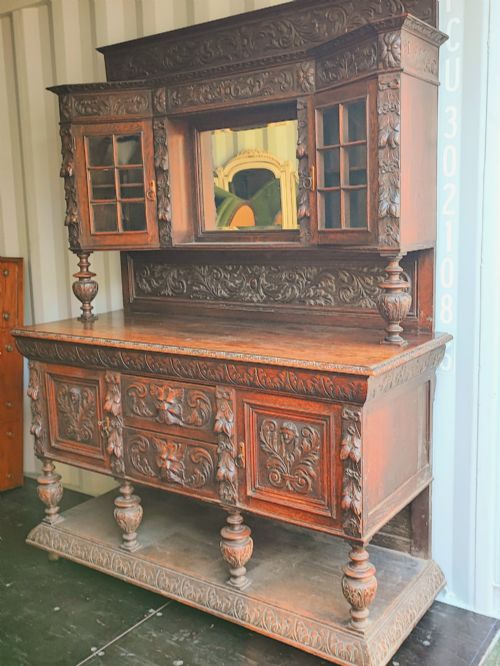
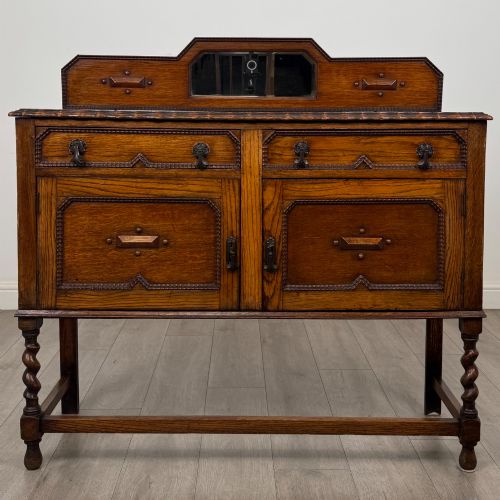
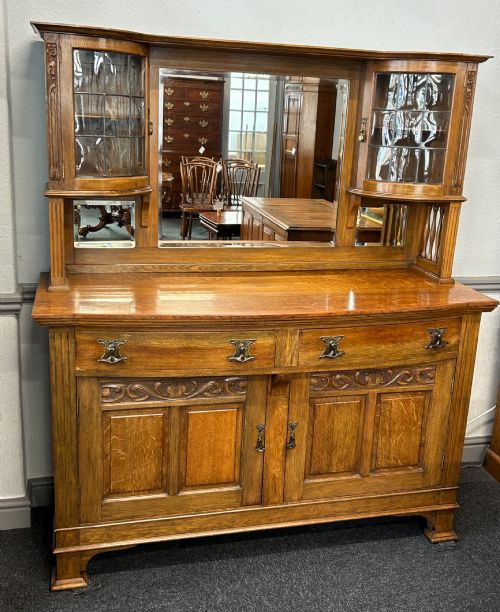
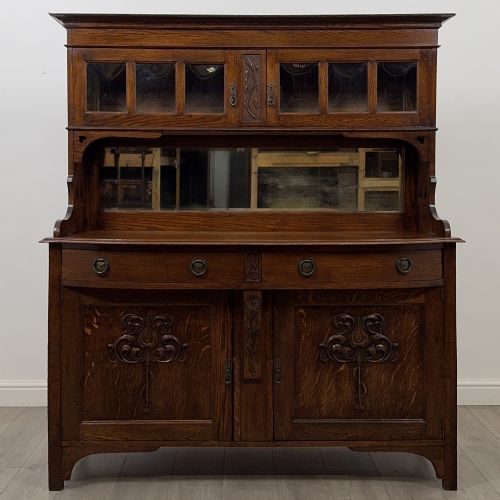
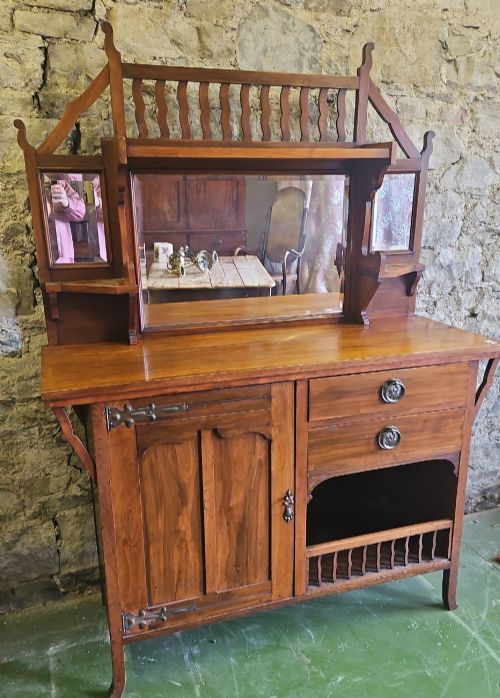
Sideboards with mirror backs represent the most frequent version on this page, often combining storage cupboards and display shelves with bevelled glass plates. Wall cabinets and gentlemen's wardrobes also appear, using oak frames to house internal mirrors.
Determinants of quality
Superior pieces display deep, figured timber grains, particularly in pollard oak selections, paired with crisp, hand-carved ornamentation. The integration of the mirror plate into the architectural frame reveals the maker's hand.
Construction robustness separates standard utility items from exceptional workshop productions. Heavy brass or bronze mounts, intricate marquetry, and well-executed Arts and Crafts or Art Deco styling elevate a piece.
Listings span the nineteenth and twentieth centuries, featuring Victorian, Edwardian, Arts and Crafts, and Art Deco styles in solid oak.
Garnett and Sons·James Shoolbred·T Simpson and Son
The Oak Mirrored Cabinet Glossary
- Pollard oak
- Timber taken from trees that were pollarded, producing a highly figured, mottled grain pattern prized for decorative cabinet fronts.
- Mirror back
- A wooden sideboard or dresser superstructure incorporating a large reflective glass panel above the main shelf.
- Arts and Crafts
- A design movement emphasising handcraftsmanship, simple forms, and natural materials without excessive ornamentation.
- Tantalus
- A locking beverage cabinet with visible decanters, designed to display contents while restricting access.
Oak Mirrored Cabinet: Frequently Asked Questions
How do I clean the mirror plate?
Use a soft cloth and a mild glass cleaner sprayed onto the cloth rather than directly onto the glass, preventing moisture from seeping behind the silvered backing.
Keep liquids away from the surrounding oak frame to preserve the polished wood surface.
Where should I place a mirror back sideboard?
Position the piece opposite or adjacent to a window to maximise the light reflection from the mirror glass into the room.
Ensure the floor is level, as heavy oak furniture requires stable placement to keep doors and drawers aligned.
How do I tell Victorian from Edwardian oak?
Victorian pieces often display darker finishes, heavier carved ornamentation, and Renaissance or Gothic revival influences.
Edwardian examples tend toward lighter golden oak tones, cleaner lines, and influences from the Arts and Crafts movement.
What is pollard oak?
Pollard oak comes from trees pruned close to the trunk, which creates dense clusters of shoots and results in a swirling, circular grain pattern.
Cabinetmakers utilised these distinctive veneers on prominent surfaces like drawer fronts and cabinet doors.