



Oak Mirrored Buffet
An oak mirrored buffet brings substantial presence to a dining room, combining heavy timber storage with a reflecting glass back.
Oak Mirrored Buffet
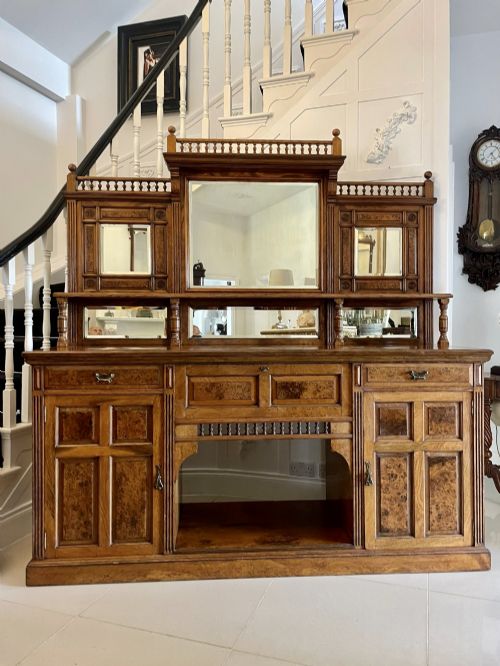
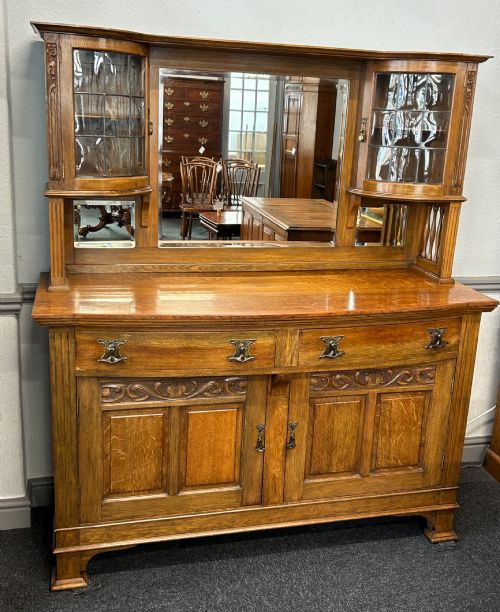
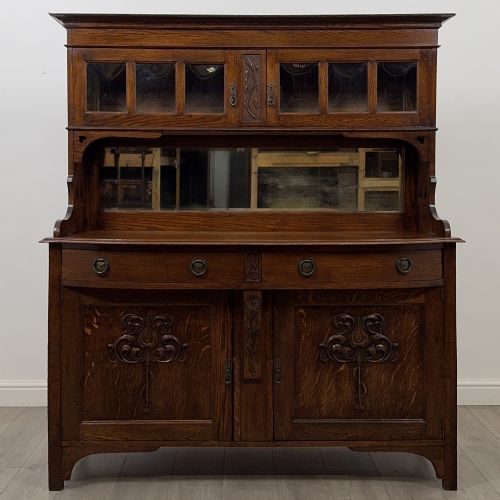
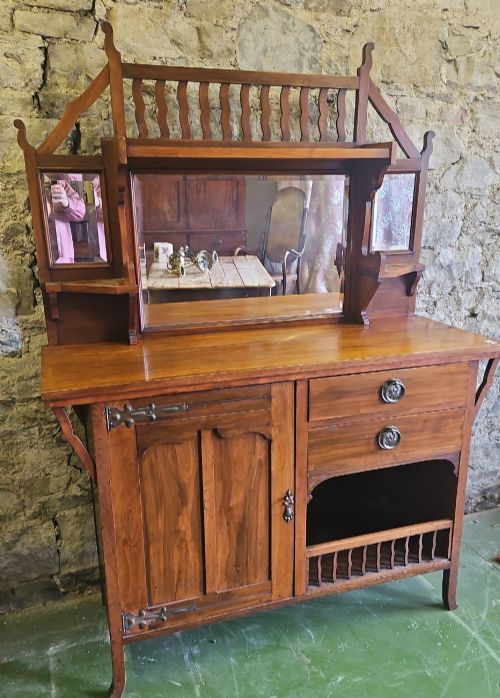
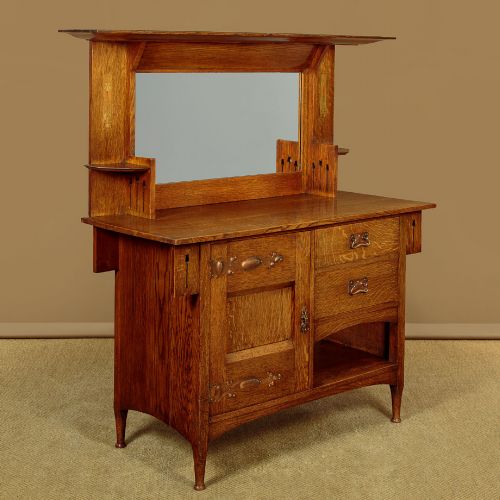
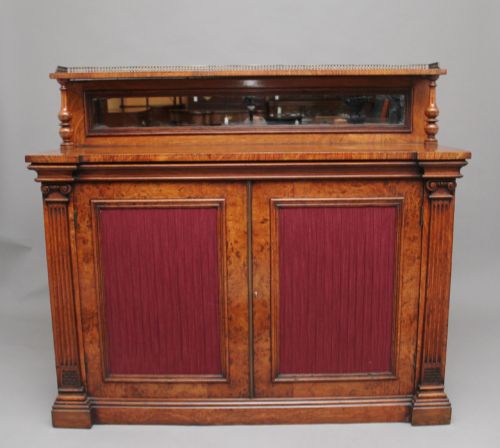
An oak mirrored buffet is a substantial dining room piece designed for storage and display, frequently incorporating a tall mirror back above a heavy base cabinet. When you examine an oak mirrored buffet on this page, you encounter forms that range from late Victorian revival designs to early twentieth-century Arts and Crafts interpretations.
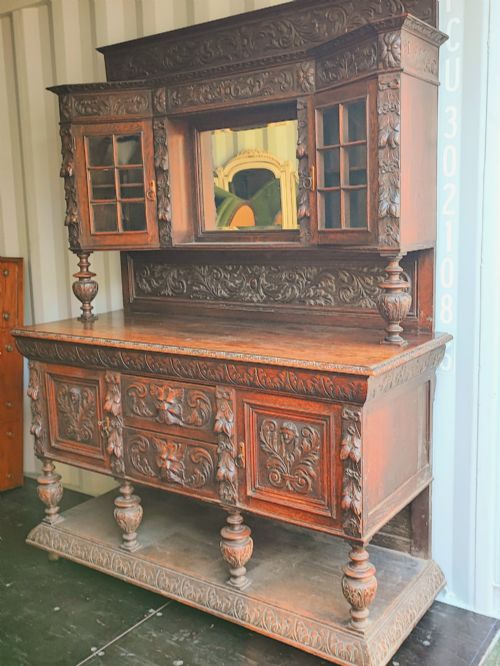
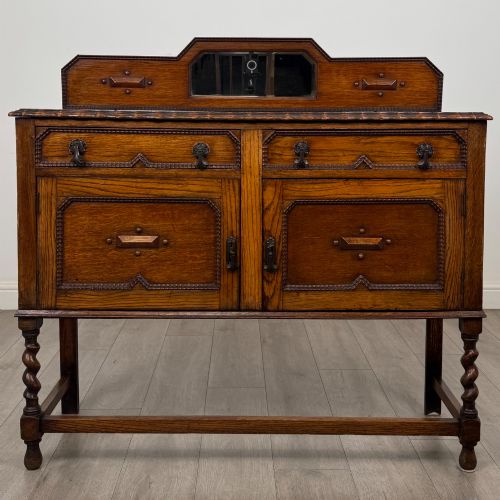
The pieces listed span the nineteenth and twentieth centuries, taking the shape of sideboards, credenzas, and dressers. Victorian and Edwardian examples predominate, often featuring carved wooden details, leaded glass doors, or distinctive barley twist supports alongside the central mirror.
Materials and construction methods
Cabinet makers relied primarily on solid oak and figured pollard oak, sometimes pairing the main timber with secondary woods such as pine for internal framing. Surfaces were frequently carved with organic motifs or geometric panels, whilst metal hardware in brass, copper, and iron provided functional hinges and drop handles.
The glass component utilises silvered mirror plates set securely into carved wooden superstructures, occasionally accompanied by leaded glass cabinet doors. Construction involved traditional joinery techniques to support the heavy timber frames and the substantial weight of the mirrored backs.
Several Victorian oak sideboards conceal ferocious Green Man carvings amongst their foliage, keeping a watchful wooden eye over the dining room.
Distinguishing quality in construction
Quality in these pieces is dictated by the selection of timber and the ambition of the carving. Exemplary items utilise highly figured pollard oak or carefully matched grain patterns, executed with deep, crisp hand-carving rather than shallow machine profiling.
Structural refinement also separates standard production from superior workshops. The integration of the mirror back, the weight of the brass or copper mounts, and the complexity of subsidiary elements like leaded glass or inlaid specimen woods determine the standing of an individual sideboard.
T Simpson and Son
The Oak Mirrored Buffet Glossary
- Pollard oak
- Timber taken from trees that have been pollarded, producing a highly figured, knobbly grain pattern prized for decorative veneers and panels. It creates a striking mottled appearance across large cabinet doors.
- Mirror back
- An upright wooden superstructure fitted with a large glass mirror, attached to the rear of a sideboard to reflect light and display tableware. This feature defines the visual height of the buffet.
- Arts and Crafts
- A design movement valuing handcraftsmanship, simple forms, and honest construction over mass-produced ornamentation. It rejects heavy Victorian revival styles in favour of clean architectural lines.
- Barley twist
- A carved wooden furniture leg or column turned in a spiral resembling a stalk of barley. This decorative detail frequently supports the upper mirror frame or lower cabinet carcase.
- Gothic Revival
- An architectural and decorative style drawing on medieval ecclesiastical forms, featuring pointed arches, tracery, and heavy carved mouldings. It appears on selected Victorian sideboard designs.
Oak Mirrored Buffet: Frequently Asked Questions
How do I care for an oak mirrored buffet?
Keep the timber nourished using traditional beeswax rather than modern silicone sprays, applying it sparingly and buffing to a soft sheen. Avoid placing the cabinet near direct heat sources or in strong sunlight to protect both the oak and the silvering on the mirror plate.
Ensure the floor beneath the piece is level, as these large cabinets are heavy and benefit from even weight distribution across their feet or pedestals. Regular dusting with a dry, soft cloth prevents particulate accumulation within deep carvings.
What rooms suit an oak mirrored buffet?
Dining rooms remain the traditional home for these pieces, offering ample surface space for serving food and deep cupboards for storing crockery and glassware. The mirrored back helps to bounce natural light around larger reception spaces.
They also function effectively in wide hallway entrances or spacious living areas where their architectural presence can be appreciated. The surface ledges provide a practical area for displaying decorative ceramics or framed artwork.
How do I distinguish Victorian from Edwardian pieces?
Victorian examples generally feature heavier proportions, darker finishes, and dense ornamentation such as deep relief carving, Green Man motifs, or Gothic revival details. They tend to emphasise formal grandeur and substantial structural mass.
Edwardian pieces often display lighter golden oak tones, cleaner Arts and Crafts influences, and a simpler approach to surface decoration. The framing becomes somewhat more restrained, reflecting early twentieth-century interior preferences.
Are mirror backs removable for transport?
Many mirror backs are constructed as separate superstructures bolted or screwed into the base sideboard to facilitate easier transport and installation. However, the exact method depends on the individual workshop design.
Care must be taken with heavy mirror plates and carved brackets during any dismantling process. Professional removal is often recommended to protect the antique glass and timber joints.