


Oak Mirror Back Server
An oak mirror back server is a substantial dining room piece combining deep storage with a tall glass panel, and buyers seek them for both practical utility and bold period character.
Oak Mirror Back Server
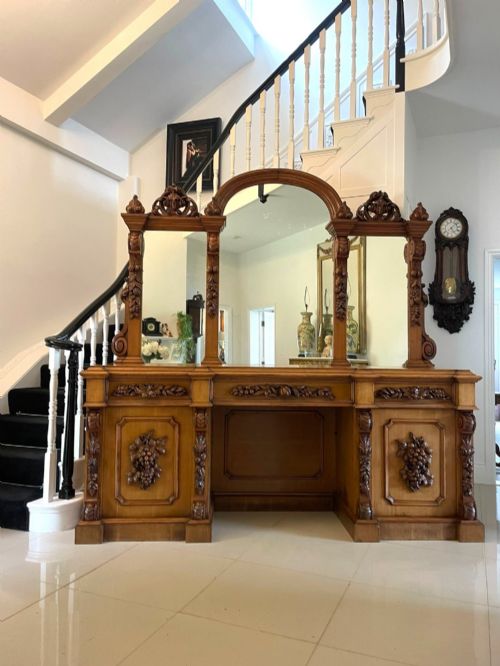
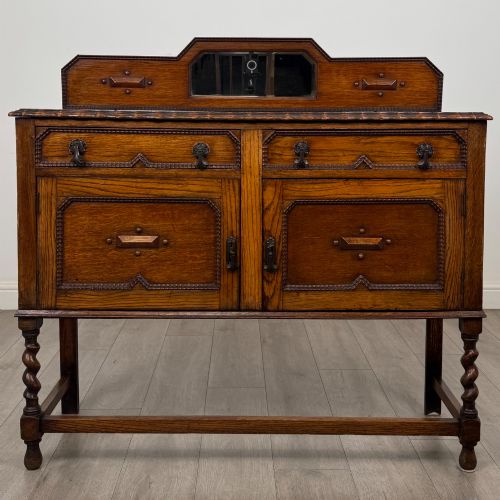
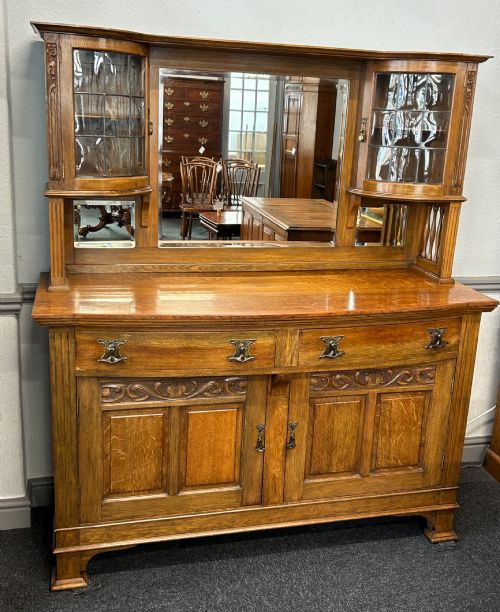
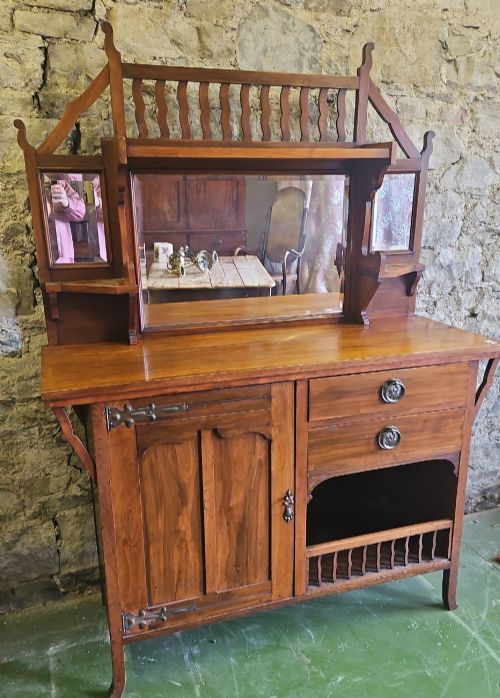
When you search for an oak mirror back server, you are looking at large dining room furniture designed for service and display, commonly appearing as sideboards and dressers. These pieces originate primarily from the Victorian and Edwardian eras, spanning the nineteenth and early twentieth centuries.
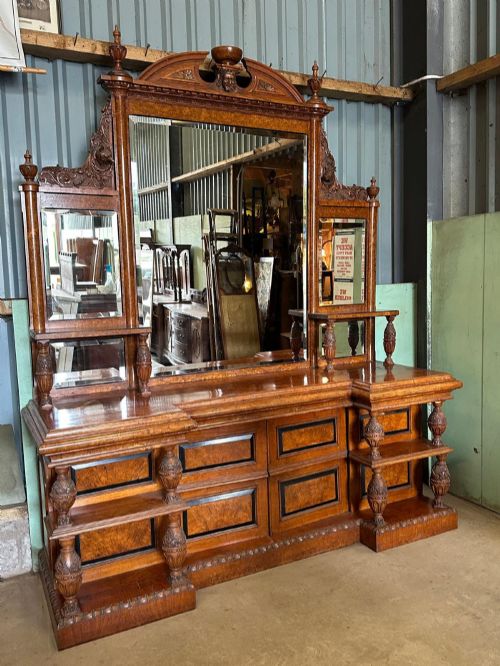
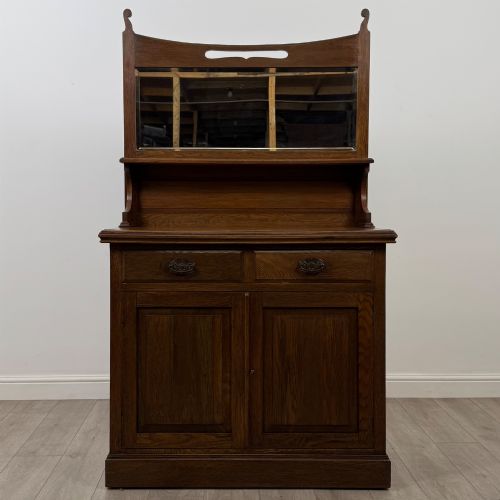
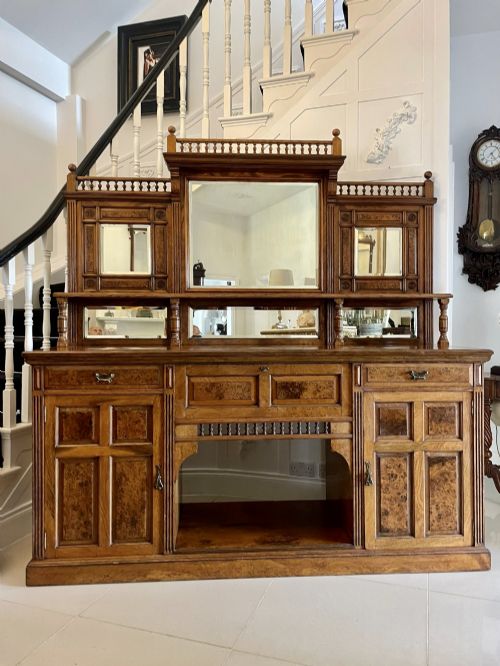
The versions most frequently met on this page combine sturdy timber carcases with integrated mirror glass panels, often featuring carved ornamentation, pedestals, or raised cabinets. Styles range from heavy Victorian Gothic and Renaissance revivals through to cleaner Arts and Crafts and Art Nouveau interpretations.
Materials and construction
The construction relies heavily on solid oak, frequently enhanced by figured pollard oak veneers or bleached finishes to accent the grain. Metal hardware such as brass handles and iron fittings provide structural and decorative punctuation to the heavy timber framework.
Makers integrated plain, bevelled, or mirrored glass within tall backboards, securing them with traditional joinery and deep carving techniques. Surfaces often display geometric motifs, green man carvings, or specimen wood inlays embedded directly into the timber.
Keep an eye out for carved green men peering through the foliage on nineteenth century panels.
Distinctions in quality
Quality rests in the selection of the timber, where figured pollard oak and specialist inlays elevate a piece above standard utility furniture. The depth and execution of the carved details, from geometric patterns to figural motifs, define the workshop's ambition.
Proportion and scale dictate the visual success of the server, with grander examples maintaining balance despite heavy mirror frames and extensive base cabinetry. The integration of the mirror back with the lower sideboard indicates the care taken in original assembly.
T Simpson and Son
The Oak Mirror Back Server Glossary
- Pollard oak
- Timber taken from trees that have been pollarded, producing a heavily figured, speckled grain highly prized in Victorian cabinet making. This timber creates distinctive mottled patterns across large drawer fronts and doors.
- Mirror back
- An upright wooden frame holding a glass mirror attached to the rear of a sideboard or server. It reflects dining room light and displays decorative objects placed on the shelf below.
- Arts and Crafts
- A design movement prioritising handcraftsmanship, simple forms, and honest expression of materials. Pieces in this style often feature minimal carving and exposed structural joinery.
- Bevelled glass
- Glass with an angled edge polished around the perimeter, catching light and adding depth to the reflection. This technique indicates a higher standard of manufacture in period mirrors.
- Gothic Revival
- An architectural and decorative style drawing on medieval forms, featuring pointed arches, heavy mouldings, and traceried panels. It appears frequently on robust nineteenth century carcases.
Oak Mirror Back Server: Frequently Asked Questions
What is an oak mirror back server used for?
These servers function primarily as dining room storage units, holding serving dishes, cutlery, and glassware within their cupboards and drawers.
The raised mirror back and upper shelf provide a display area for decorative ceramics, silver, or silver-plated items during formal meals.
How do I fit one in a modern home?
Their substantial proportions require a dedicated wall space in a dining room, large hallway, or spacious living area.
The reflective glass panel helps brighten darker rooms by bouncing natural light around the space while offering useful surface area on the serving top.
How do I distinguish Victorian from Edwardian pieces?
Victorian examples generally feature heavier carvings, darker finishes, and ornamental revivals such as Gothic or Renaissance motifs.
Edwardian pieces tend to lean towards lighter oak tones, simpler Arts and Crafts lines, and less congested surface decoration.
Are the mirrors original?
Most surviving servers retain their original mirror glass, often showing minor foxing or light ageing appropriate to the period.
The glass is typically secured with original wooden backing boards and framing beads that match the internal construction of the carcase.