

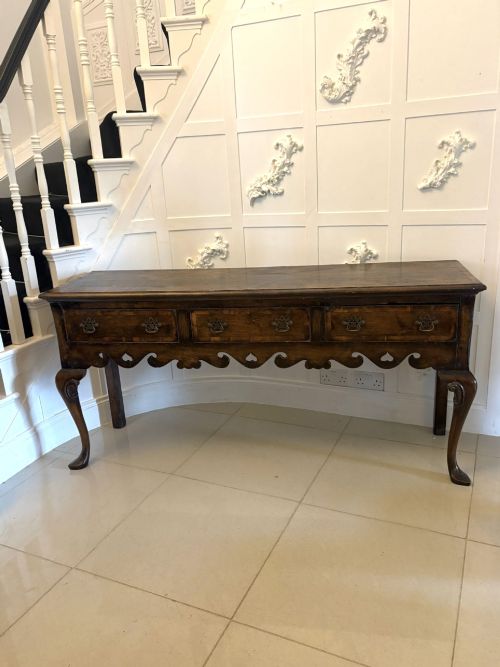
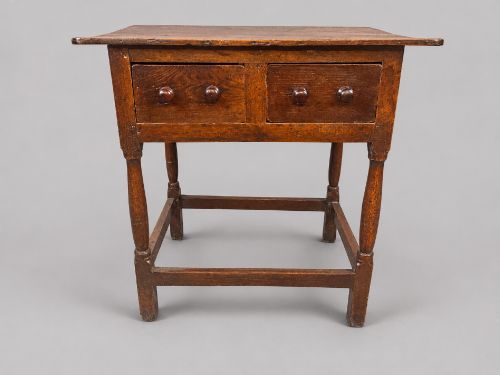
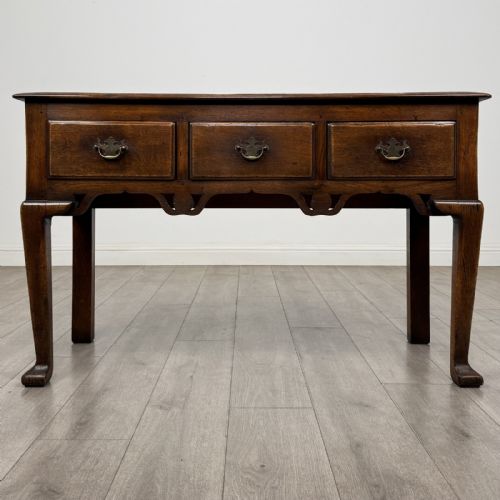
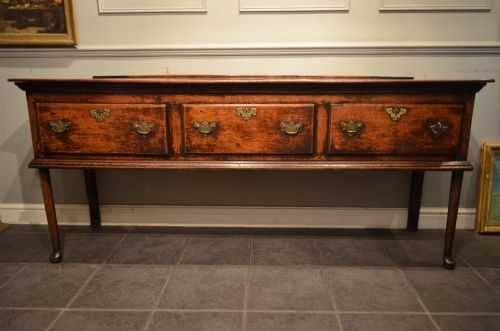
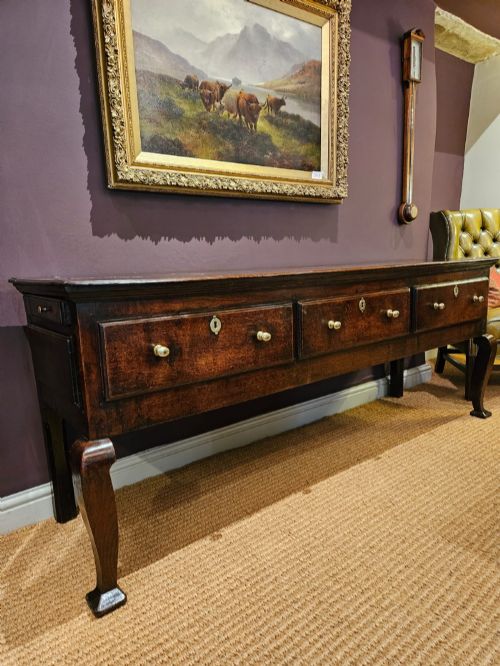
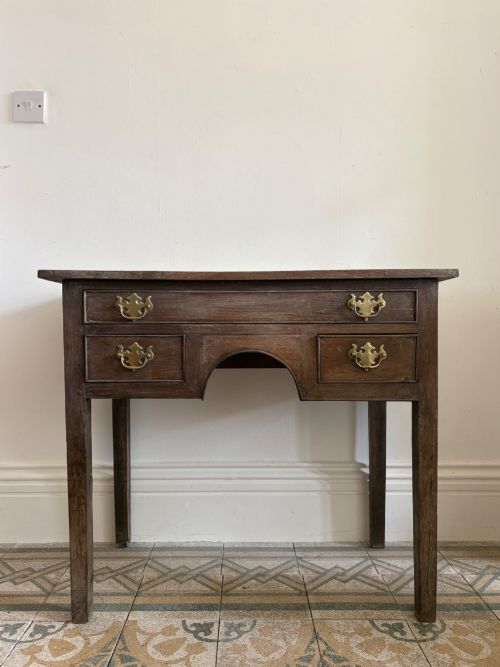
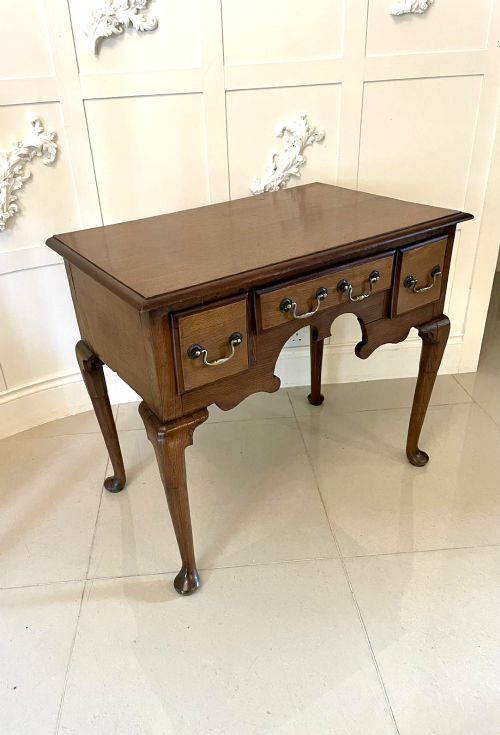
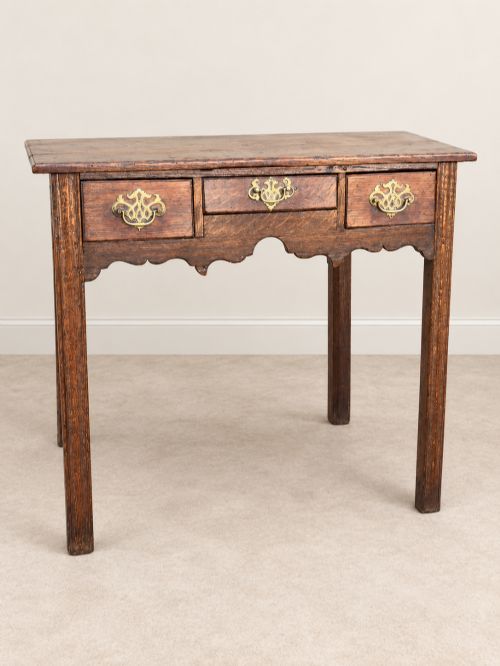
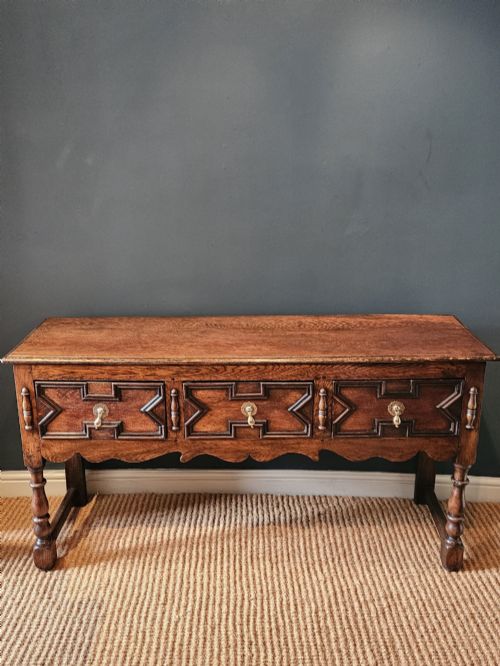
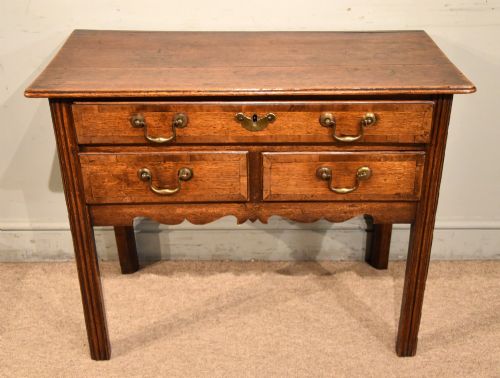
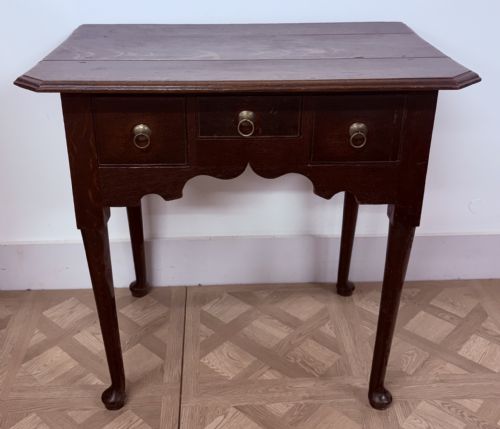
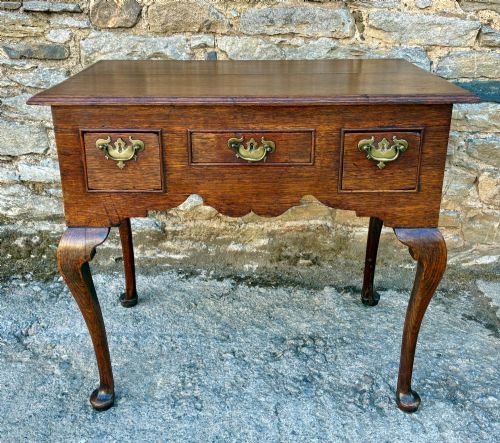
Oak Lowboy Server
An oak lowboy server is a low-slung table with drawers, offering compact surface space and useful storage for a dining room or hall.
Oak Lowboy Server
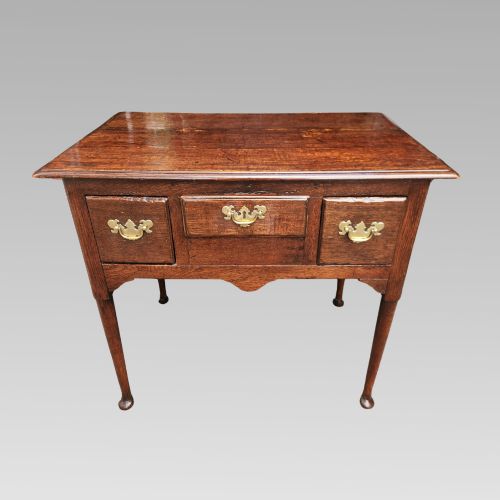
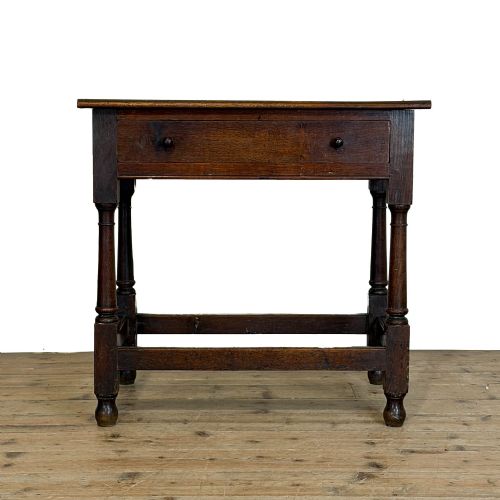
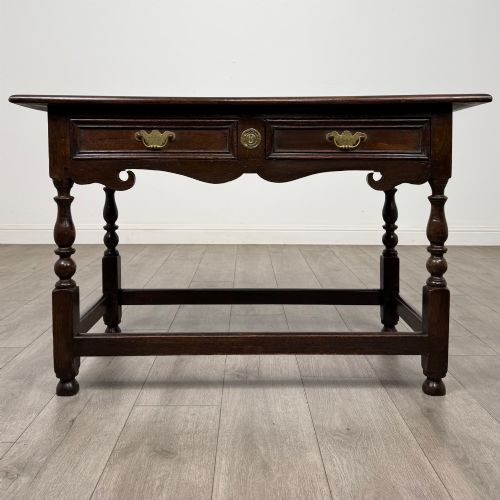
When searching for an oak lowboy server, you are looking at low tables equipped with multiple drawers, often functioning as side tables, dresser bases, or dressing tables. These pieces combine tabletop surface space with practical under-counter storage.
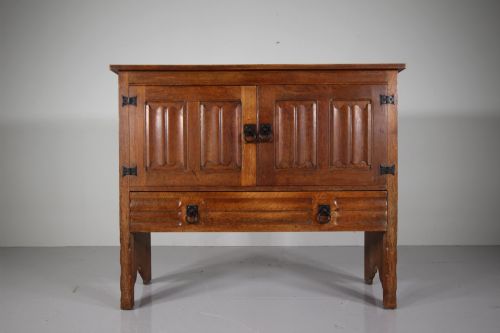
The versions you are most likely to meet on this page hail primarily from the 18th century and the Georgian period, alongside occasional 17th-century examples, revival pieces, and later 20th-century interpretations. They appear under various historic labels including lowboys, side tables, dresser bases, and server bases.
Originating as versatile household furniture, these low tables suit entrance halls, living spaces, and dining rooms alike. Their construction reflects domestic requirements of past centuries, prioritizing accessible drawer storage beneath a sturdy timber top.
How they were made
Cabinetmakers built these pieces predominantly using solid oak, occasionally incorporating secondary woods such as walnut, red walnut, fruitwood, and burr walnut veneer. Surfaces frequently display fruitwood inlay or geometric mouldings that accent the primary timber.
Structural hardware relies on traditional joinery supplemented by brass pulls, handles, and iron fixings on the drawers. Legs range from straight square supports to carved cabriole legs and blind silhouette designs.
Oak Lowboy Server Retail Price Guide 2026
Typical asking prices for oak lowboy server among the pieces listed under this phrase on Sellingantiques today, from the lower quarter to the upper quarter. They describe what is for sale here now, not the wider market.
Some lowboys spent centuries moonlighting as dressing tables before finding a permanent retirement holding car keys in modern hallways.
What varies in quality
The standard of a lowboy server rests heavily on the integrity of its timber surfaces, such as dry historic finishes versus later interventions, and the crispness of any fruitwood inlay or geometric mouldings. Finer examples retain their original brass hardware and untouched patination built up over centuries.
Proportion and leg form also dictate the caliber of the piece, with well-balanced cabriole legs or precise square legs showing superior craftsmanship compared to plain or heavily altered frames.
The Oak Lowboy Server Glossary
- Lowboy
- A small oak table with drawers, traditionally standing on four legs at a height convenient for serving or personal grooming.
- Dresser base
- The lower section of a kitchen or dining dresser, functioning independently as a sideboard or server with multiple drawers.
- Cabriole leg
- A furniture leg that curves outward in a convex arc and tapers inward in a concave arc, often terminating in a pad foot.
- Geometric moulding
- Raised wooden mouldings applied to drawer fronts or frames in geometric patterns, characteristic of 17th-century and early 18th-century cabinet work.
- Fruitwood inlay
- Decorative contrasting insertions of fruitwood embedded into the primary oak surface to create linear or geometric patterns.
Oak Lowboy Server: Frequently Asked Questions
What is an oak lowboy server used for?
These pieces function primarily as side tables, servers, or compact storage units in dining rooms and hallways. Their surface accommodates lamps or decorative items while the drawers hold smaller household goods.
Historically, similar low tables served multiple domestic purposes including dressing tables and serving surfaces. Today, they fit easily into modern rooms as hallway consoles or living room side tables.
How can I tell an 18th century lowboy from a later revival piece?
Examination of the timber surfaces, drawer construction, and tool marks reveals the age of the piece. Older items display dry historic finishes and hand-cut joinery consistent with 18th-century methods.
Revival pieces from later periods often show uniform machine milling and different interior secondary woods. Comparing leg styles, such as Georgian cabriole legs against later interpretations, also helps distinguish the period.
Did lowboys always have drawers?
Most pieces identified as lowboys feature one to three drawers arranged beneath the main top surface. The configuration varies from single-drawer dressing tables to wider three-drawer dresser bases.
While the primary surface provided space for placement, the integrated drawers supplied secure storage for small valuables or linens. The presence of these drawers defines the standard lowboy form.
How do I care for an antique oak surface?
Maintaining an antique oak surface requires simple dusting with a dry, soft cloth and avoiding modern silicone-based polishes. Keeping the furniture away from direct heat sources prevents the timber from drying out.
Applying a traditional beeswax occasionally helps nourish the wood and preserve the natural patination. Gentle handling ensures the dry surface and original finish remain protected over time.